

Elise Eales From Di Lunedi
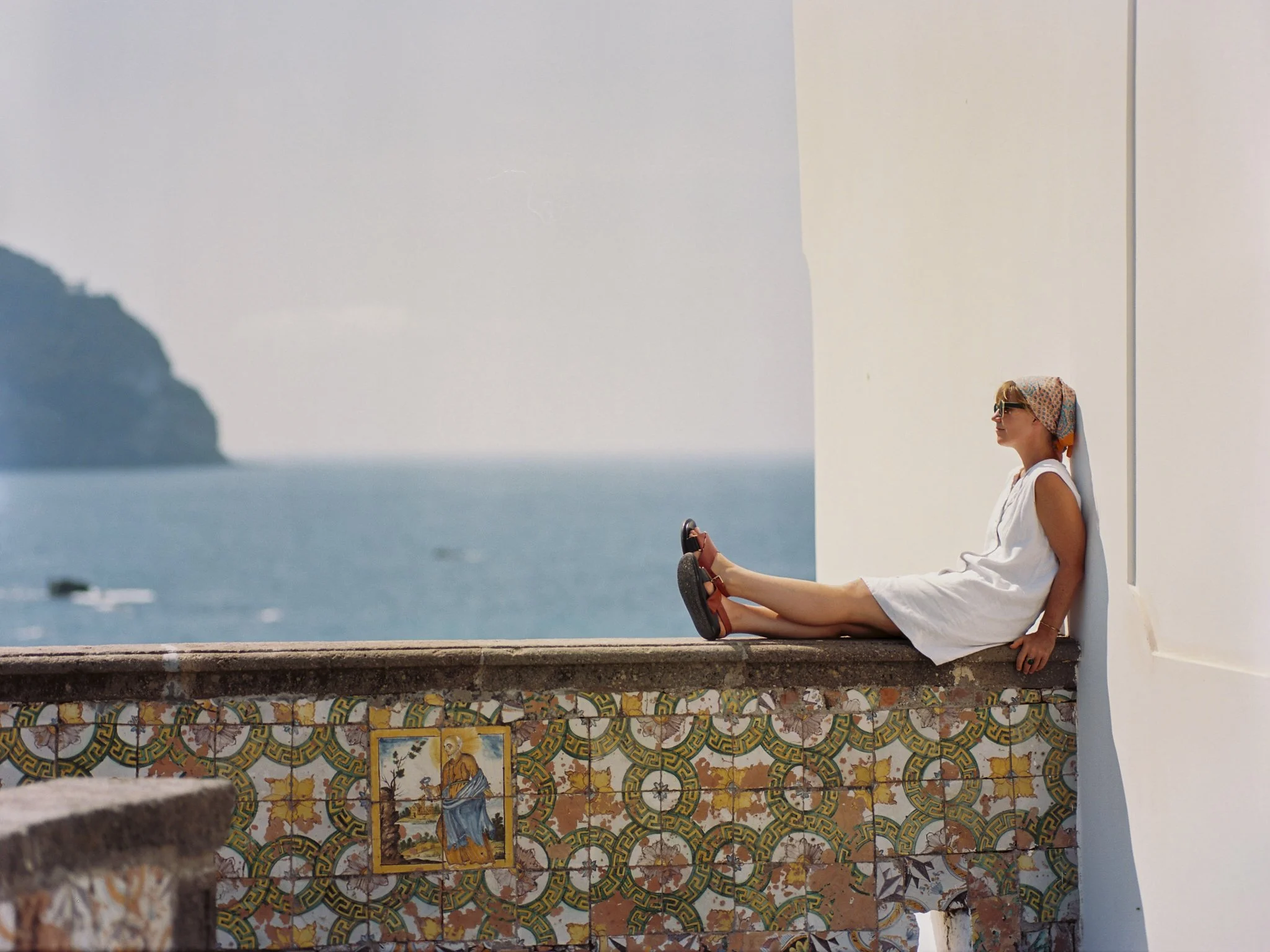
Elise Eales is the founder and maker behind Di Lunedi. Splitting her time between the Northern Rivers and Italy, she creates whimsical pieces inspired by her Mediterranean travels and a love of nostalgic aesthetics.
Photos ANNA PIHAN
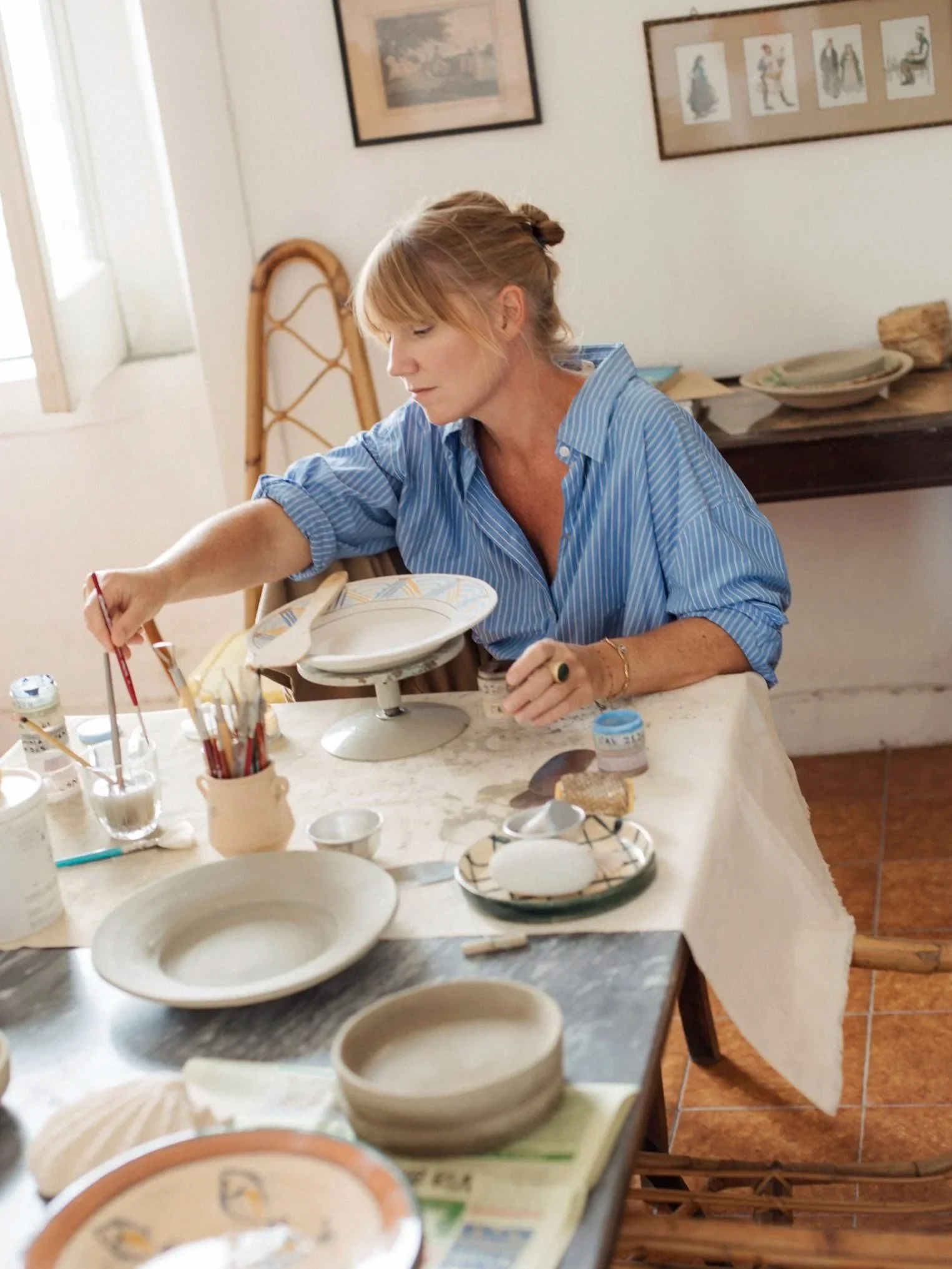
Ceramic artist Elise Eales from Di Lunedi.
‘Ischia always feels like returning home. Seeing my favourite little sun tile set above old shutters or the beautiful maiolica street signs that all feature the pine trees found on the island,’ shares Elise Eales.
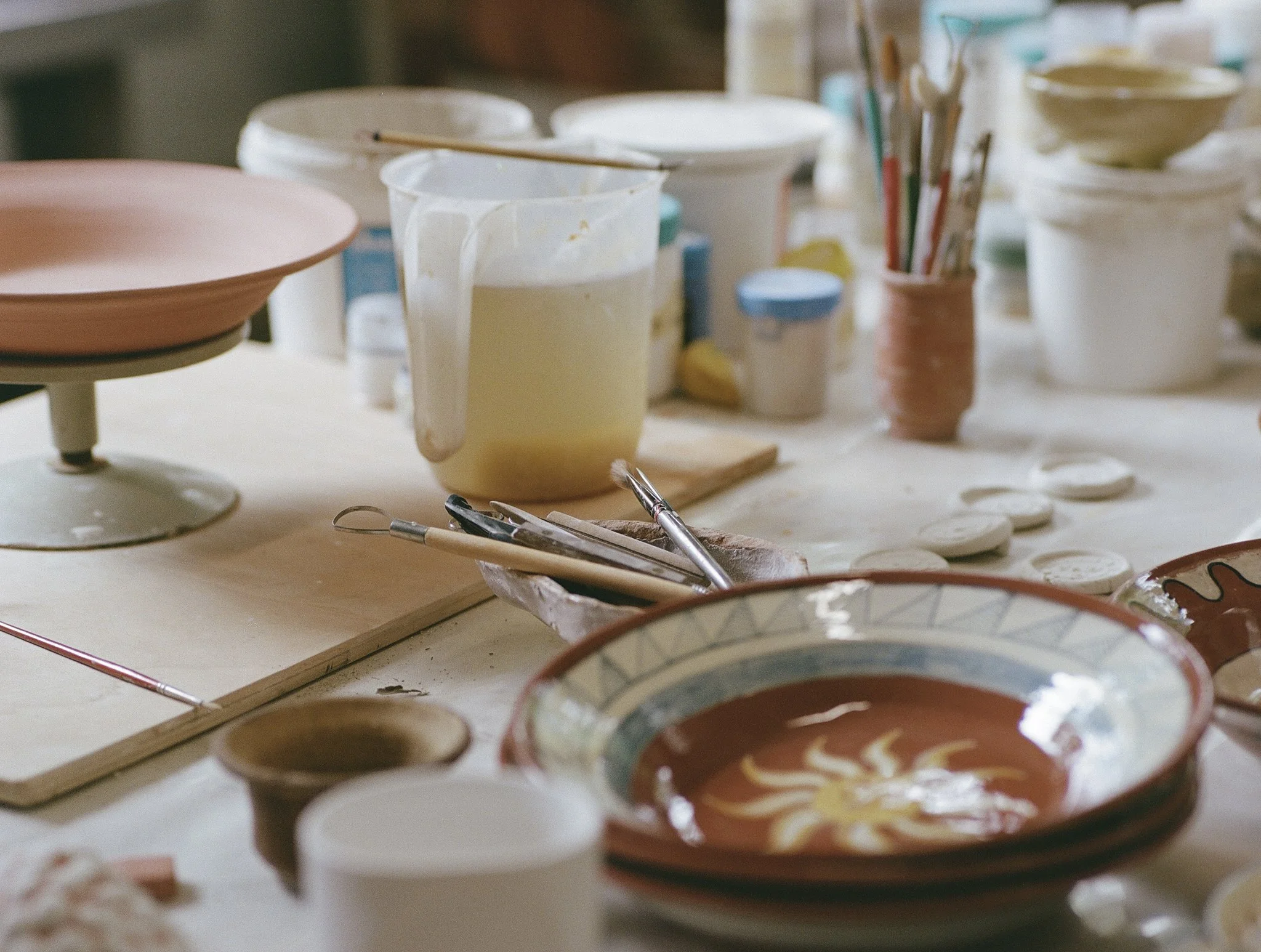
‘Once I'm in the studio, time has a way of disappearing,’ says Elise Eales.
“I grew up in my father’s pottery studio, so clay has been part of my life since childhood. Returning to it as an adult has felt like the most natural thing in the world.”
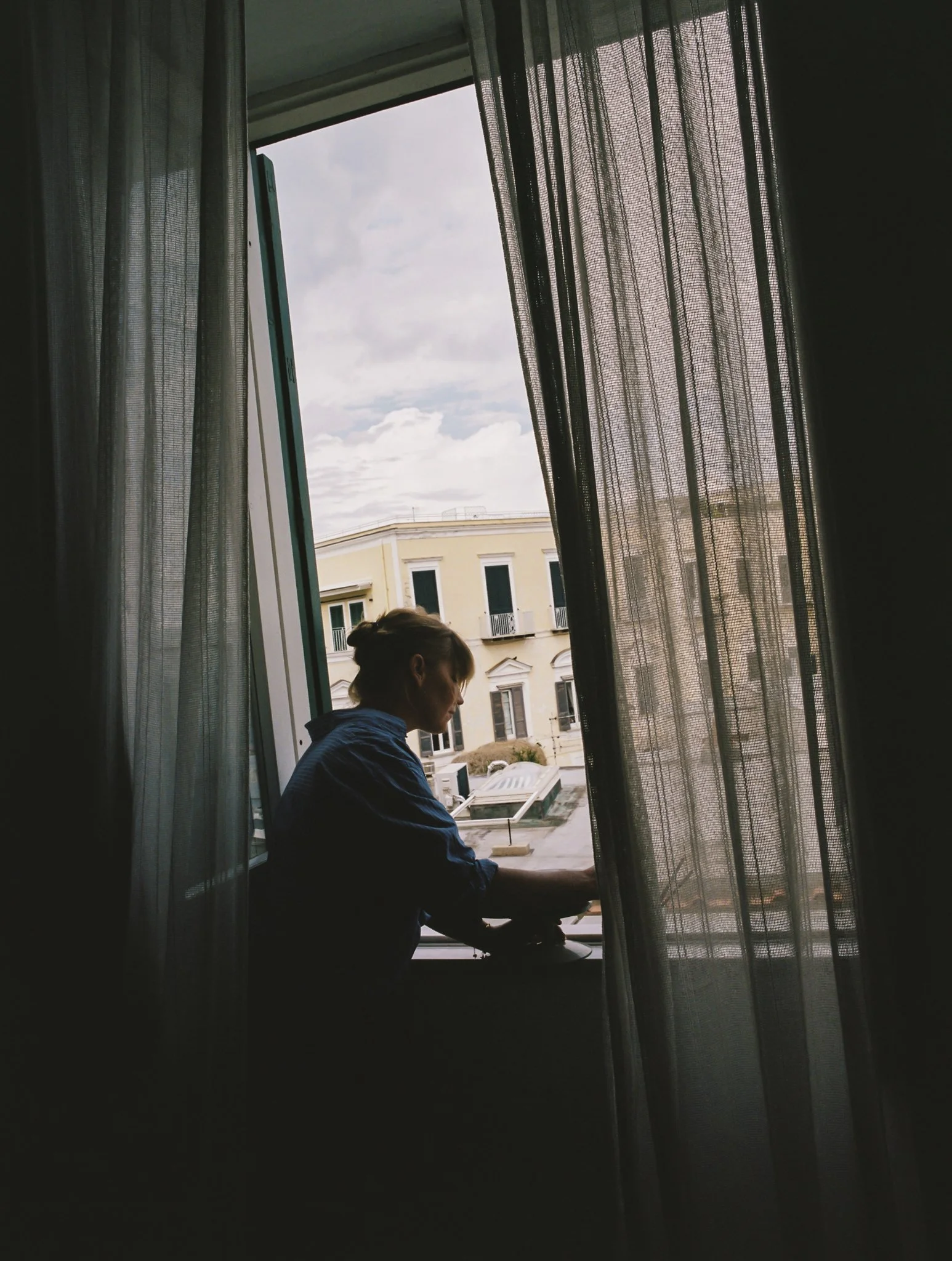
‘I always felt pulled to Italy, it’s something in the aesthetics, the history, and the way life is simply appreciated more.’
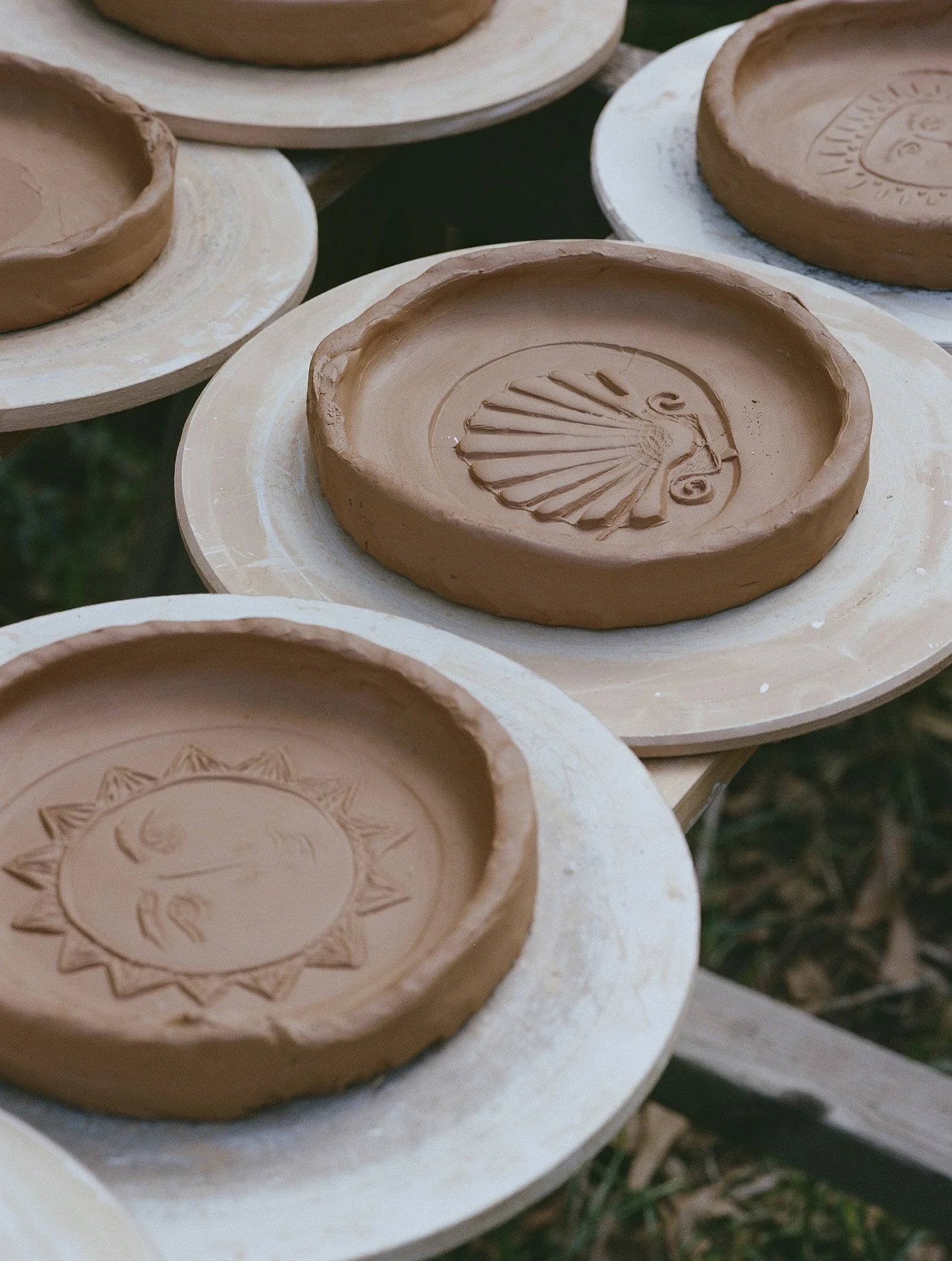
‘Fish and sunny faces tend to appear on repeat, there's something whimsical and light in the brushstroke of a tail, or the slight curl of a turned-up mouth.’
Hello Elise—can you introduce yourself?
My name is Elise Eales and I'm the founder and maker behind Di Lunedi, a ceramics project inspired by my Italian travels and a deep reverence for nostalgic aesthetics. I split my time between my studio on a twelve acre property in Northern NSW and Italy, where I spend several months of the year creating and absorbing everything around me. I grew up in my father’s pottery studio, so clay has been part of my life since childhood. Returning to it as an adult has felt like the most natural thing in the world.
How much have those early years in your father's studio shaped the way you work today?
More than I probably realise. Growing up in that space gave me an early and very physical relationship with clay, the textures and sensory rhythm of a working studio. Ceramics were always being talked about at home: a particular form, the result of a glaze firing, the small discoveries that come with the medium. I remember taking friends to the cup drawer and asking them to choose their favourite, which looking back feels like a very early version of what I'm still doing now. The idea that an object can create a moment of connection and quiet pleasure.
How did Di Lunedi first came to life?
Di Lunedi began in 2020, though in many ways it had been forming long before that. Italy was always my destination of choice, and once I started travelling there regularly and creating in the places that inspired me, the project found its own shape quite naturally.
Di Lunedi translates to Of Monday — a small nudge toward the idea that beauty is in the small things. You don't have to save the good china for a special day, Tuesday morning will do just fine. It's a reminder that art and function can be one and the same.
What first drew you to Italy, and what keeps bringing you back?
I always felt pulled to Italy, it’s something in the aesthetics, the history, and the way life is simply appreciated more. In those early experiences of travel, ceramics were something I always gravitated to, collected and sought out. Even before Di Lunedi had a name, that appreciation for materials and everyday objects was already there.
What keeps drawing me back is harder to pin down because it’s the sum of countless details and experiences. The ceramic traditions alone could keep me occupied for a lifetime, with each region different. In recent years I've been lucky to be invited into some incredible studios and workshops, watching makers work by hand in spaces full of pigment, half-finished experiments, and the collected paraphernalia of years of creating.
Italy has a remarkable ability to make the beautiful feel completely ordinary, and the ordinary extraordinary which is something I find endlessly inspiring.
Is there a particular place, object or memory that’s influenced your work over the years?
Ischia always feels like returning home. Seeing my favourite little sun tile set above old shutters or the beautiful maiolica street signs that all feature the pine trees found on the island. They are small details but there is intention in their beauty.
The ceramics I've collected from markets over the years are also a constant source of reference, pieces that feel so perfectly imperfect. They show where a glaze has dripped down the side or a fingerprint has been left in the clay.
What inspires your collections most?
Often it's a feeling more than a literal translation. Fish and sunny faces tend to appear on repeat, there's something whimsical and light in the brushstroke of a tail, or the slight curl of a turned-up mouth. I love how varied the interpretation can be, the way a different technique can take the same simple motif somewhere completely new. It keeps the possibilities feeling endless.
Tell us a little about your process and what goes into a making a piece…
Clay is a wonderful collaborator and a very patient teacher. Each stage — hand-building, drying, firing — unfolds on its own timeline and asks you to meet it there. I've come to love that about it. Nothing can be rushed, which means the studio always has multiple pieces at varying stages at once. Slip, for instance, can be tinted for tone but must be applied to leather hard clay, then given time to rest before I can begin sketching or carving into the surface with sgraffito technique.
Once dry, the pieces can go through their first firing, a low bisque, which will take 24 hours before it can be removed from the kiln. Then I can finally start creating the designs and adding the Italian coloured pigments that I use. I often start with a border, it can be quite meditative working around the edge of a piece, and from there the central design tends to follow quite naturally. Pieces are glazed and put into the kiln for the final firing where a certain kind of magic all of its own happens.
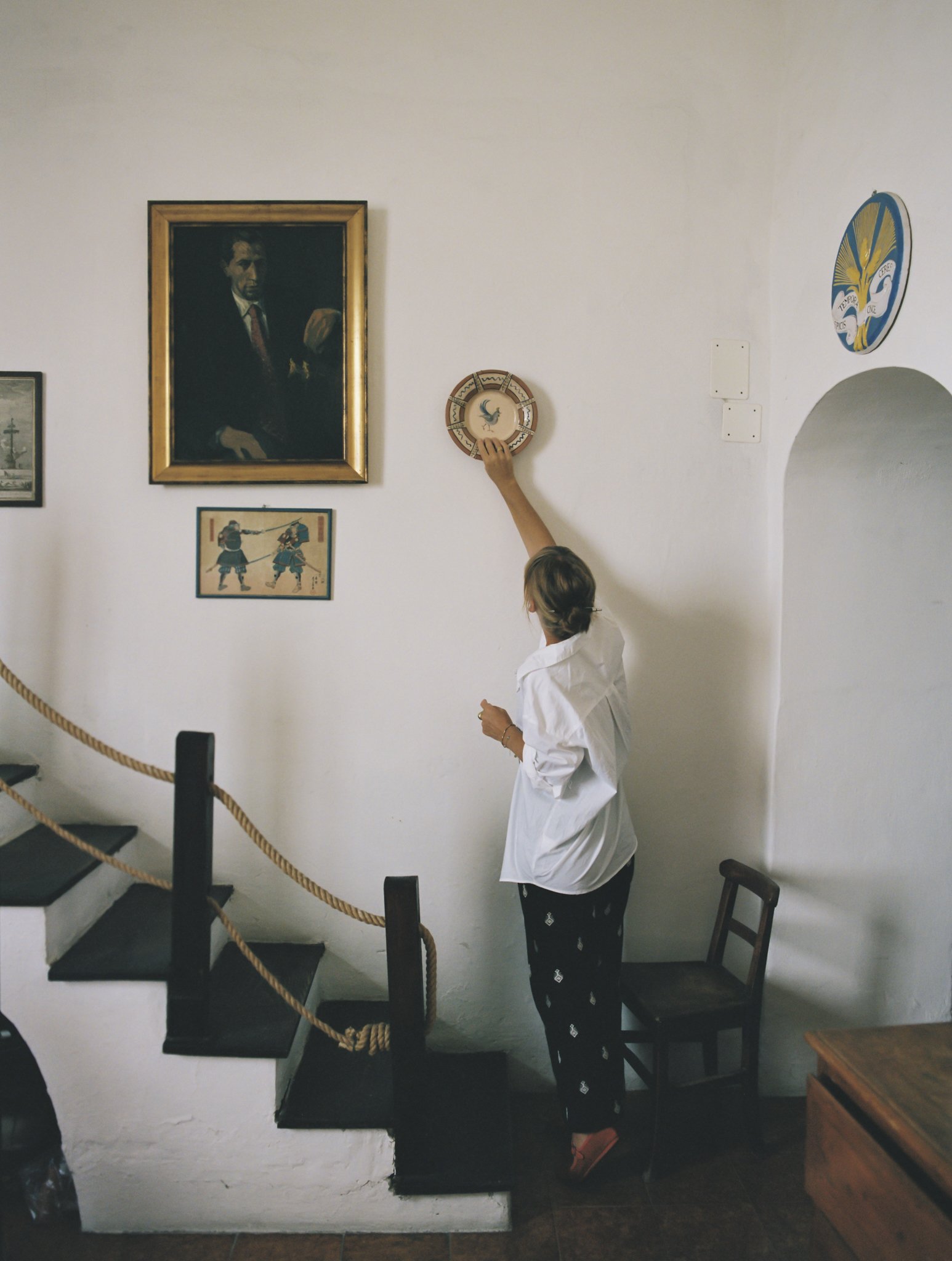
‘The ceramics I've collected from markets over the years are a constant source of reference, pieces that feel so perfectly imperfect.’
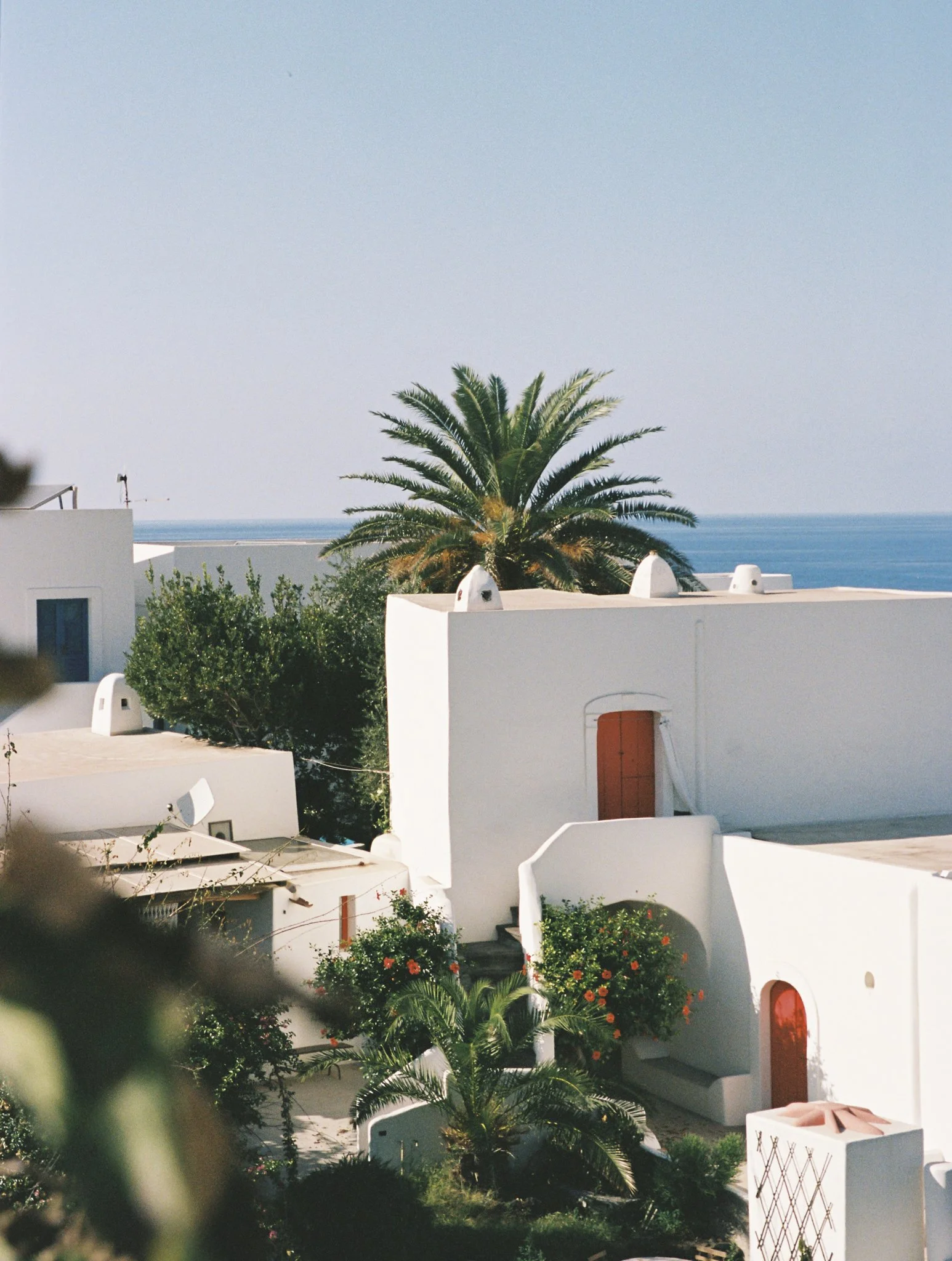
‘When I travel I prefer to anchor myself to a place rather than rush to experience everything, to let the details settle in and make it feel real.’
“Italy has a remarkable ability to make the beautiful feel completely ordinary, and the ordinary extraordinary, which is something I find endlessly inspiring.”
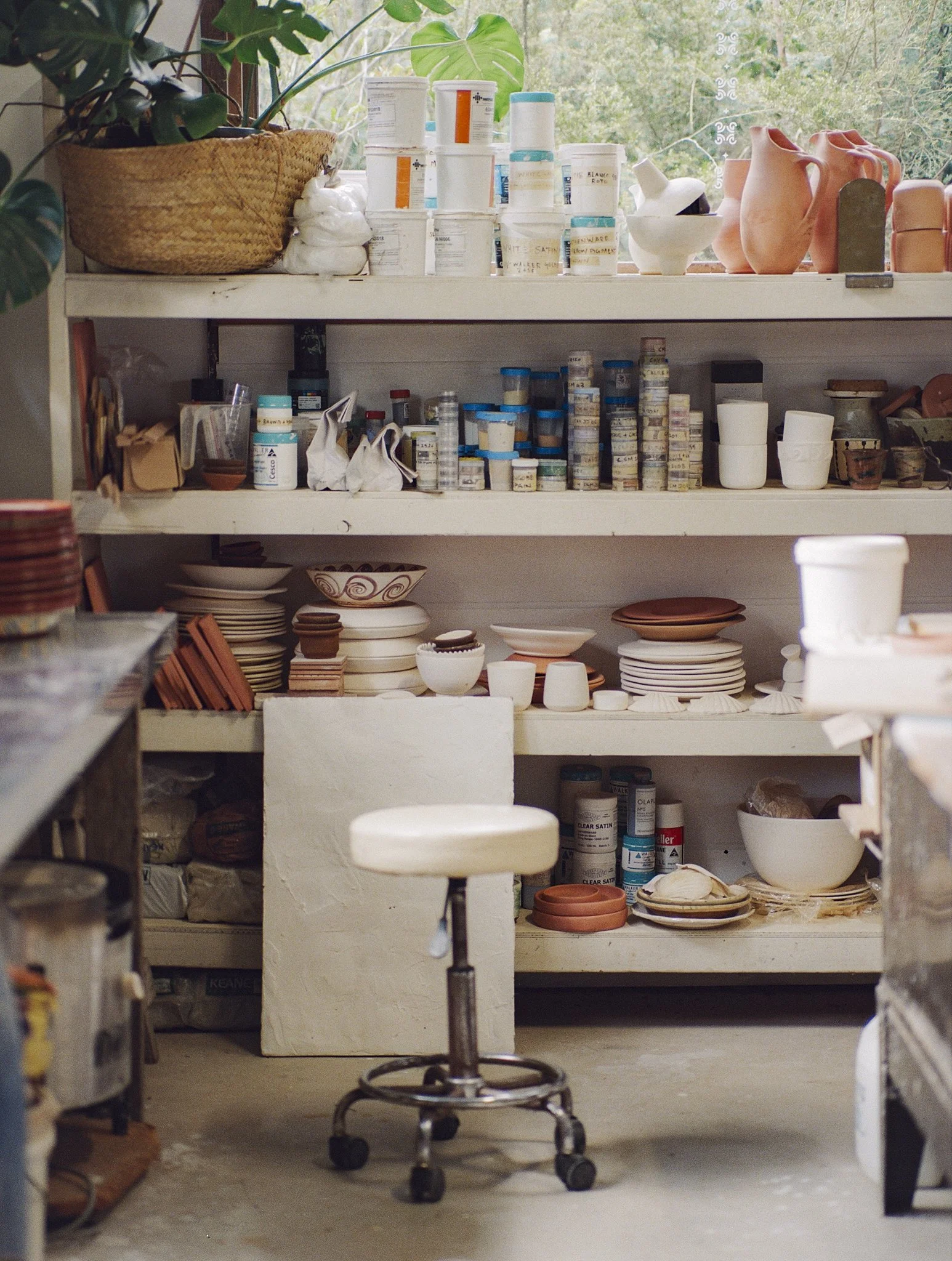
Elise's studio is always filled with pieces at various stages of completion.
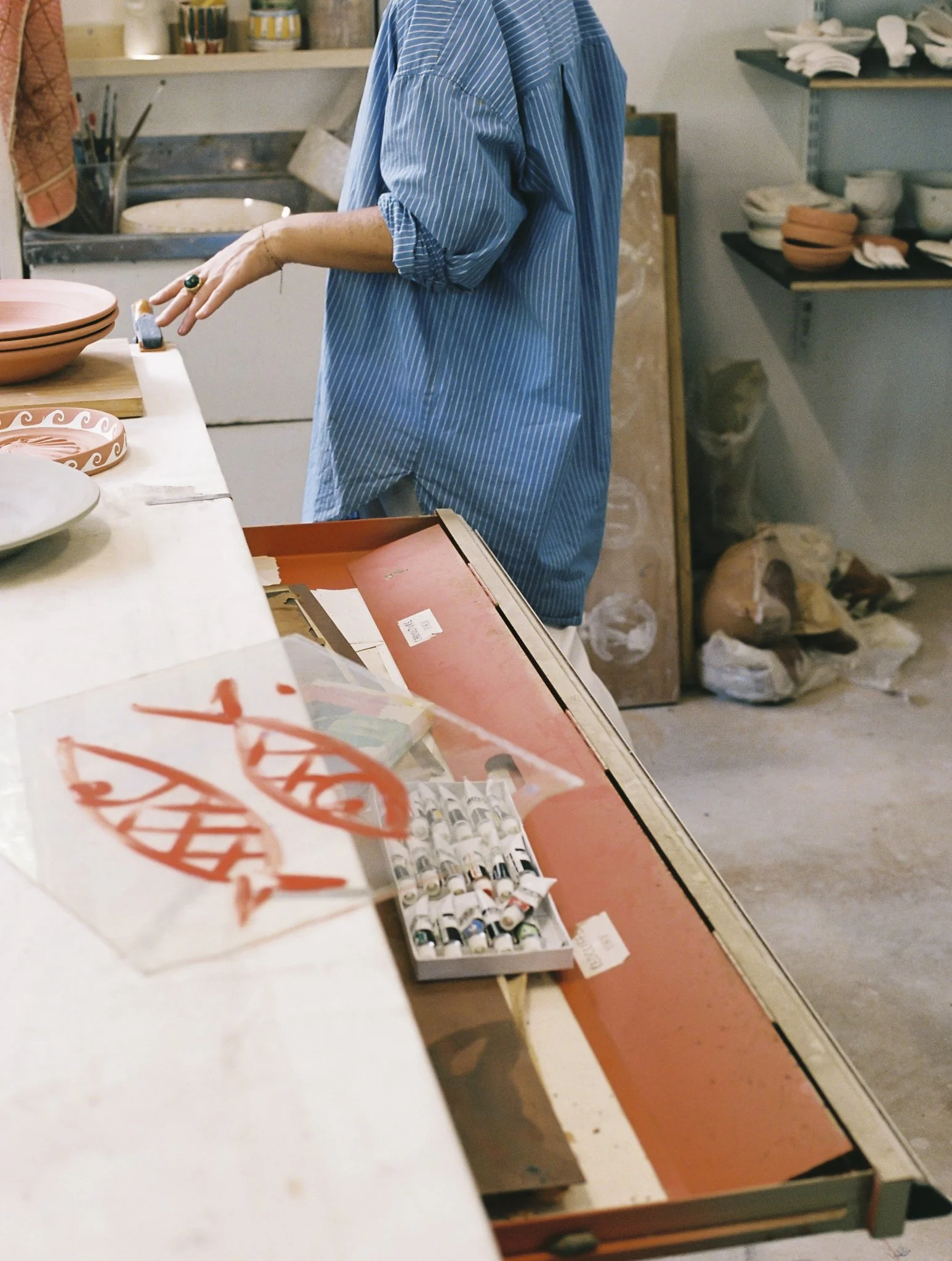
‘Clay is a wonderful collaborator and a very patient teacher. Each stage — hand-building, drying, firing — unfolds on its own timeline and asks you to meet it there.’
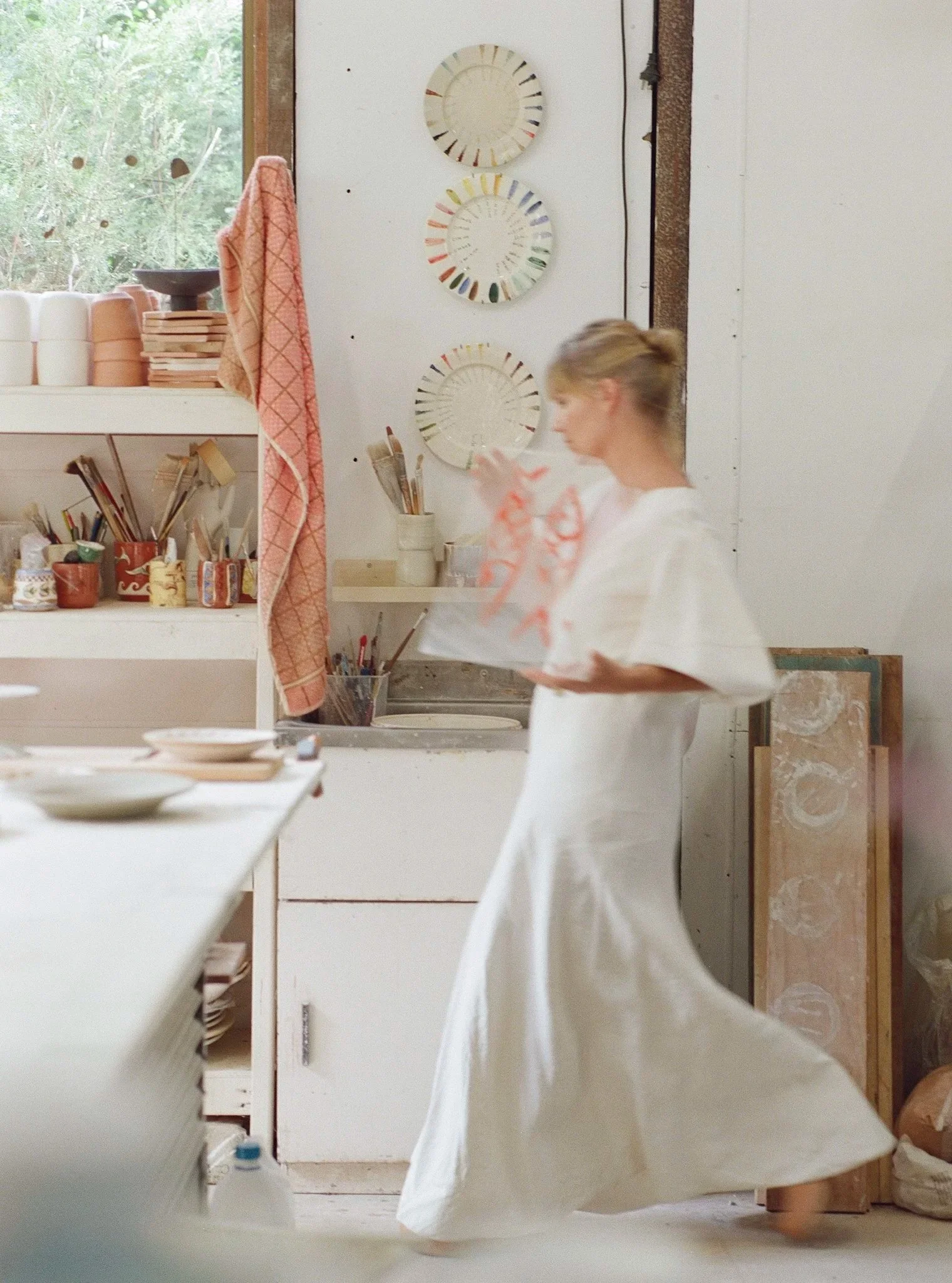
‘More often than not, it’s the small details rather than big statements that find their way into my work.’
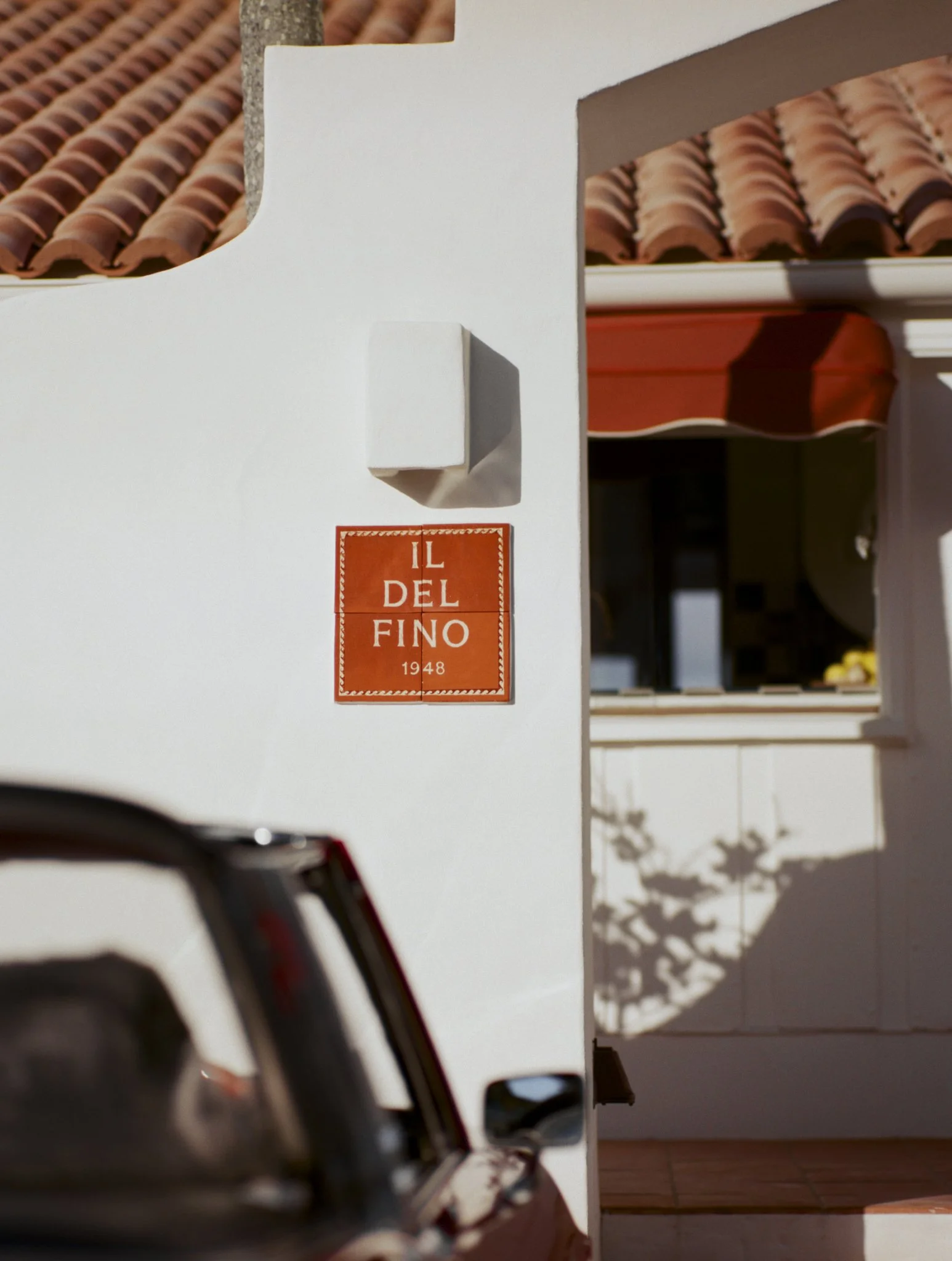
Elise Eales created a collection of handcrafted tiles, paying homage to Italian seaside destinations for Il Delfino, a Mediterranean inspired inn in the coastal town of Yamba, Australia.
You're inspired by aged ceramic patinas, weathered tiles and the details of everyday life in the Mediterranean. How do you tend to notice these small moments?
I think it requires a particular kind of slowness. When I travel I prefer to anchor myself to a place rather than rush to experience everything, to let the details settle in and make it feel real. That usually means staying somewhere long enough to both create and experience it at the same time. That balance is important. It gives me the opportunity to stand still, observe, and absorb the place around me rather than simply passing through.
Walk us through a ‘typical’ day in your studio…
Whether I'm in Australia or Italy, mornings look much the same, an early start, a coffee, and a few quiet minutes before the day starts asking things of me. I'm not great at multi-tasking, so I've learned to give different hours to different kinds of work rather than juggle it all at once.
Once I'm in the studio, time has a way of disappearing. Hand building and designing need such different kinds of focus so I try to stay in one or the other rather than moving back and forth. I like to organise my space, tidy it a little from whatever I was working on the previous day, and pick a bunch of fresh flowers for the studio. Old art books and film stills from past travels sit nearby too, serving as reminders of ideas or guiding a collection in a new direction.
Is there a particular place, journey or encounter that has unexpectedly changed the direction of your work?
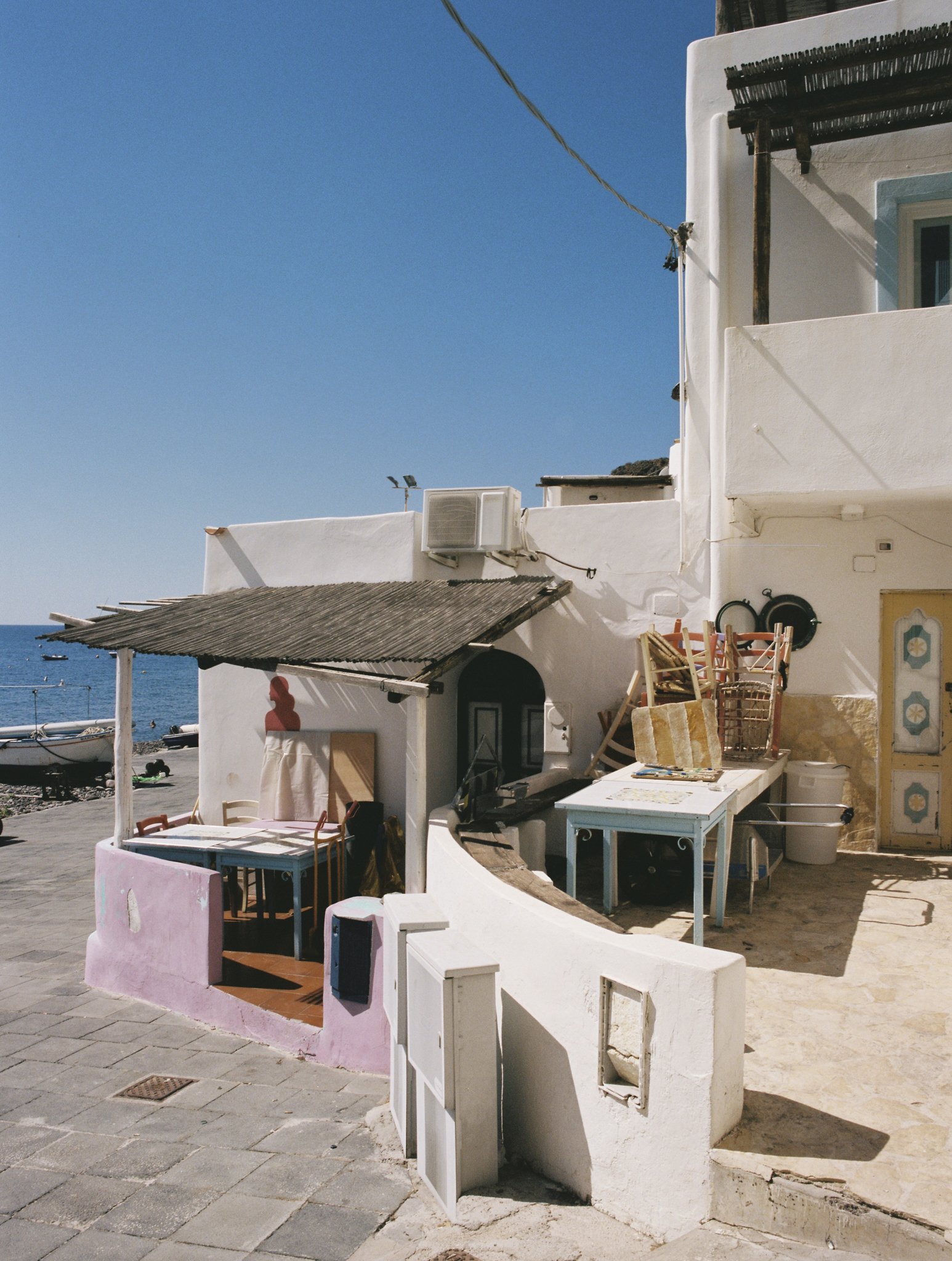
In September 2024 I travelled to Stromboli with a client whose father had once been a local on the island. She wanted to experience his heritage more fully, to step into a place that had always felt, to her, like a kind of magical story. We arrived early in the morning, the glow of the volcano's lava in the distance as we arrived. The collection of plates I created for her was full of illustrative imagery, each piece felt less like an object and more like a chapter in a larger narrative.
Sicilian ceramics have quite a different style to what I’d designed before – more narrative, more pattern, with a storytelling theme in the decoration. Some of that made its way into a later collection I created with Lo Scoglio, and I continue to return to it as inspiration and a design style.
A dream project for you?
Creating work in response to a particular place is something I’d love to explore further. A collaboration with a boutique hotel or brand, where a collection is shaped by its surroundings, would be a dream.
I’m also interested in furniture and lighting. I love the way different materials can work together, often creating something more interesting than either could alone.
A piece of advice you would give someone starting their journey in ceramics?
Give yourself permission to play… we so rarely as adults allow space to create for the sake of it, without an attachment to the outcome or sense of where it’s leading. I think some of the most beautiful pieces come from experimentation and ceramics is a medium of endless possibilities.
What are you currently looking at, reading or noticing that's feeding into your work?
On my desk at the moment are books on Picasso’s ceramics, antique maiolica tiles, and old Sicilian formelle with their beautifully simple embossed motifs.
I’m drawn to things with character, objects shaped by hand and old traditions. More often than not, it’s the small details rather than big statements that find their way into my work.
Where would we find you on a typical Saturday?
It depends where I am in the world. At home in Northern NSW I love to sit in my little courtyard. The garden is vast and always attracts a varied assortment of birds who make use of the bird bath. It’s a space that always recalibrates me and I can happily spend a few hours looking through books or sketching ideas. If in Ischia, it’s down on the Scoglio (rocks) under Castello Aragonaese, where the locals swim and there’s always someone to stop and chat with.
What's coming up for you that you're most excited about?
I’ve been experimenting with more tiles and how they can be applied to lighting designs. I’m also heading back to Italy in August and September to work on a collection while there, which I plan to bring back to Australia. And there’s a few exciting projects coming up with beautiful boutique hotels that have endless possibilities to explore.
Stay up to date with Di Lunedi here or follow @di_lunedi
