

Erin Fairmaid From HèHè Design
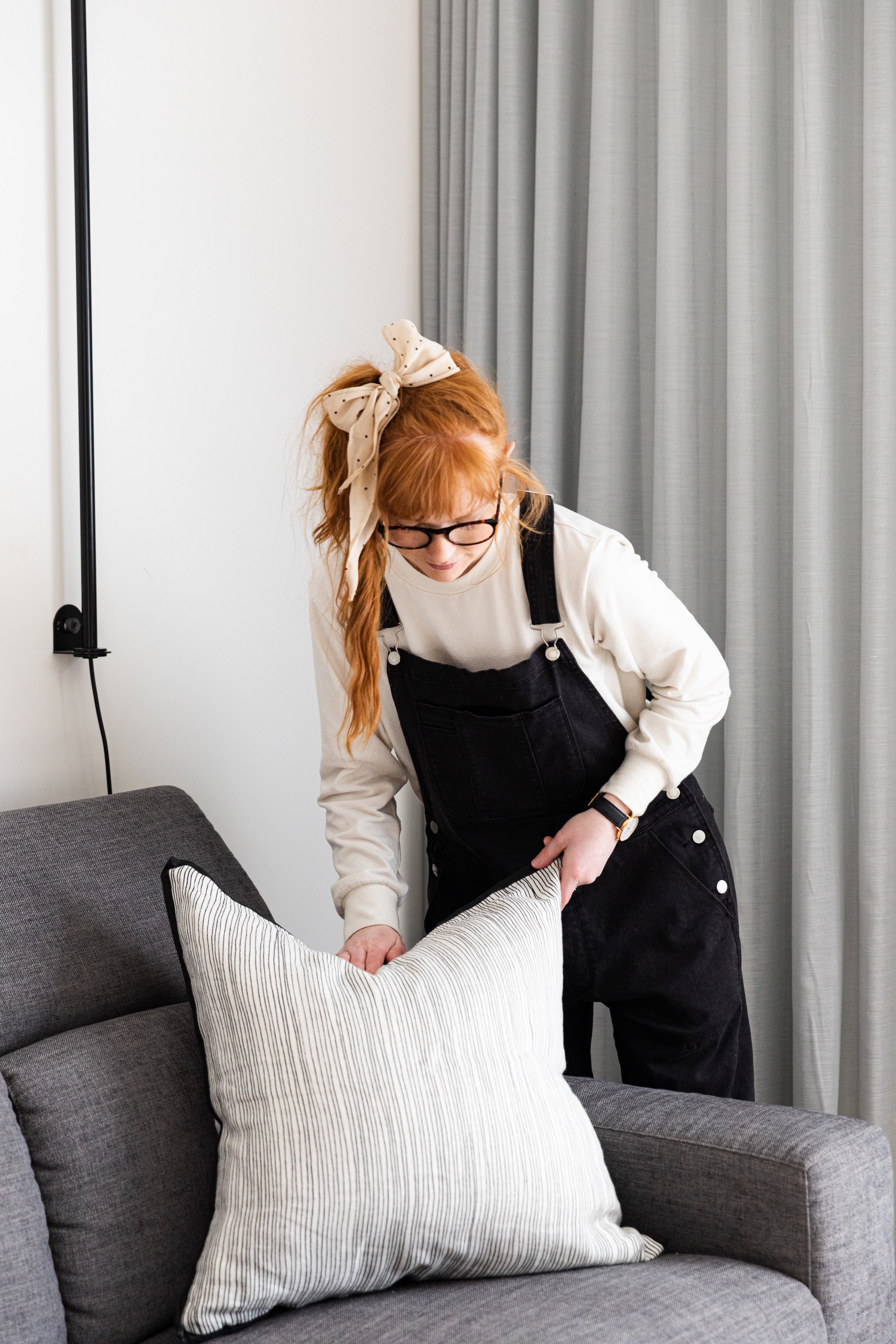
Erin Fairmaid, founder and interior designer at HèHè Design, crafts emotionally attuned homes, shaped by routine and mood—translated into sustainable, Passive House–minded interiors.
Photos MARNIE HAWSON & REBECCA HAYCRAFT
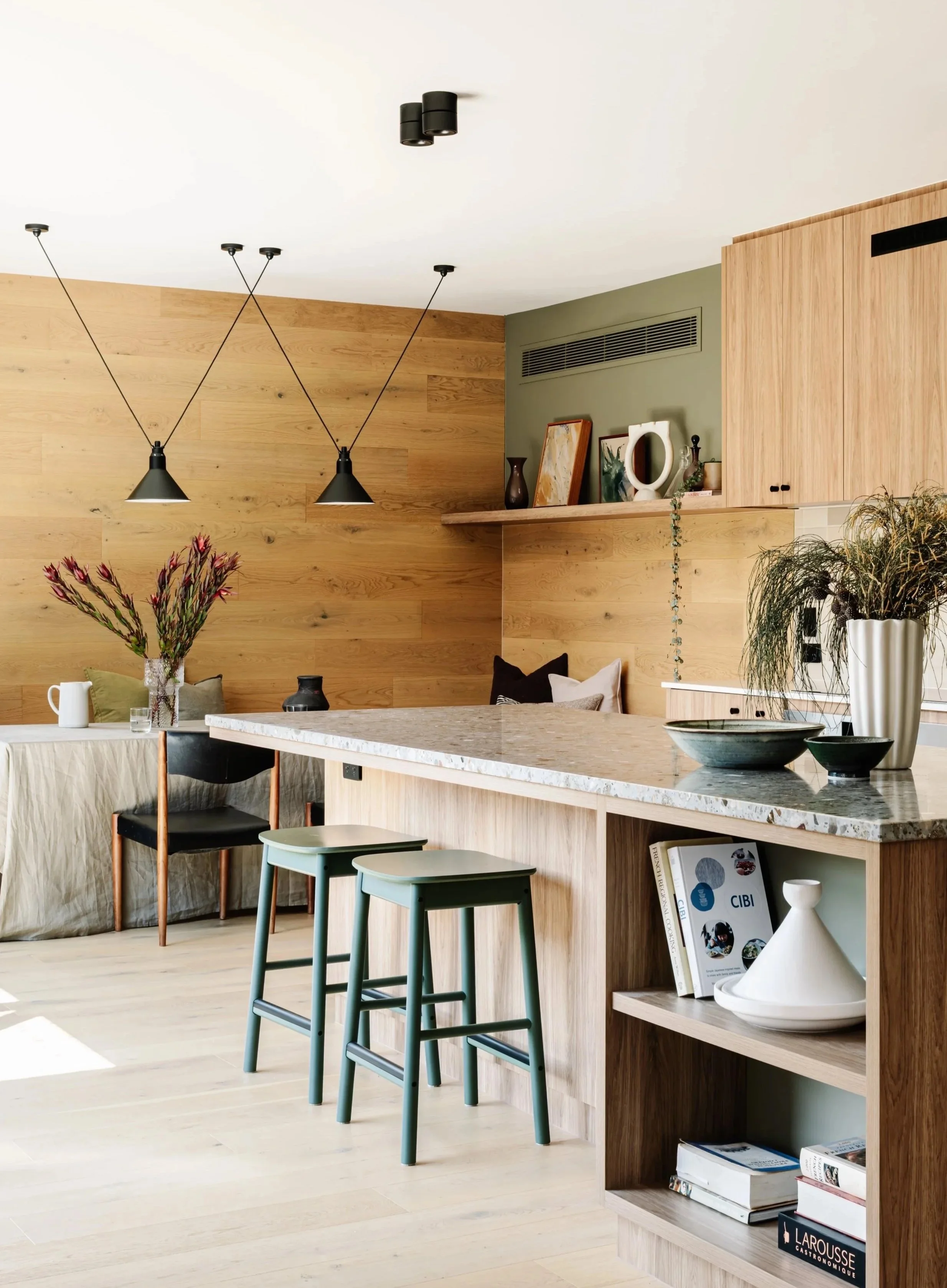
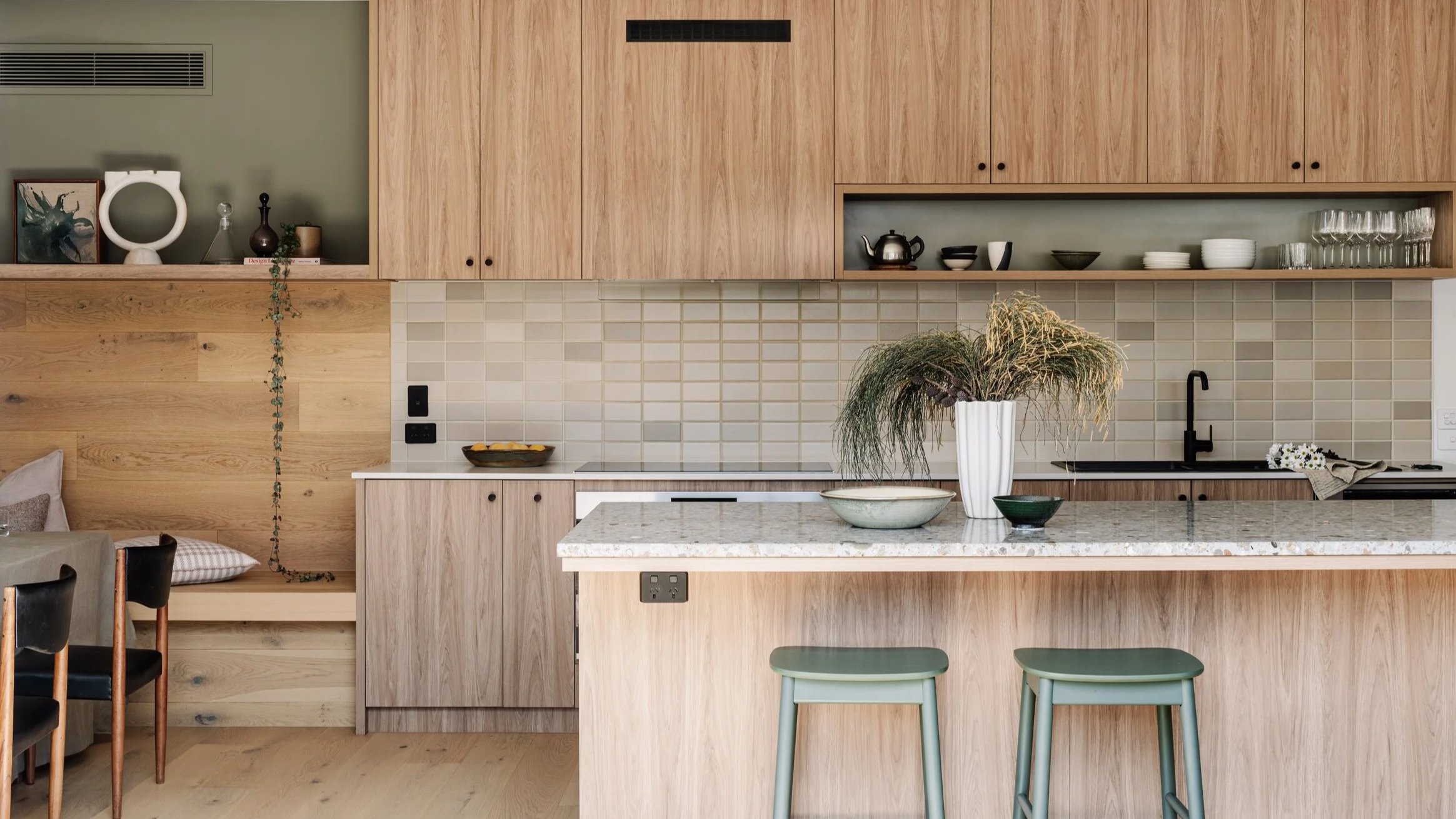
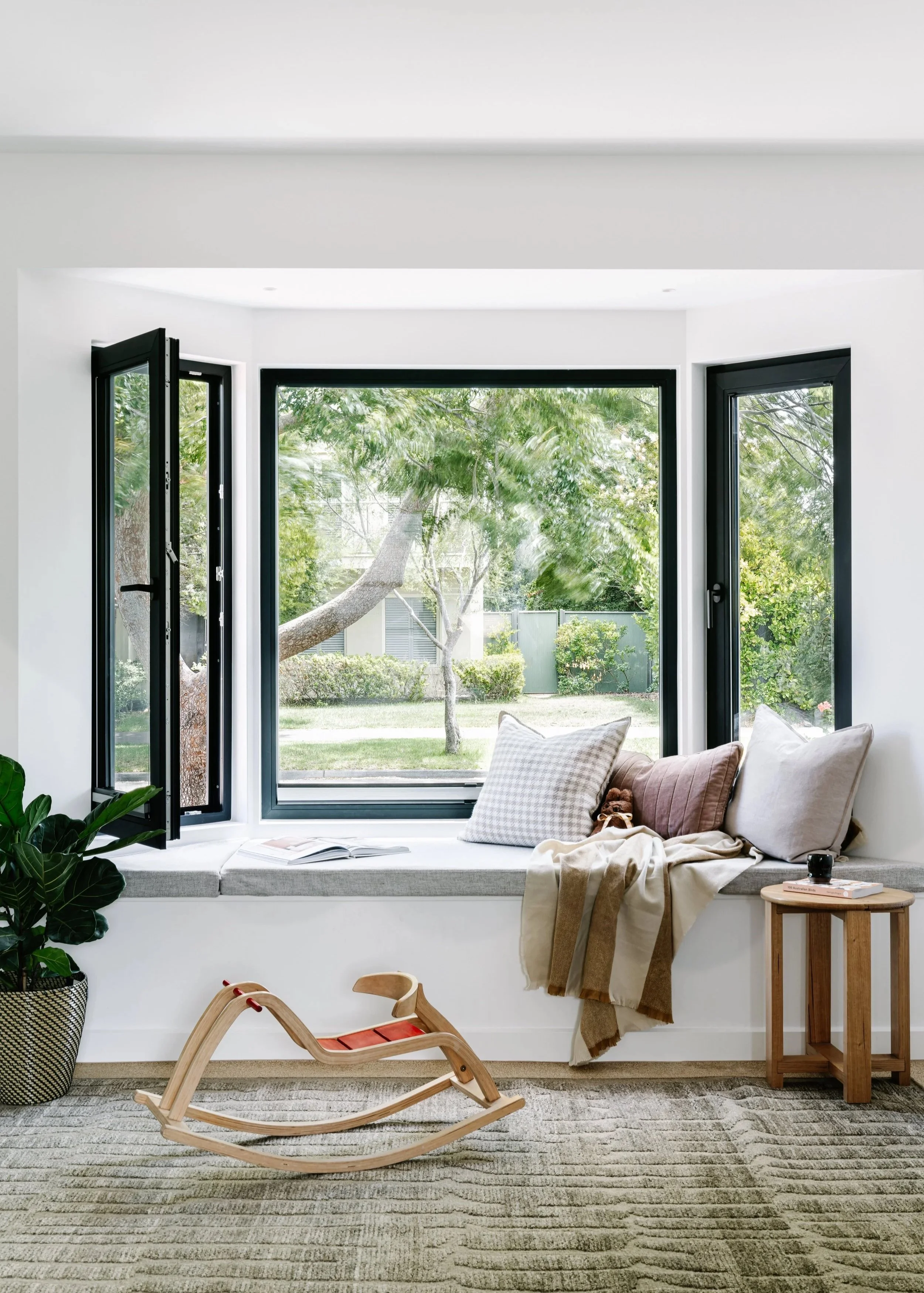
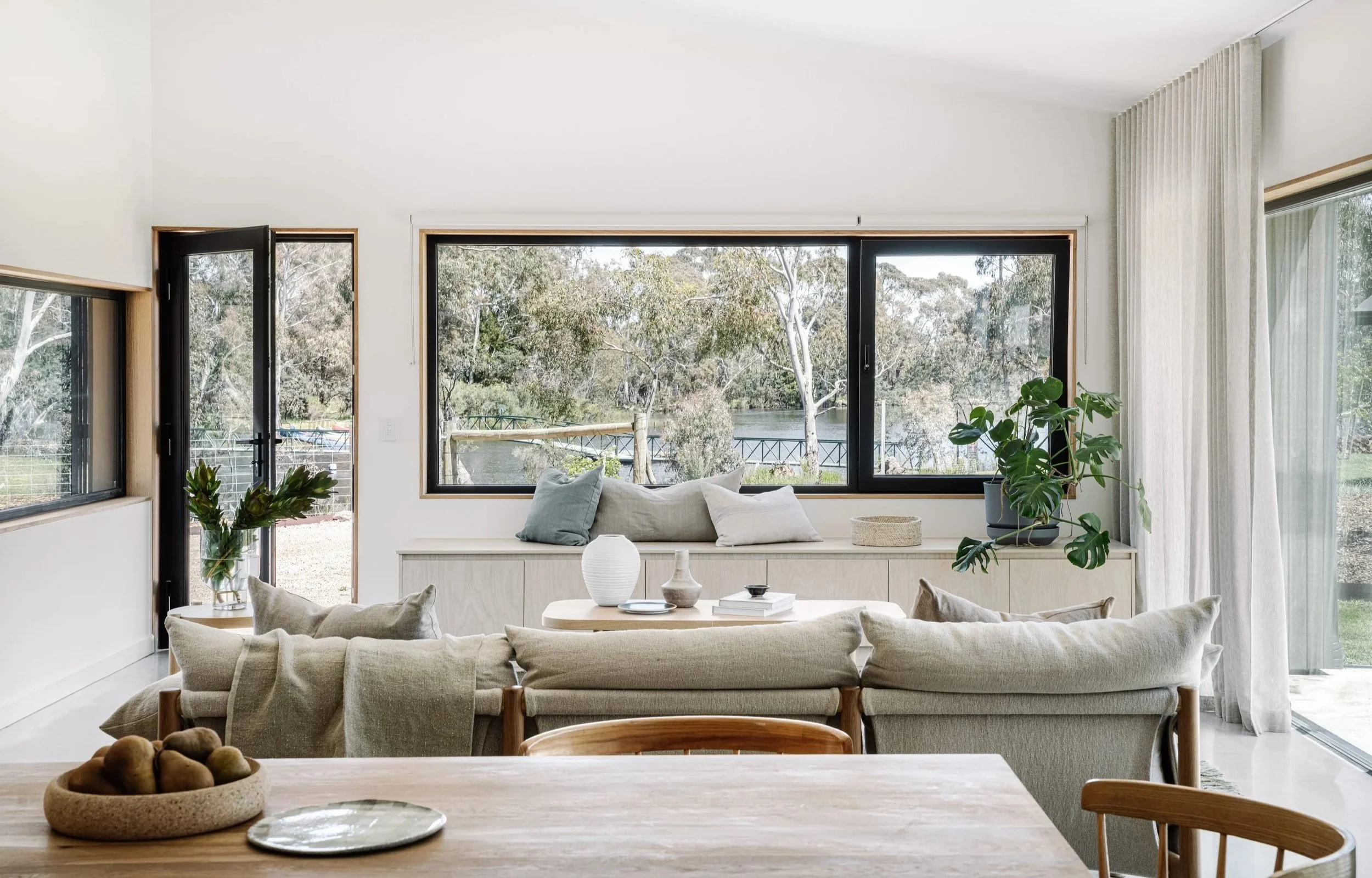
Haven House by HèHè Design. Photo: Marnie Hawson

HèHè Design founder and interior designer, Erin Fairmaid. Photo: Rebecca Haycraft
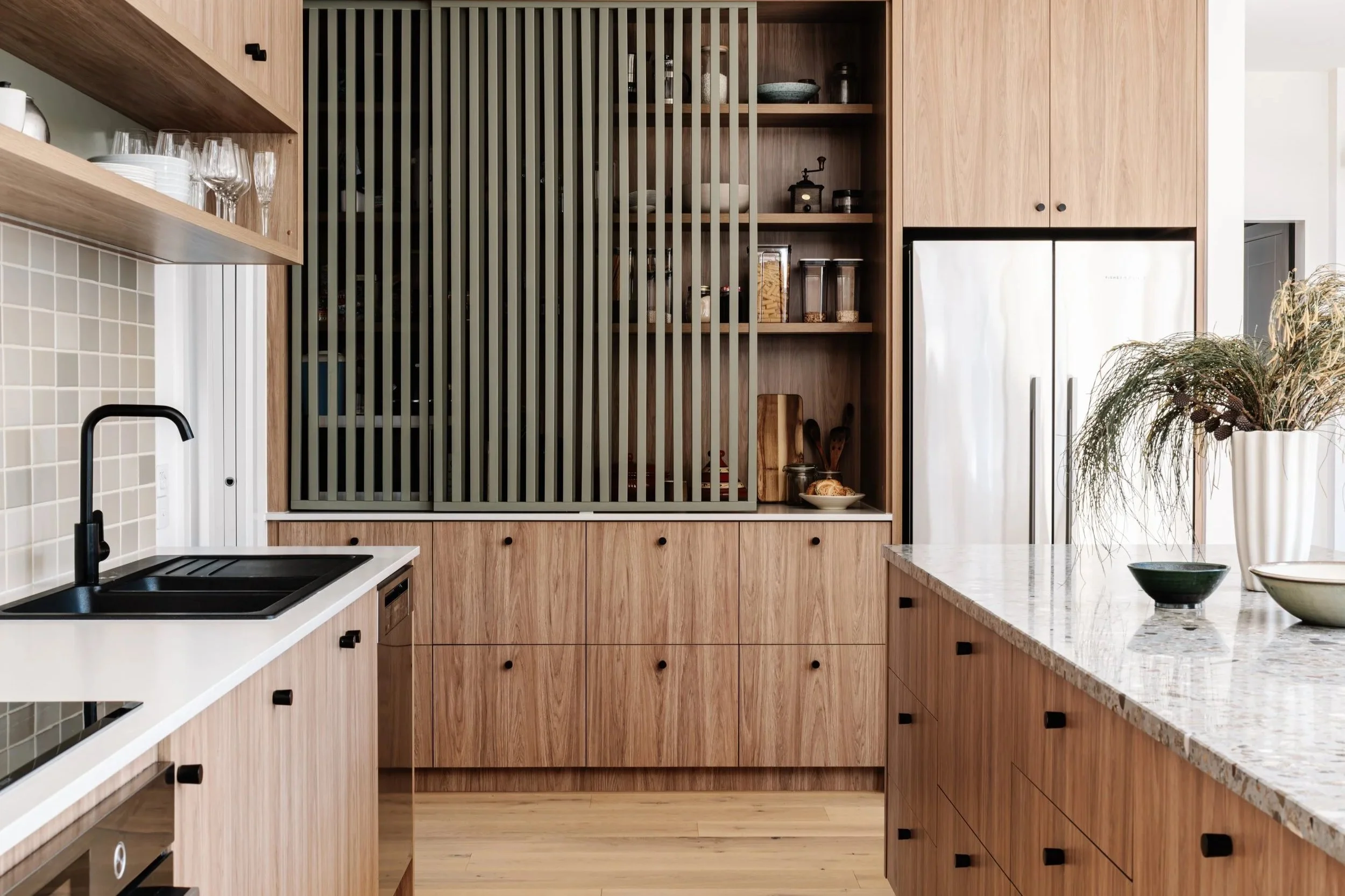

‘I create spaces that support the way people live with each choice and design decision being grounded in understanding the occupant—their daily routines, and the things they like to do to relax and unwind.’ Photo: Rebecca Haycraft
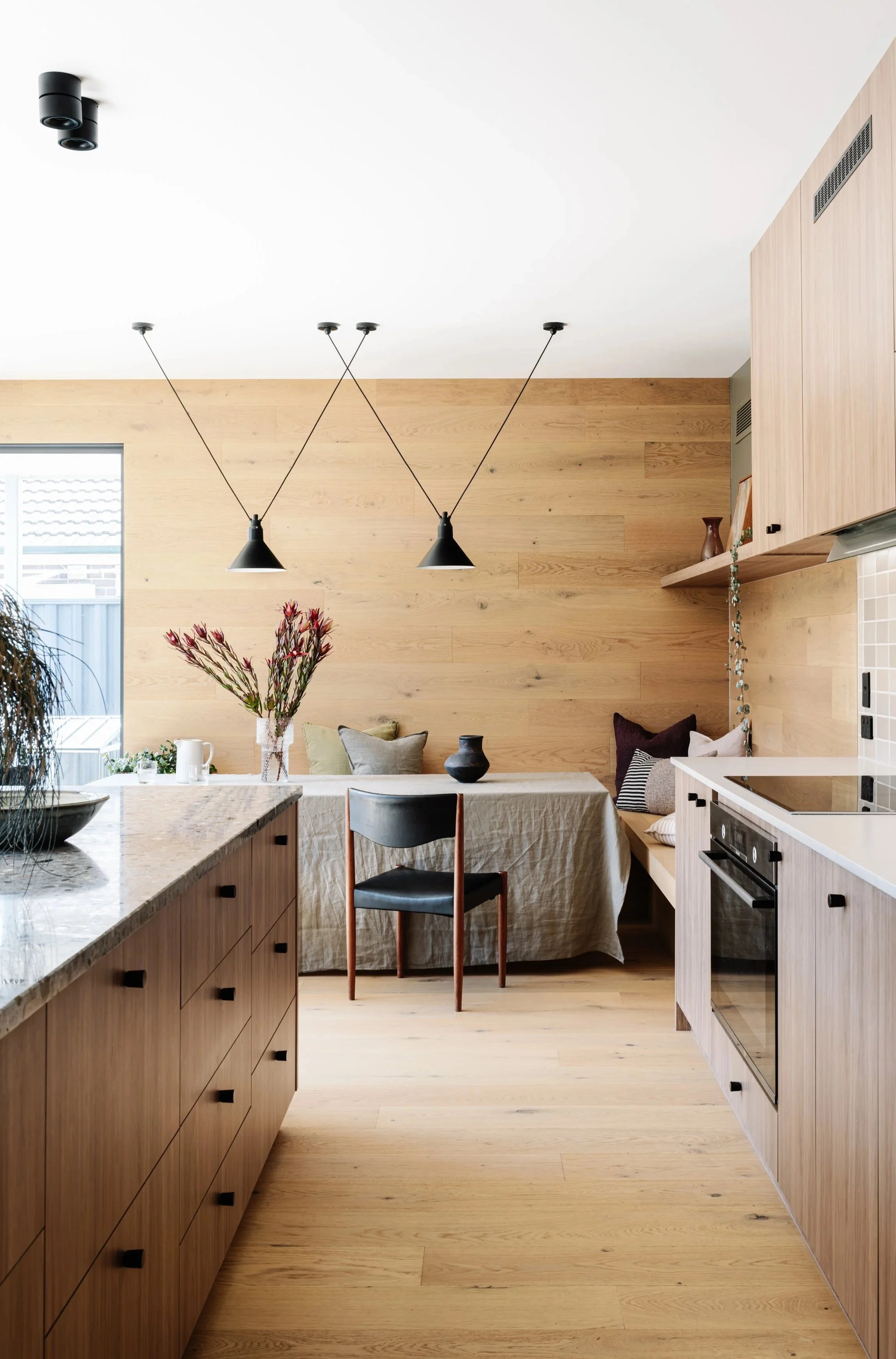
Haven House by HèHè Design. Photo: Marnie Hawson
“Trust your instincts and forge your own path—there’s room for us all. Balance that confidence with curiosity and humility: observe how people use spaces, ask questions, and never stop learning.”
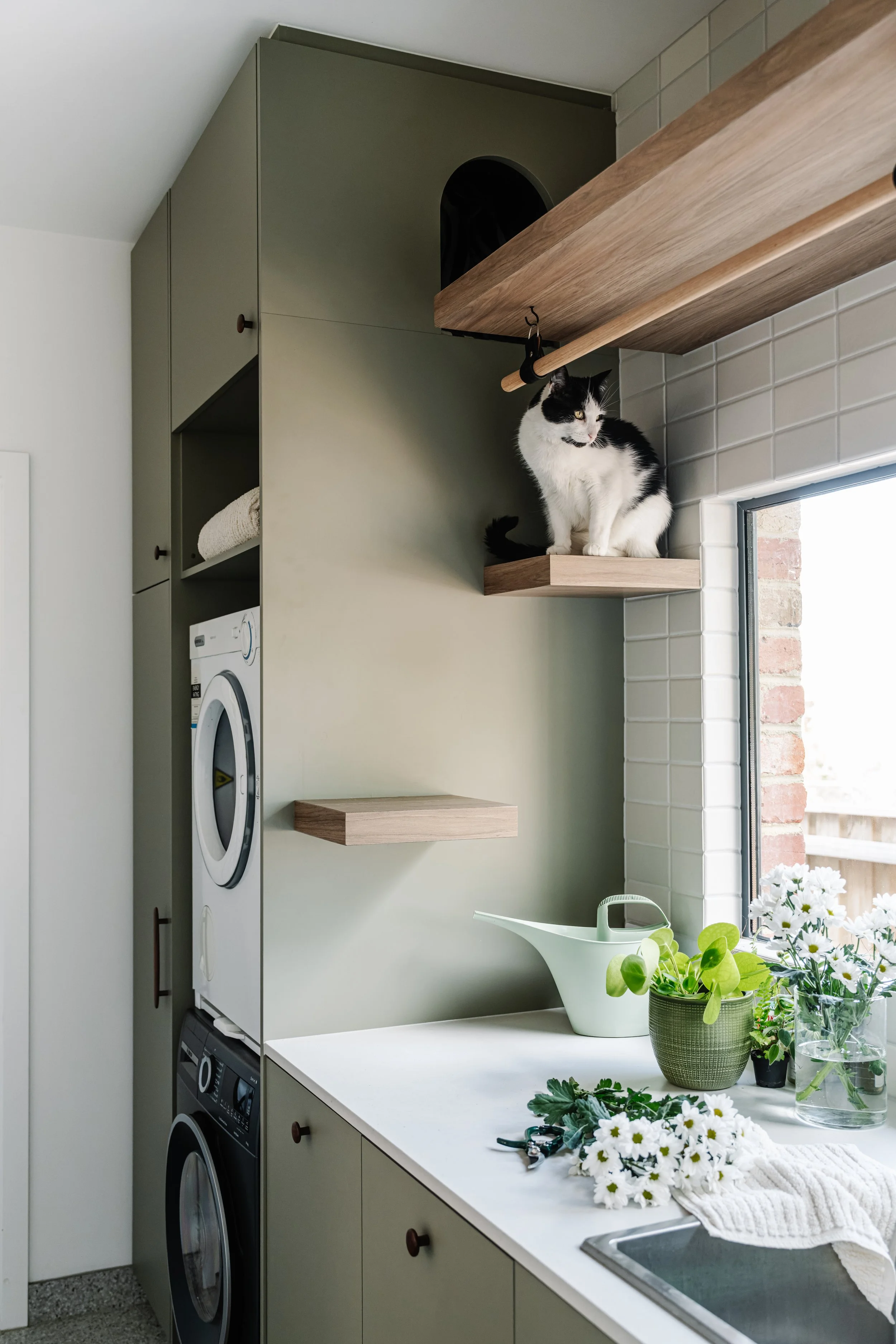
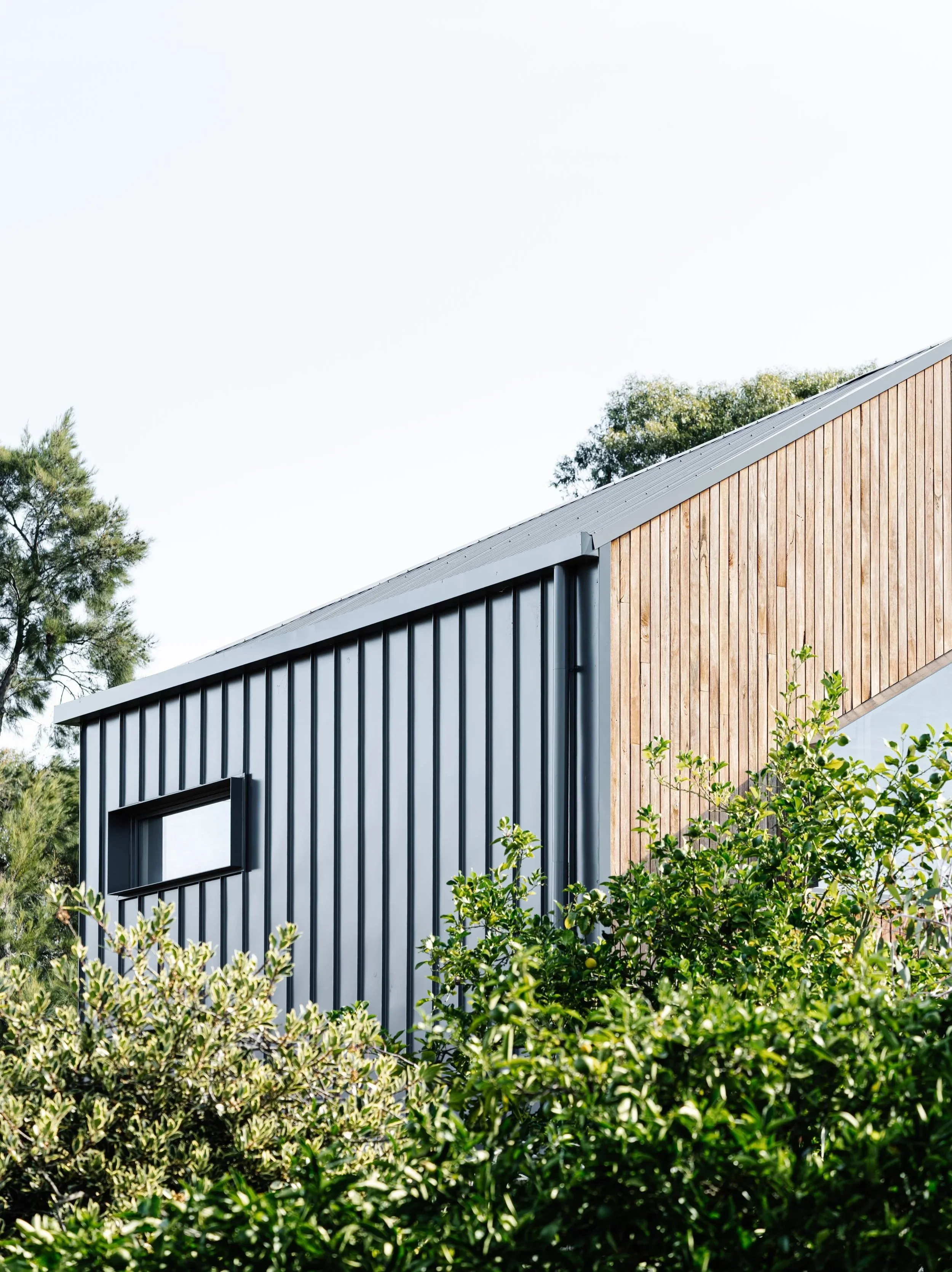

Hello Erin—can you introduce yourself?
Erin: Hello! I’m Erin Fairmaid, interior designer and founder of HèHè Design, an interior design studio based in Victoria. HèHè is a Dutch expression that essentially translates to ‘a sigh of relief’, like the sigh you make when finally putting your feet up at the end of a long day. I chose the name Hè Hè as a nod to my Dutch heritage, which I hold close to my heart. My passion is creating homes that feel cosy and inspiring, and that leave a lasting, emotional connection. I want clients to have a home where they find comfort and happiness at the end of each day.
Can you trace your path to HèHè Design—your early influences and the moment you knew interiors would be your field?
I grew up in regional Victoria and spent much of my childhood exploring the bush (which was essentially my backyard), busy crafting, woodworking, and making cubbies houses in the trees. I can vividly recall changing my room around and the feeling it would give me; a ‘new’ way to experience my room. My mum is also very house proud and a total homebody (she won’t mind me saying!), both traits I have certainly inherited.
Creativity was always close by, however academically I went down the science path. After completing a Bachelor of Science (Psychology), I decided not to pursue that further in any kind of clinical sense. I spent a few years working as a paralegal in family law and came to fuel my obsession with houses through conveyancing. I came across the idea of interior design after spending countless hours trawling Pinterest and curating home ‘wish lists’, and wondering how I could turn this into a job. From there, I enrolled in a few short courses to get a feel for it, and I instantly knew that I was going to be an interior designer. After completing my Diploma of Interior Design and Decoration in 2017, I launched Hè Hè Design in 2018.
How do those disciplines meet in your practice?
I’ve reflected on this a lot, and they meet at every level of my work. Psychology looks at the human mind and behaviours, while interior design considers crafting environments based on human behaviours. In practice, this means I work to deeply understand my clients wants and needs, likes and dislikes, and find ways to incorporate this into their homes. I think about how a space needs to be curated and shaped in order to maximise functionality, as well as how the space makes people feel.
I consider how natural light or particular colours affect mood, or how clutter might stress someone out, thereby prioritising design of storage solutions to help. By combining these disciplines, I create spaces that support the way people live with each choice and design decision being grounded in understanding the occupant, their daily routines, and the things they like to do to relax and unwind.
How do you translate behavioural insights into spatial planning, colour, lighting and material choices?
Since I design around the routines and rhythms of my client’s daily life, this usually informs what a space needs in order to function well. For instance, I know that coming home each day often requires somewhere to put your bag/keys/shoes, ideally as soon as you enter. If space allows, practical built-in joinery solutions like shelving, wall hooks, bench seating and shoe storage in the entry to ‘catch’ these items helps to create an easy, clutter free transition indoors. Where space is tight, a simple wall shelf and wall hooks can also go some way to doing the trick. This is obviously only a small consideration, but it can be the difference between stressful mornings from never knowing where your things are, and stressful meal times from a messy island bench impacting your cooking zone.
Spatial planning is something that, in my opinion, has the biggest impact on how we experience a space. Creating spaces that address the occupant’s needs in each area is paramount to a well designed home.
Lighting is also a huge consideration in every project, ensuring that each space has adequate lighting: both natural and artificial. A layered lighting approach is adopted wherever possible to further ensure that the occupants can both experience light where they need it most, and also have the opportunity to manipulate it in a way to craft a mood or atmosphere in their home.
Materially, I choose textures and colours for emotional effect and apply them in ways that make the most sense from a colour psychology point of view. For example, green is a colour grounded in nature and can feel refreshing, calm and relaxing. It’s no surprise that this is a favoured colour in our homes, especially in bathrooms.
I love creating spaces that provide an unexpected moment of joy. I also prioritise specifying healthy and sustainable finishes wherever possible, for both the health of the occupants and our planet. Every layout decision, colour palette choice and material finish is made with the occupant’s experience in mind.
Tell us about a recent project that shifted your thinking. What design move changed the outcome most?
I’ve been fortunate to land in the Passive House building space, which has completely opened my eyes to a new way of building and living. An added benefit of working here is the collaboration with incredibly talented and passionate design and building professionals. It’s shown me that this is where the synergy of building design and interior design meet to align for a common goal: the health, happiness and wellbeing of the occupants, whilst also drastically reducing energy, assisting the move toward a more sustainable future.
Right now, I’m working on a Passive House project that’s to be designed and built to meet the Specialist Disability Accommodation (SDA) High Physical Support (HPS) design standards. These guidelines are strict, and are intended to create safe, supportive homes for individuals with significant physical impairments and very high support needs. For me, the real challenge and opportunity have been in making accessibility feel aesthetic, intentional, and considered, rather than clinical. I feel so fortunate to design homes where people can enjoy making memories, and this project is no exception.
Working on this project has also made me think about the bigger picture. I can see real benefits in including some of these design standards in everyday households. The Liveable Housing Design Standards go some way toward bridging that gap, making our homes more adaptable and helping people stay in their homes longer whether through aging, an accident, or a change in life circumstances. Wider doorways, step-free thresholds, accessible bathrooms and thoughtful circulation can be life-changing for someone in a wheelchair, but they’re equally invaluable when pushing a pram, carrying groceries, or recovering from injury. They support those with specific needs, but they’re also practical for everyday living. For me, accessibility shouldn’t be treated as a specialist add-on, but more as a core part of good design.
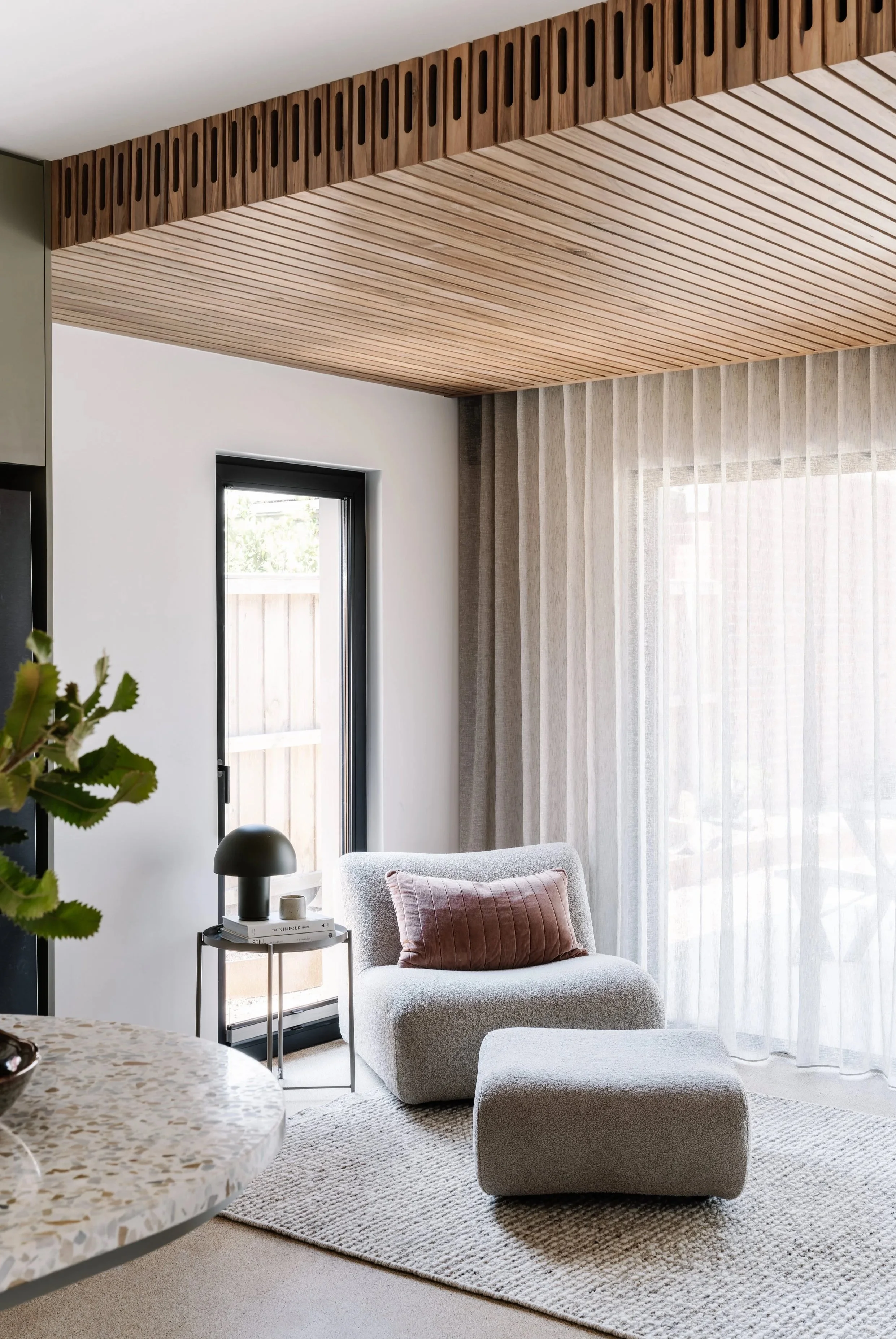
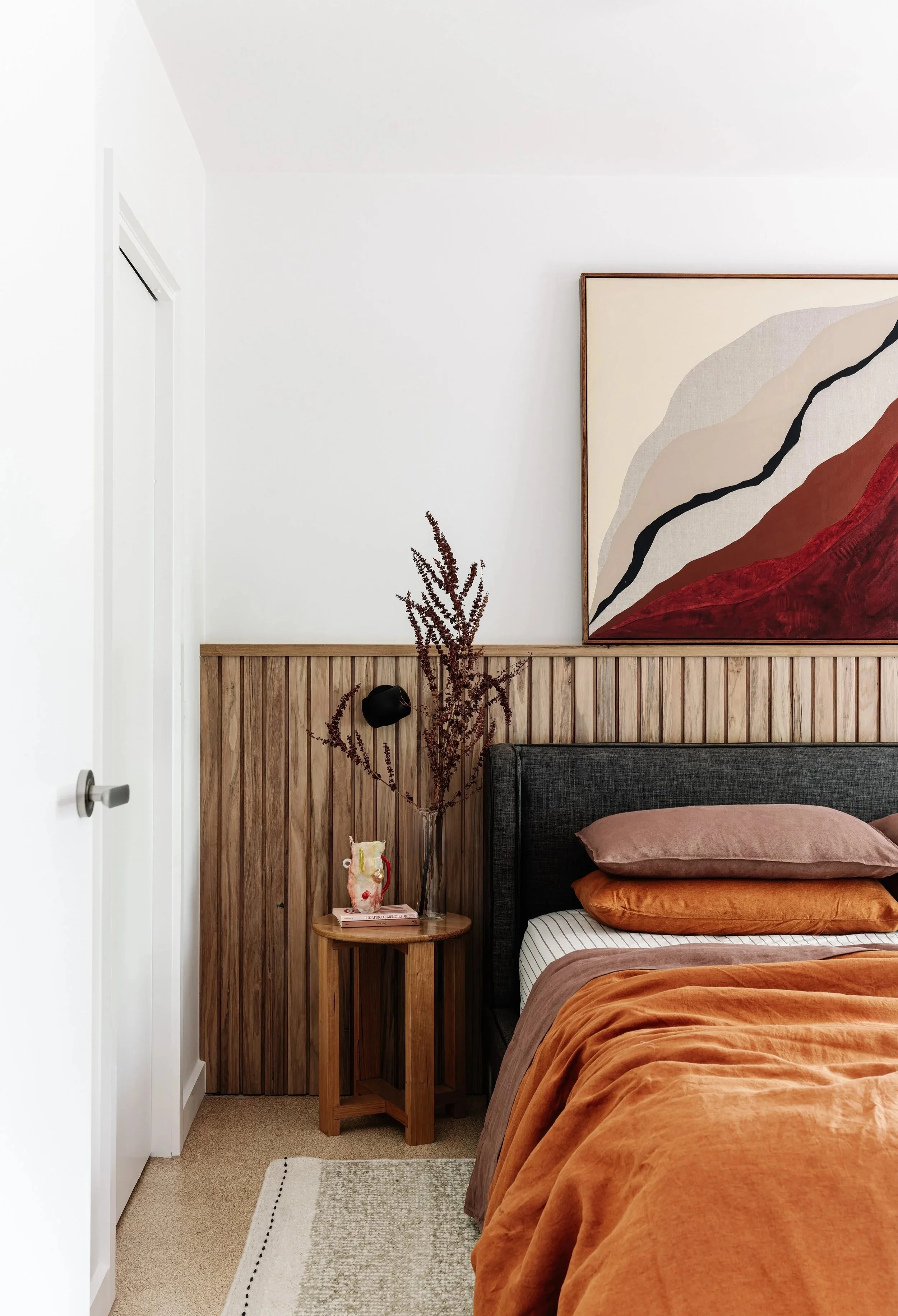
Rifle Range Passivhaus by HèHè Design. Photo: Marnie Hawson
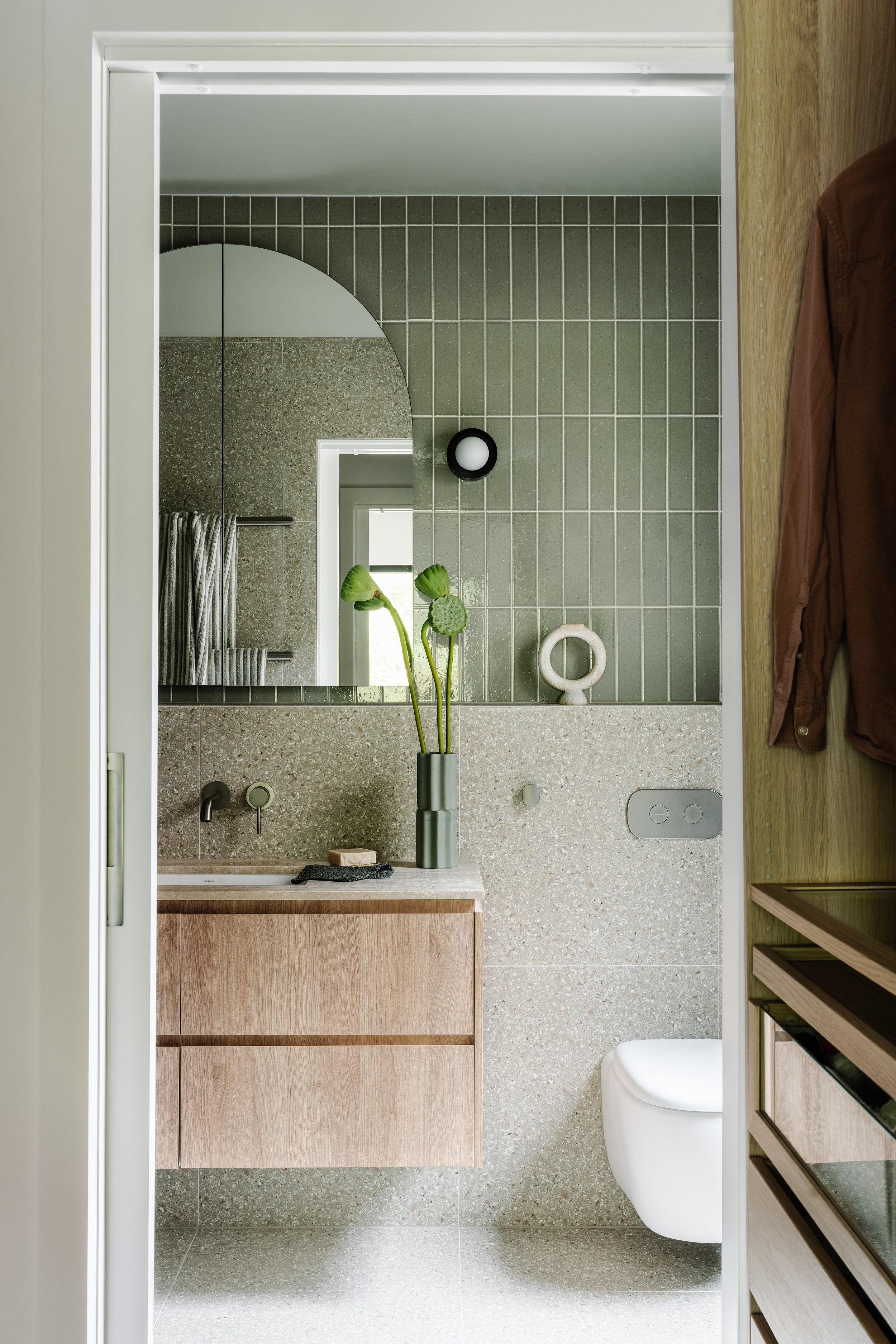
Rifle Range Passivhaus by HèHè Design. Photo: Marnie Hawson
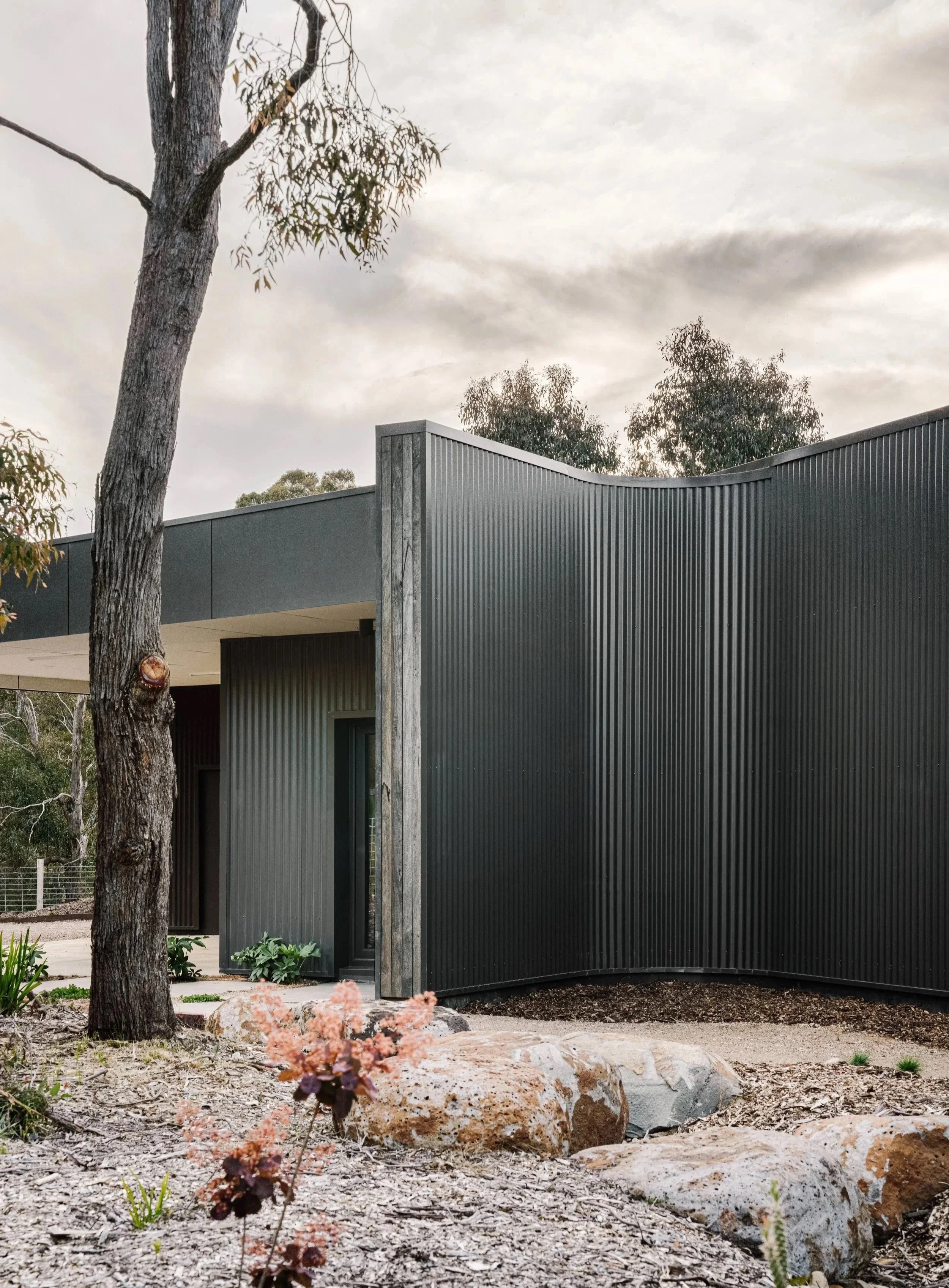
Taungurung Passivhaus by HèHè Design. Photo: Marnie Hawson

Taungurung Passivhaus by HèHè Design. Photo: Marnie Hawson
What does a ‘typical’ studio day look like, and what tools keep you most organised?
My days are varied, but a typical one starts with coffee before checking emails and setting the day’s to-do list. I love using a physical paper diary to keep me on track, alongside digital programs that help with project-specific tasks and time tracking. And of course, there’s my design programs and 3D software, which I basically live in to bring projects to life, visually and in real-time.
Despite what some may think, interior design is largely a creative desk job. I spend most of my time conducting online meetings and working on projects. Some days I’ll head out to client meetings, site or supplier visits, but more often my studio floor is scattered with samples while I workshop the design in 3D, and curate palettes and finishes.
When you hit a design block, what’s your best way to reset?
Funnily, one of the best things about working from home is being able to have a shower in the middle of the day! I find this is one of the things that helps me the most if I’m completely stuck and feeling unproductive. If that doesn’t work, I go for a comfort hot beverage to help me get through a task. I also find that a change of scenery works wonders too. If I’m stuck, I’ll step outside for a bit, or take my laptop to a cafe, or just do something completely unrelated. I’ve learned not to force creativity. Sometimes the best ideas arrive after stepping back for a while and approaching it with fresh eyes.
Sustainability-wise, where are you currently placing the most attention?
Where I can, I will specify sustainable, low-impact products that can have a real effect on the overall environmental footprint of a project, longevity, and the health and well-being of the occupants, for example low VOCs and a locally made focus.
Footprint sizing is my personal favourite, because I love exploring what’s possible within the confines of an existing space, and finding ways to make every square metre work harder. This often means designing spaces that perform multiple functions through clever spatial planning and intentional joinery. For example, a bench seat in the living room might be designed to store children’s toys or shoes, while also providing extra seating when entertaining guests. It’s about creating spaces that are flexible, functional, and thoughtful, so they can serve both daily life and special moments without the need for additional resources or clutter.
What’s the best piece of advice you would give to someone embarking on their design career journey?
It’s not so much advice I’ve been given, but advice I would share. Trust your instincts and forge your own path: there is room for us all. Balance that confidence with curiosity and humility: observe how people use spaces, continually ask questions, and never stop learning. Remember that communication and collaboration are just as important as creativity: we truly are better together. And above all, hold onto the joy in the process, it’s what will sustain you through the inevitable challenges.
When you’re not working, where do you go to ground yourself?
I’m a total homebody, and my happy place is always at home. You’ll usually find me baking and cooking, hosting friends, playing boardgames, attempting to grow vegies, or hanging out with my cats. Family is at the heart of everything I do, so I spend as much time with them as I can. I also still love to make things and usually have a sewing or craft project on the go!
What’s coming up next for HèHè Design that you’re most excited about?
There are lots of exciting projects coming up featuring more Passive House builds and sustainable renovations. What excites me most is continuing to design homes that feel warm, functional and truly supportive of the people who live in them, as well as working alongside collaborative teams who continue to fuel the passion. On another note, I’m also preparing to launch one of my craft projects, so watch this space!
To stay up to date with Hè Hè Design visit the website or follow @hehedesign on Instagram.
