

Georgia Ezra
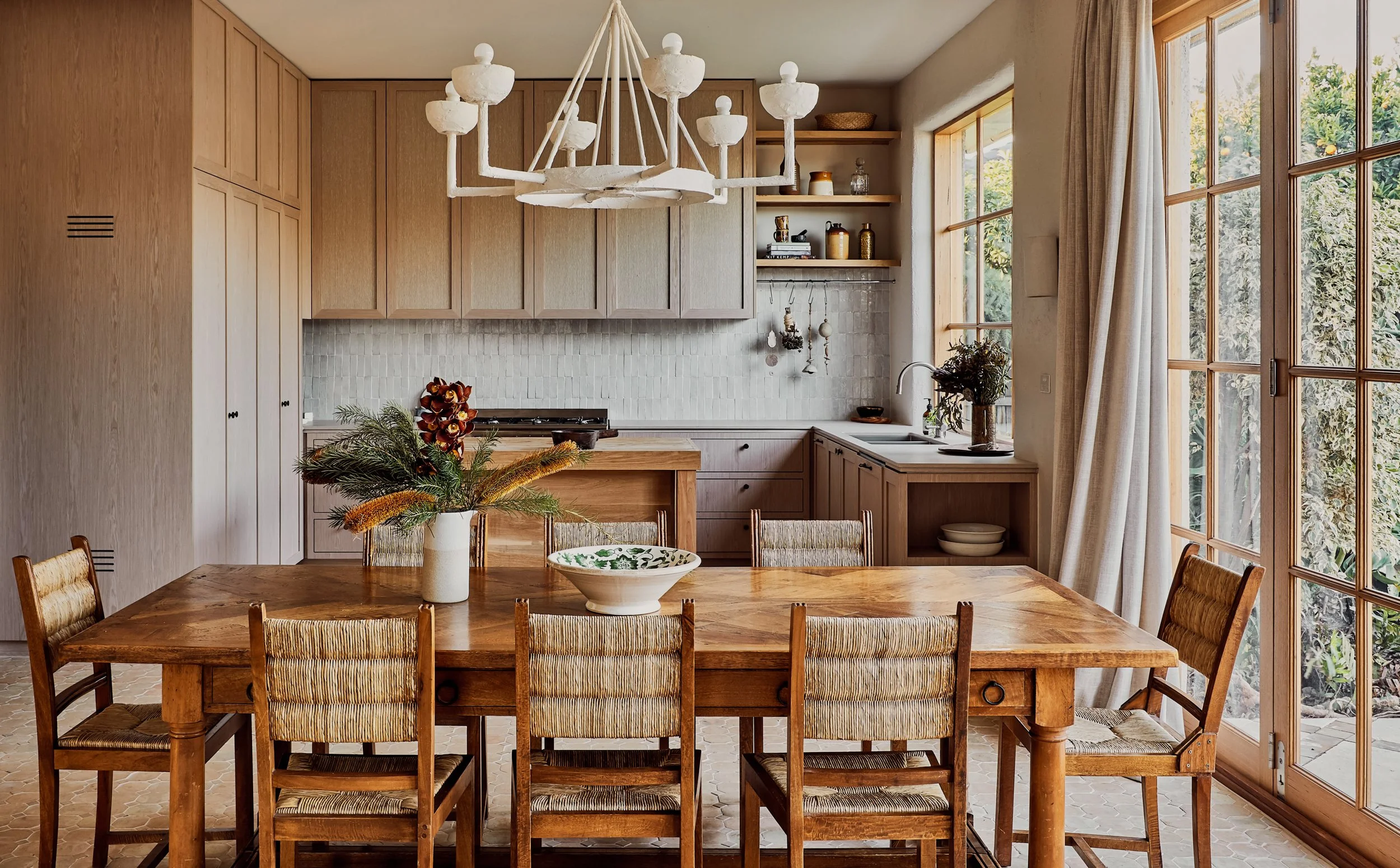
Georgia Ezra leads a creative life shaped by intuition, craftsmanship and cultural connection, spanning Studio Ezra interiors, Tiles of Ezra and her role as co-host of Design Down Under.
Photos AMELIA STANWIX & DYLAN JAMES
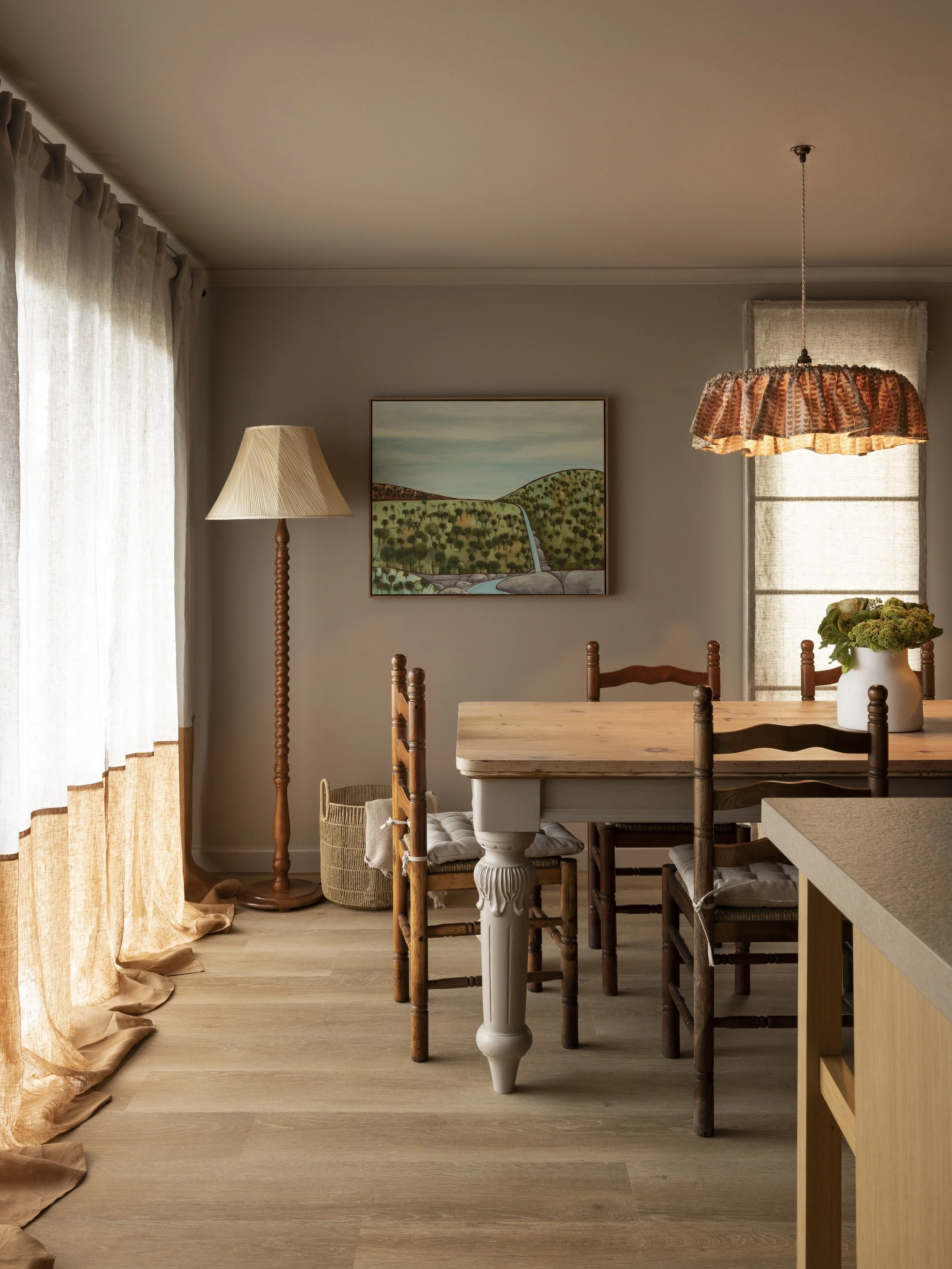
Box Hill House by Studio Ezra. Photo: Dylan James
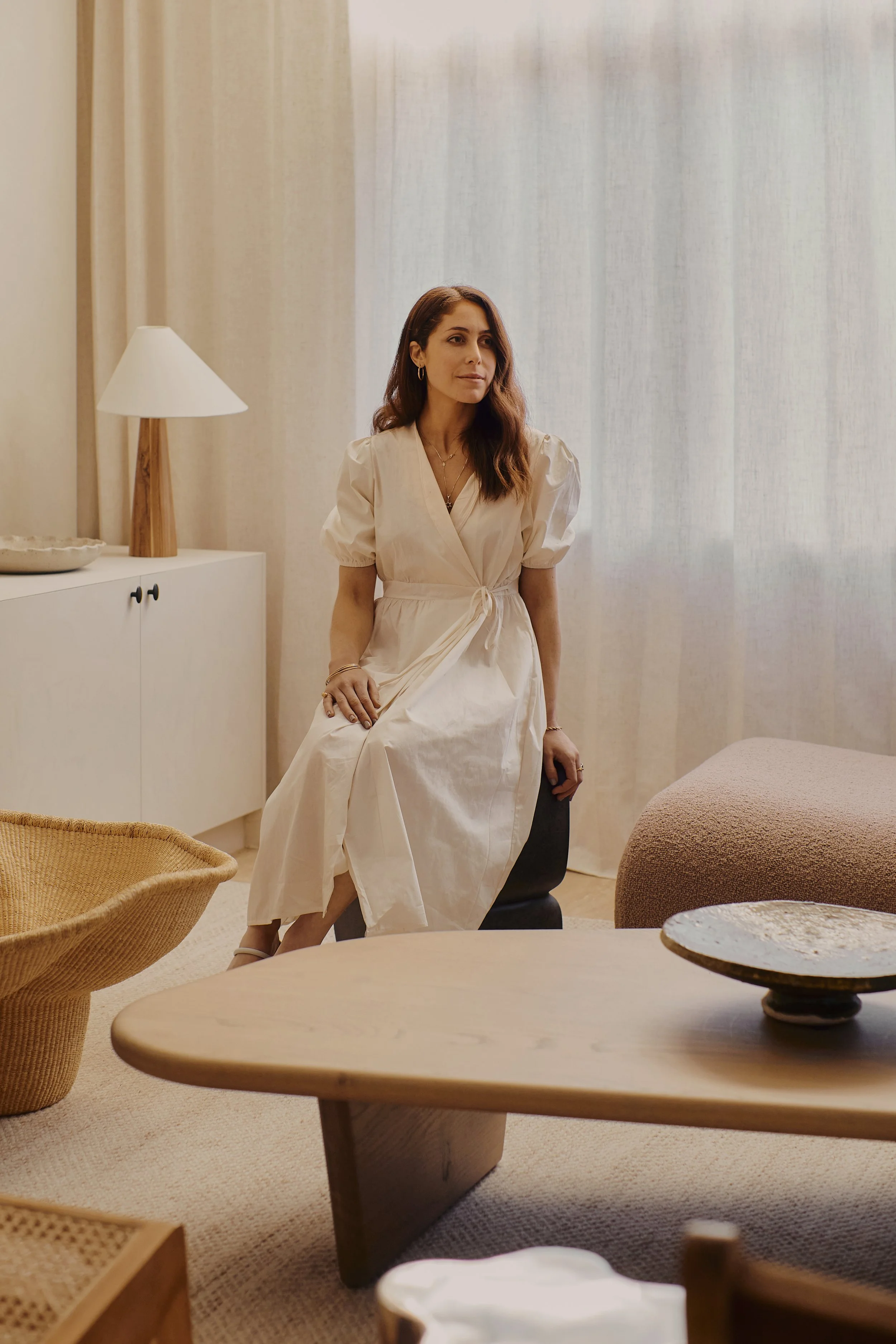
‘As the years have passed, my style keeps evolving—I feel like I’m a blend of many influences: Europe, the Middle East, Asia and India,’ says Georgia Ezra. Photo: Amelia Stanwix
Tiles of Ezra work closely with skilled global artisans, designing and producing sustainable, handmade tiles that honour tradition. Photo: Courtesy of Studio Ezra
Inkerman Home by Studio Ezra. Photo: Dylan James

Hand-stacked tiles ready for firing in a traditional kiln in Morocco. Photo: Courtesy of Studio Ezra
“Designing and building for myself has given me a deep understanding of materiality and function. I’ve lived with the decisions I make—I know what works, what I love, and what frustrates me.”
Hello Georgia—can you introduce yourself?
Georgia: My name is Georgia Ezra. I’m the owner of Studio Ezra, Tiles of Ezra, and the homeware line AHW Georgia Ezra, in 2022—2024, my husband and I hosted Design Down Under, a TV show which aired in the US and Canada, and many other countries, and is now also airing in Australia. I consider myself a multi-faceted creative who loves acting on her passions, and sometimes that takes the form of building businesses. That’s really me in a nutshell.
When did you realise interior design would be more than a passion, but your life’s work?
As a little girl, I used to sit in the car, perch my chin on the window, and stare at houses my parents were inspecting. While other kids wished they could fly, I wished I could see through the front façade of every house and know what was inside. Whenever we entered a home, I would run upstairs and go straight to the bedrooms.
I spent weekends completely rearranging my room, moving antique armoires, wrought-iron beds, and desks around even after my mum asked me not to. I was fascinated by how different a space could feel just by reorienting it. I loved going to friend’s houses, especially those with unusual or creative layouts, like my friend whose bed was built into the wall. So when I finished school, there was never a question. I always knew I wanted to create form from the inside out. It was always going to be interior architecture.
How did Studio Ezra’s philosophy of authentic and layered interiors form, and how has it evolved?
I’ve always been drawn to layered interiors, unique patterns, textures, tiles and fabrics. My cultural background plays a huge role: I’m 50% Mizrahi Jewish, with my father born in Calcutta to Iranian and Iraqi grandparents, and my mum is Eastern European. That mix gave me a natural love for Middle Eastern, Mediterranean, Oriental, and culturally rich textures, prints, and art. As the years have passed, my style keeps evolving.
I feel like I’m a blend of many influences: Europe, the Middle East, Asia and India. Working in Melbourne means the local aesthetic is different, so I bring in as much of my own style as each client is comfortable with. But I still feel that I haven’t fully expressed the deepest, most layered and colourful version of my own style yet, and I’m excited for the evolution ahead.
What sparked the idea to create Tiles of Ezra, and how did you navigate the leap to product design?
Tiles have always captivated me. While designing a wine store in Melbourne, I envisioned a blend of Mexican hacienda and Parisian wine bar. I sourced Mexican Talavera tiles and accidentally made a tiny margin on them. Around the same time, I sent photos of samples to designers and had sales within 48 hours. That was the birth of Tiles of Ezra, without ever imagining it would become anything more than a fun side project. It grew organically into what it is today, but one rule has always stayed the same: if I wouldn’t put it in my home, it doesn’t make it in the range. My collections may be different from one another, but they harmonise beautifully because they’re all aligned with my aesthetic.
Can you share a vivid moment from Morocco that shaped a tile collection?
There’s a collection coming out in 2026, inspired by an old Roman ruin in the centre of Morocco. I haven’t shared the range yet, but that moment, standing among ancient forms and textures, directly shaped the designs that will be part of the collection.
What does your creative process look like when beginning a new tile collection?
My process is deeply research and travel driven, sometimes a whole range comes from a single image, for example this happened when I saw a painted depiction of a floor in an old building in Sintra, Portugal. I also designed an entire range after seeing the new version of The Little Mermaid... I saw architecture in the movie and was designing in my mind while I was sitting in my cinema chair. When it comes, it comes and I can’t always control it—I see something that inspires and my mind expands.
I have many folders of ranges sitting on my hard drive with imagery inspiring the ranges—I hand draw, use CAD and have presentations for each range so that I can see all the designs and how they culminate together. From there I will sample, choices are then made from sampling and prototypes.
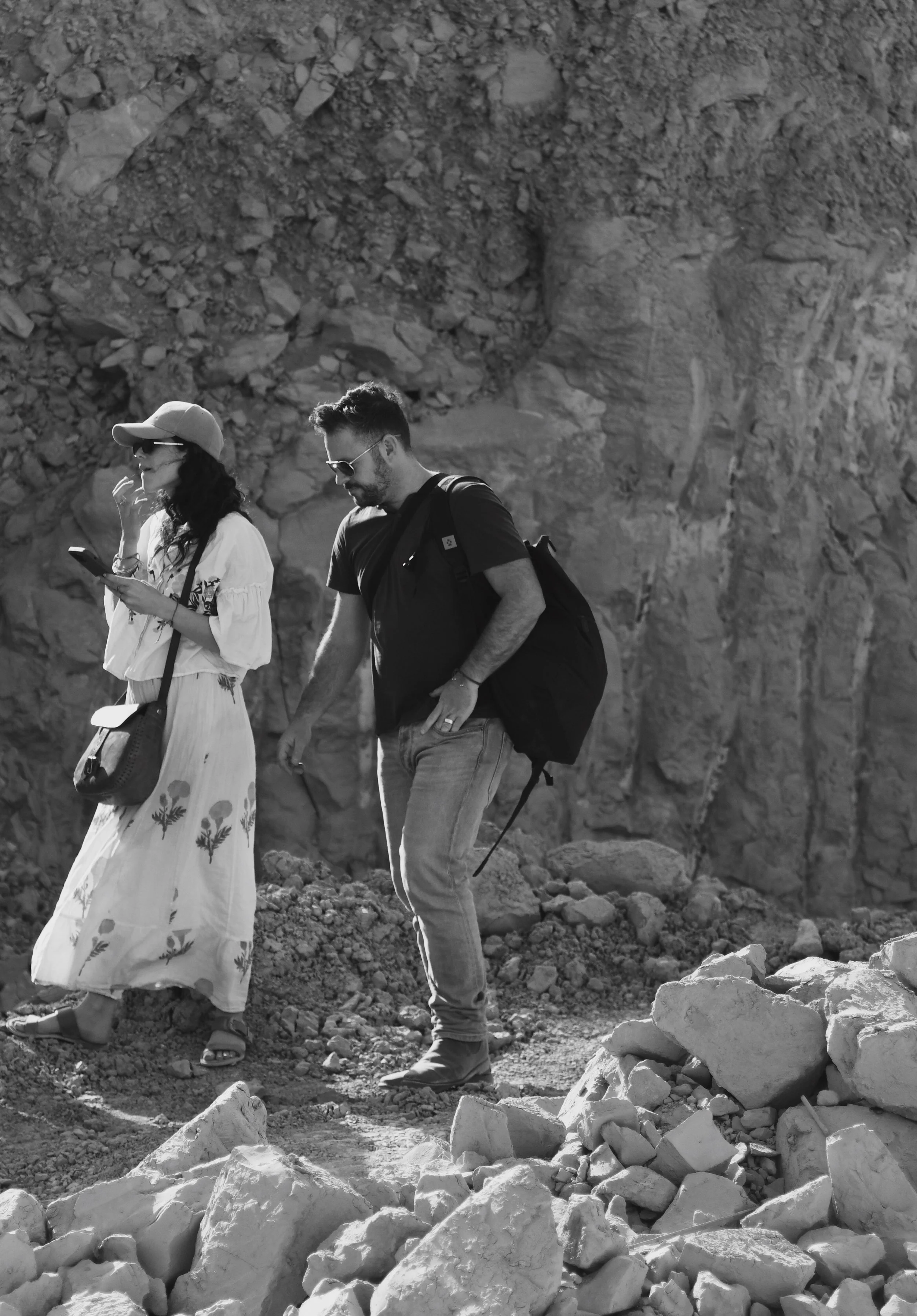
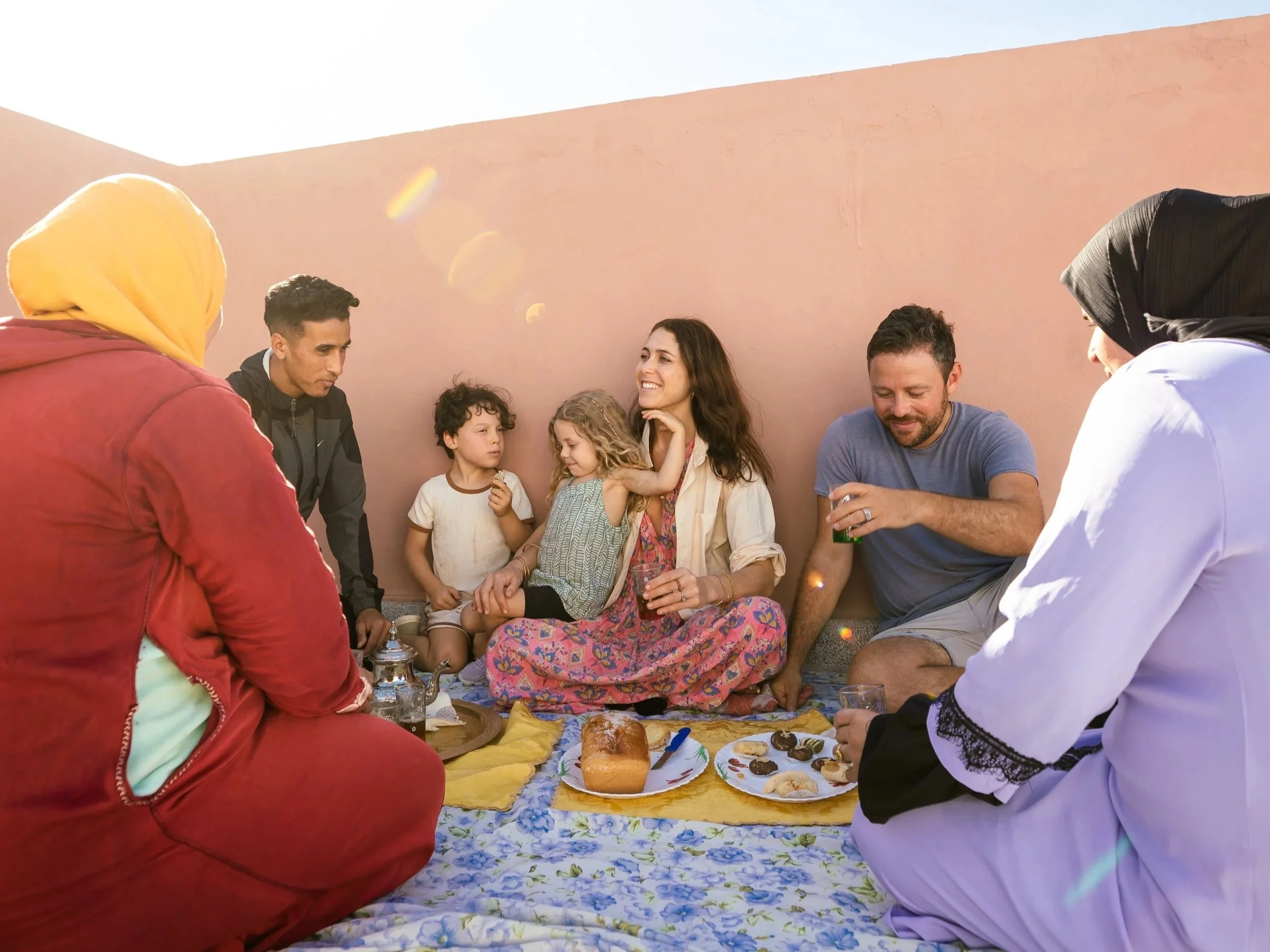
Georgia Ezra and her husband Richie Morris, co-director of Tiles of Ezra and co-host of Design Down Under, at a clay quarry in Morocco. Photo: Courtesy of Studio Ezra
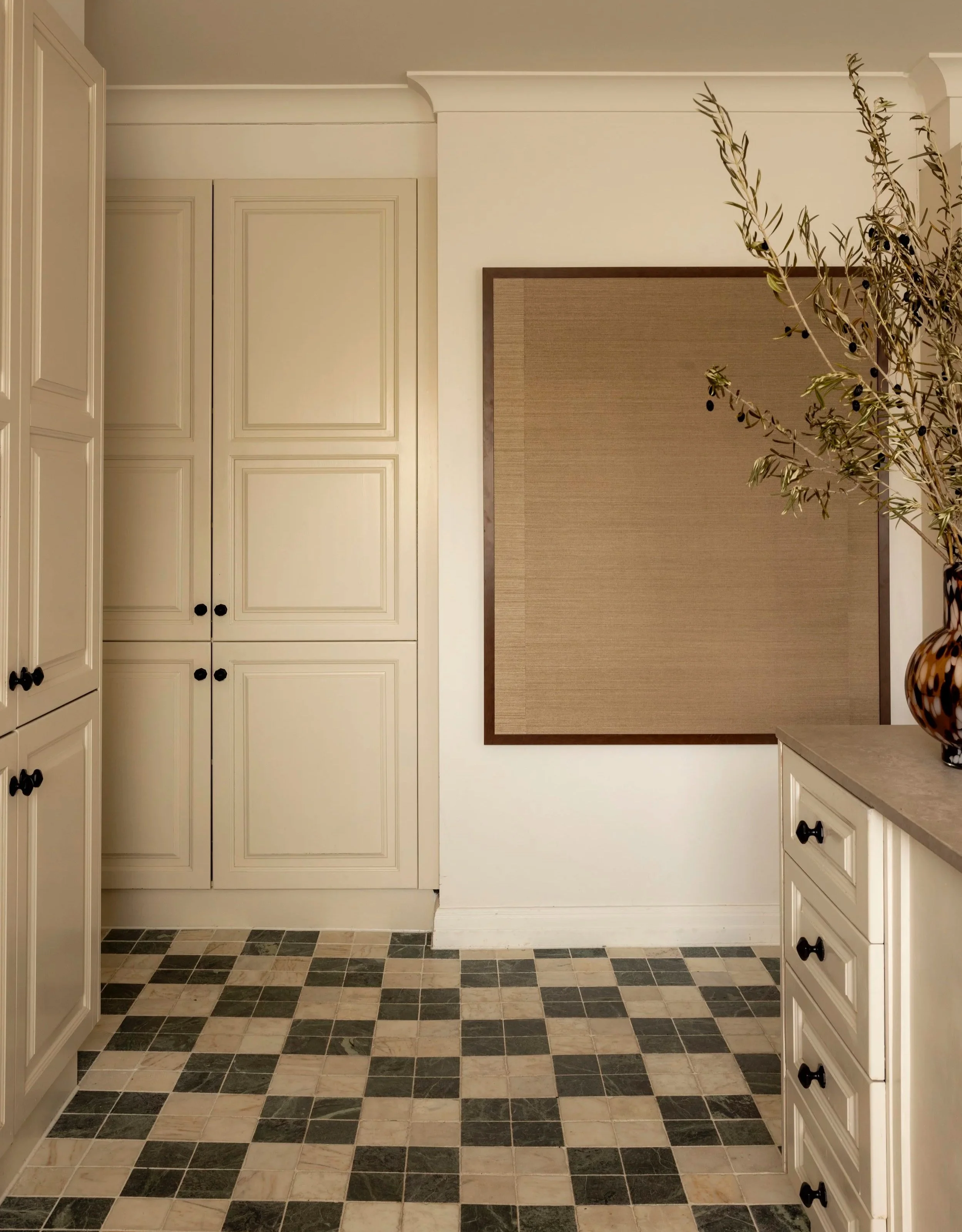
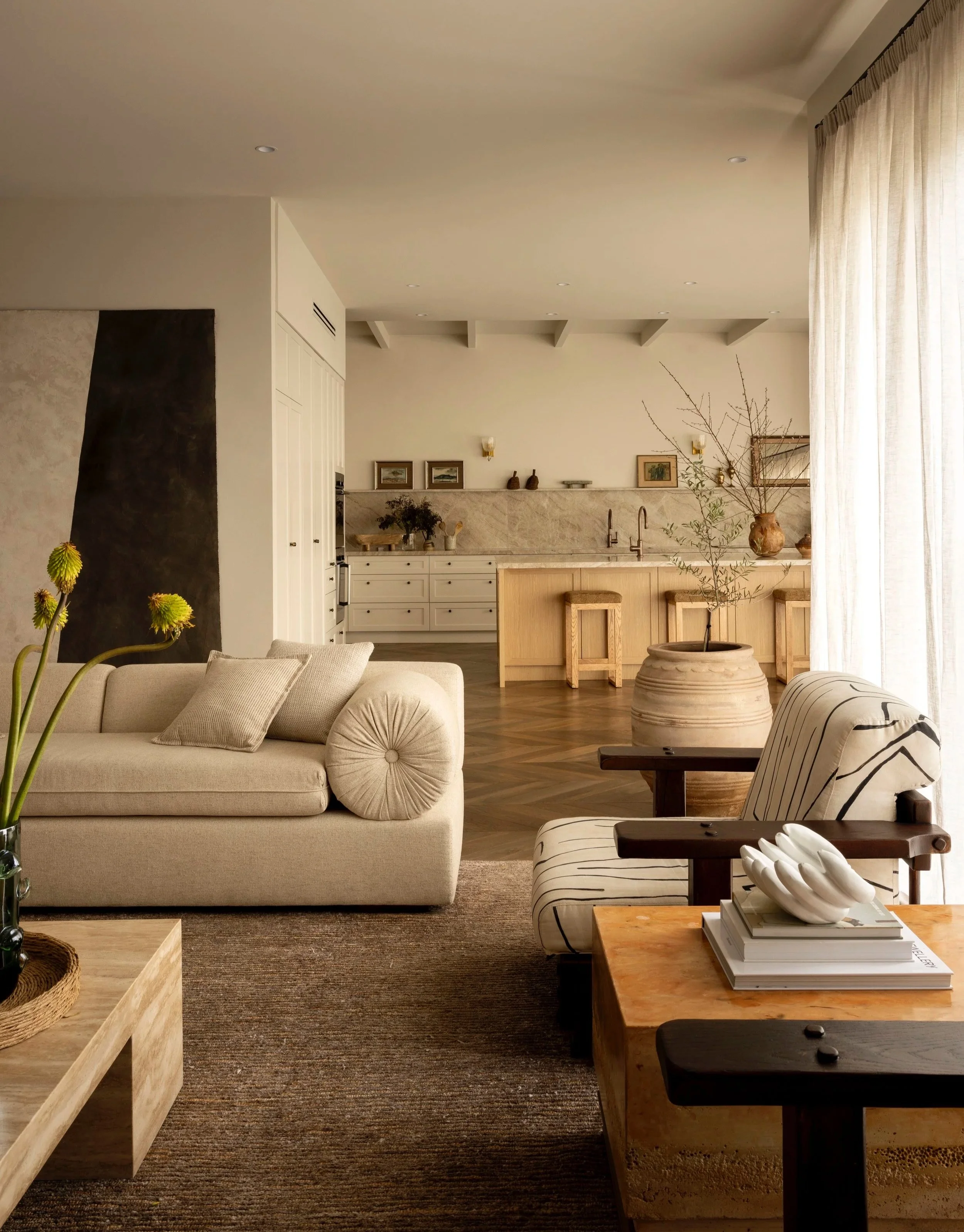
Orrong Home by Studio Ezra. Photo: Dylan James
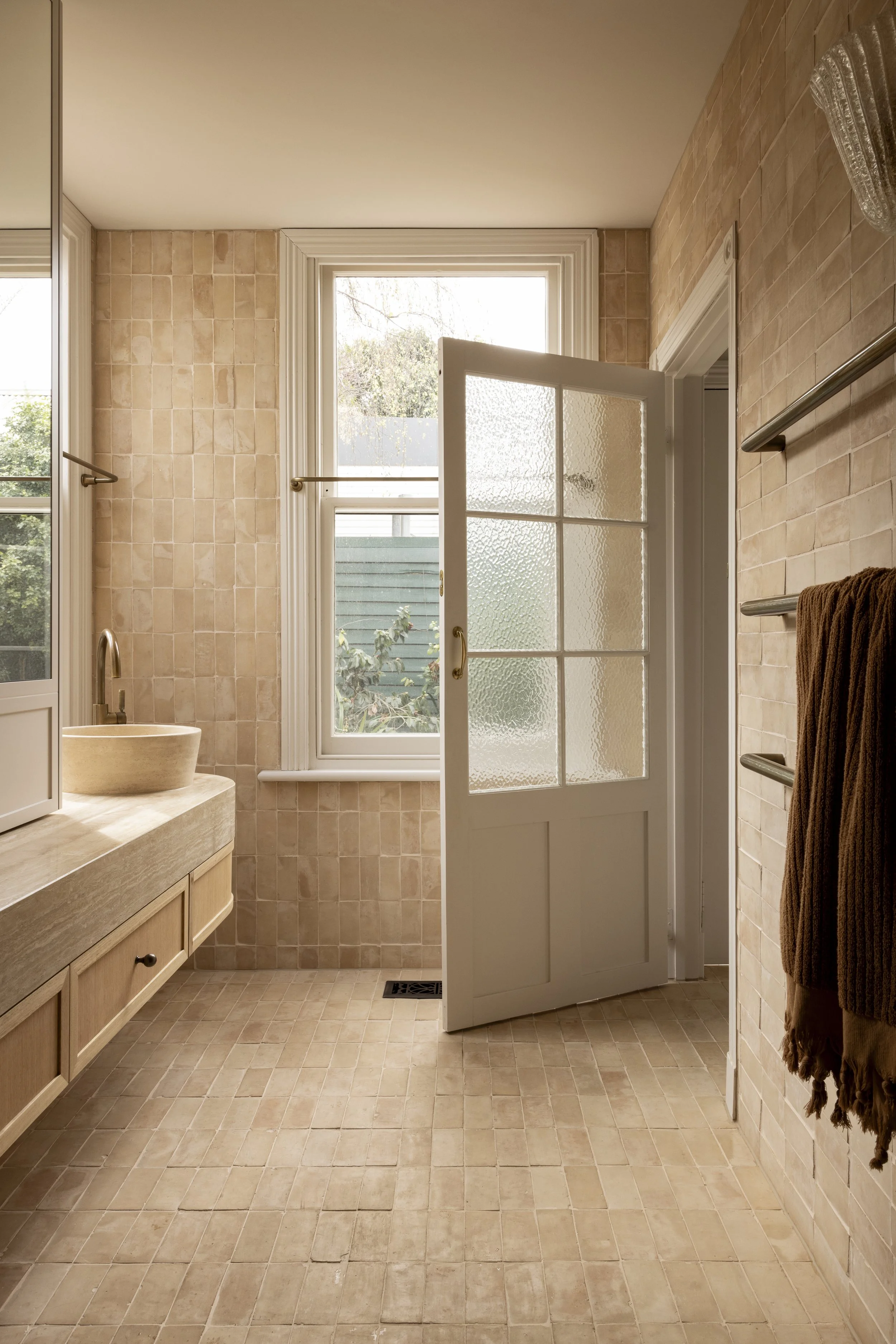
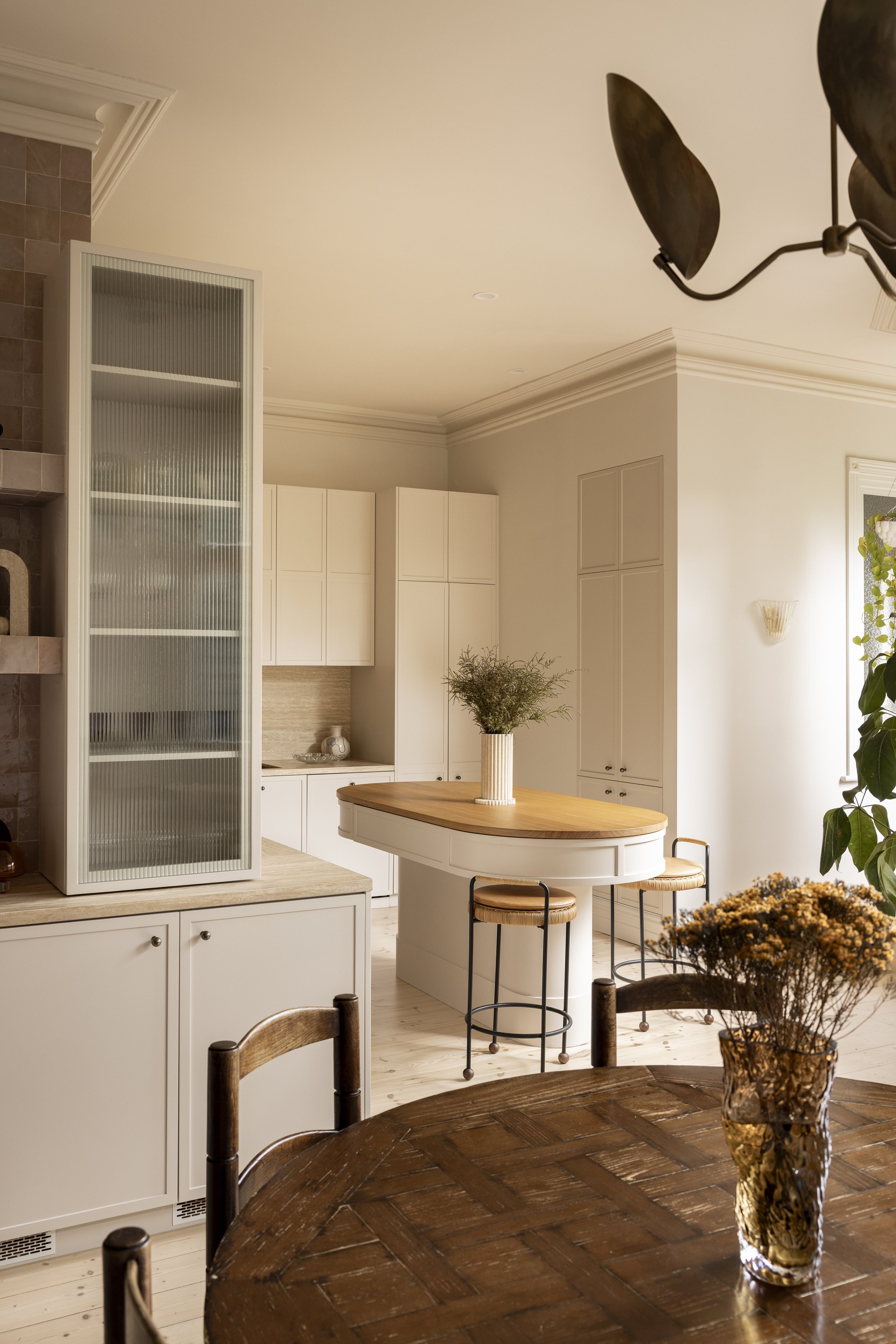
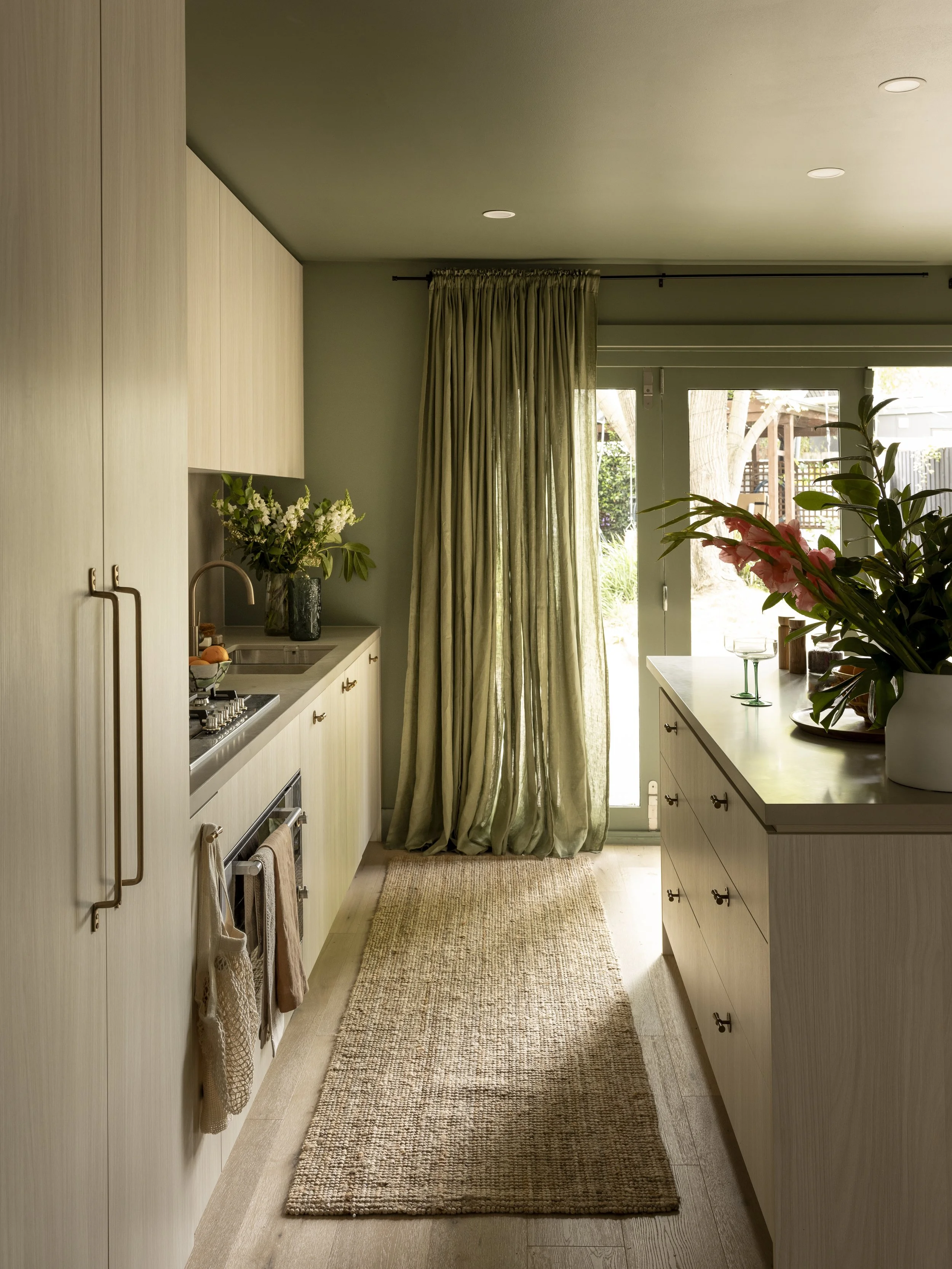
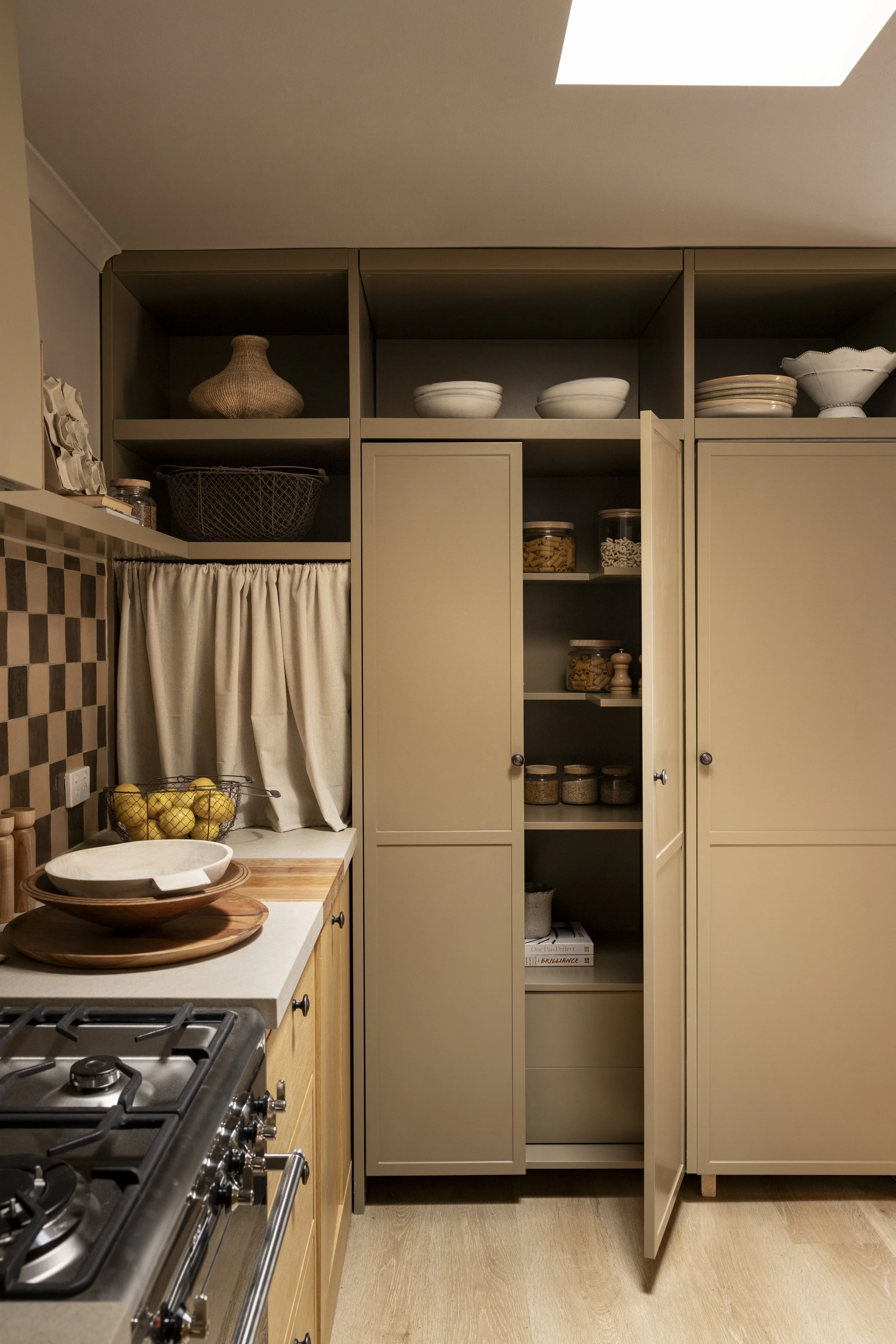
Cramped Kitchen Conversion by Studio Ezra. Photo: Dylan James
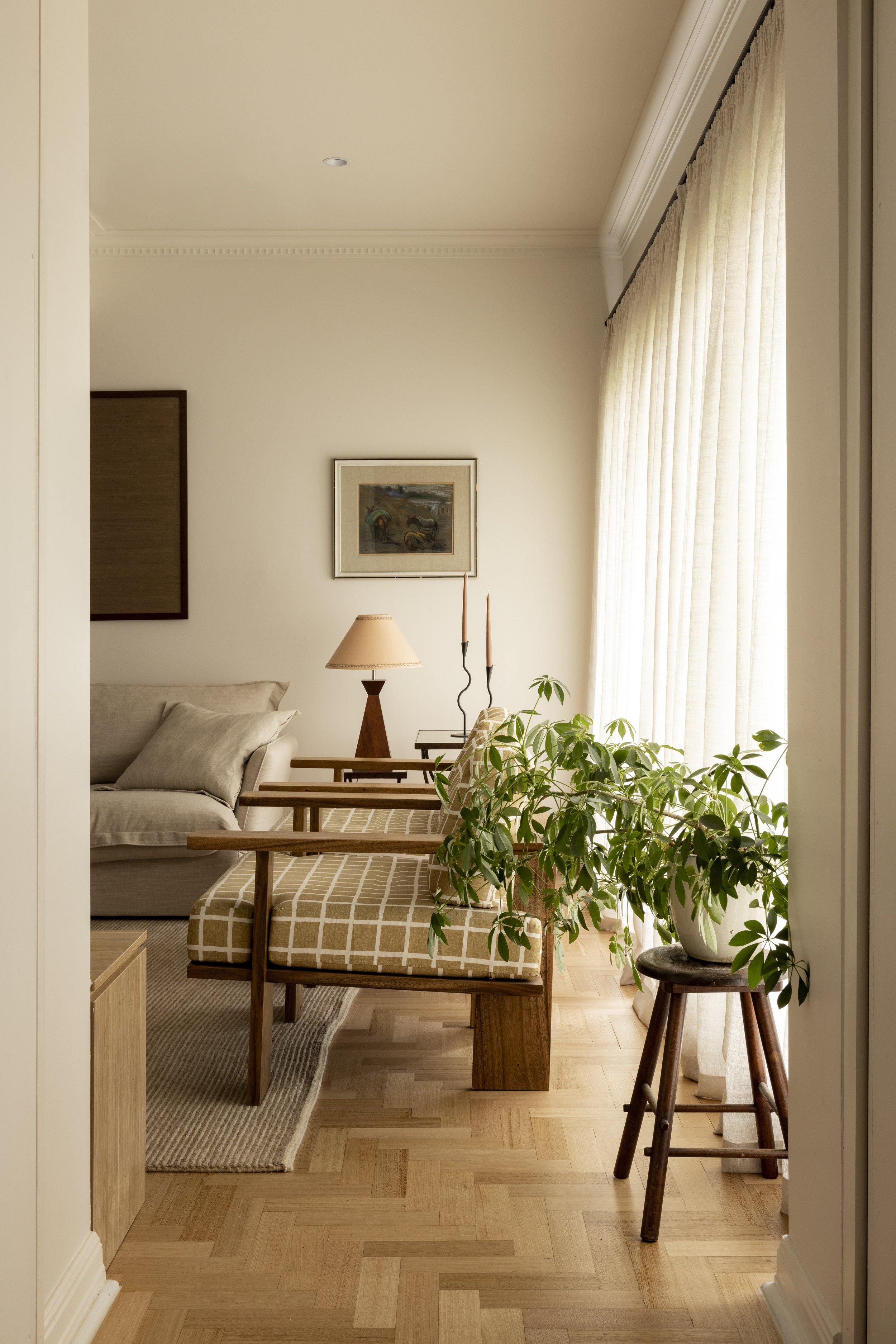
Orrong Home by Studio Ezra. Photo: Dylan James
How do you balance two businesses, travel, production, and raising a family?
I’m very honest about this: I’m not a structured person. My creativity doesn’t operate within rigid schedules. The only true structure in my day is the kids’ school hours: 8:30am–3:30pm. Outside that, I move toward whatever the priority is. I’m often doing twelve things at once; that’s just how my brain works. Every attempt to force structure actually makes things harder for me. I plan big global trips and key dates about a year ahead, and the team schedules launches and events, but day-to-day life is organised chaos moving toward shared goals.
What does a typical work day look like?
There is no typical day. Generally, I sit at my desk around 9am with a coffee. My mornings usually start with back-to-back meetings with clients and my team. In between, I squeeze in priority tasks. When I’m designing, I try to block out time during the day, but my real creative flow happens at night or on weekends when it’s quiet. Without emails and meetings, I can enter that vortex where I produce my best work. During the day, it’s a rotation of emails, decisions, photographing tiles, and meetings.
As a mother and business owner, what comes naturally and what requires effort?
Both roles come naturally to me. I’m not systemised or structured in the way I think or work, and I don’t separate parts of my life, and that actually works for me. I’m happiest multi-tasking and being immersed in everything at once. Chaos is comfortable for me. I’ve never needed to make a major adjustment to balance motherhood and business, the blend of both feels intuitive.
How does the way you live at home influence the way you design for others?
Designing and building for myself, twice now, has given me a deep understanding of materiality and function. I’ve lived with the decisions I make, and I know what works, what I love, and what frustrates me. This allows me to design for others from a place of experience rather than theory.
I take more risks at home than clients often will, but that testing ground helps me specify confidently for others. Being a mum also shapes how I design—functionality is non-negotiable. It always comes first, before form. Once the bone structure is right, then the finishes bring beauty.
Outside the studio, what do you love to do in your spare time?
Hot yoga, long walks, dancing, and spending time with friends. I love a glass of wine, entertaining at home, having people over from the afternoon into the night with good food and kids running around. I’m a water baby, I need to be near the ocean, paddleboarding, or just being at the beach. And always, time with family and friends brings me the most joy.
For emerging designers or makers, what advice would you give about honouring craft and intuition while also building a sustainable, growth-minded business?
One of the biggest things that I’ve always stayed true to my own style and aesthetic. I’ve never designed ranges based on what I think the market wants or tried to create products just to please everyone; I’ve never tried to be everything to everyone, and I’ve never tried to compete with other tile companies. I’ve always approached my work as an artisan atelier, creating what I believe is truly beautiful, and I truly believe that this is what has strengthened the Tiles of Ezra brand on a global scale.
As the business has scaled, especially over the past five years, I’ve had to incorporate a second layer of thinking, the operational and commercial side. Loving a design is one part, but the other is asking whether clients will buy it in mass, whether it can be scaled, whether the SKUs can work together to form patterns, whether the collection sits harmoniously as a whole, and whether our manufacturers can meet demand without stress or delay. There are many ranges I personally find beautiful, but if I know they can’t scale, or the manufacturing line is too small to keep up, in those instances I ensure that if we go ahead with them they are curated for the right market, but we would just simply won’t bring them to market if the intention is to scale the range.
My advice is this: honour your aesthetic completely, but balance it with smart, grounded operational thinking. Both the beauty and scalable boxes need to be ticked.
Looking ahead, what feels most exciting for you?
There’s some exciting growth happening in America, and demand there continues to rise. We have many new ranges already designed and we’re excited about expanding our collections and building strong new partnerships. We’re also developing completely new ranges for the Australian market, that feels energising. Creatively, I’m focusing a lot of my time on designing collections for designers, the trade, and homeowners, so there’s a lot ahead that we’re truly excited about.
On a personal front, I have a coffee table book releasing next year, which is the culmination of many years of hard work. It includes over twenty interior projects and represents a huge chapter for me, challenging but incredibly exciting.
Stay up to date with Studio Ezra & Tiles of Ezra or follow @studio_ezra & @tilesofezra on Instagram.
