

Ha Ha Haus By FIGR Architecture
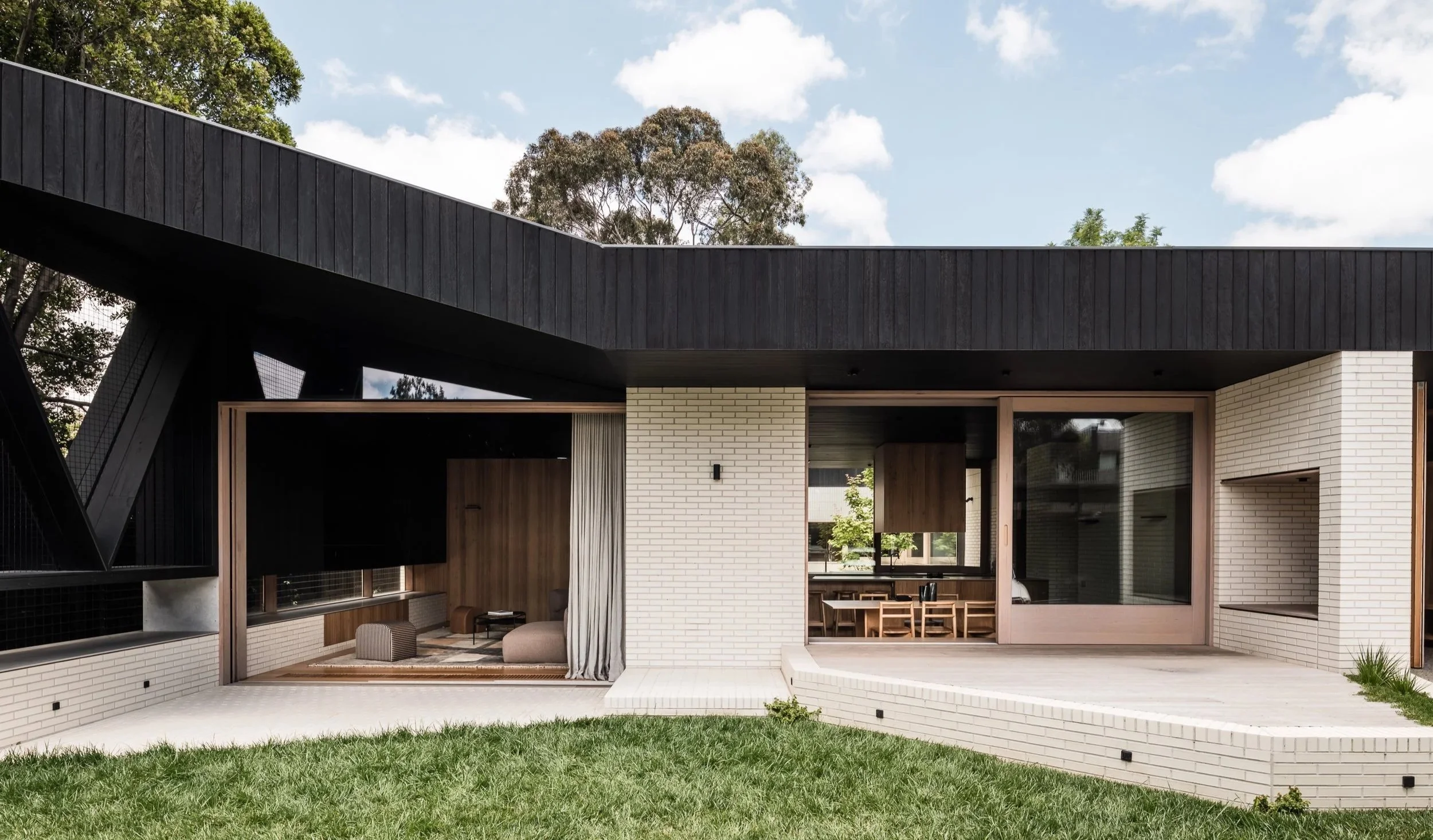
In Alphington, Victoria, Ha Ha Haus by FIGR Architecture balances intergenerational living with a strong connection to the landscape, carefully shaped around the site’s natural slope.
Words HANDE RENSHAW Photos TOM BLACHFORD Architecture FIGR ARCHITECTURE Landscape MUD OFFICE
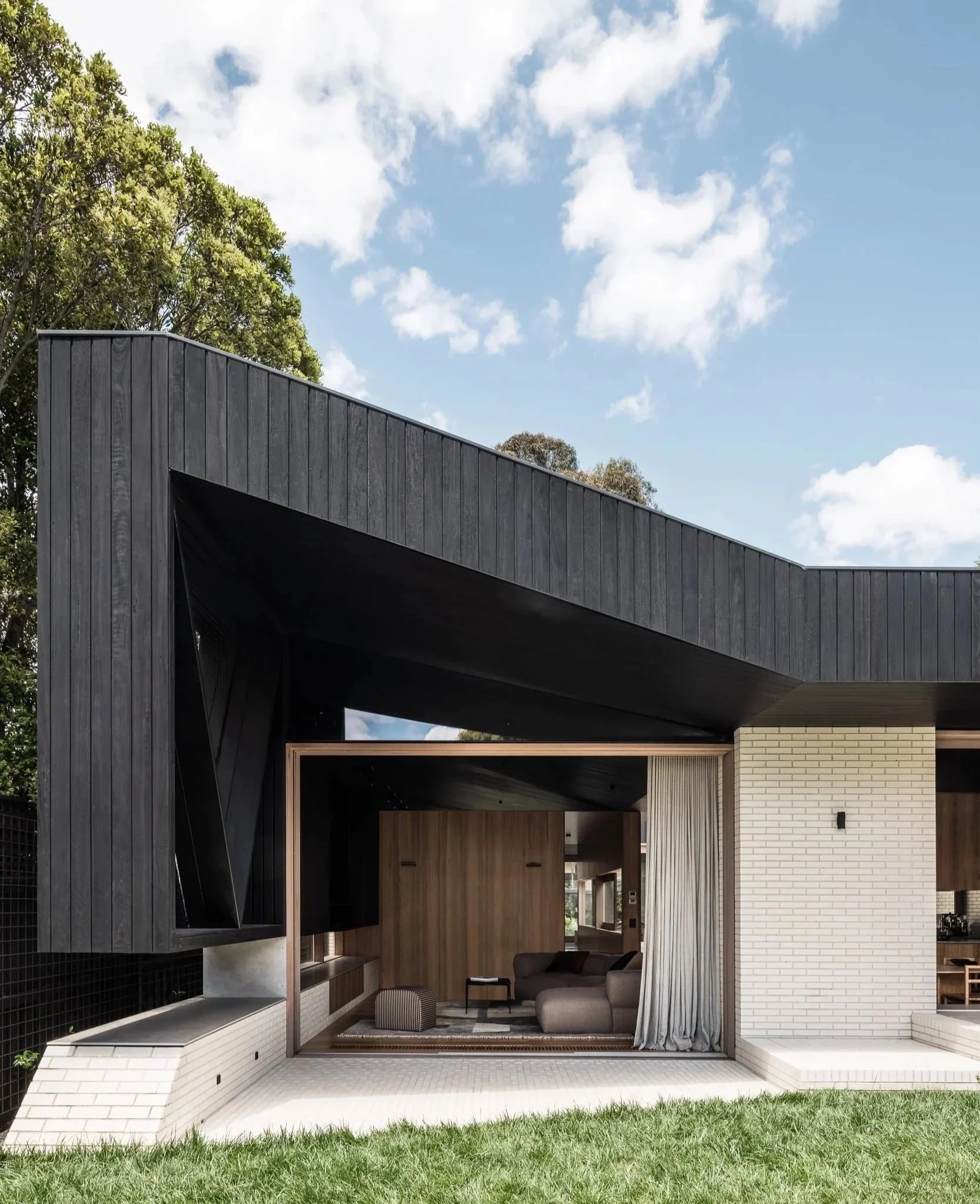
A veil of charred Blackbutt cladding wraps the home, softening its scale while creating a strong horizon line across the site.
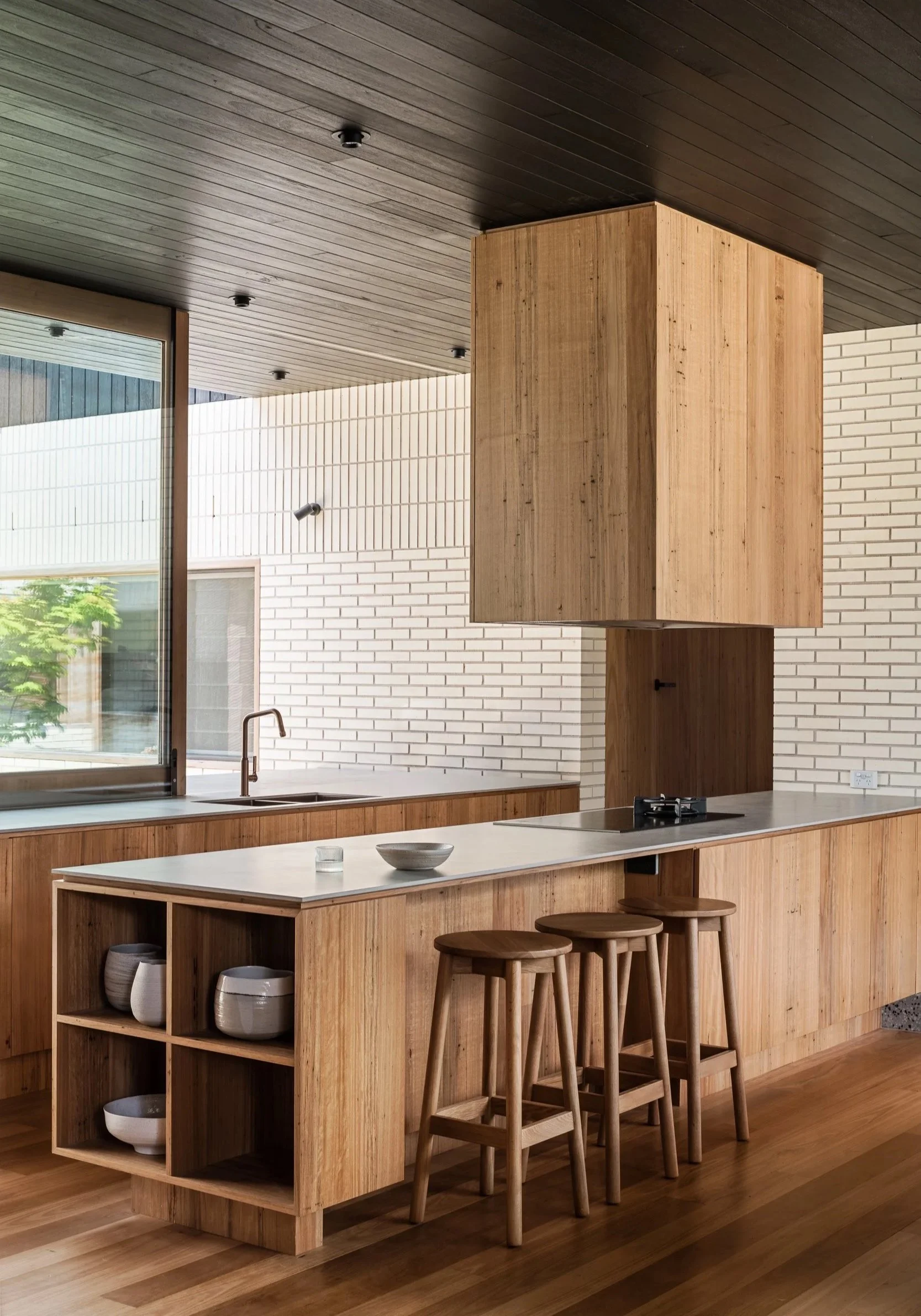
A restrained mix of pale brick, natural timber and darkened ceilings brings depth and contrast to the kitchen.
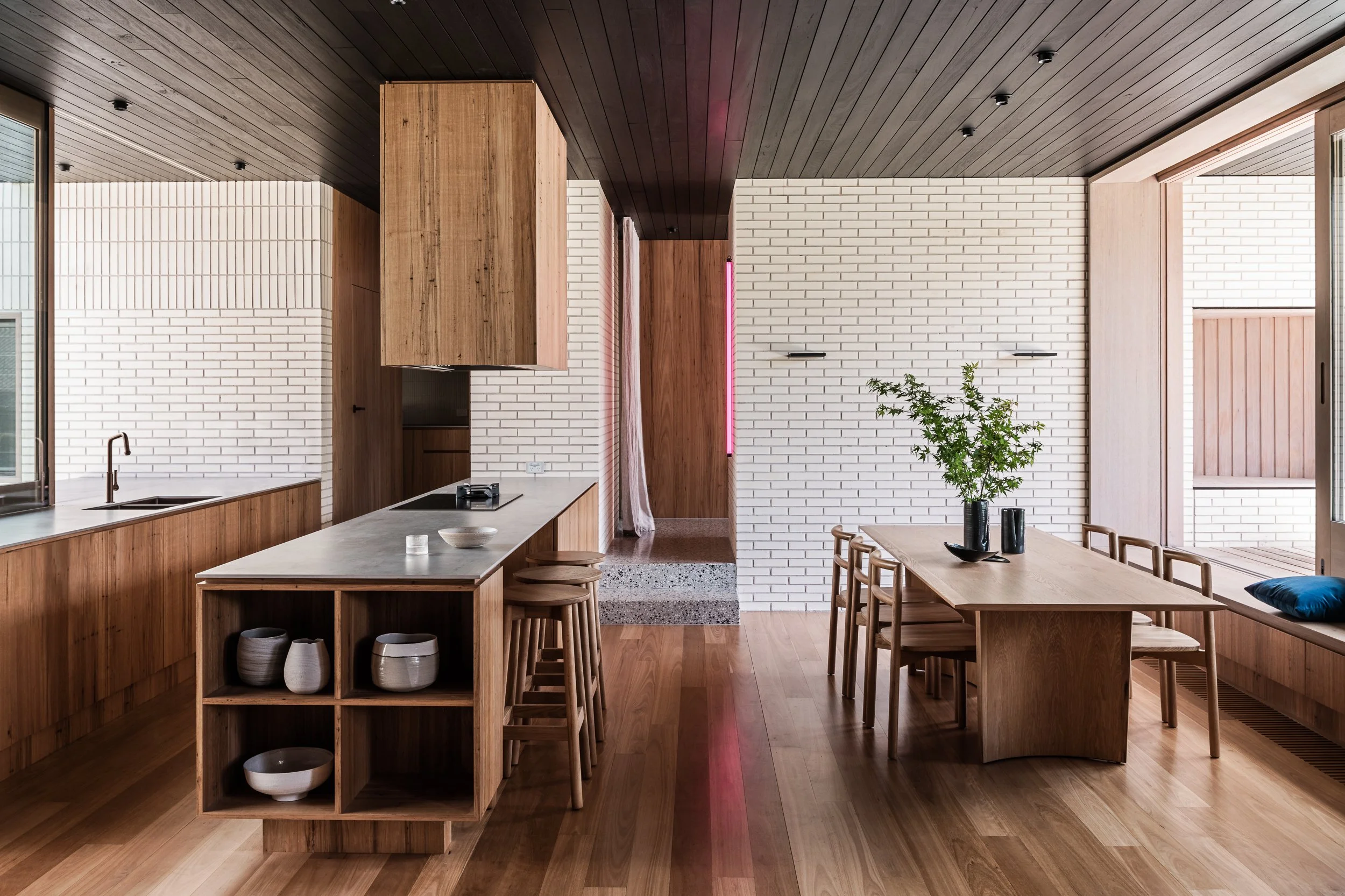
A pared-back material palette of pale brick, charred timber and natural Blackbutt brings warmth and depth to Ha Ha Haus, while oversized openings blur the line between the kitchen, dining space and courtyard beyond.
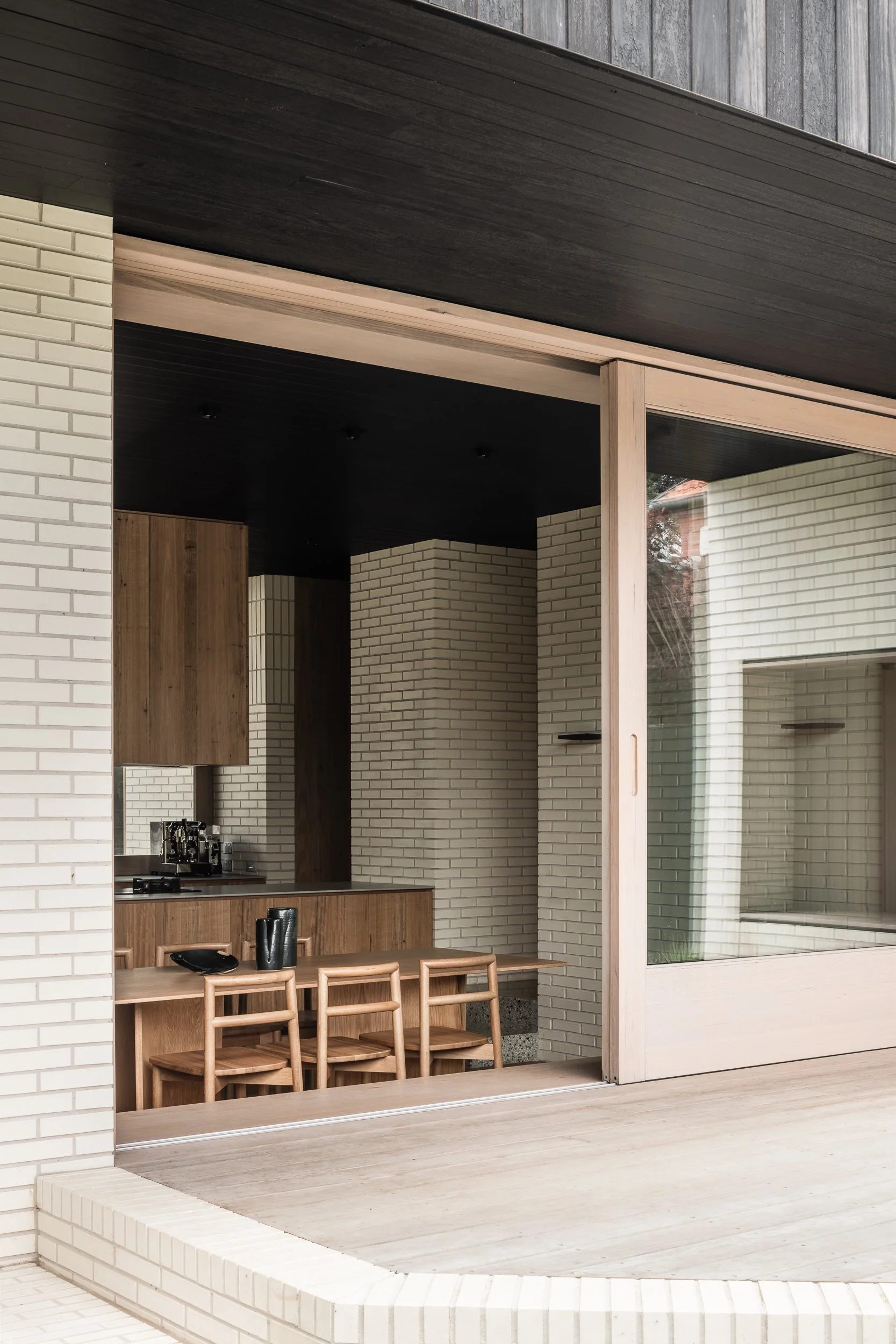
While darkened timber and masonry define the exterior, warmer timber finishes inside bring texture and softness through the flooring, joinery and wall linings.
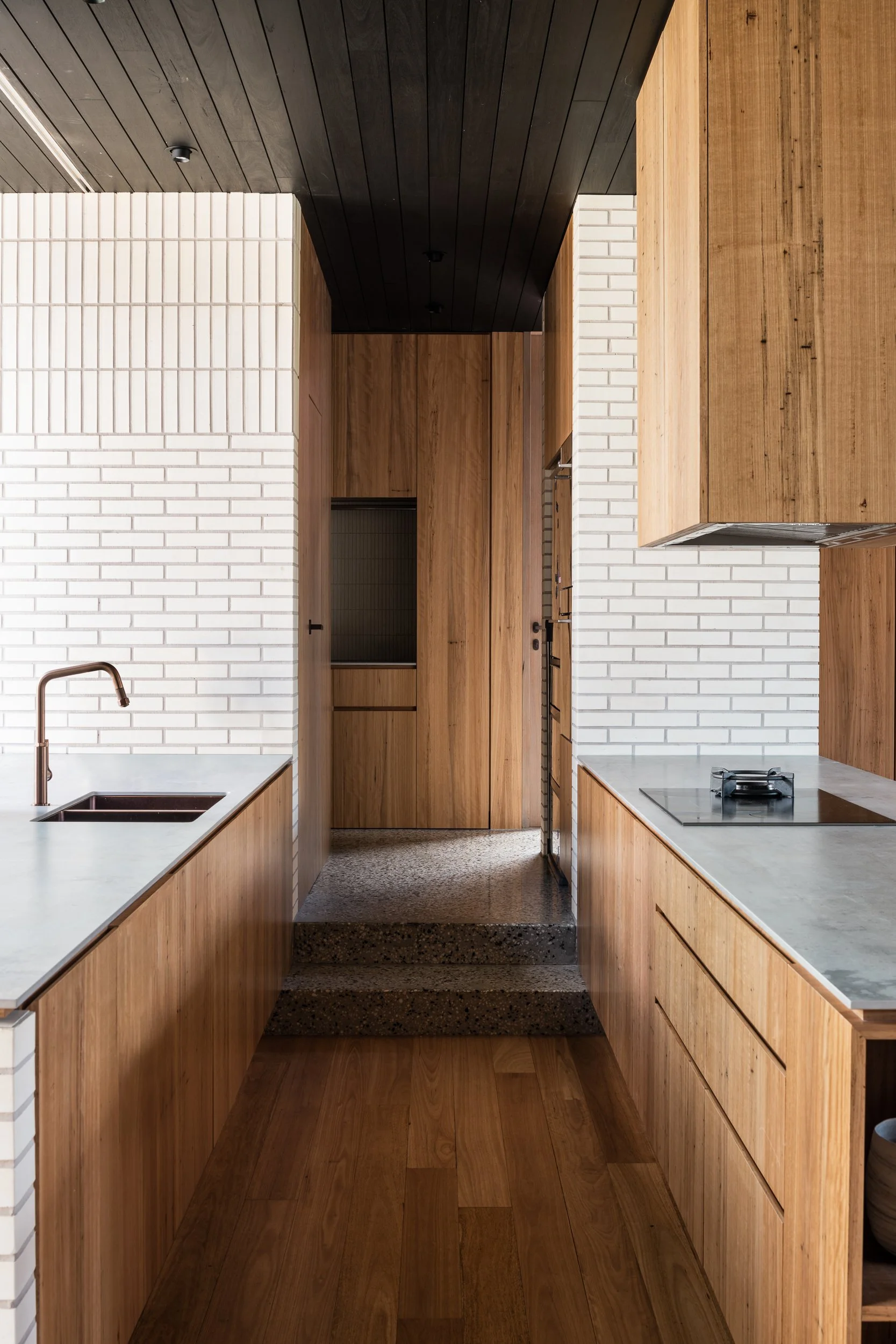
A layered mix of timber, terrazzo and pale brick brings warmth and texture to the kitchen.
“Exploring form, threshold and arrival, FIGR Architecture rethinks residential typology through a considered approach to ownership, transition and the experience of coming home.”
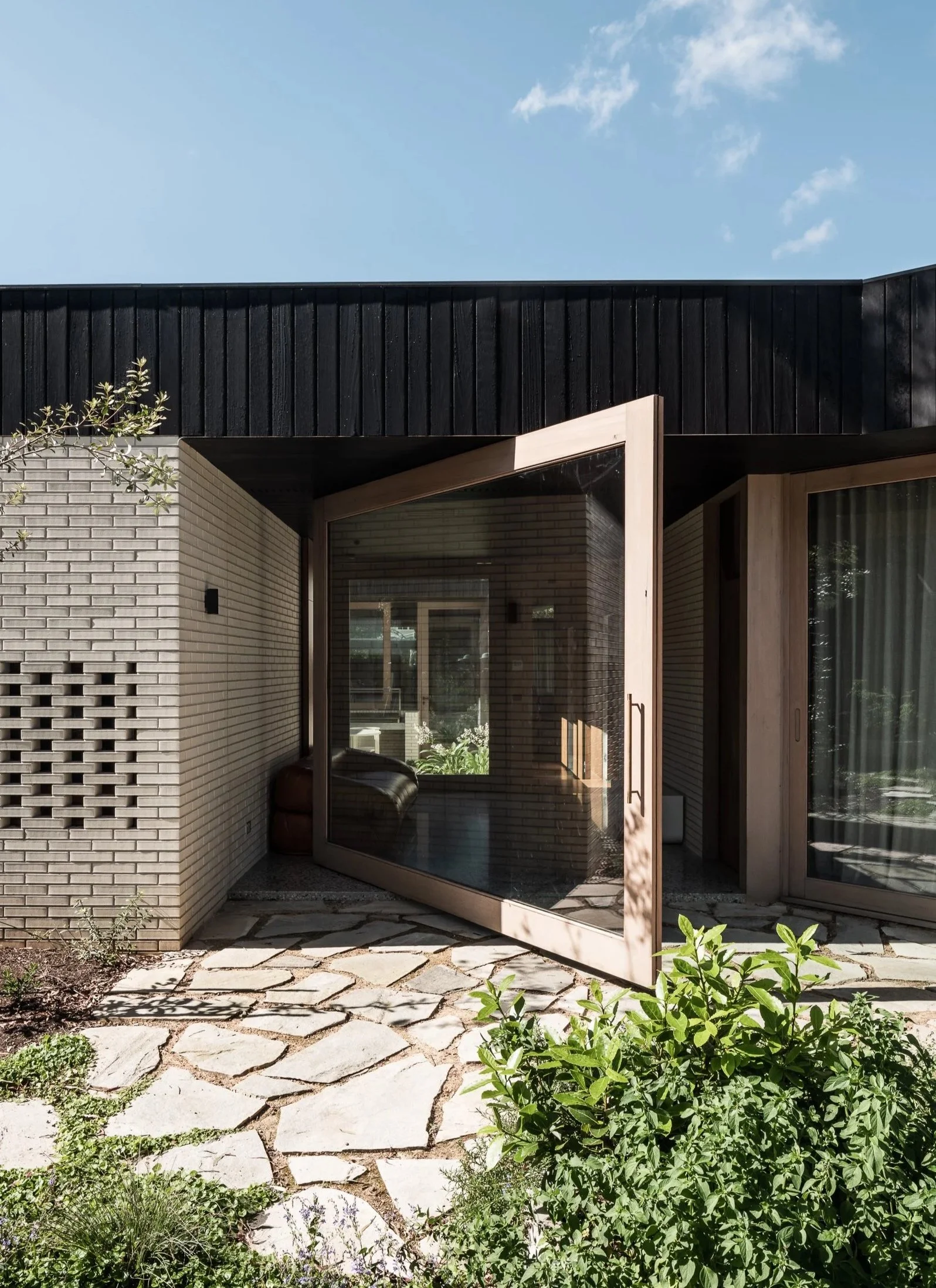
Large pivoting openings connect directly to its landscaped courtyard, reinforcing the project’s focus on openness to the garden.
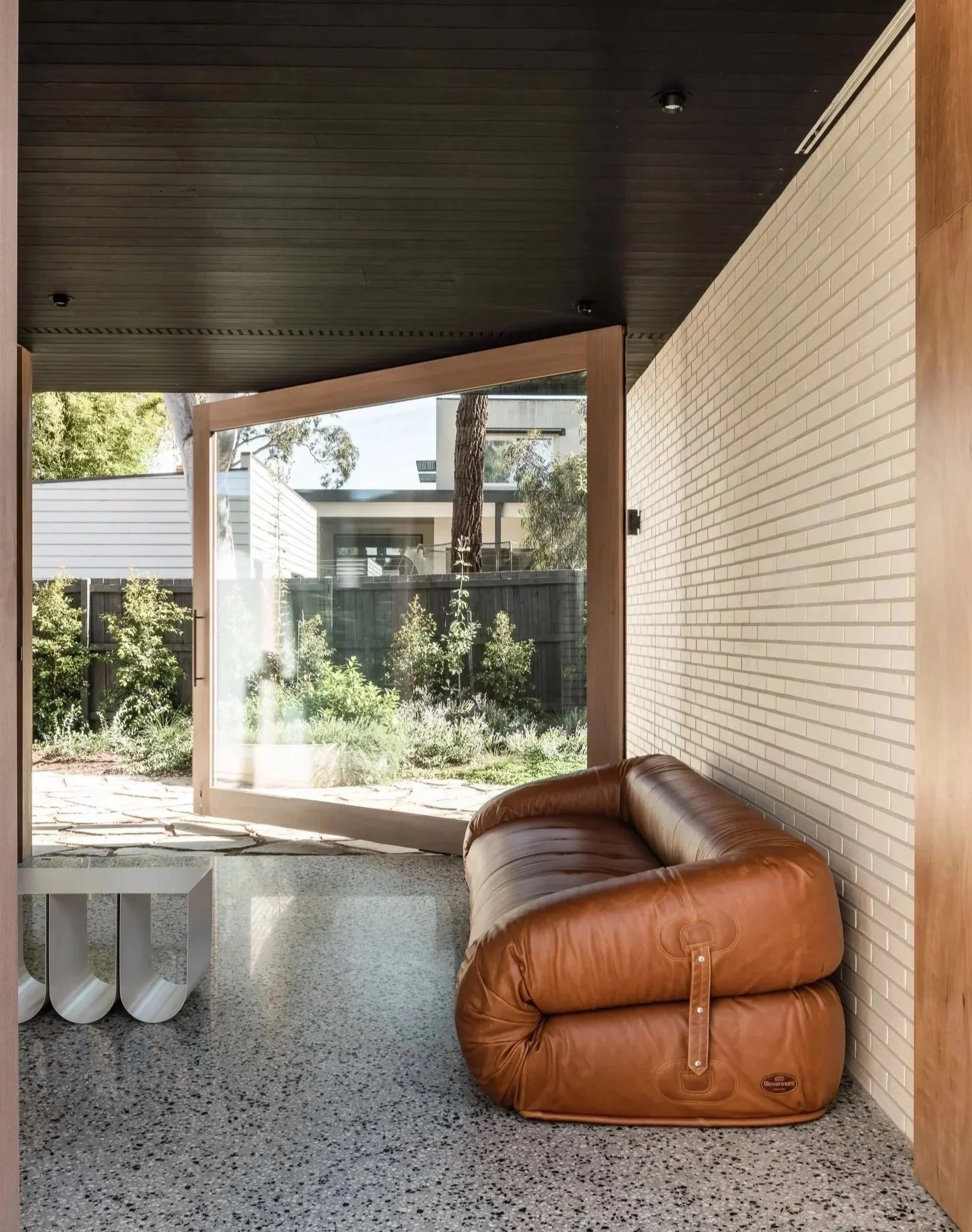
Pale brickwork, charred timber ceilings and oversized pivot doors shape a series of light-filled living spaces that open effortlessly onto the courtyard.
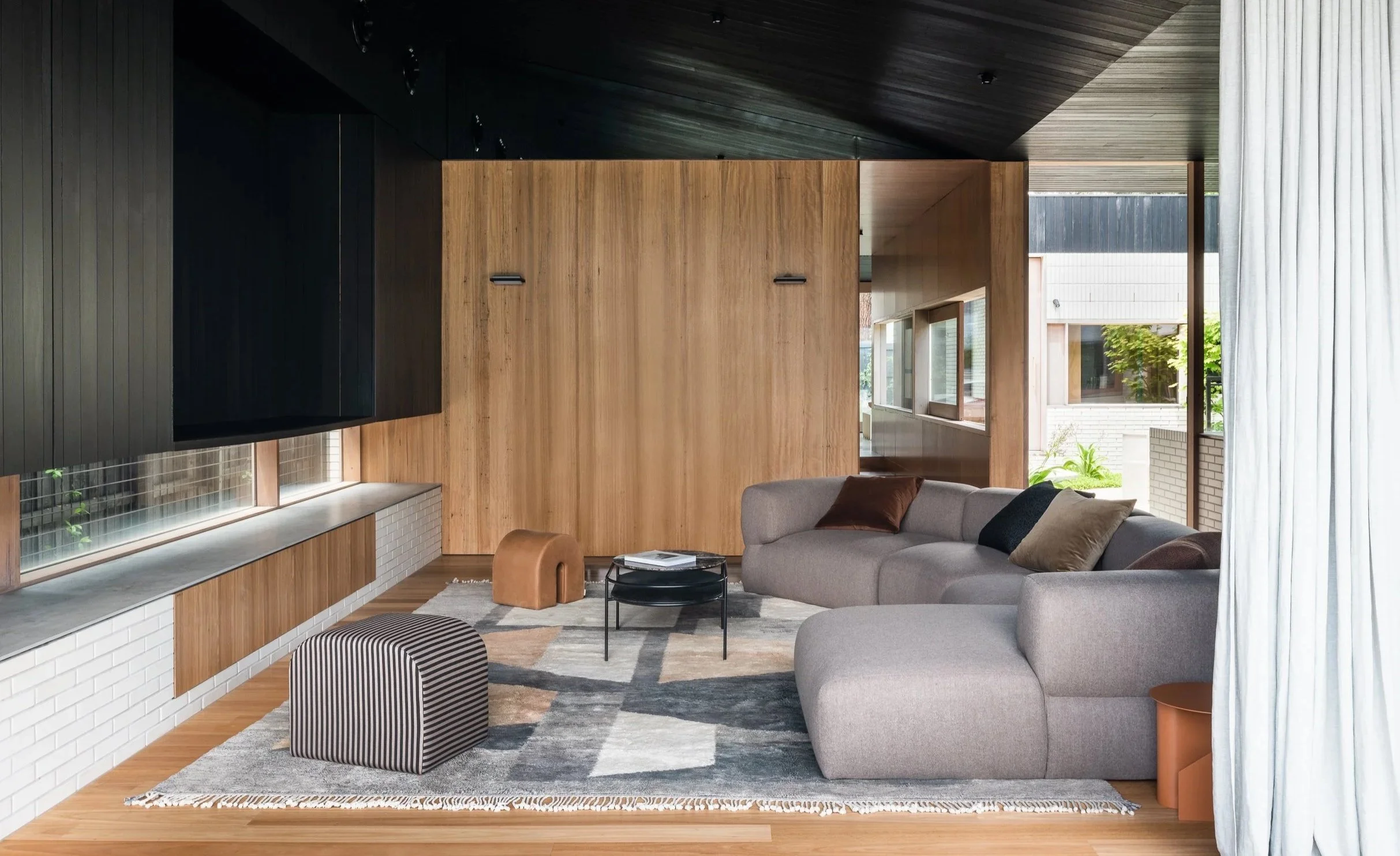
Designed to support ageing in place, the home remains entirely on one level, with the site carefully shaped to bring light, openness and ease to everyday living.
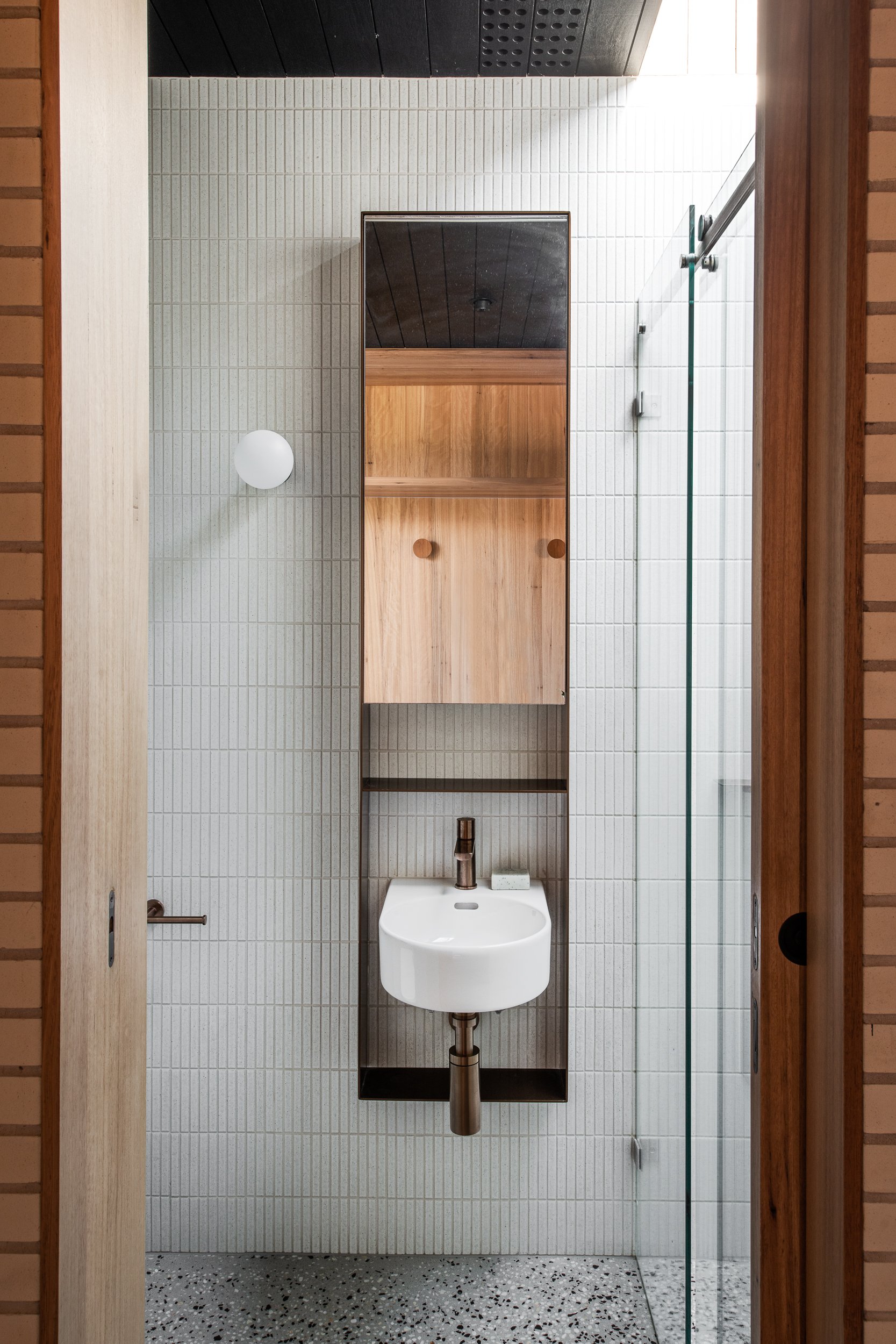
Textured mosaic tiles, terrazzo flooring and timber detailing create a layered material palette within a bathroom in the home.
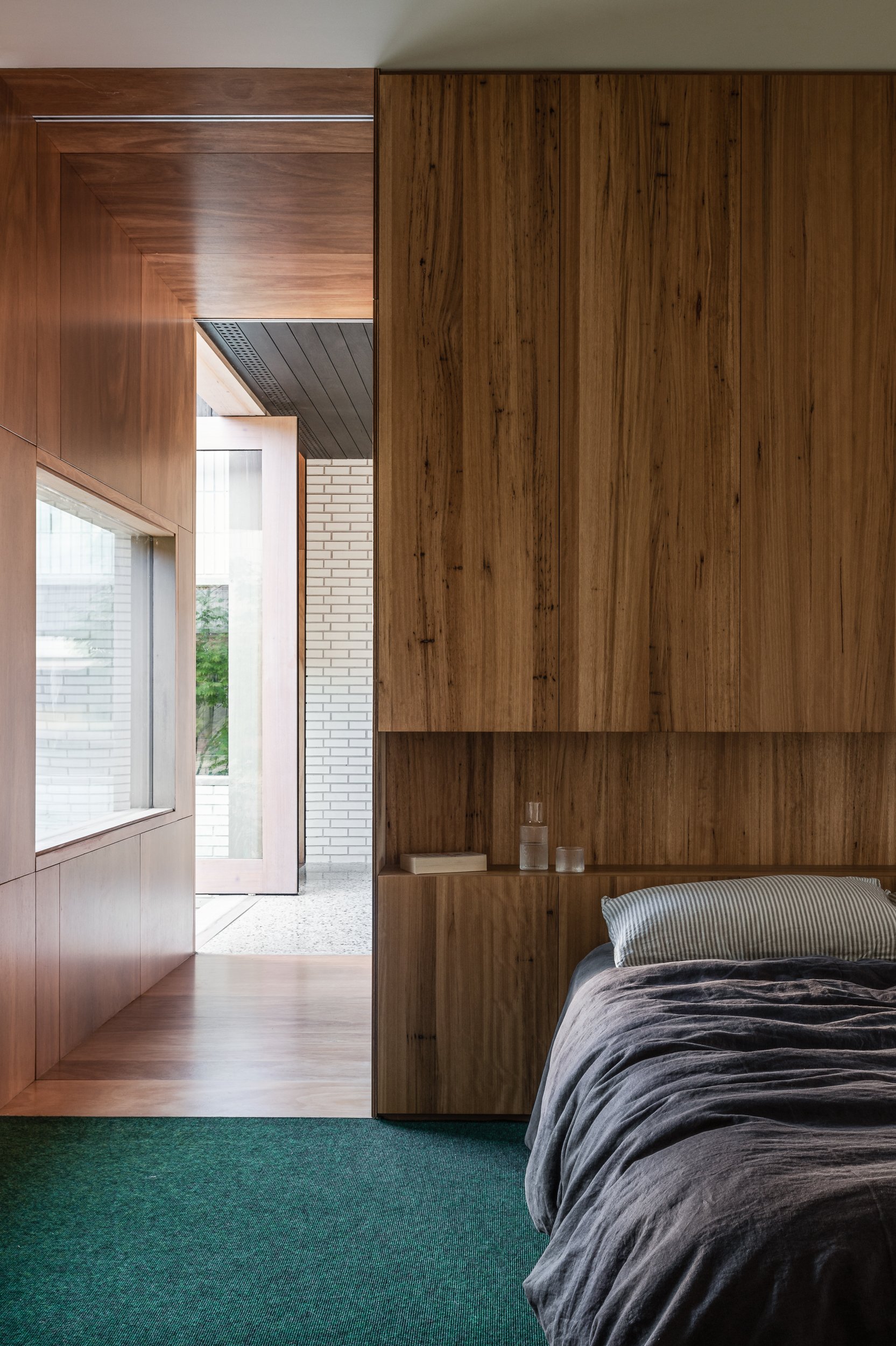
Rich timber joinery and panelling bring warmth to the bedroom, continuing the home’s layered material palette into the bedroom spaces.
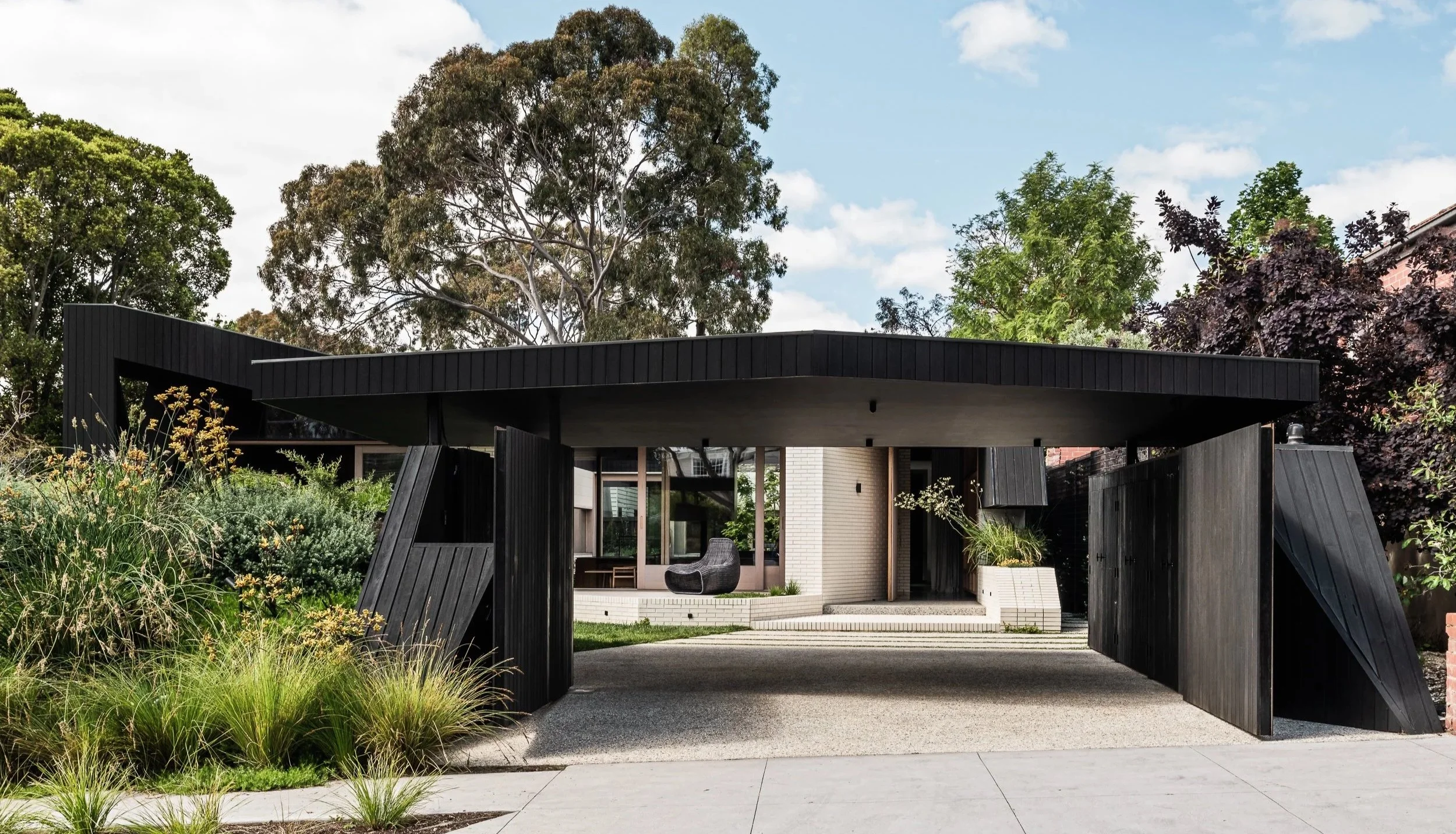
From the street, the home has been designed to contribute to the surrounding streetscape, sitting naturally within the neighbourhood.
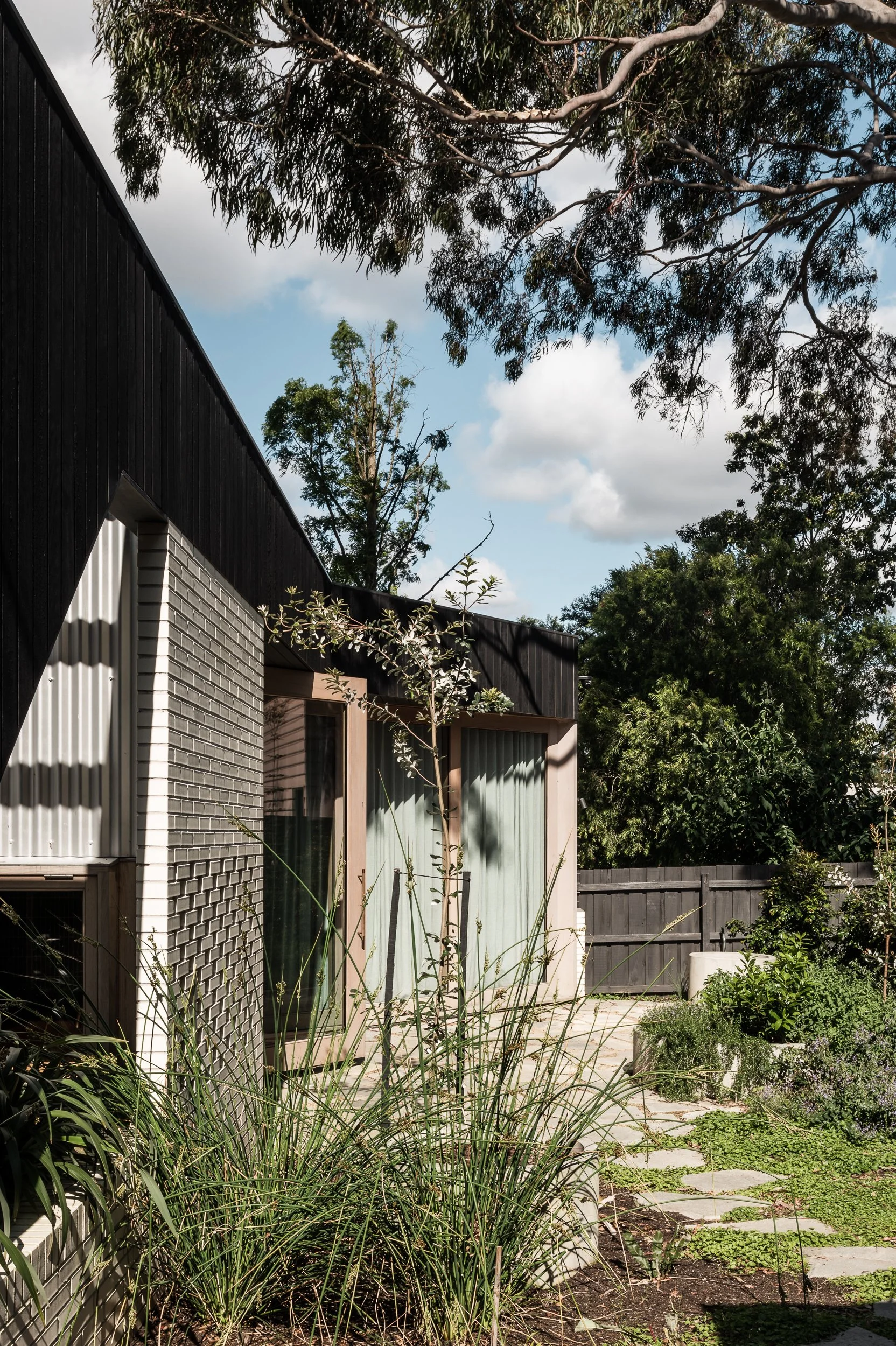
The floor plan wraps around a central landscaped courtyard, creating a continuous connection between the home and garden
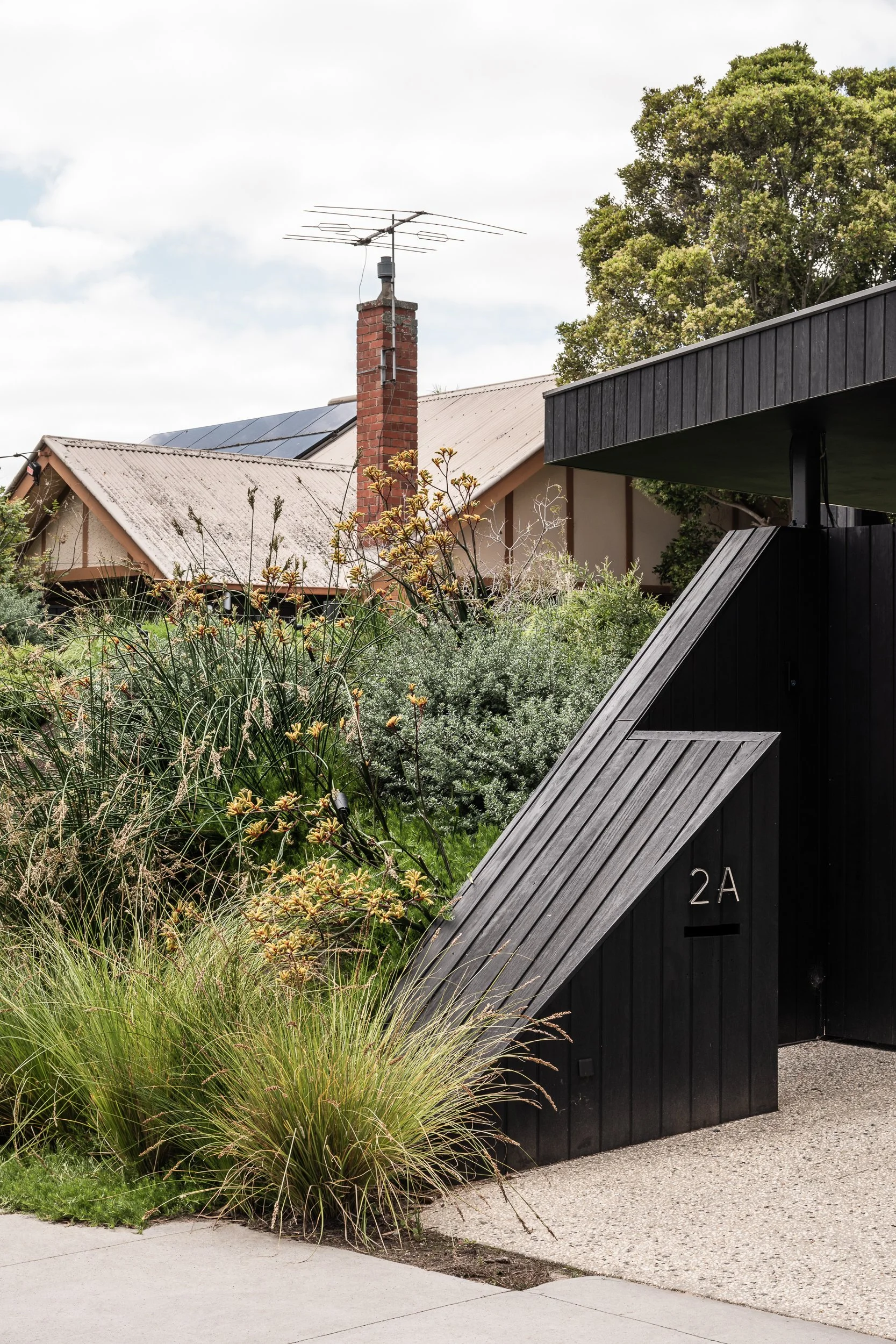
Landscape designed by MUD Office.
Tucked into a leafy pocket of Alphington/Wurundjeri Country in Victoria, where front fences remain a rarity, Ha Ha Haus by FIGR Architecture considers family living through landscape, flexibility and a strong connection to its site.
Designed for a close-knit household with an evolving way of living, the home responds to the realities of intergenerational occupation, regular overseas visitors and periods of transient stay. Rather than separating itself from its surroundings, the sprawling single-storey residence settles carefully into the sloping site, prioritising ageing-in-place and a oneness with the outdoors.
Developed through a highly collaborative process between the client, consultants and recurring landscape architect collaborators MUD Office, the design takes shape as a looping floor plan wrapped around a central landscaped courtyard. What the architects describe as a ‘donut’ arrangement became a direct response to the site’s challenging south-facing orientation, creating new opportunities for northern light, passive ventilation and private zones.
At the centre of the home, the courtyard acts as both anchor and refuge. Guided by passive solar principles, the space draws natural light deep into the interiors while encouraging cross ventilation throughout the home. At the same time, it redirects the occupant’s focus away from overlooking neighbouring properties and toward pockets of borrowed greenery beyond the perimeter walls, reinforcing a feeling of immersion within the landscape.
This relationship between architecture and environment continues at the street edge. A landscaped mound conceals much of the home’s visual bulk while also housing a concealed 20,000-litre rainwater harvesting tank beneath it. Supported by the expansive single-storey roof catchment, the system supplies recycled water for irrigation and bathrooms at levels far exceeding local building requirements.
Encircling the home is a veil of charred Blackbutt timber cladding that softens the scale of the building while creating a distinct horizon line across the site. The material palette remains intentionally restrained, with just three primary finishes extending from the exterior into the interiors. Locally sourced to reduce embodied carbon emissions, the materials were selected for their durability, longevity and ability to age naturally over time.
At Ha Ha Haus, sustainability is embedded into the architecture itself rather than treated as an added layer. Through careful orientation, material restraint and long-term adaptability, the home balances environmental responsiveness with the rhythms of contemporary family life.
Location: Alphington/Wurundjeri Country, Victoria
Architecture & Interiors: FIGR Architecture
Photography: Tom Blachford
