

Apartment Alchemy—Drummoyne Apartment By Jacqui Koska

In Sydney’s Drummoyne, a period apartment becomes a study in spatial ingenuity—constraints become catalysts as interior designer Jacqui Koska transforms awkward geometry into defining features.
Words HANDE RENSHAW Photos PABLO VEIGA Editorial Stylist HOLLY IRWINE
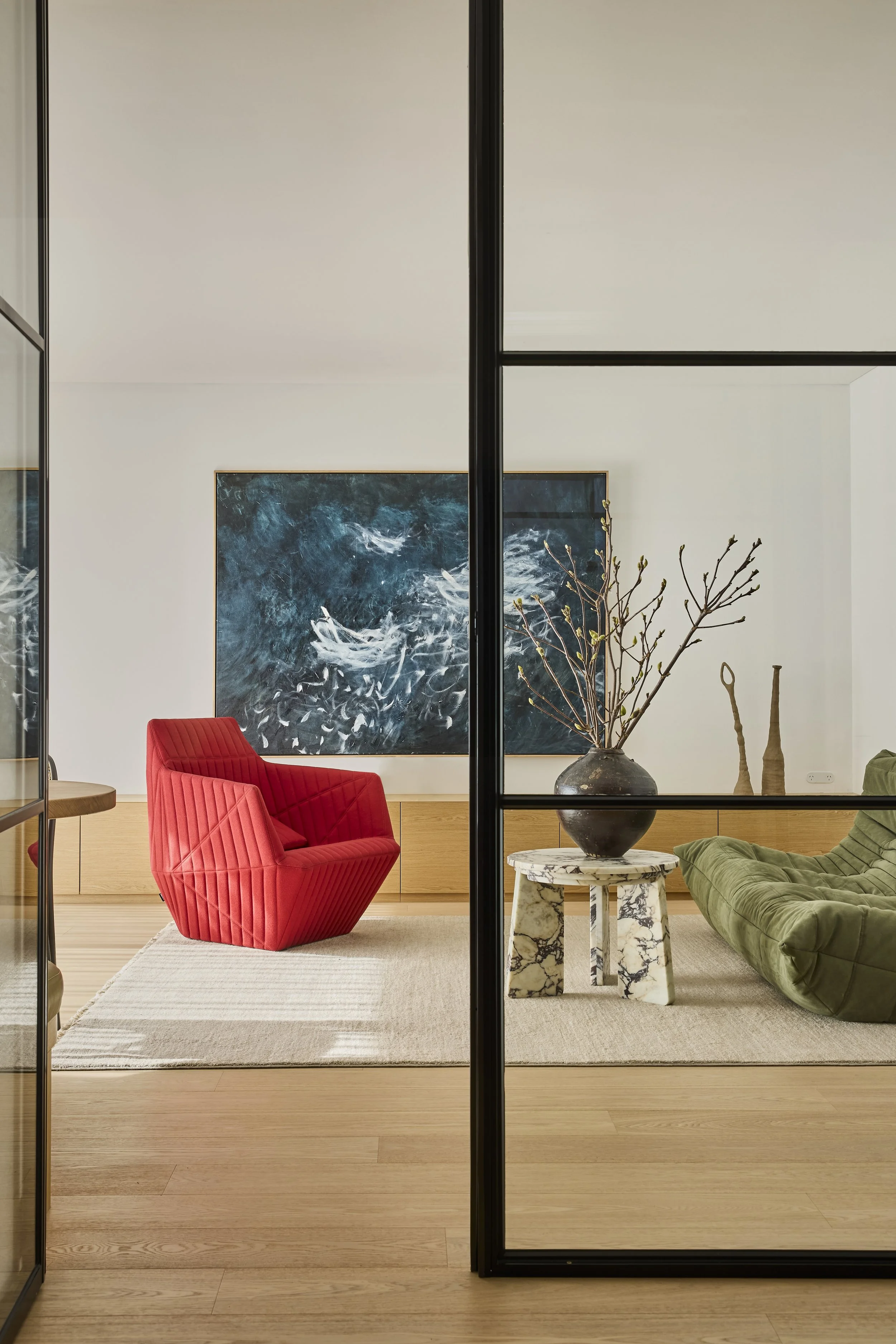
In the living room, a scarlet vintage Ligne Roset chair adds a bold touch of colour to a serene space framed by bay views, glimpsed through glass and steel doors.
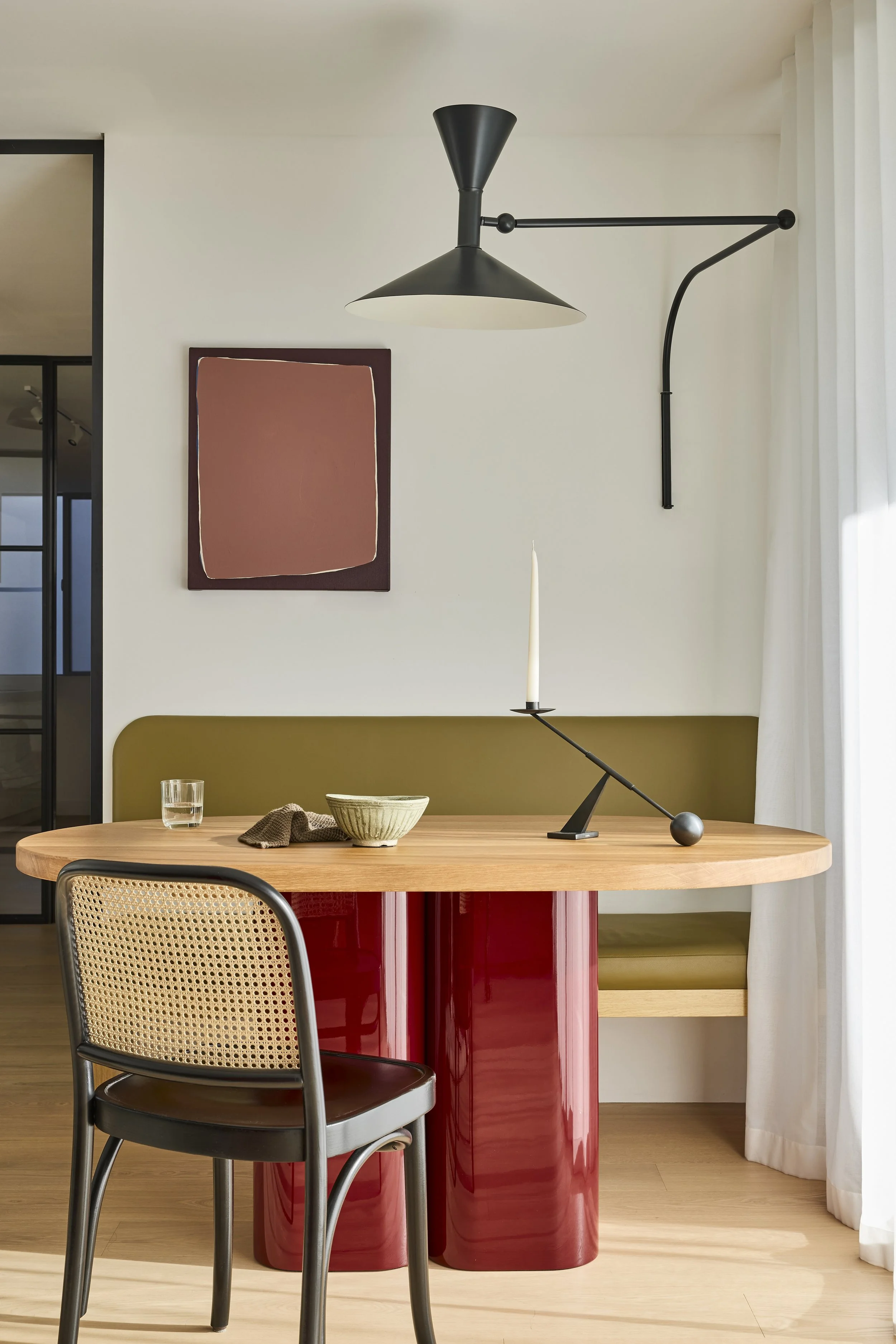
A custom oak dining table rests on a scarlet lacquered pedestal, a bold detail designed to echo the vintage Ligne Roset chair.
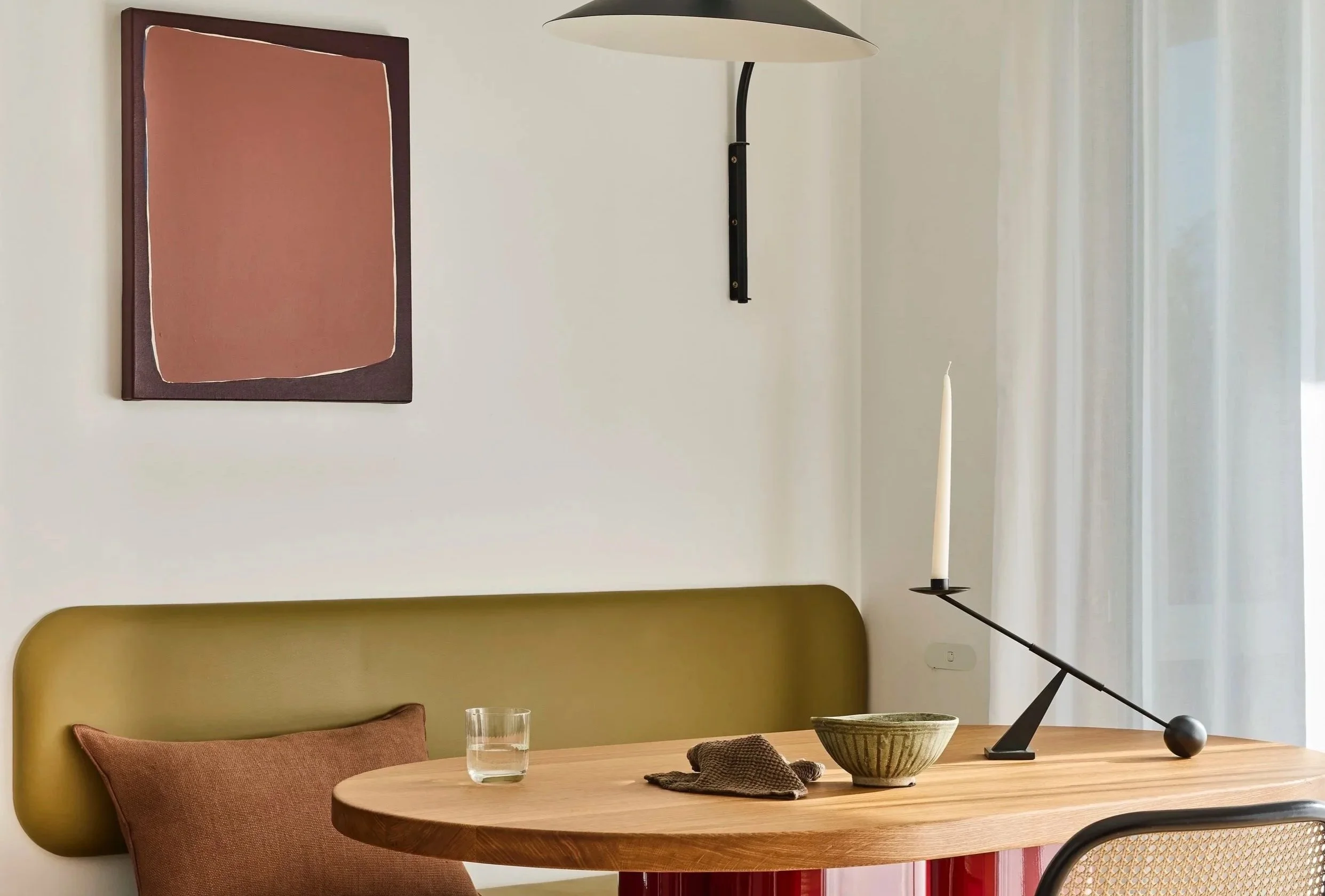
Soft curves replace hard collisions, turning constraints into the apartment’s strongest notes.
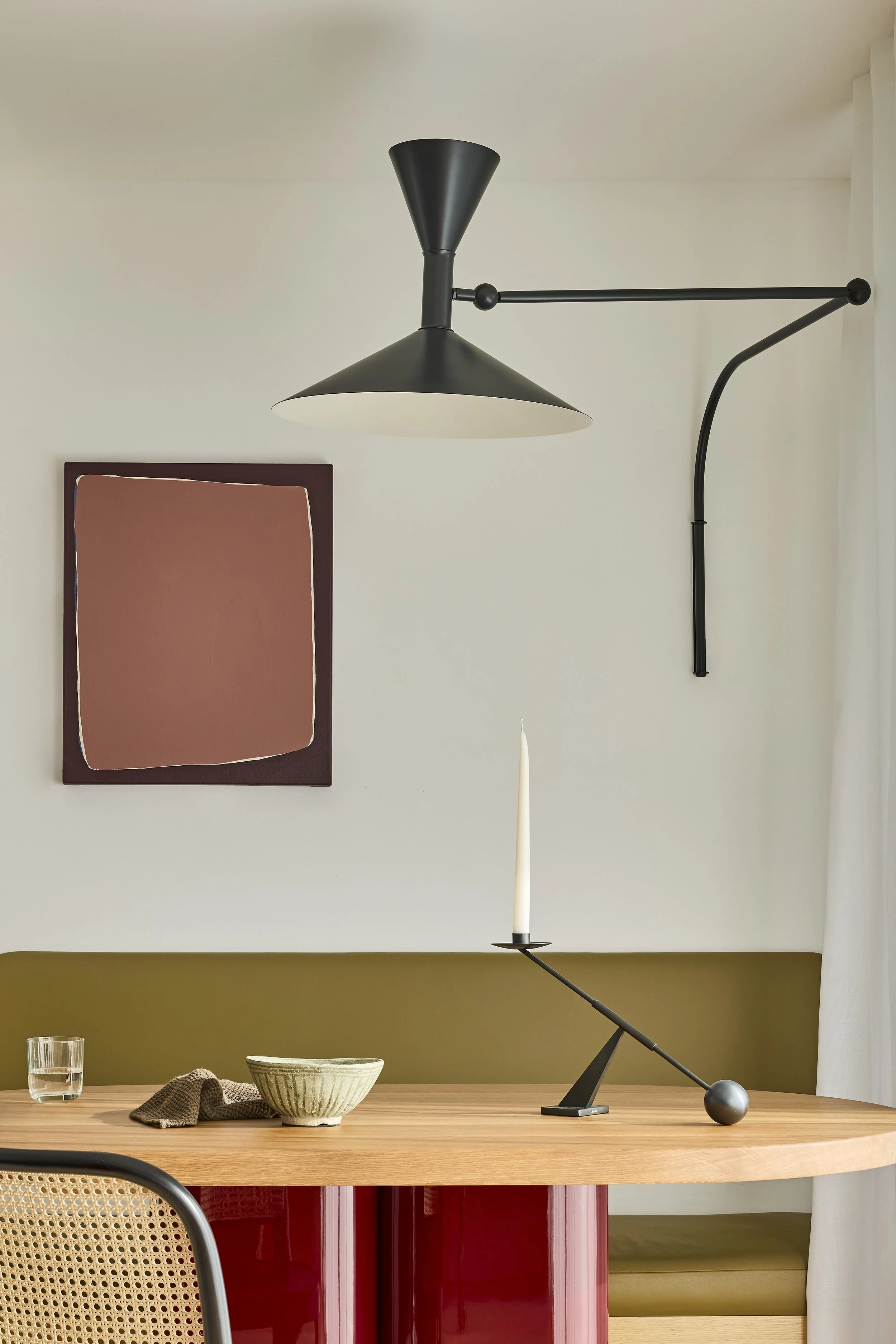
Curves within the built-in bench seat echo the geometry offered throughout the home.
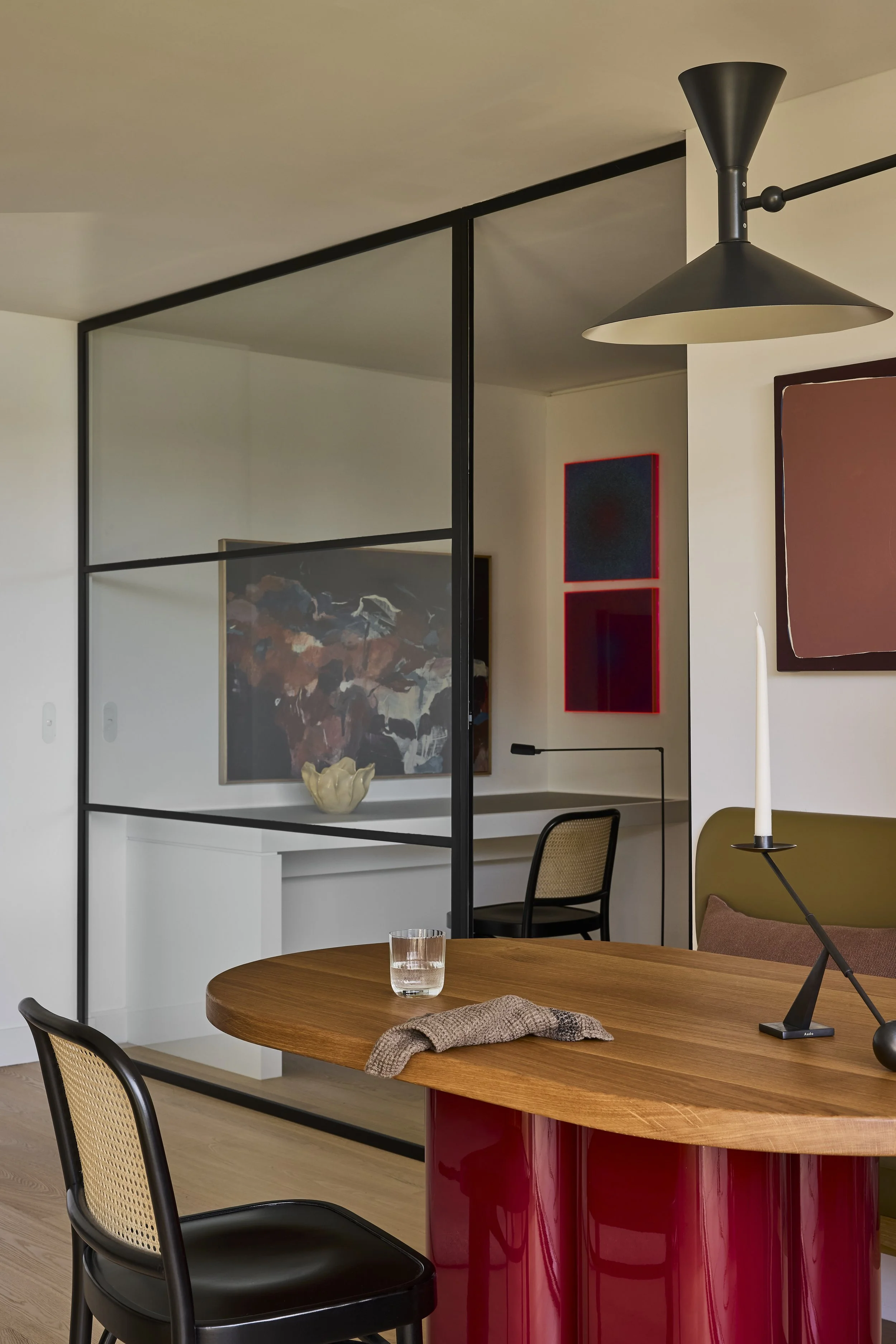
A bespoke desk anchors the study nook, enclosed by steel and glass partitions that bring both separation and light.
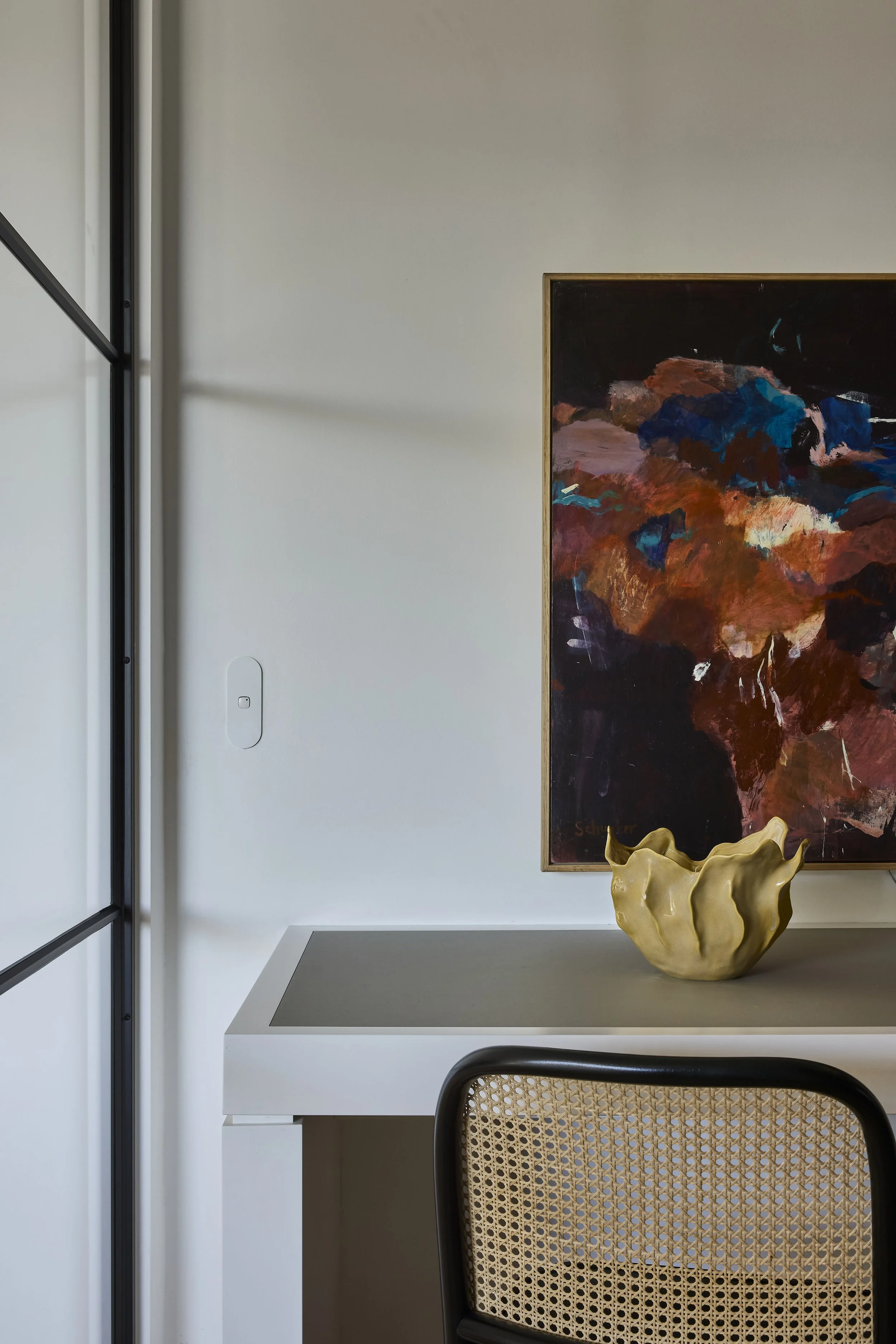
A restrained palette lets artwork and form take the stage.
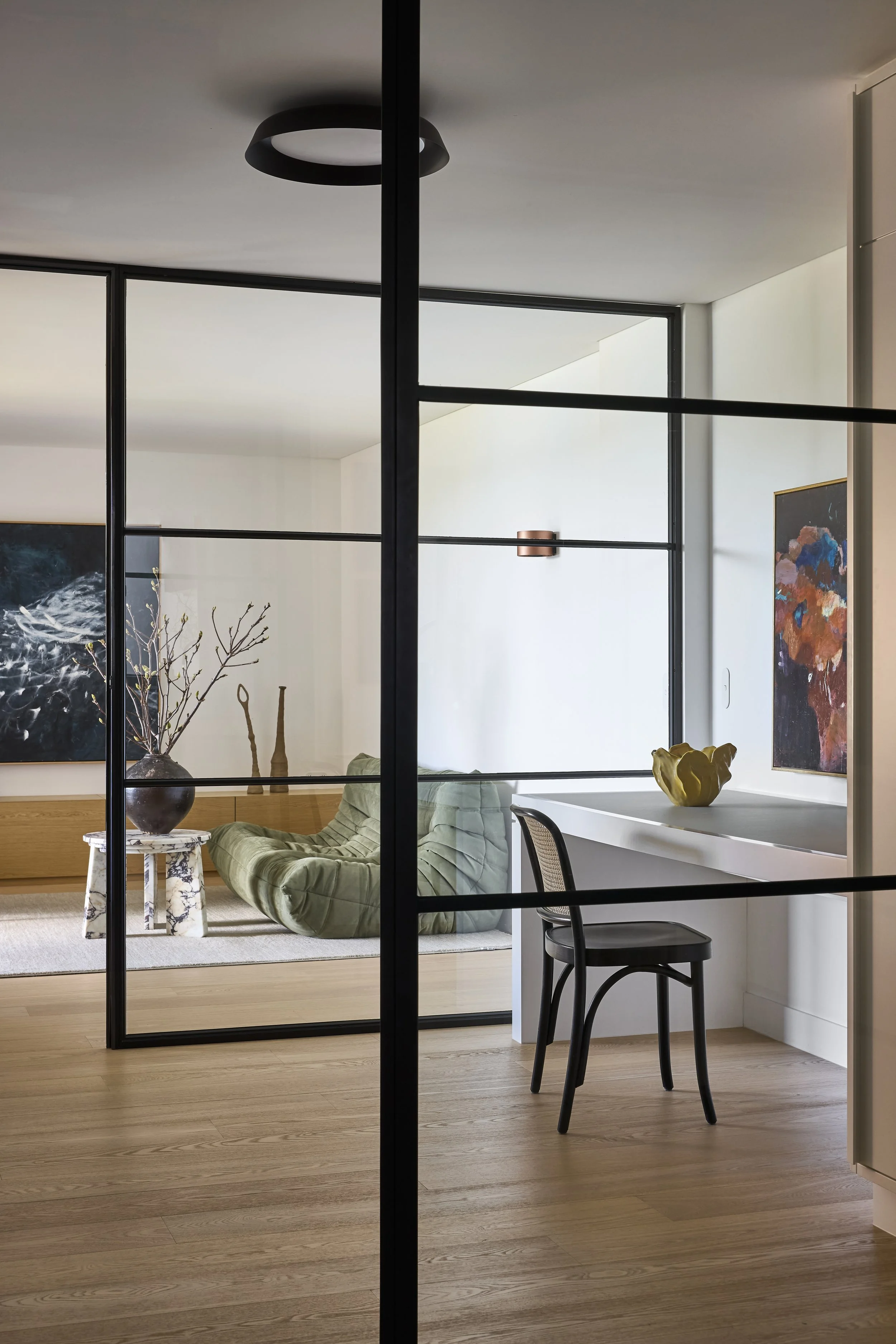
Running through the heart of the apartment, a marmorino wall is paired with steel and glass doors that define a light-filled study.
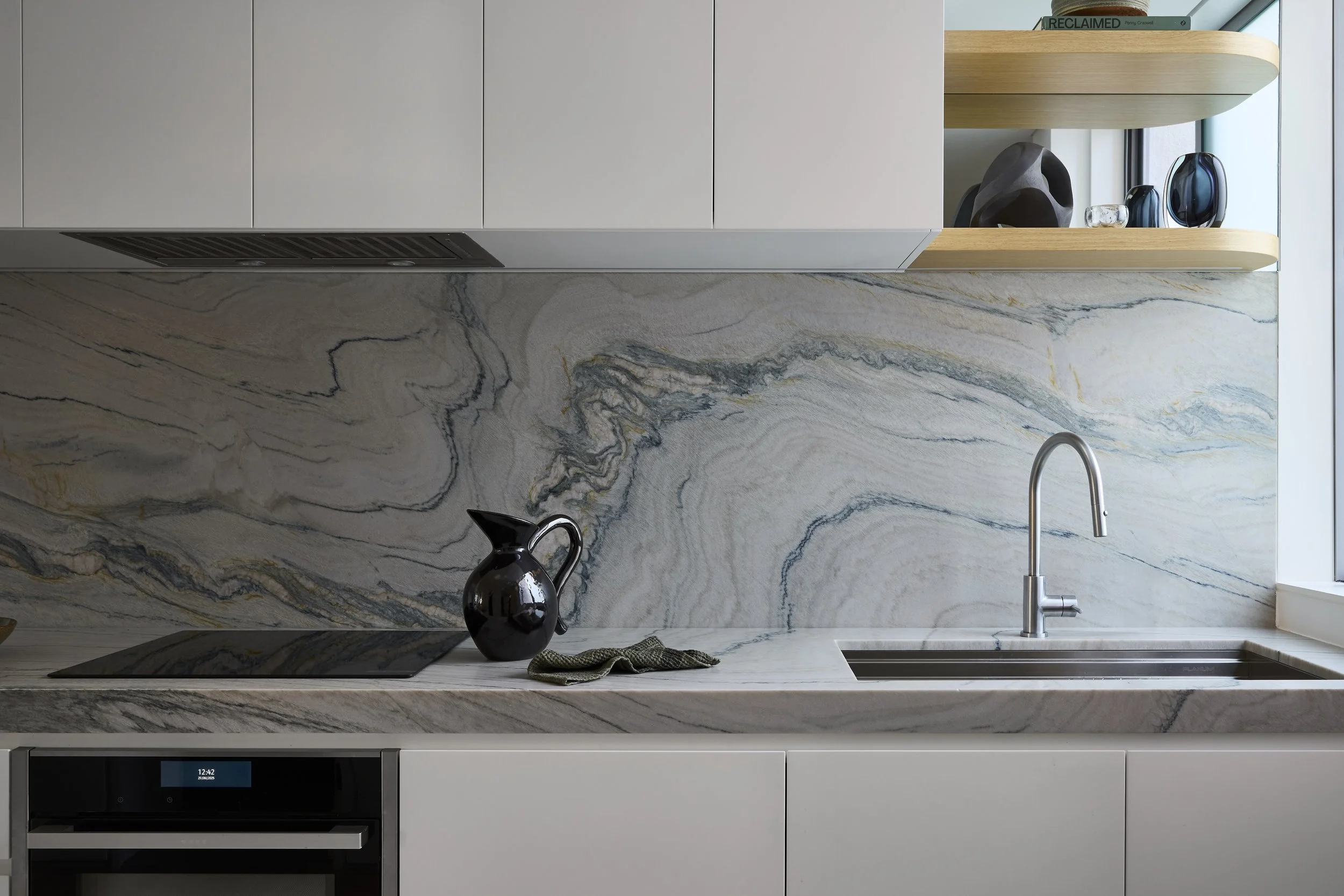
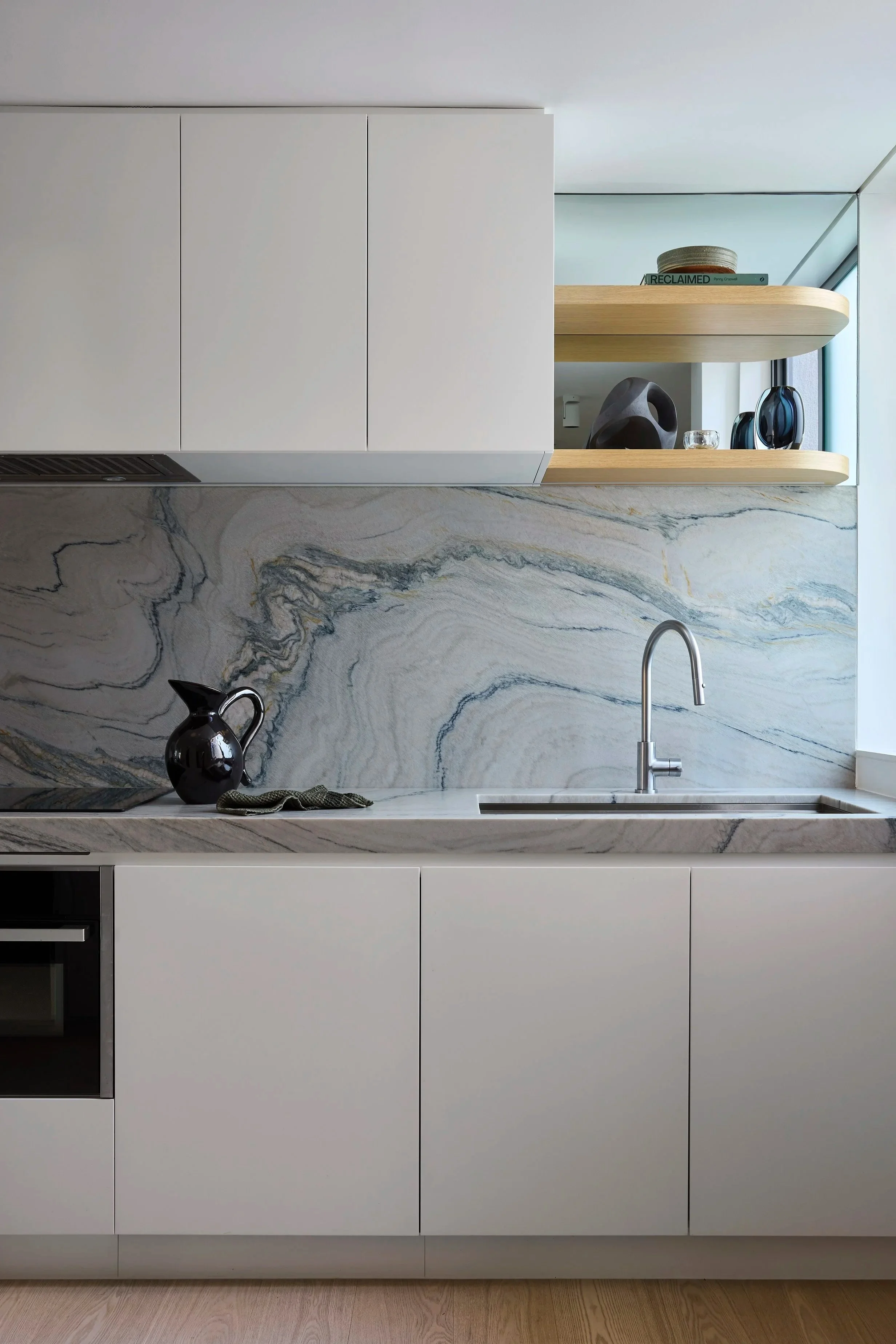
A continuous slab of stone flows from bench top to splashback, offset by white joinery.
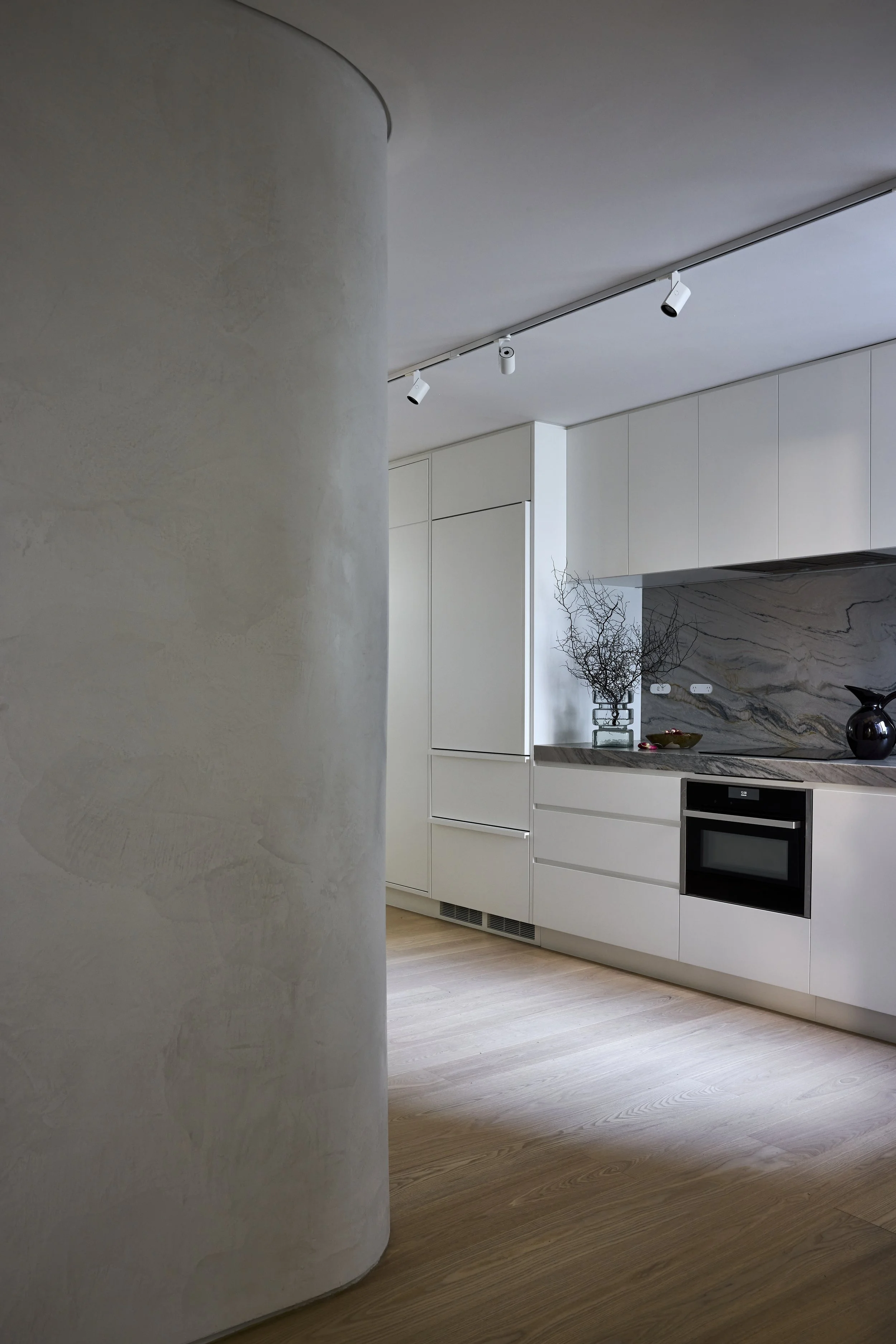
At the entry, a softly curved wall in Marmorino creates a sculptural moment that guides you toward the kitchen.
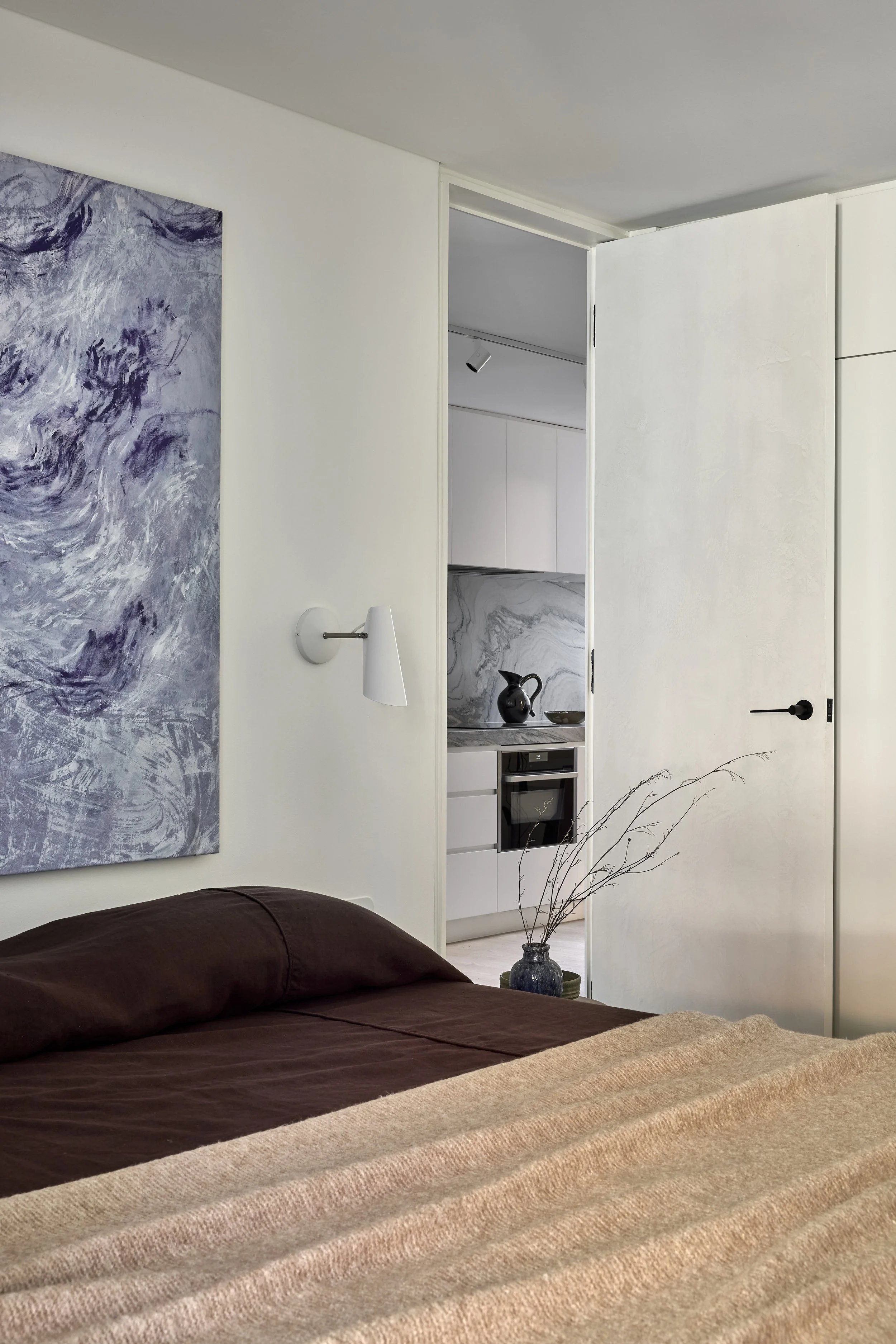
In the bedroom the door frames a glimpse into the kitchen.

Bespoke joinery wraps irregular walls, folding protrusions into seamless storage.
In Sydney’s Drummoyne, 89-square-metre period apartment becomes a study in spatial ingenuity—rather than fight the building’s protrusions and awkward geometry, interior designer Jacqui Koska treats each constraint as an instrument, turning problem areas into the project’s strongest notes.
The result is apartment living with the ease turned up: flexible and refined. The interior features soft curves where hard angles once collided, easing circulation and opening up sightlines.
A glass-partitioned study responds to work-from-home demands without sacrificing light or spatial generosity; when not in use, it reads as part of the living volume rather than a bolt-on room.
Even the problematic bathroom bulkhead, often disguised or tolerated, has been re-cast as a sculptural feature, its form acknowledged and elevated rather than erased.
The furniture within follows the architecture’s lead, every piece is designed and crafted for the apartment, collapsing the jitter of ill-fitting objects into a coherent whole. A custom desk with inlay sits perfectly within the glass partitions; bespoke cabinetry wraps irregular walls and absorbs protrusions, translating awkwardness into seamless storage. Against a clean, restrained palette, art and select furniture take the spotlight—allowing moments of colour, texture and silhouette to punctuate.
Marmorino plaster walls introduce tactile depth; concealed storage keeps daily life out of the frame; junctions are considered so that nothing shouts. The luxury is in the calibration—doors that close flush, radiuses that meet the hand, surfaces that catch light softly. It’s an apartment that feels meticulously edited to its finest detail, but not precious: the kind of refinement that makes living simpler rather than more performative.
Shaped by time in London, New York and Tokyo, Jacqui’s approach balances clarity and calm with wabi-sabi grit—clean lines offset by textured contrasts and subtly raw materials.
The design’s strength lies in reimagining the plan for liveability, then expressing those moves through tailored, character-making details. Just as important, Jacqui reads her clients closely—turning wish lists into spaces that elevate daily rituals and feel specific to a life, not a trend.
Through measured moves including curved interventions, custom joinery and purposeful materiality, Drummoyne Apartment reframes the supposed limits of compact living. The awkward becomes elegant, the leftover becomes useful, and the plan finds its calm.
