

Lorne Treehouse By Keep Studio
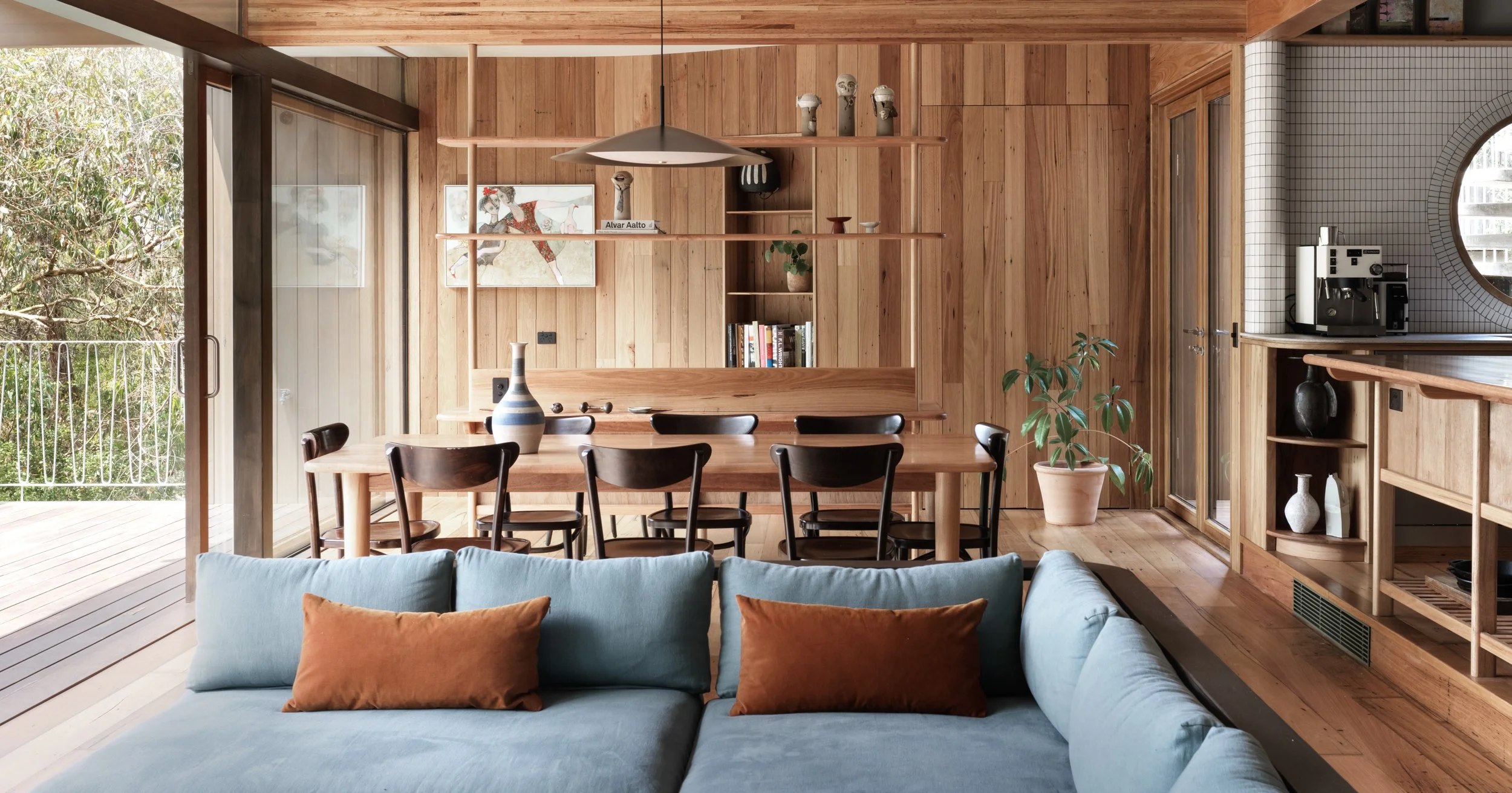
Designed by Keep Studio, Lorne Treehouse perches among eucalypts—light-footed, steel-framed, and designed for a family, with handmade details and calm spaces tuned in to the canopy.
Words HANDE RENSHAW Photos ALEXANDER WILLIAM Build WILLIAM & TIM DAVEY
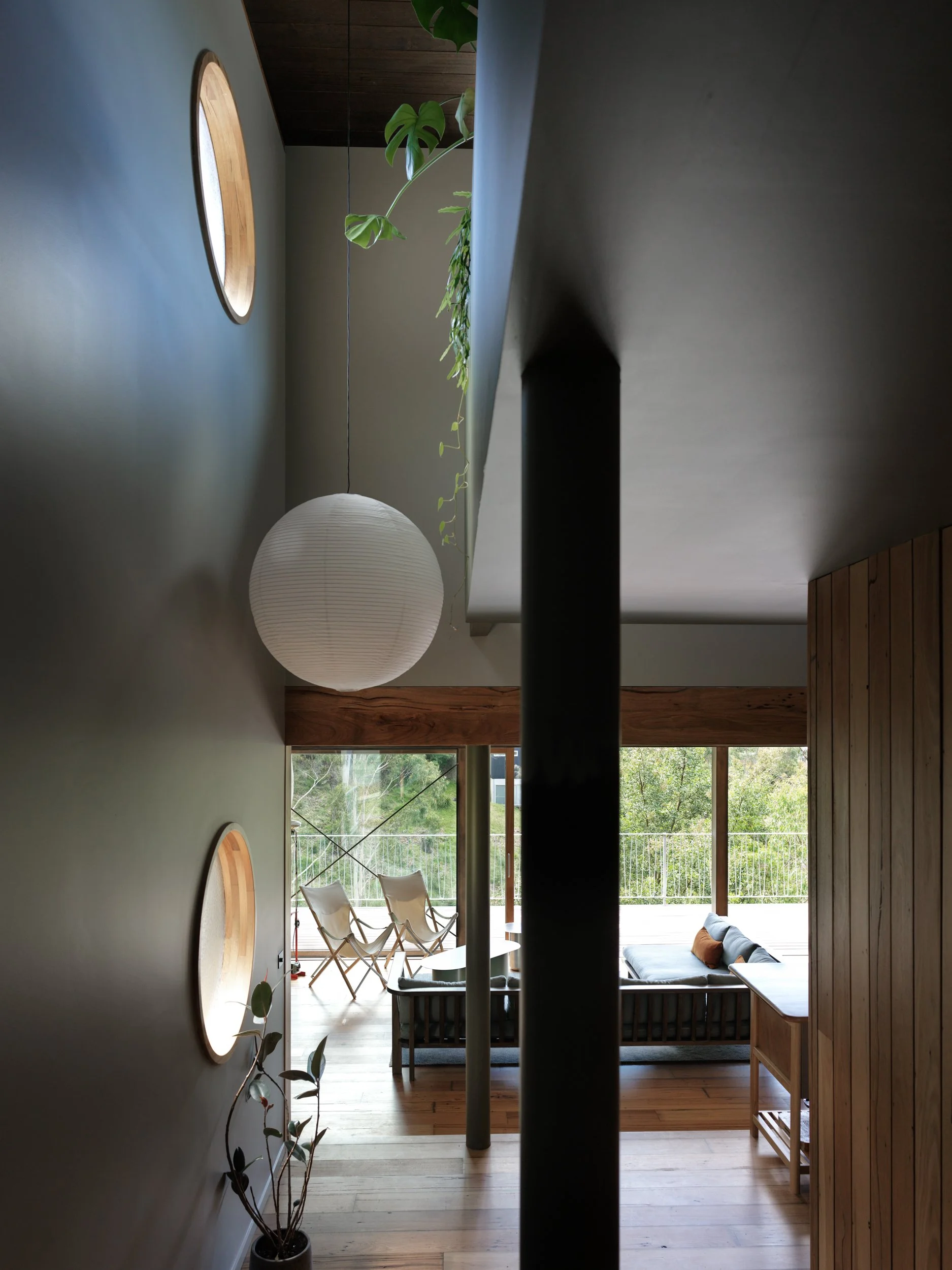
A double-height hallway funnels light to the living deck, where circular porthole windows, timber lining and a paper lantern echo the home’s treehouse calm.

The treehouse prioritises the same honest expression of structure and materiality, and connections to nature.
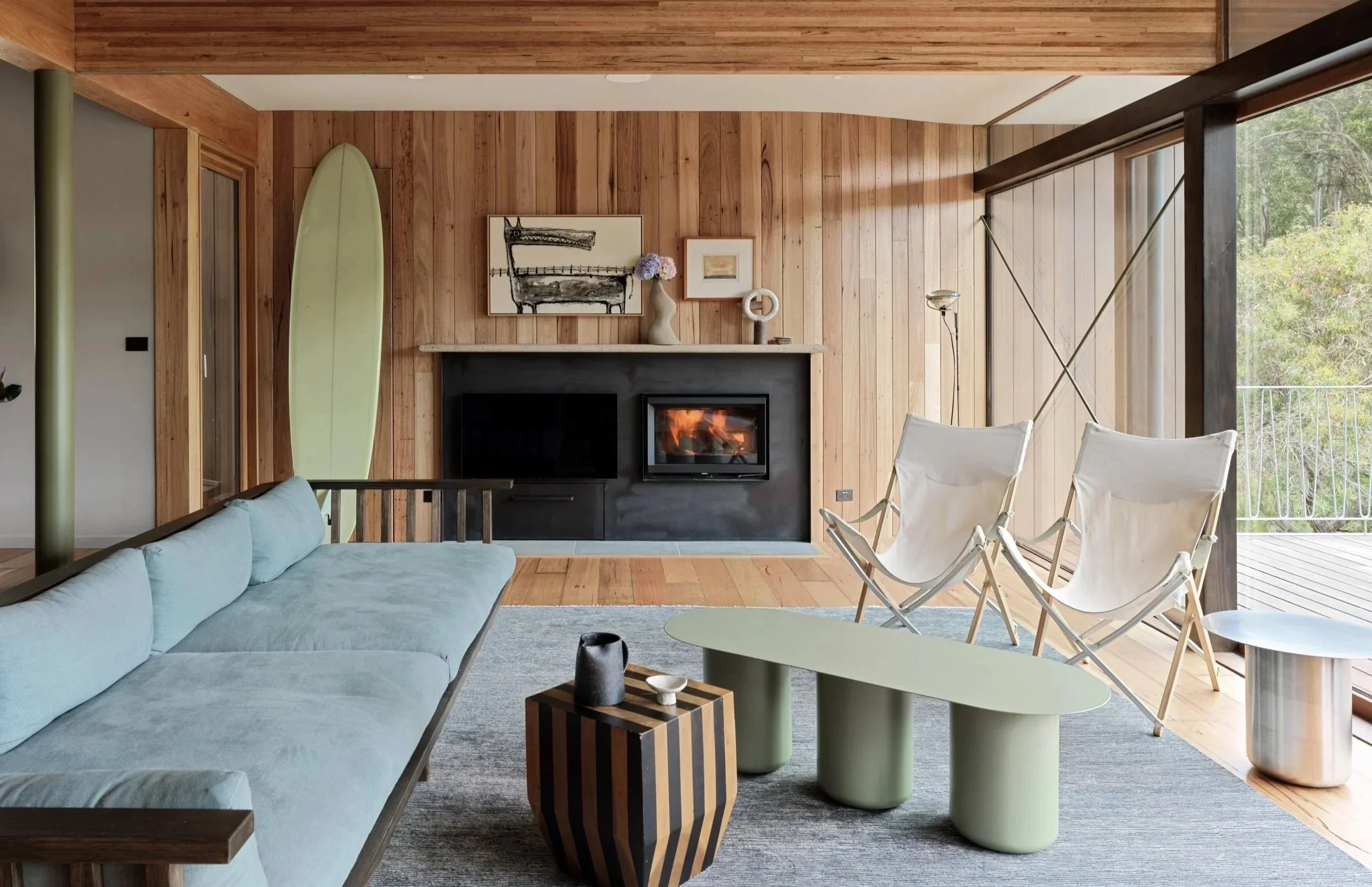
Tucked in a tree-lined cul-de-sac in coastal Lorne, the timber home floats among the treetops and is the home of Keep Studio’s co-director William and his partner, Ruby.

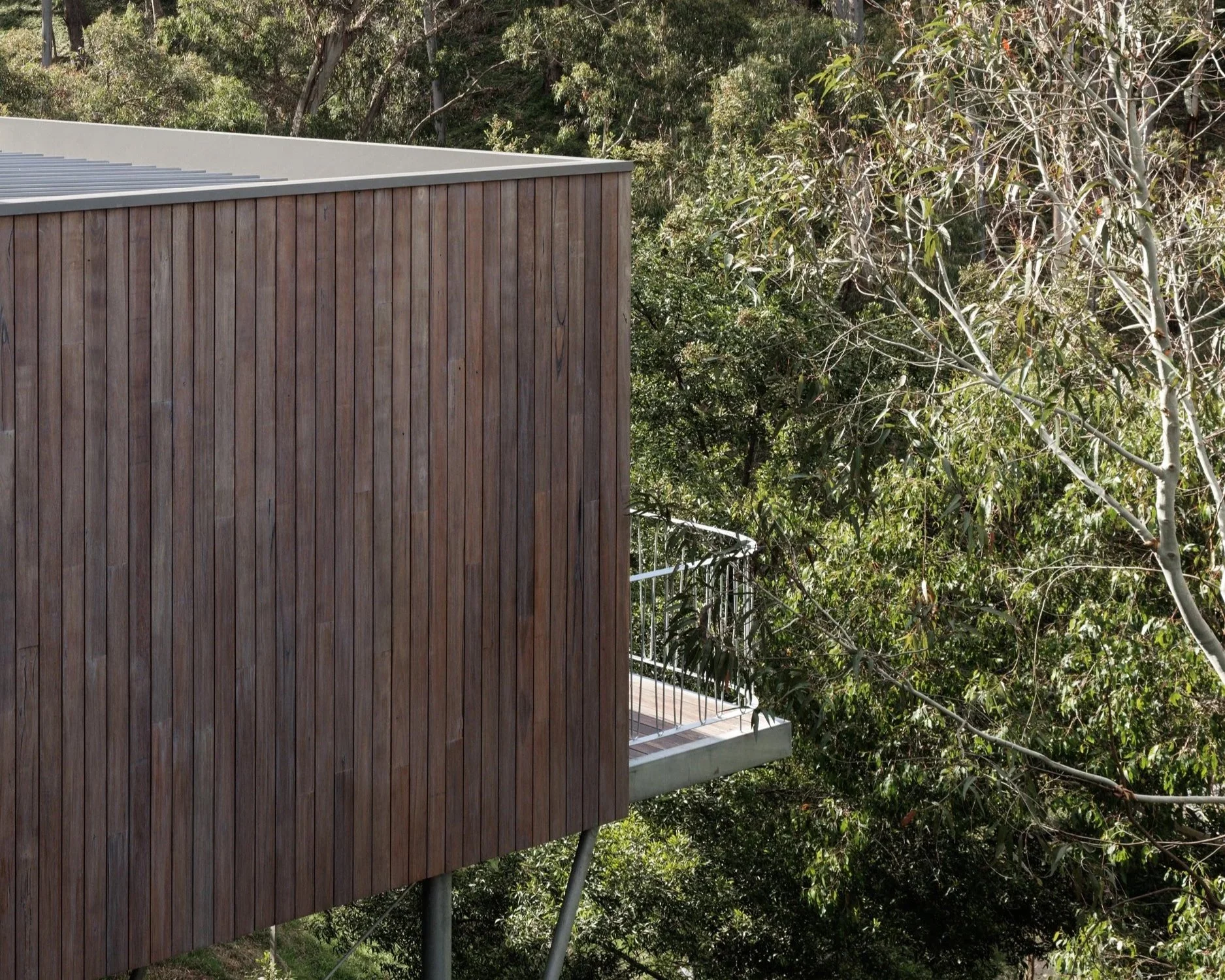
Elevated on steel posts, the structure avoided a costly excavation and ensures the home touches the earth lightly.
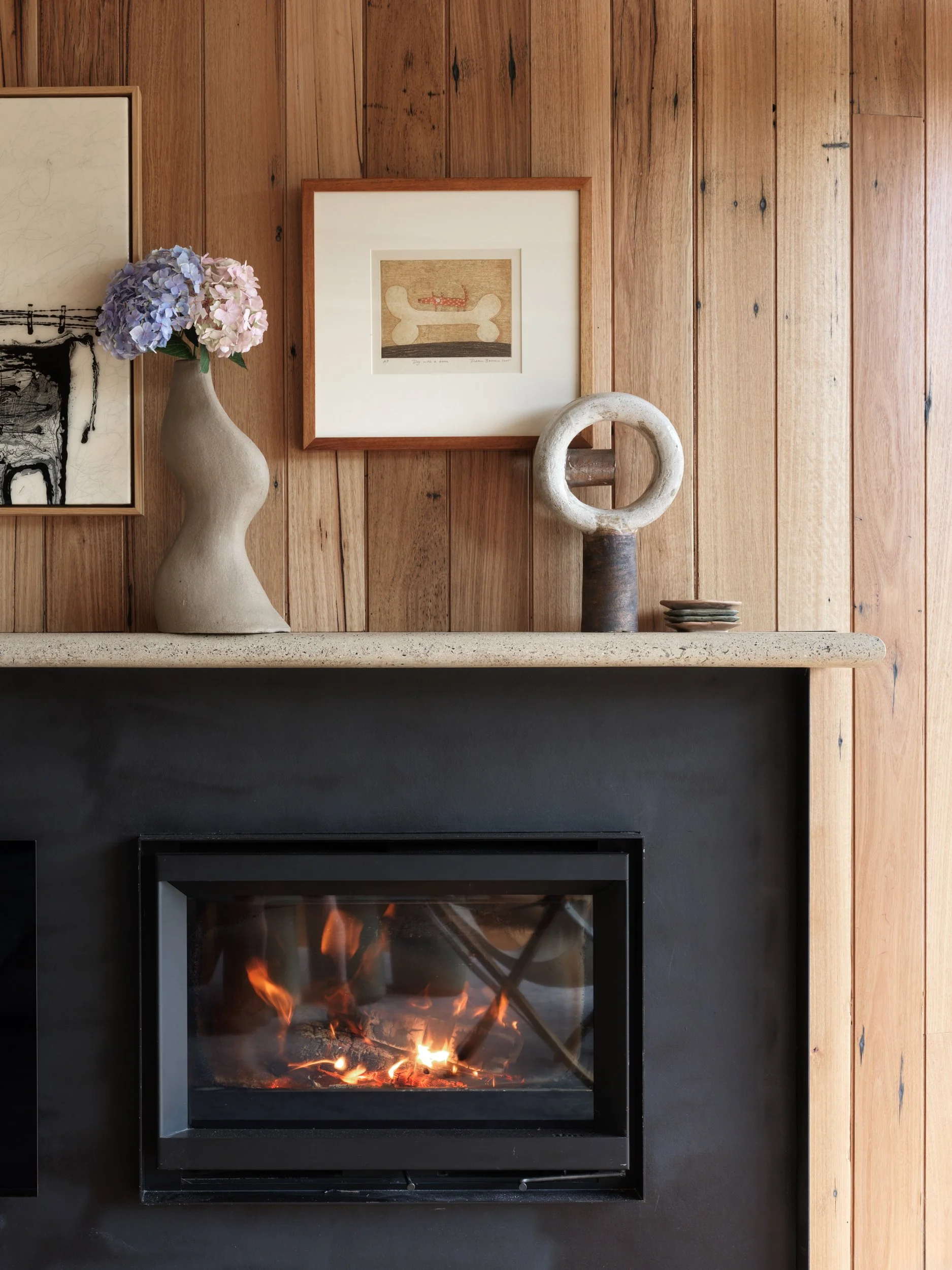
Influenced by post-war modernists including Robin Boyd, Craig Ellwood and Richard Neutra, the home prioritises honest expression of structure and materiality, clarity and connection to nature.
“Shadows from surrounding eucalypts, circular windows, and internal plants animate the walls throughout the day.”
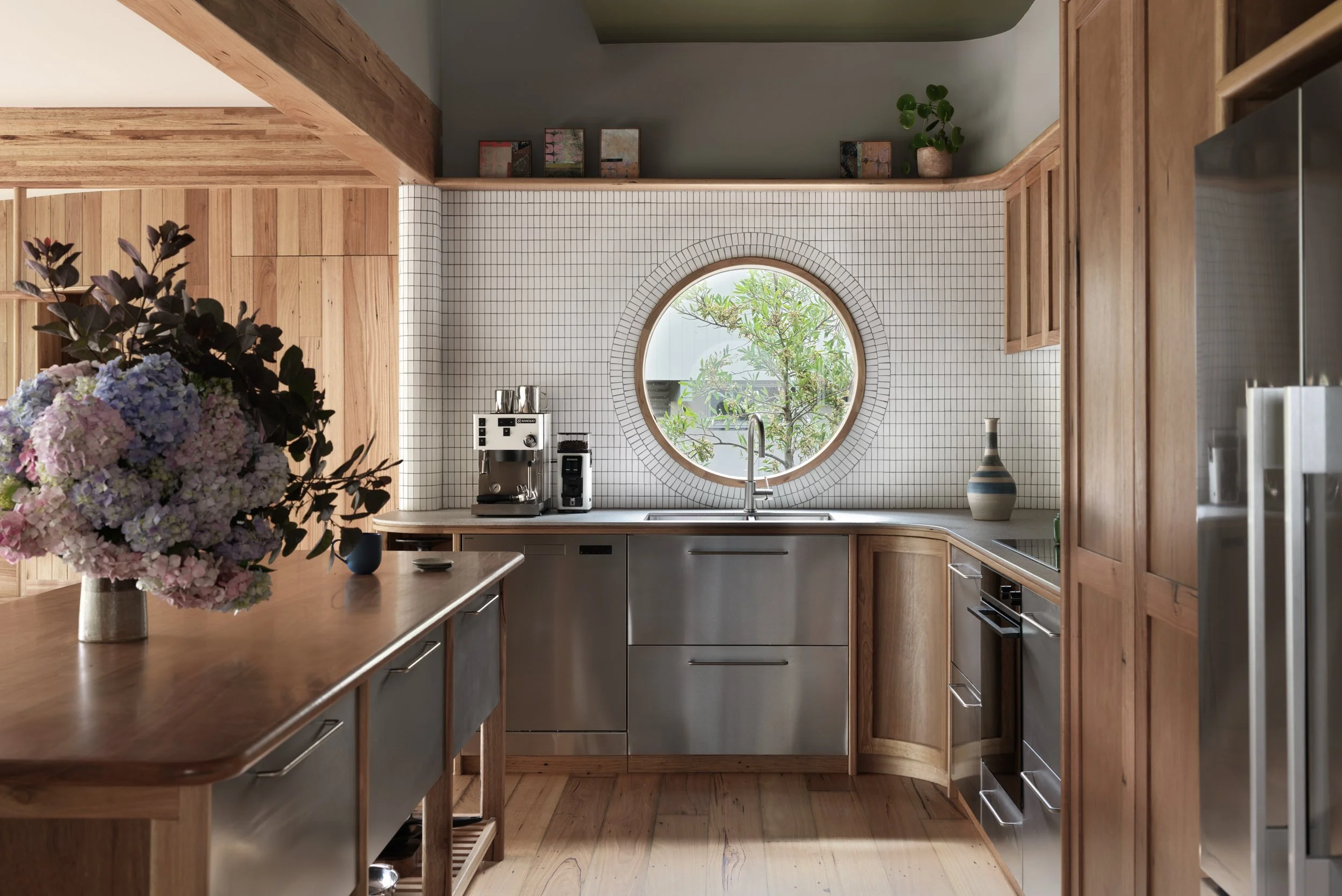
Curved profiles and a circular window soften the kitchen’s hard lines, giving the home an organic and natural feel.
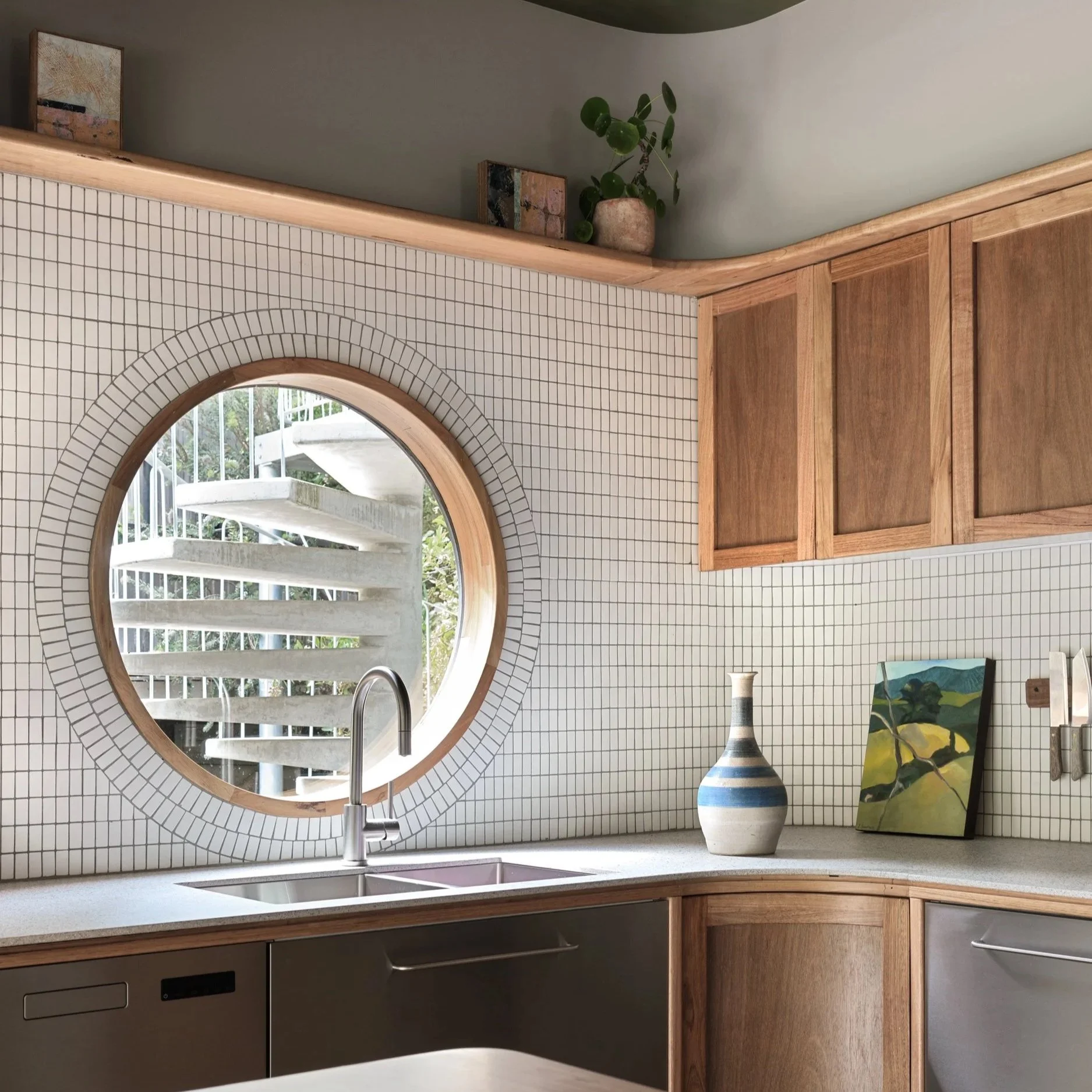
The brief for the treehouse called for a long-term home tailored to a couple who love to cook, entertain, and work from home.
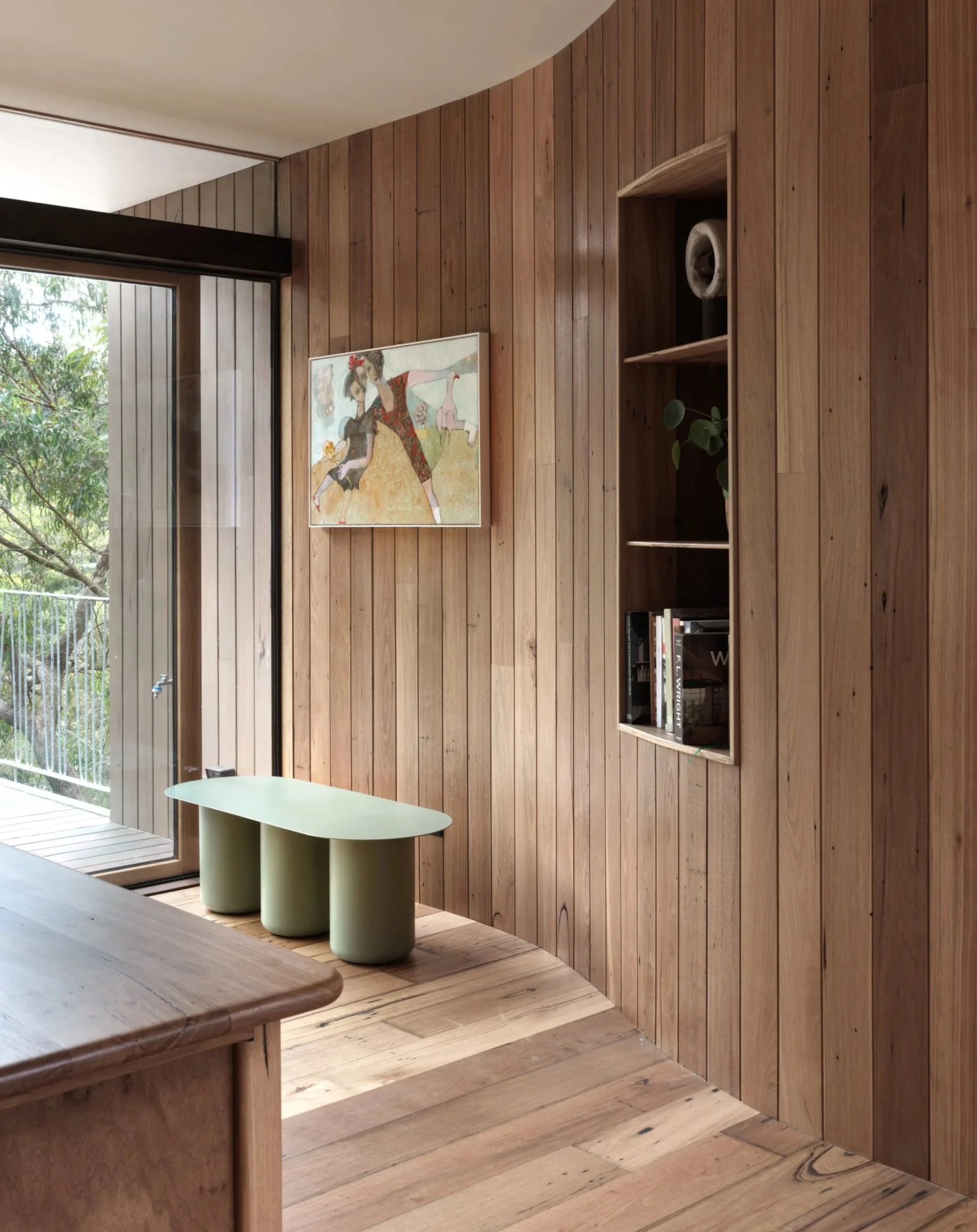
The palette of greens, greys, and warm timber connects the home with its landscape.
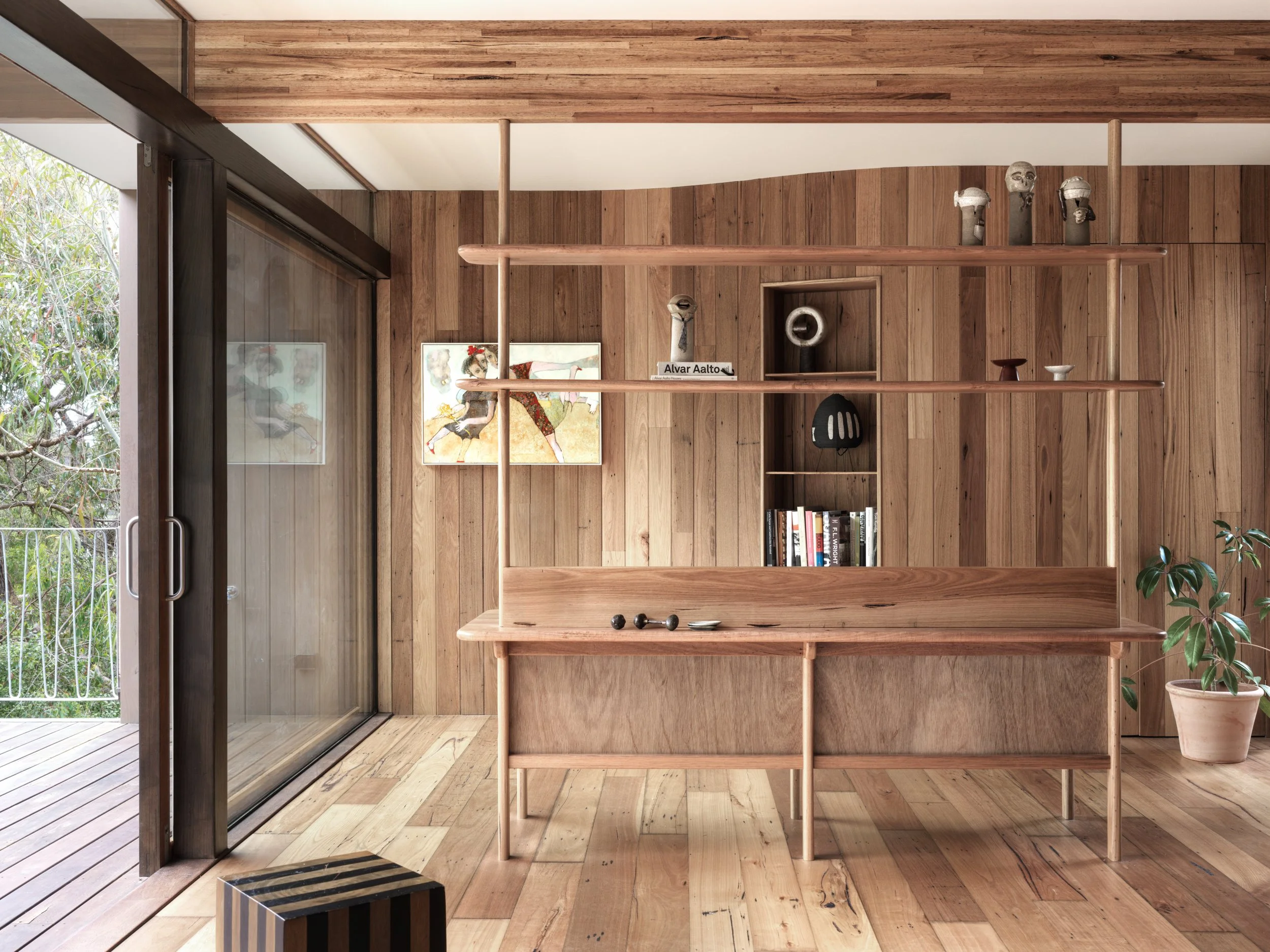
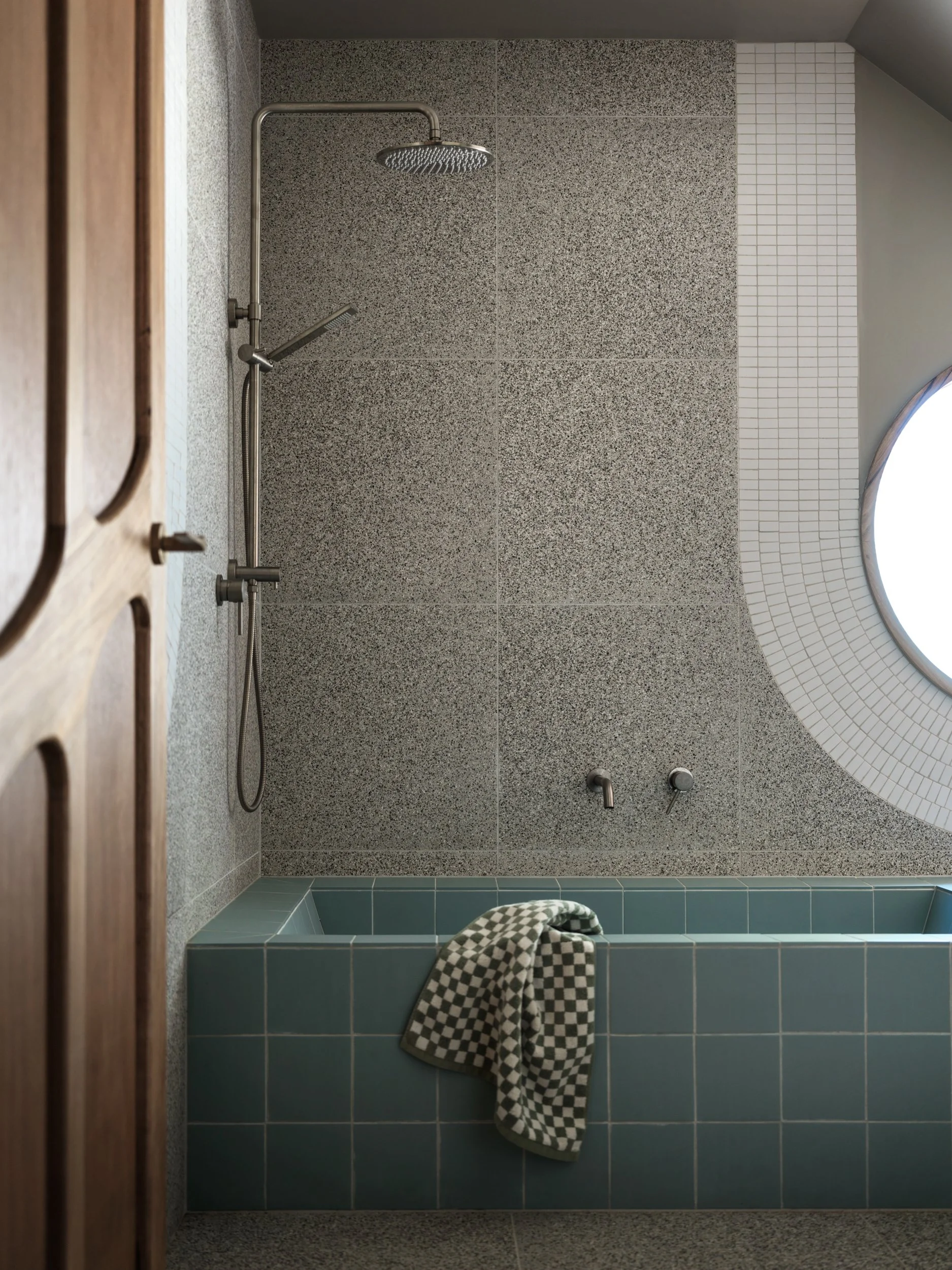
The spaces prioritise a strong connection to nature.
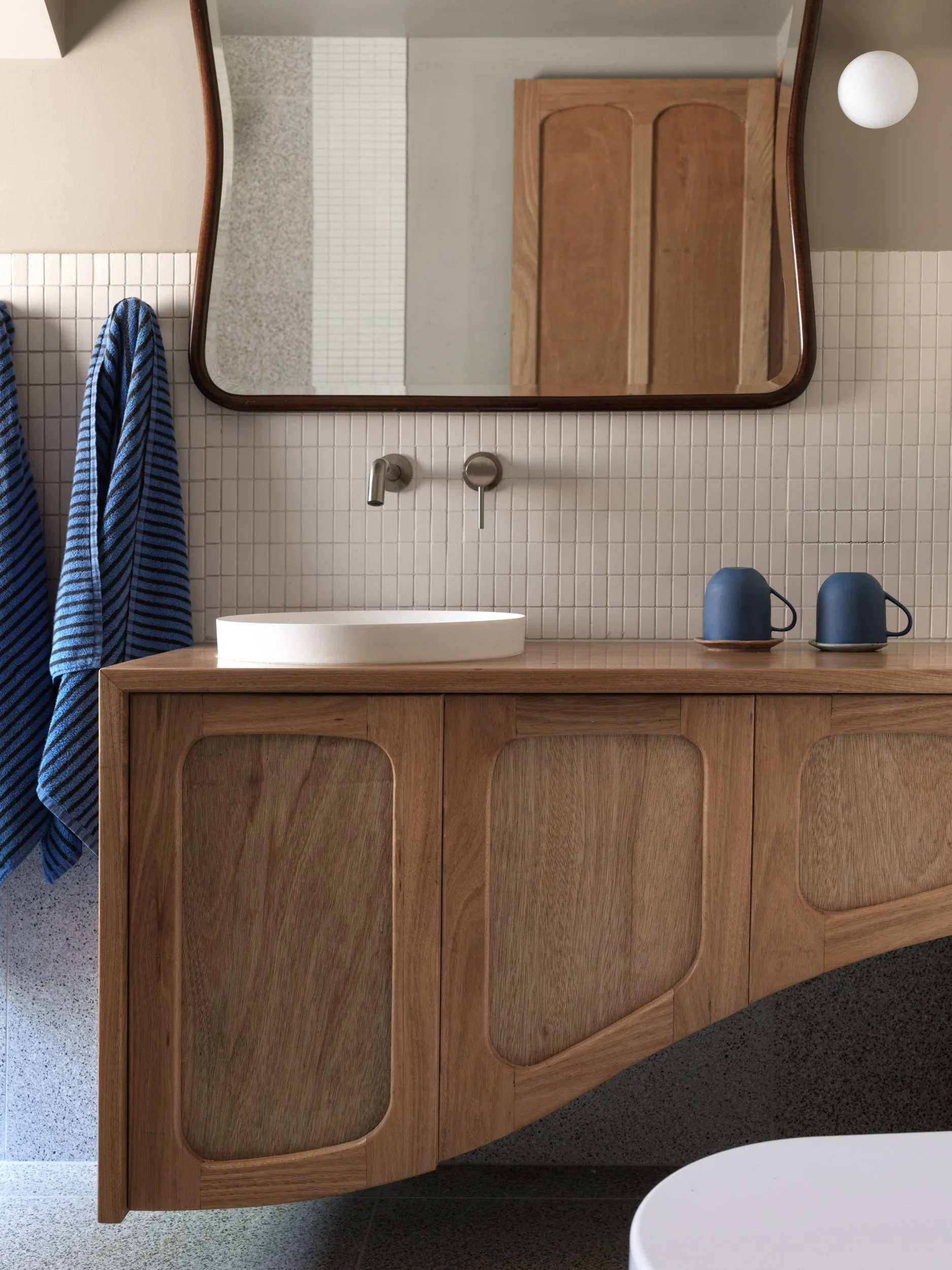
The organic lines and forms found throughout the house extend to the bathroom space.
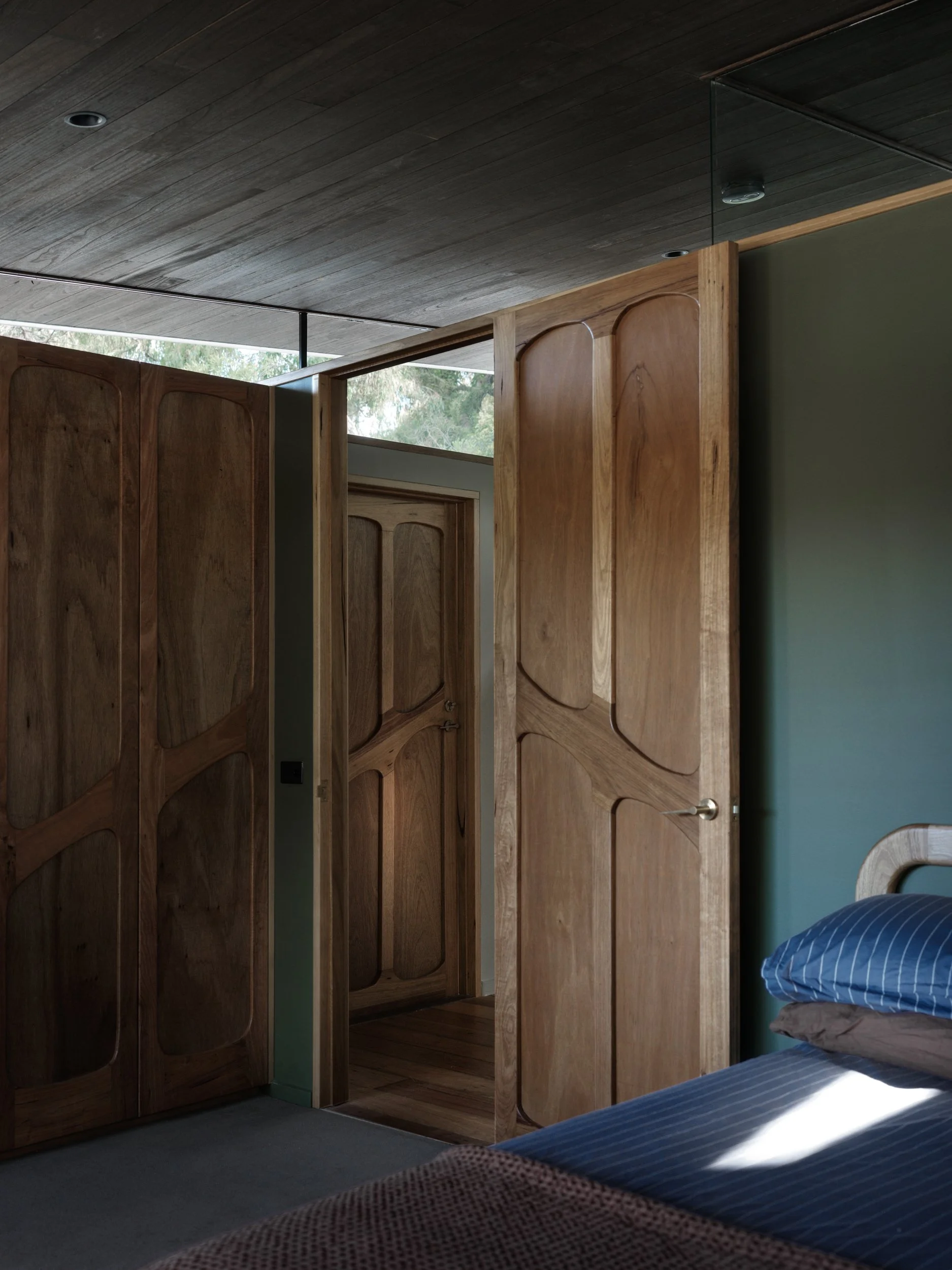
Natural light animates the interiors through circular and highlight windows.
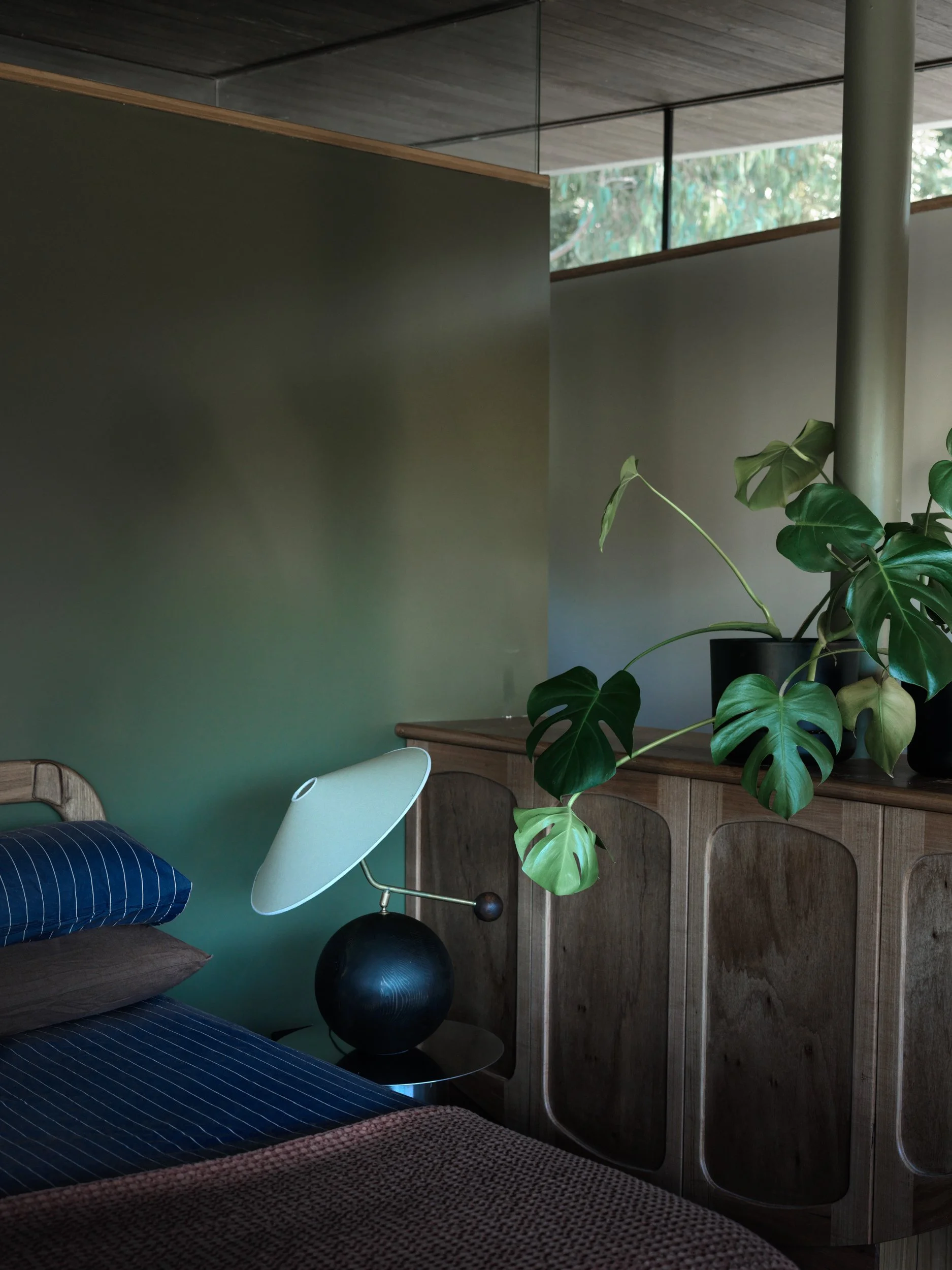
In the bedroom: Orbital Lamp by Hermon Blue.
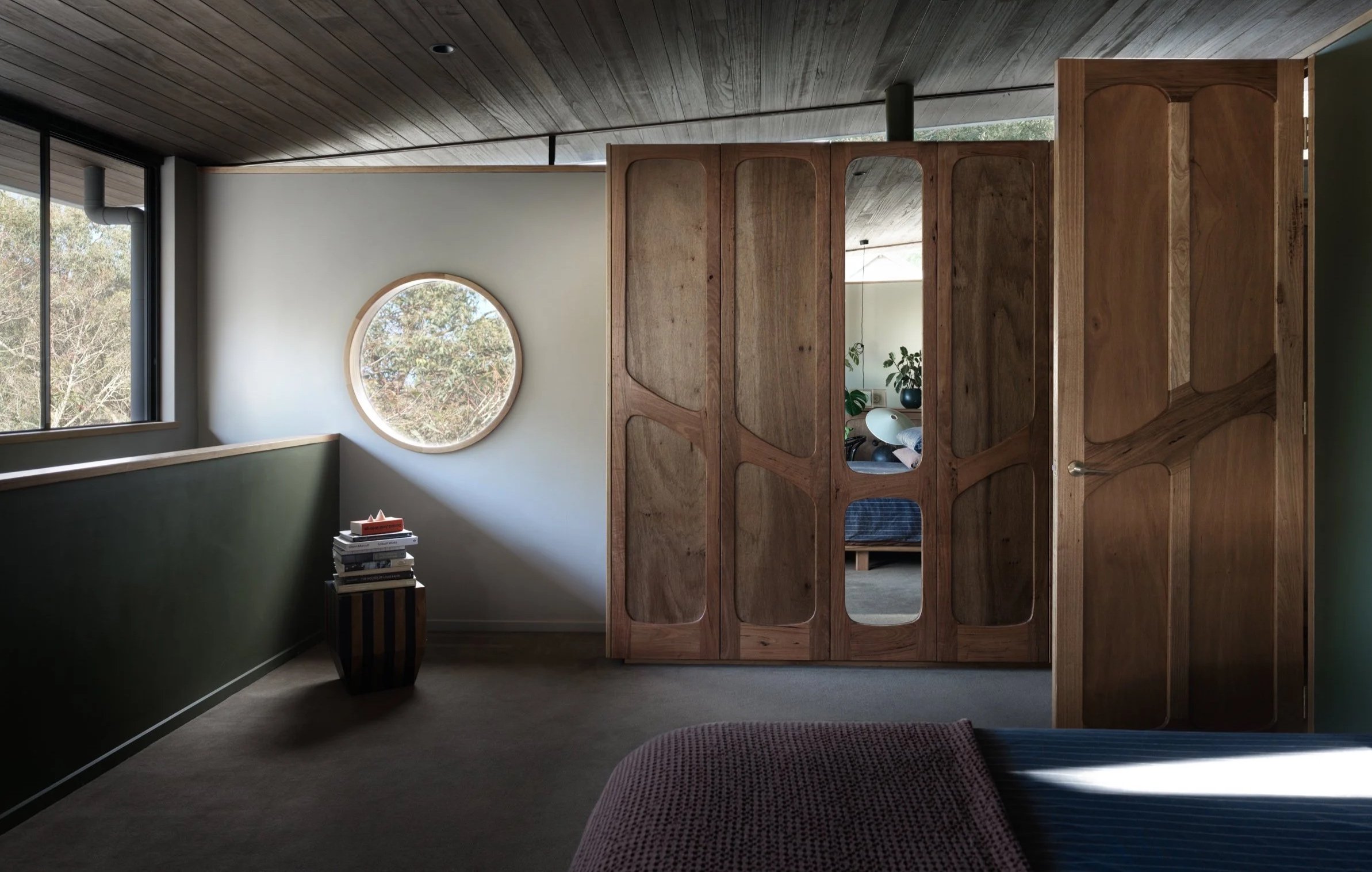
The palette of greens, greys, and warm timber connects the home with its landscape.
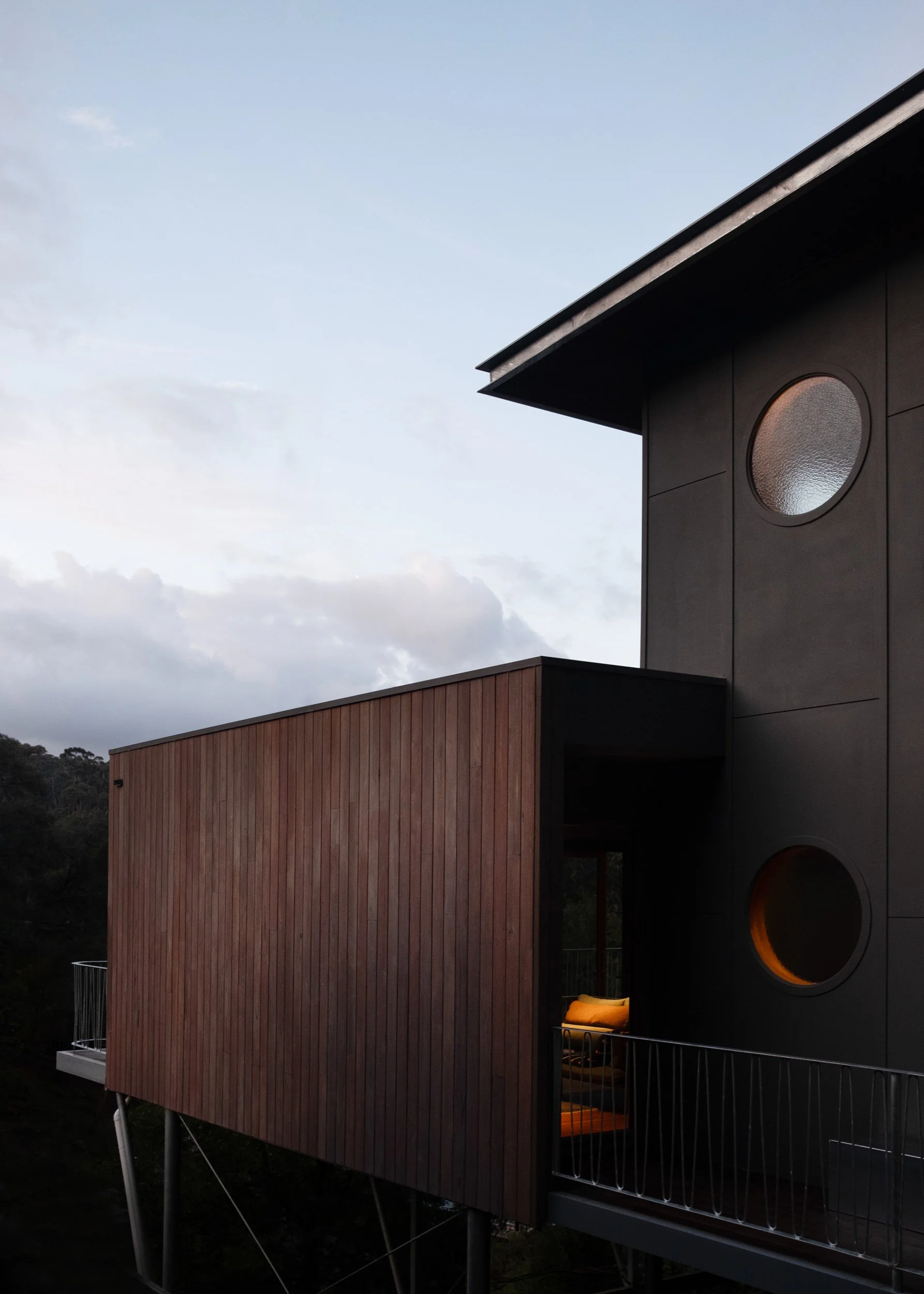
Timber-clad and steel-legged, the Lorne Treehouse hovers above the gully.
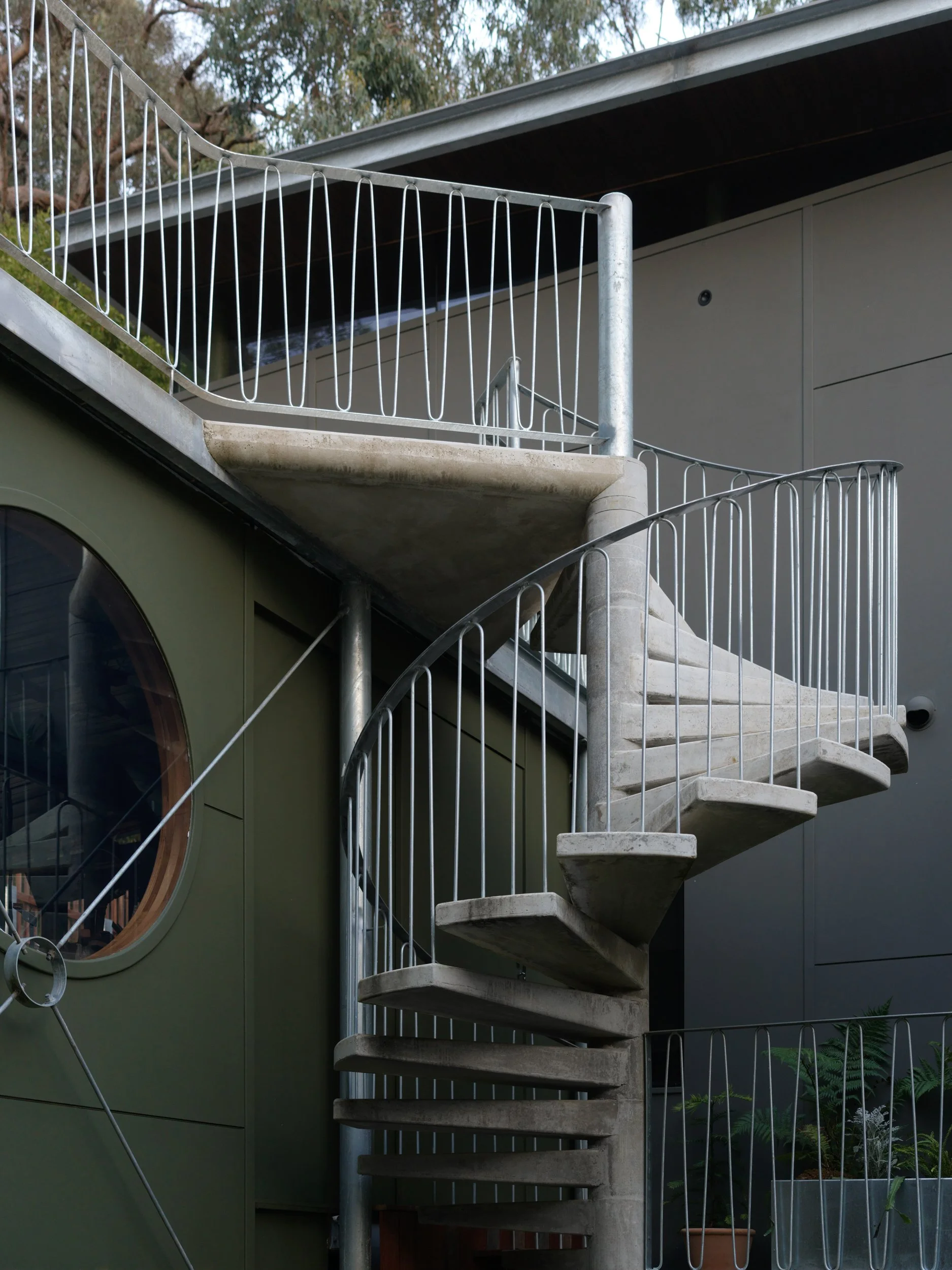
The incredible hand-poured in-situ concrete spiral staircase.
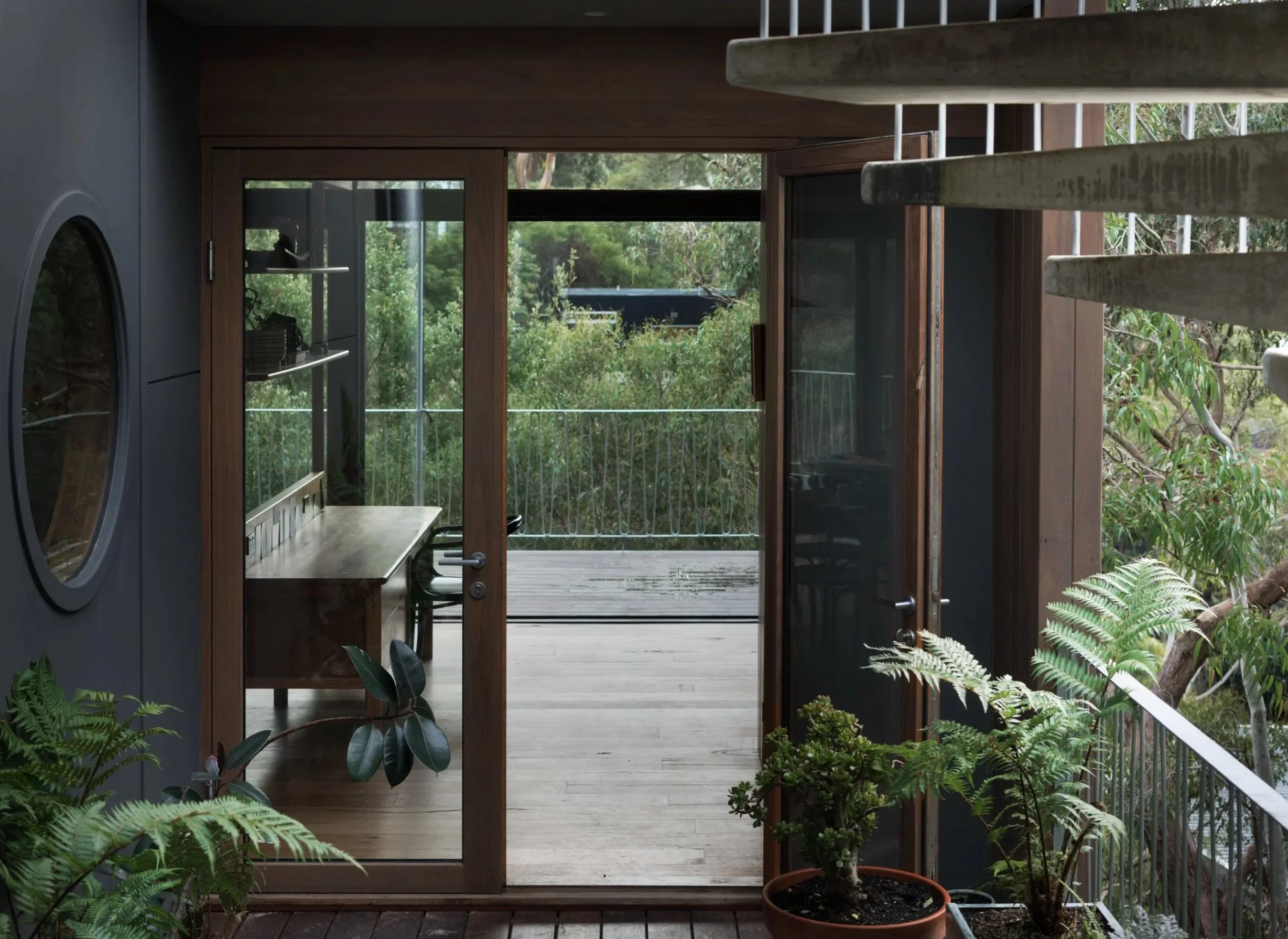
A love of the outdoors shaped the design—the home functions like a shed: raw, open, and deeply connected to the outdoors.
Designed by Keep Studio, Lorne Treehouse sits tucked into a tree-lined cul-de-sac in coastal Lorne, lifting above the canopy on slender steel posts.
The project was a family affair: co-created by Keep Studio co-director William Davey for himself and partner Ruby, in close collaboration with his sister Nikki (co-director and interior designer) and built by hand with their father Tim. The project is a family endeavour that folds craft, economy and affection into every junction.
The brief was simple: a warm, flexible house for cooking, working and gathering that touches the site lightly and opens to the trees. Influences run from Robin Boyd to Craig Ellwood and Richard Neutra—modernists who prized clarity, structure and the comfort of connection to nature.
Here, a straightforward steel frame avoids costly excavation on the steep, 30-degree slope, allowing the home to hover above ground and preserve the bush below. Exposed beams, columns and cross-bracing meet generous glazing, establishing a legible rhythm. Against that rectilinear language, a family of soft curves does careful work: easing corners, concealing storage, and softening edges in the kitchen so the plan feels intuitive, not diagrammatic.
Cost, and the chance to make, shaped the method for the home. With Lorne’s construction premiums in mind, William set a rule: anything designed must be buildable in-house. That constraint became a catalyst. Working with Tim, a retired commercial builder, construction unfolded between the site and a workshop in Echuca, drawing on their shared skills in carpentry, steel fabrication and formwork.
The centrepiece of that hands-on approach is a hand-poured, in-situ concrete spiral stair, cast two treads at a time over two weeks. Custom hardwood doors, Gaudí-tinged in their sculpted profiles, were bandsawn and bullnosed in-house; furniture and joinery were made by hand; looped steel balustrades were bent on a reo bar bender and jigged on the workshop floor. When needed, the duo tapped their Echuca networks; structural engineer Simon Brown remained an agile sounding board as ideas were refined in real time.
Inside, light and outlook set the plan. Visitors park at the upper level and descend the spiral to enter a living space that feels ground-level until you notice the trunks below. North light washes the kitchen and lounge through oversized top-hung sliders and highlight glazing; circular windows add a quietly nautical note. A mezzanine, defined by expressed columns and wrapped in a 360-degree highlight window, becomes a retreat immersed in the canopy. Throughout the day, shadows of eucalypts animate walls; greens, greys and warm timber hold the palette close to site.
Material thinking is precise and resourceful. Cladding modules align to standard cement sheet dimensions to eliminate off-cut waste; planning echoes that discipline across rooms. Steel off-cuts are repurposed where possible. Bored piers minimise disturbance on the steep ground plane. Bushfire-compliant spotted gum decks (BAL-29) and blackbutt frames pair durability with thermal performance. Recycled timbers from Victorian sites, and hardwood salvaged from an old Echuca squash court, return as joinery and detail.
The treehouse is a lived system rather than a statement piece: structure laid bare, family-built and future-minded—evidence that budget discipline and craft can coexist.
