

Natalie Rosin
Natalie Rosin is an artist who defies traditional sculpture with architectural ceramic designs.
Words: Emma-Kate Wilson

MCM Natalie Rosin and Emma Lipscombe Duo Exhibition at Saint Cloche Gallery. Photo - Jacqui Turk.
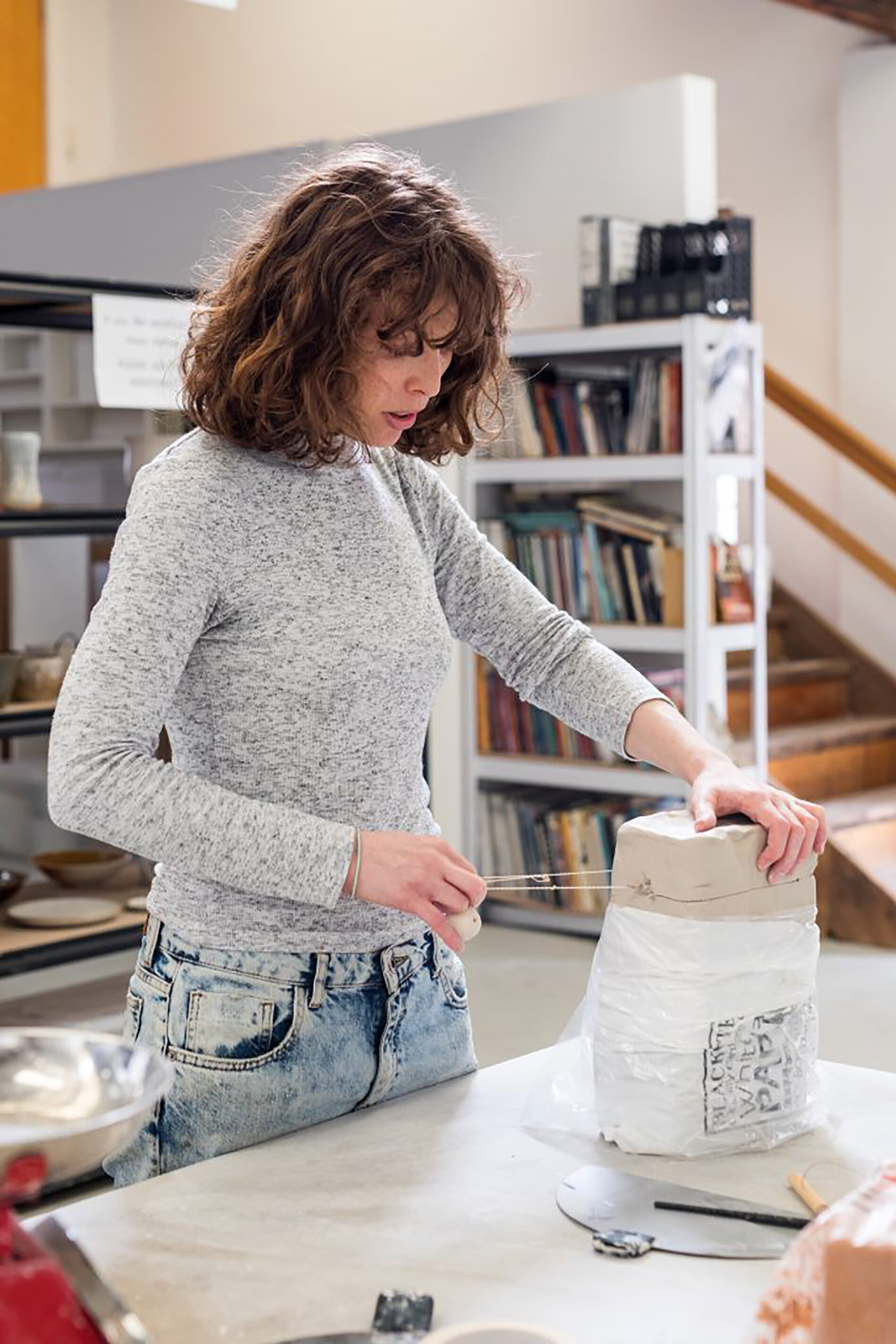
Natalie Rosin in her studio. Photo - Kai Leishman for Jardan.

White Large Collage Vase by Natalie Rosin for Jardan. Photo - Jardan.
It was at university when Natalie first uncovered her love of ceramics, all while studying for a Masters of Architecture Degree at UNSW in 2012. Even though ceramics wasn’t part of the degree, the sculptor managed to fit in a beginner’s course, which started a more meaningful relationship.
After slowly learning the basics, beginning with functional objects like vessels, Natalie built a foundation in clay. But it wasn’t until 2017 that the designer went full-time with her art; working with clients such as Jardan, Curatorial & Co, Bijl Architecture, Stewart Highfield, Saint Cloche Gallery and other supporters of her art practice.

“I make sure that I am at peace with its mortality. That’s why I’m often pleasantly surprised when everything goes to plan,” says Natalie Rosin of her process. Pictured - MCM wall lights and vases by Natalie Rosin at Saint Cloche Gallery. Photo - Jacqui Turk.
“During my design and making process, certain material and design decisions are often made to limit material wastage and minimise energy usage.”

“The process I follow from a thought in my mind to the final product involves many steps,” says Natalie Rosin. Pictured - MCM sculptures by Natalie Rosin at Saint Cloche Gallery. Photo - Jacqui Turk.
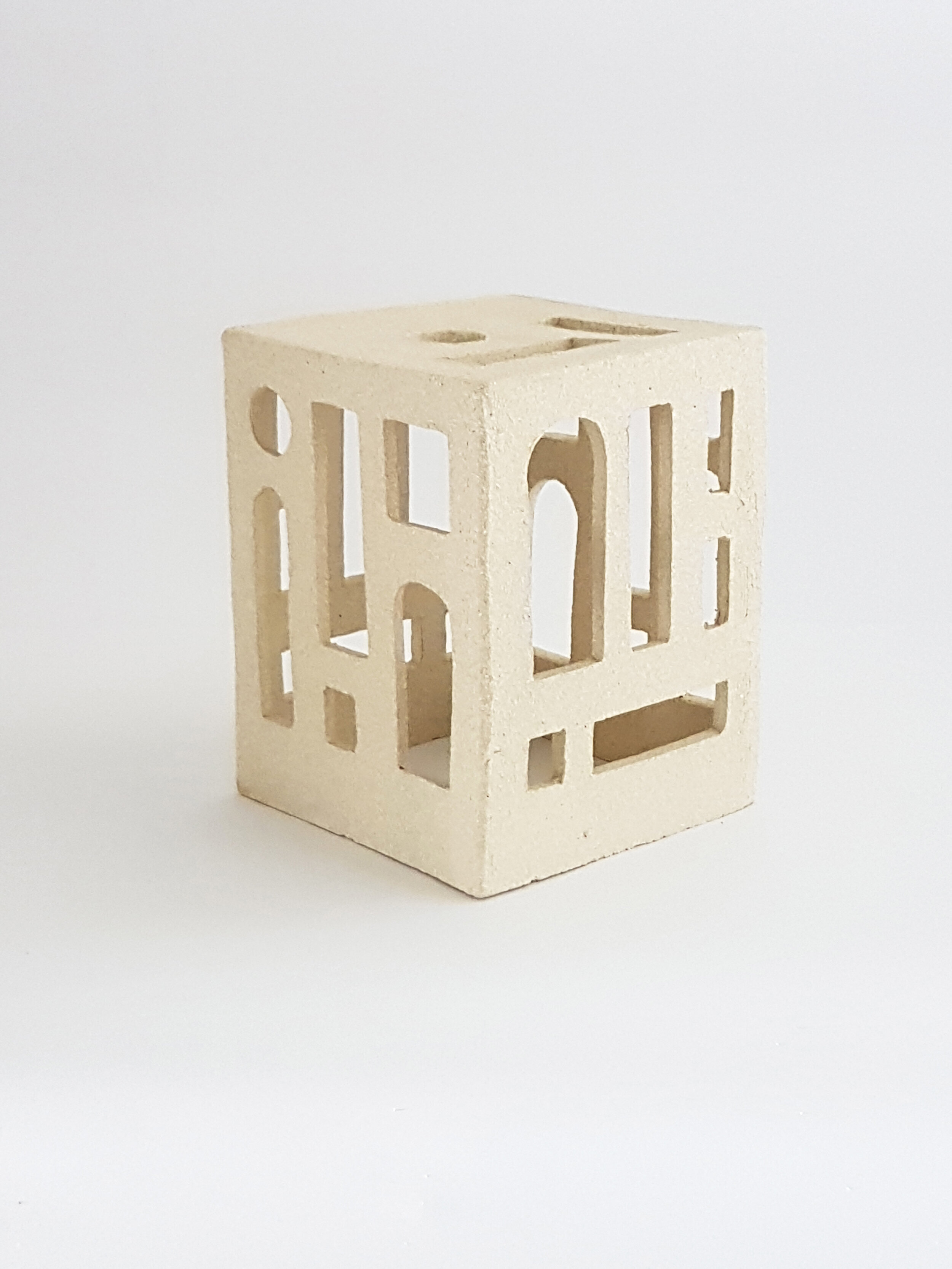
Babylon Sculpture in Sandy Raku Clay by Natalie Rosin. Photo - Natalie Rosin.

MCM wall sculptures at Saint Cloche Gallery. Photo - Photo - Jacqui Turk.
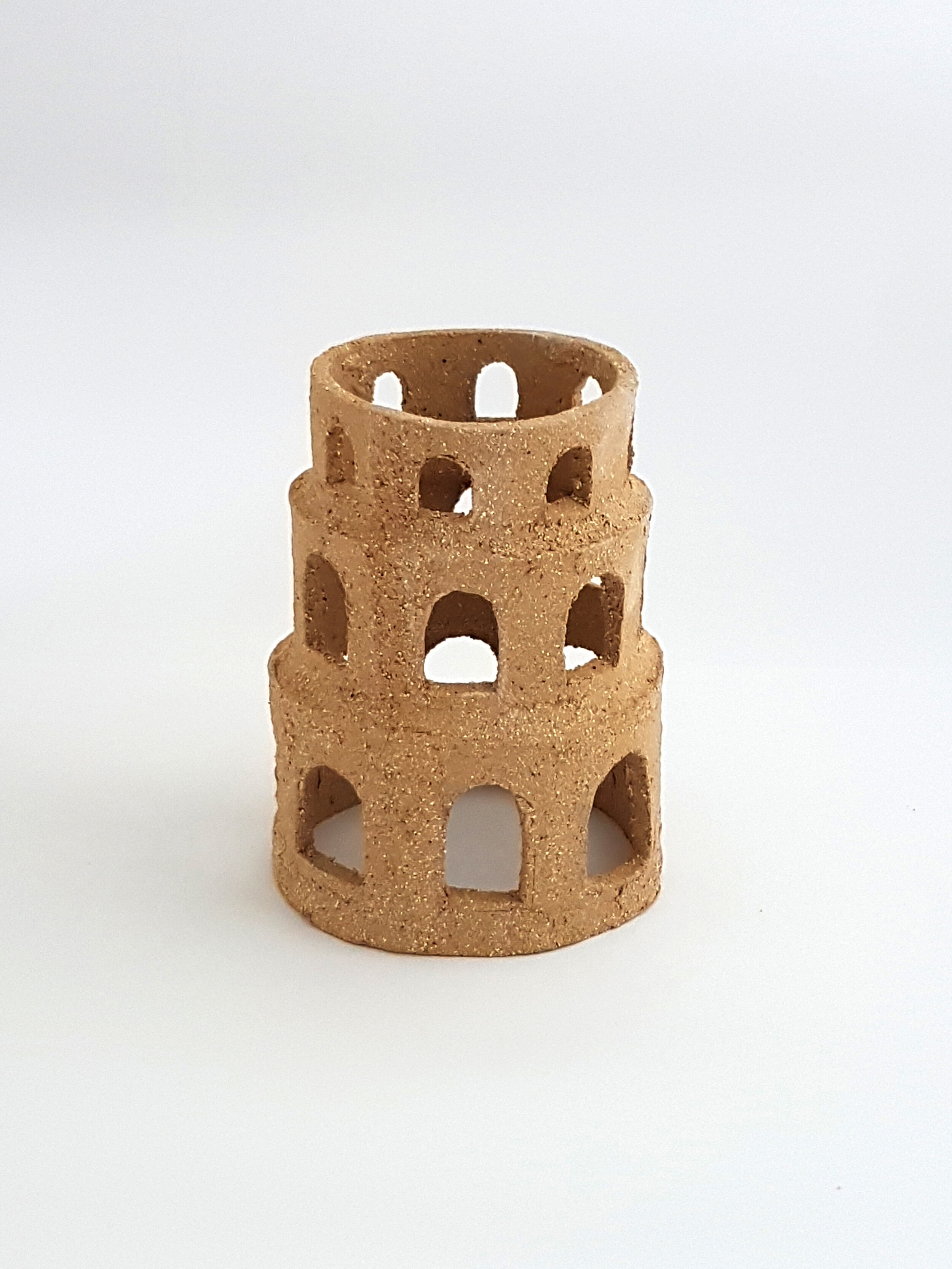
Babylon Sculpture in Buff Raku Clay by Natalie Rosin. Photo - Natalie Rosin.
The highly detailed ceramic sculptures can begin with a sketch and ample research, which is where Natalie’s architectural background comes into play. “I find having that experience really helps when gathering the information from local councils, libraries— gathering images, architectural plans, demolition reports, development applications on council websites.”
Research has been essential to the artist’s upcoming 2020 exhibition at The Australian Design Centre on demolished, or under threat of demolition, buildings in Australia. Somewhat so, this consideration feeds into Natalie’s own practice, by using recycled off-cuts and by-products and making specific clay type selections which she knows are less likely to incur a high breakage.
“I don’t think we can live in this point in history without properly thinking about sustainability and the environment. ”

Natalie Rosin wearing SHHORN. Photo - Traianos Pakioufakis.

Babylon Sculptures by Natalie Rosin. Photo - Natalie Rosin.

Noir in Yolk Art Deco Series Sculpture by Natalie Rosin for Jardan. Photo - Jardan.
After the researching and sketch, Natalie moves onto a computer to visualise every angle in a 3D model, before using a ‘slab rolling’ technique to build her mini architectural designs in clay. But, with every design comes a fear of a crack, a break, or glaze running and fusing to another object. "Every time I make a piece, I treat it as though it may break,” the artist shares. “I make sure that I am at peace with its mortality.”
“Another virtue ceramics has taught me is patience.”
The artist looks towards the awe-inspiring Catalan Modernism architecture of Gaudi in Barcelona, which left an impression on the young Bachelor of Architecture student backing 2011. “The beautiful organic forms are so moving, and the audacity to cover every single exterior surface in mosaic, was very inspiring,” she reflects. It would be my dream to mosaic an entire building.” For her own sculptures, Natalie finds an obvious inspiration in the links between clay and the concrete used in brutalist architecture.
Film of Natalie Rosin by Flore Vallery-Radot titled City of Clay. Music by Franz Liszt “Aus der Ungarischen Krönungsmesse, S. 381 interpreted by Mauro Tortorelli - Attribution 3.0 Unported (CC BY 3.0)
