

Bush Modern: Inside Light Well House
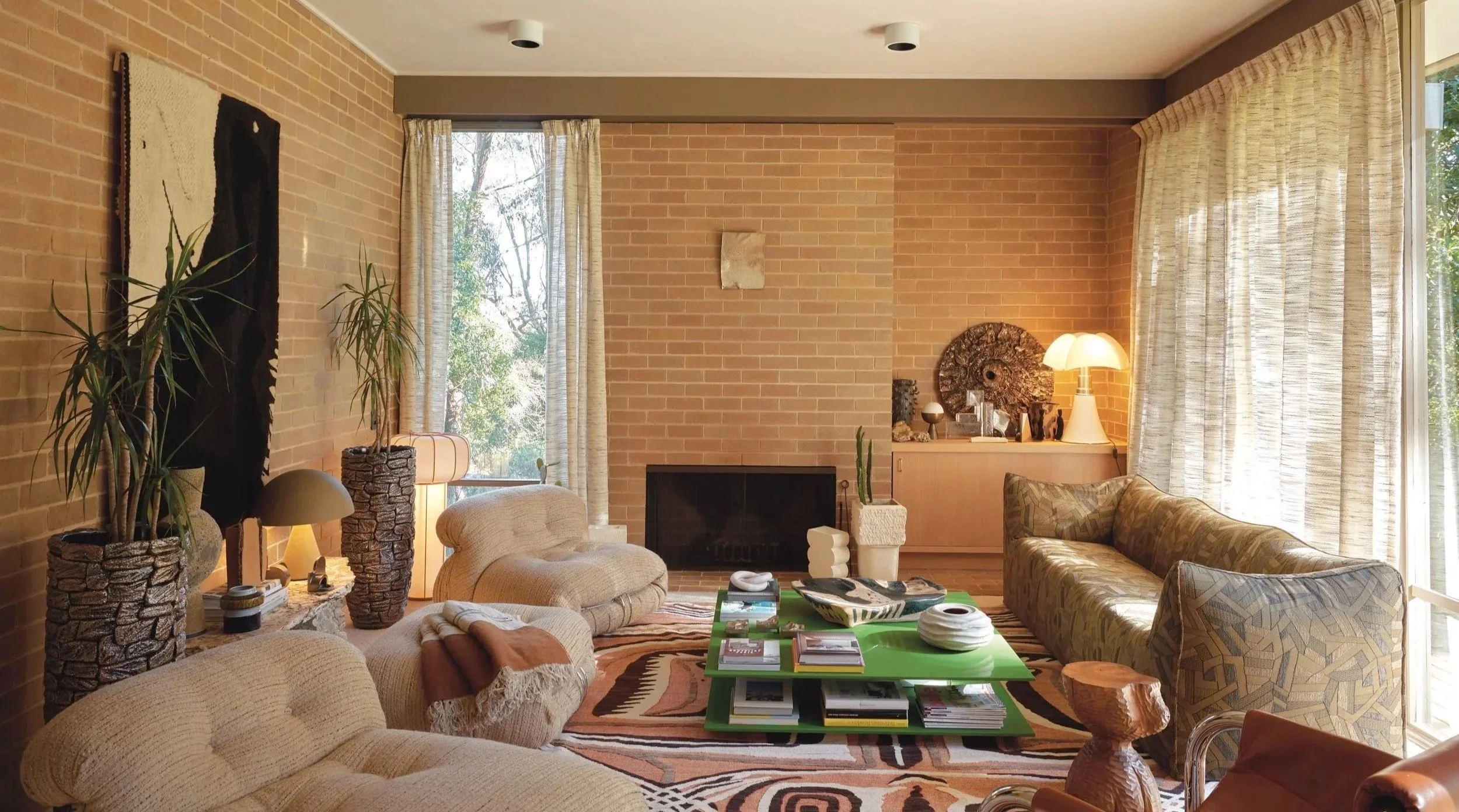
Featured in Jessica Lillico and Sean Fennessy’s new book Bush Modern, Ian J. Smith’s Light Well House is a modernist home on Melbourne’s bushland edge—shaped by materiality and the Australian landscape.
Photos SEAN FENNESSEY
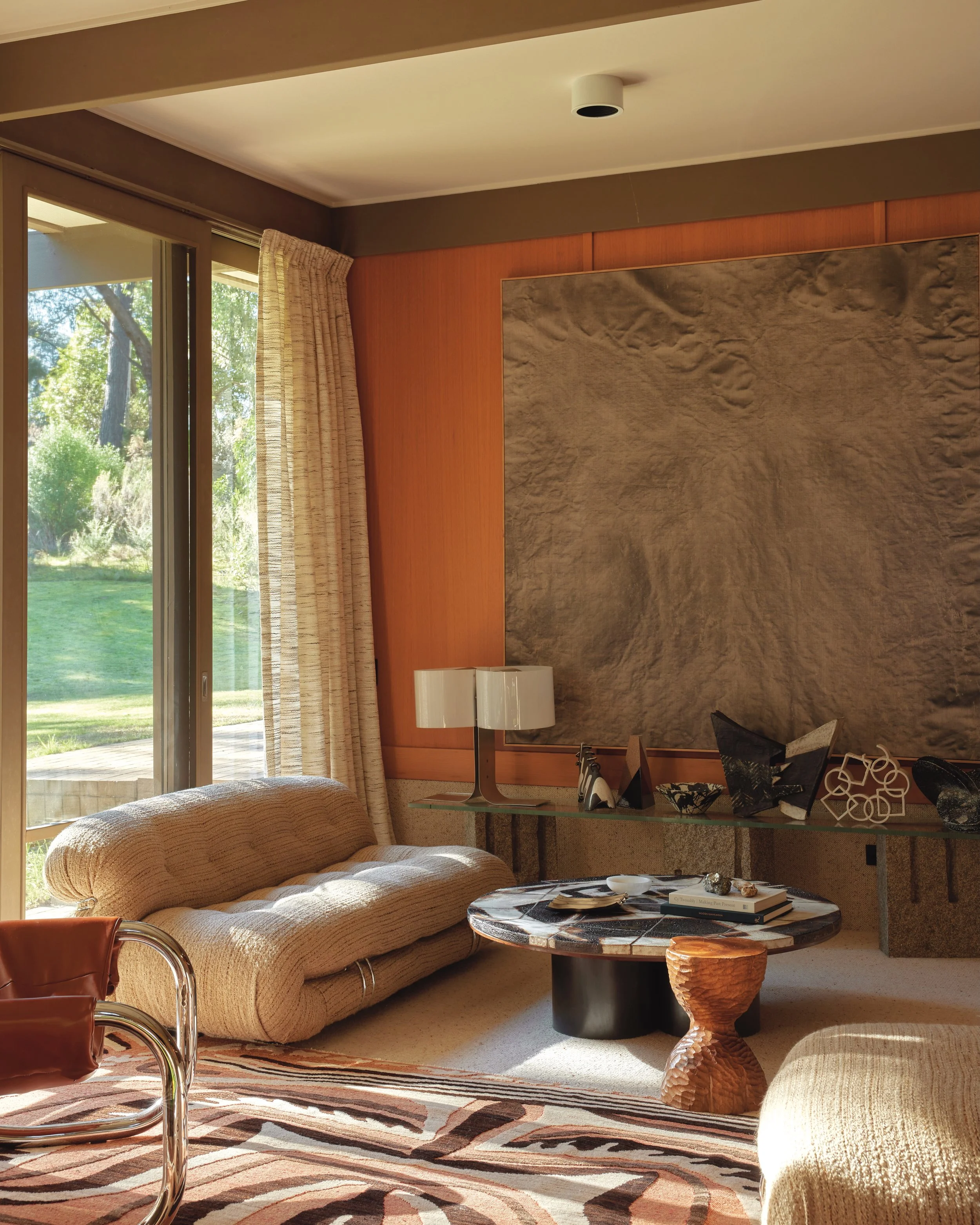
The sunken living room, layered with art and objects, features the classic Soriana seating by Afra & Tobia Scarpa and a Le Bambole sofa by Mario Bellini.
The current owner of Light Well House, interior decorator Simone Haag, has for many years cultivated a love of classic mid-century design.


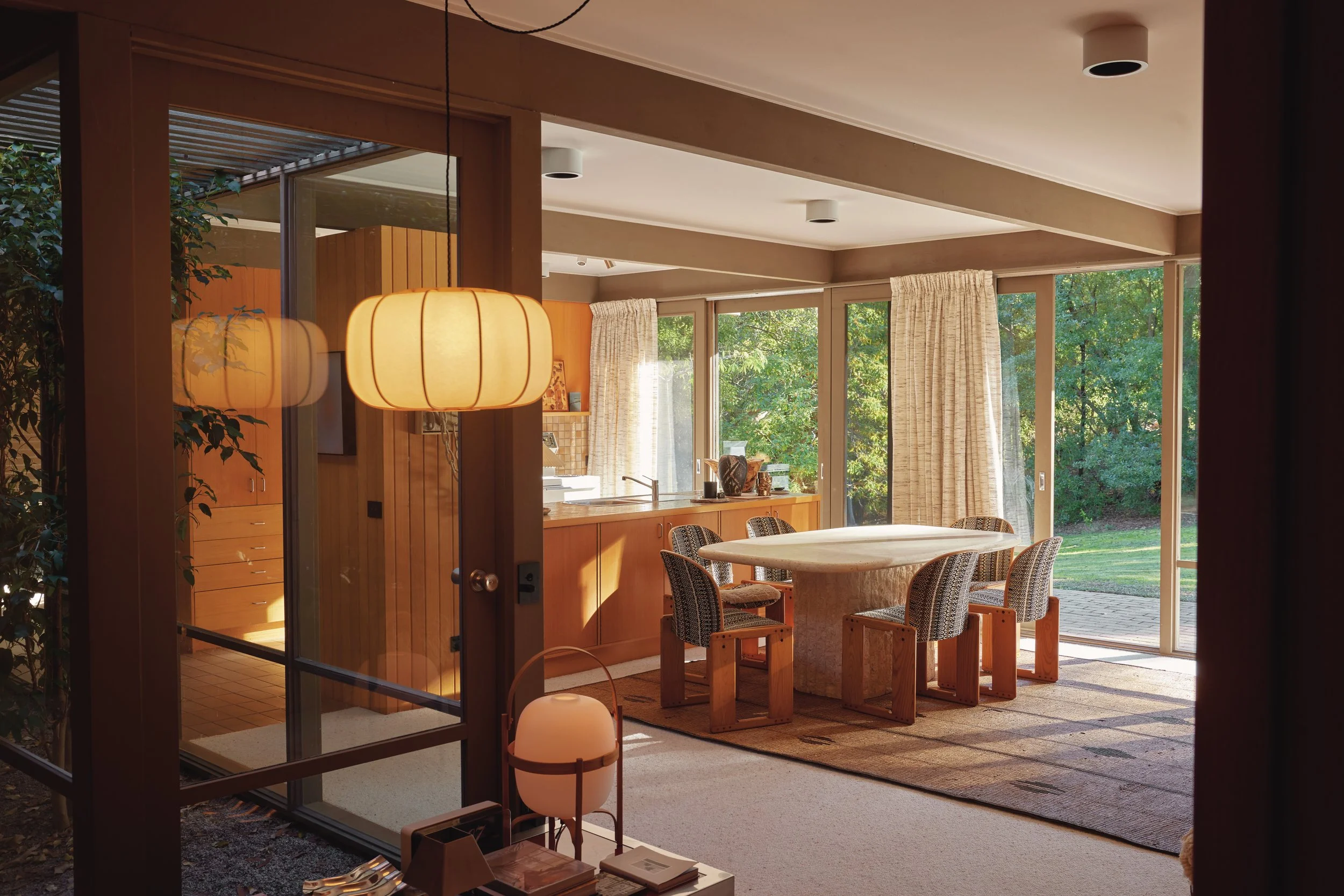
At the heart of the home, the original kitchen remains in excellent condition, complete with tiled benchtops, splashback and cabinetry. Artworks and ceramics are thoughtfully arranged along the ledge, bringing warmth and character to the space.
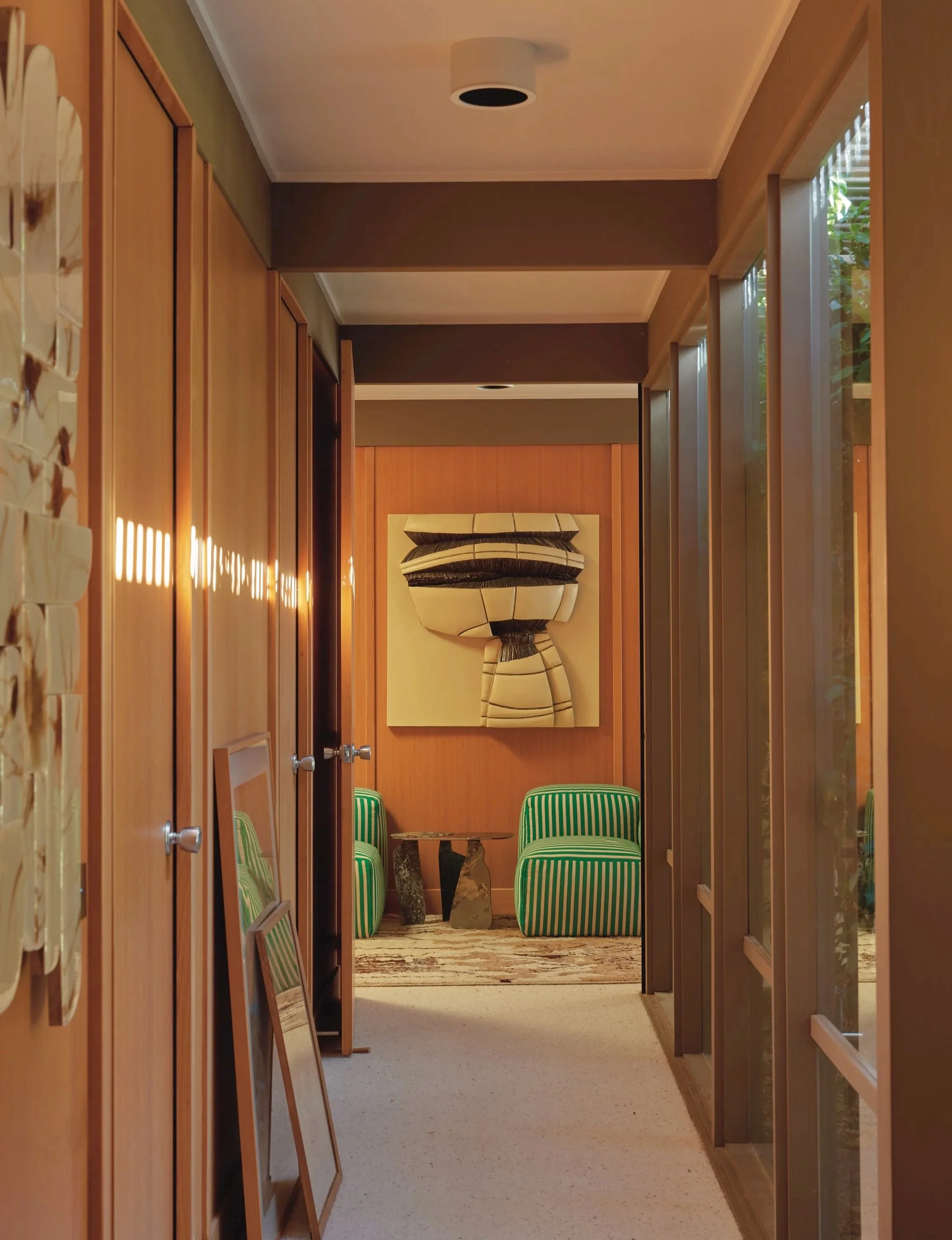
A view down the hallway, with the children’s bedrooms to the left and the home’s namesake light well to the right. Tacchini Le Mura lounge chairs sit beneath an artwork of unknown origin, found at a Paris flea market.
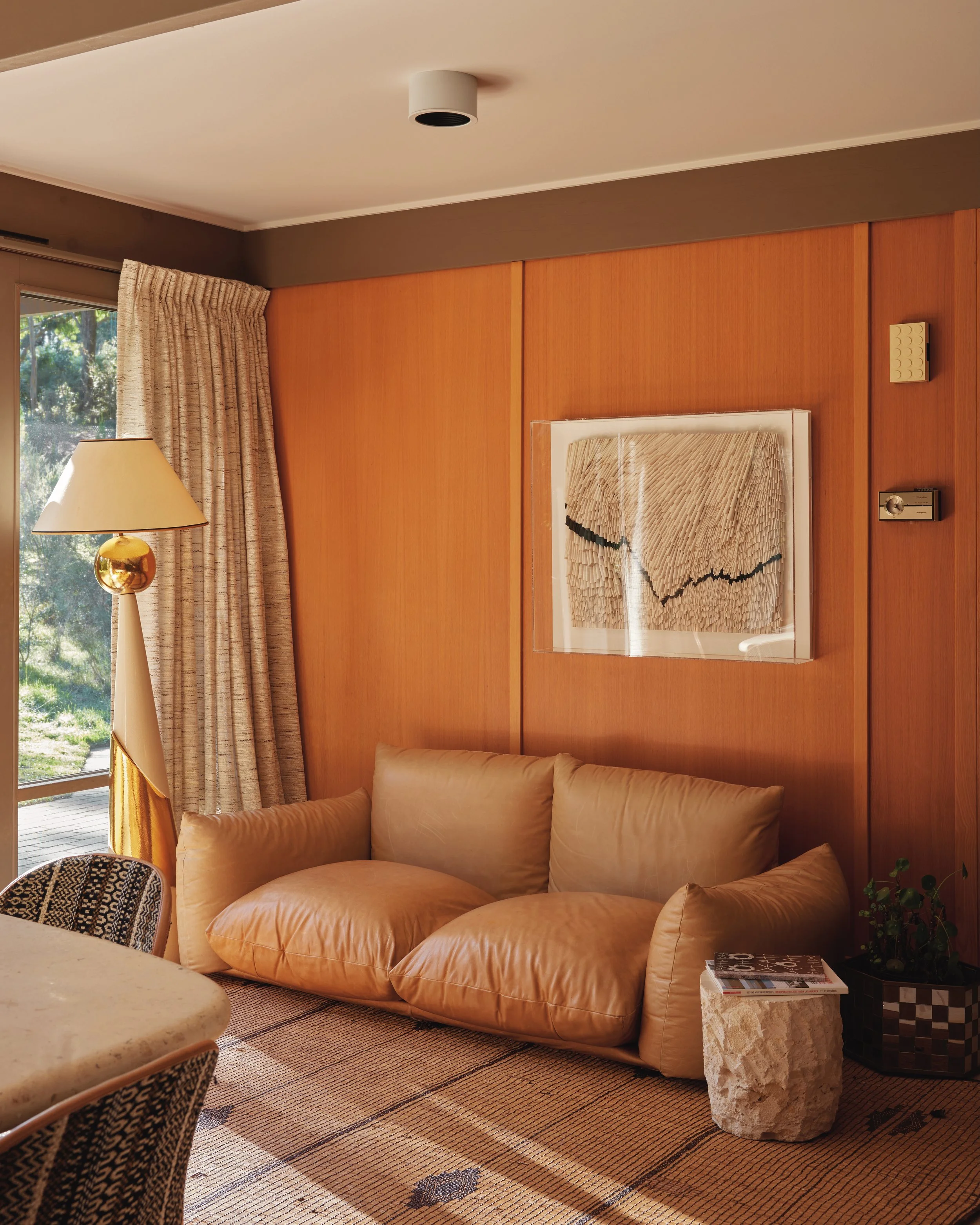
In a sunny sitting area adjacent to the dining room an Arflex Marenco sofa is positioned next to a Francois Chatain floor lamp.
“The emphasis on textural layering is bold yet tonally harmonious, with the shapely 70s Italian furniture adding a playful touch.”
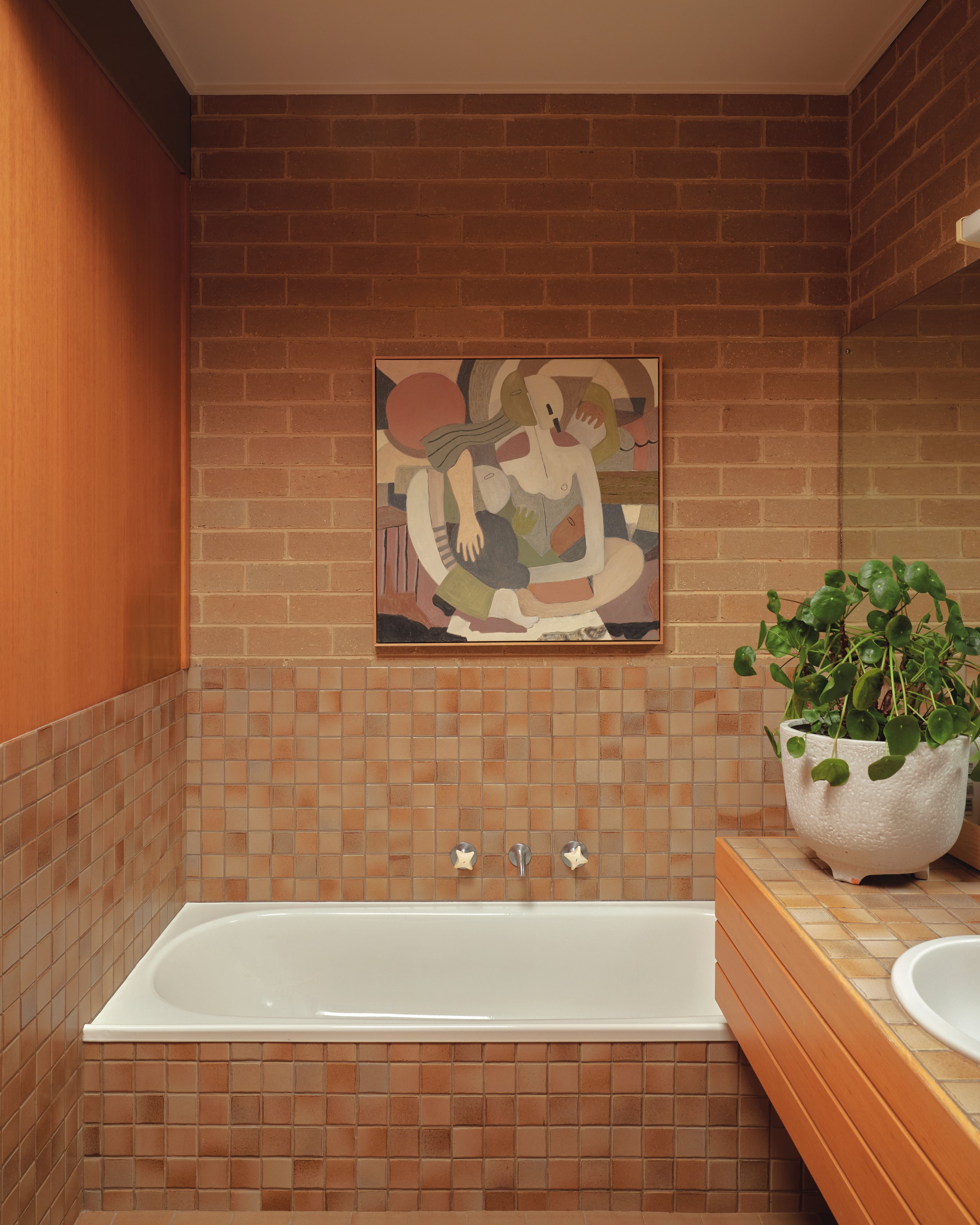
The main bathroom, with its original mosaic tiles and timber joinery, is a testament to the quality of the home craftmanship. Artwork by Charlotte Swiden.

A view through the doorway to the timber-lined powder room with its unique original basin.
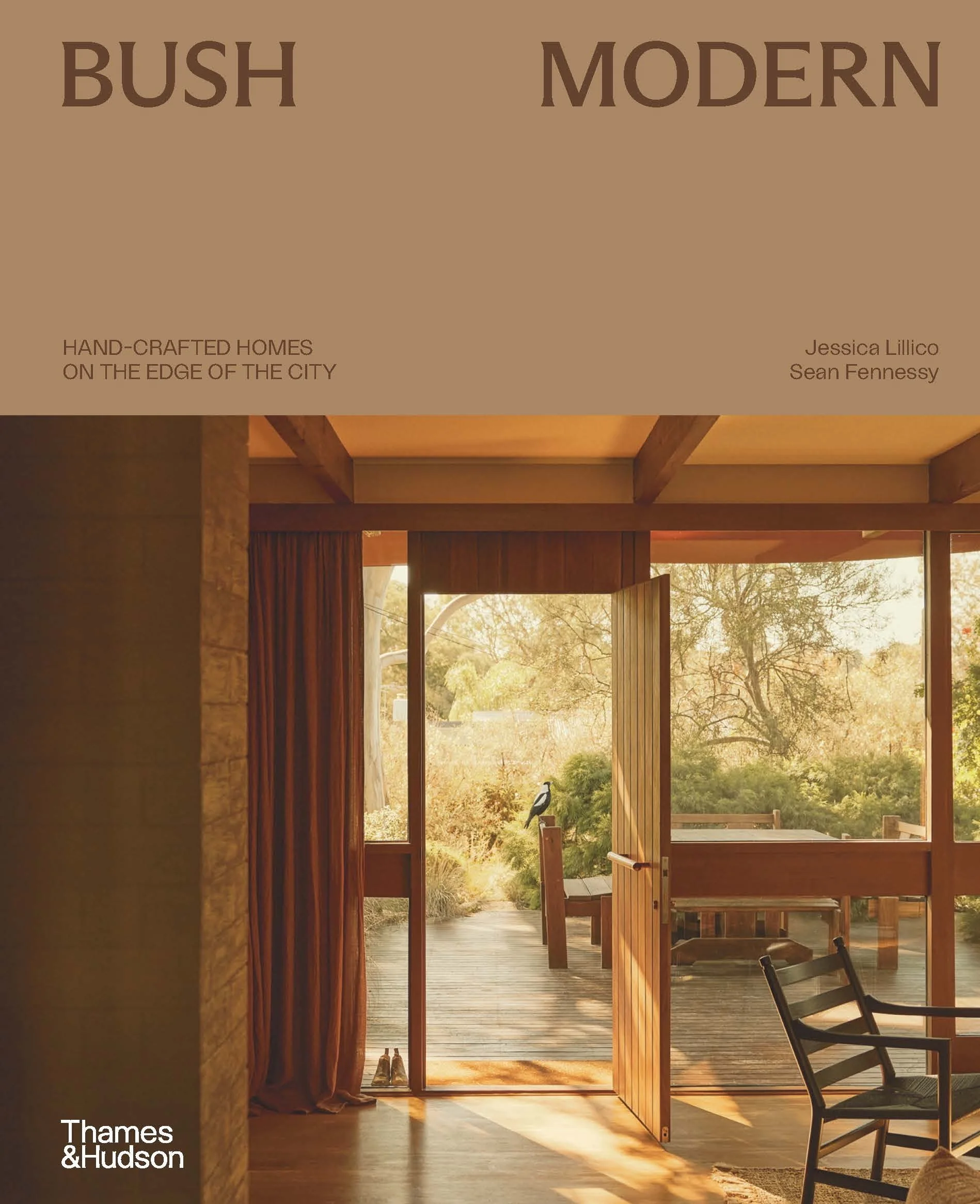
Bush Modern by Jessica Lillico and Sean Fennessy is out now.
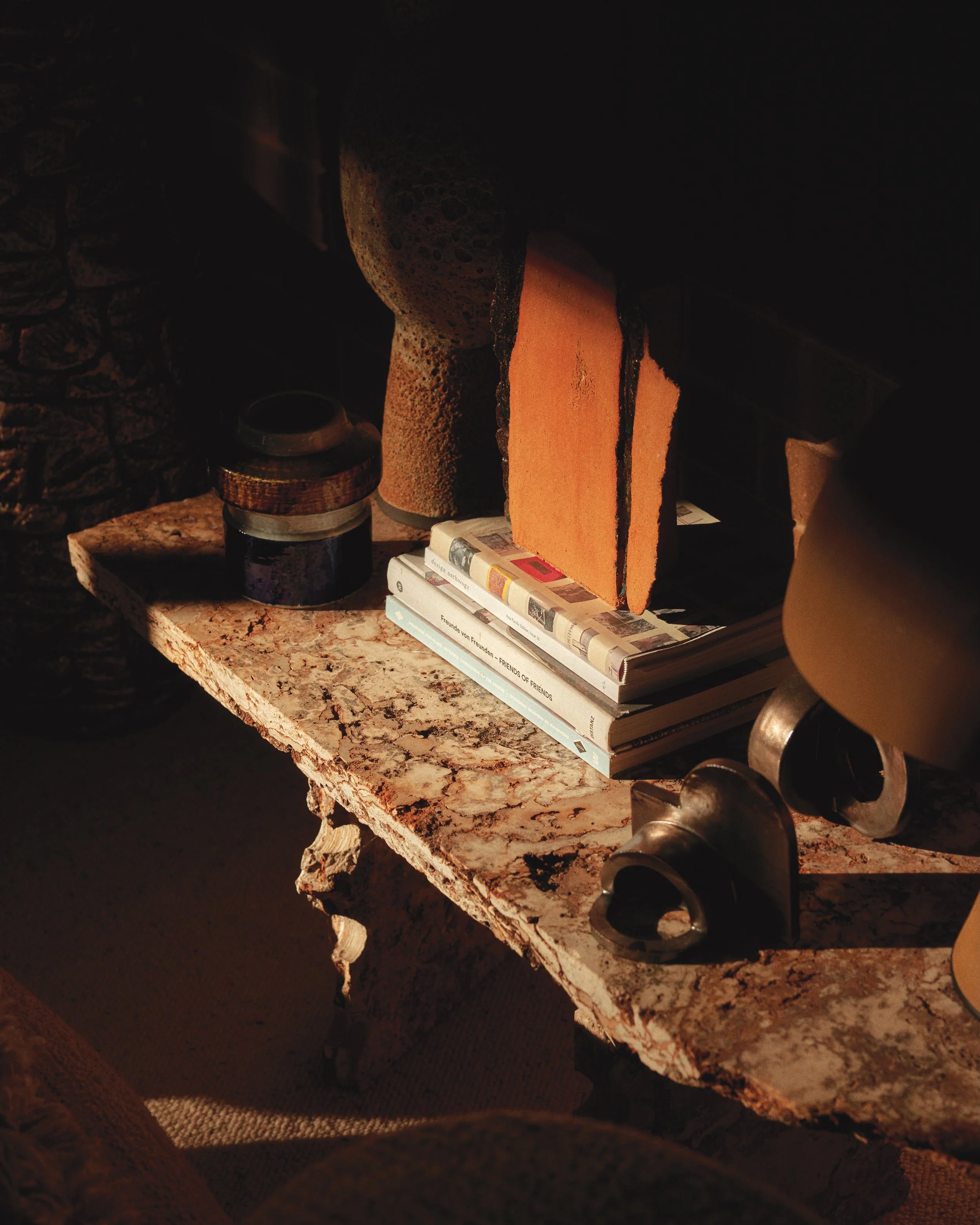
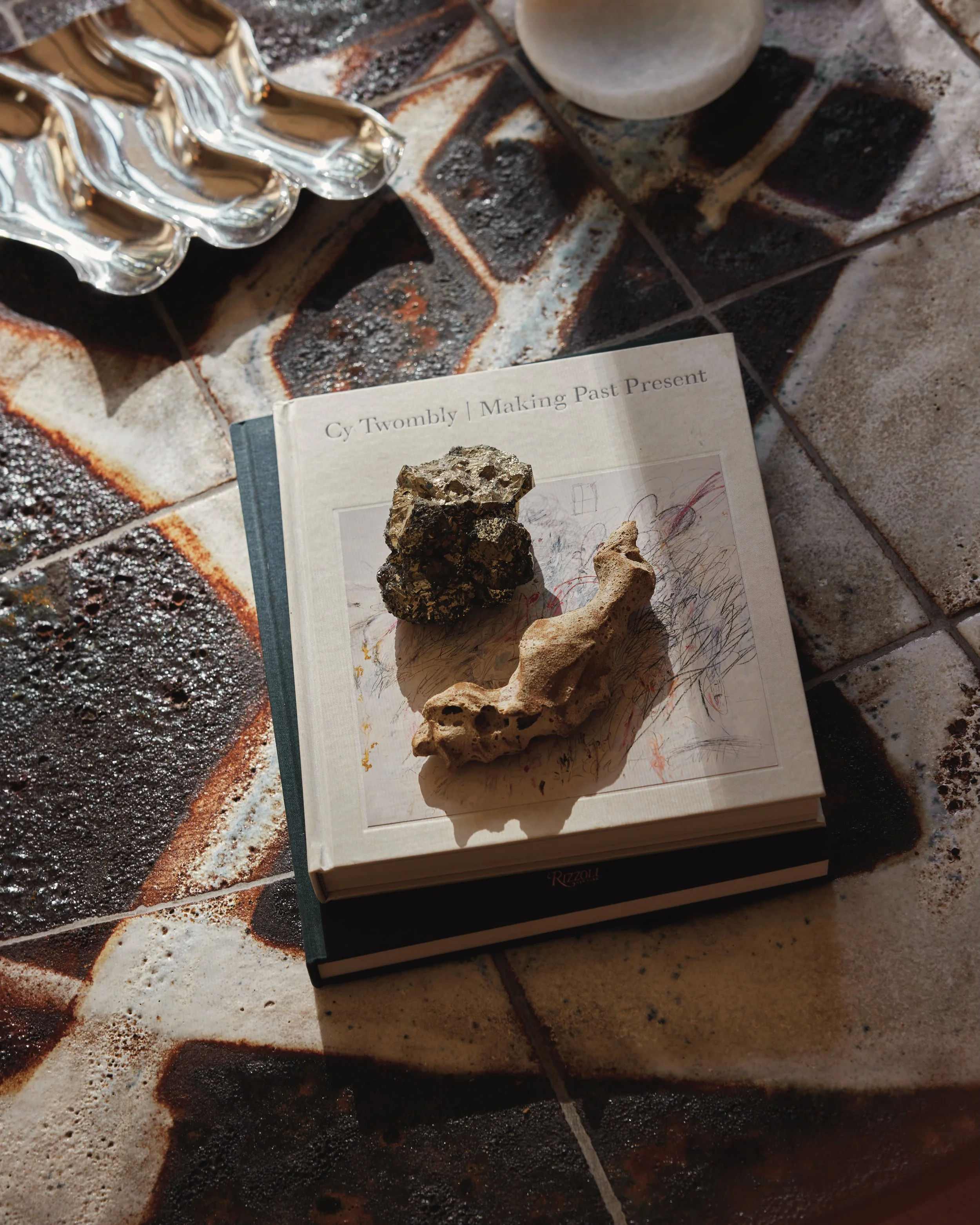
A coffee table vignette that artfully balances texture and tone.
It can be difficult to pinpoint exactly where the city meets the bush, but on the eastern side at least, it could be argued that this nebulous boundary follows the course of a modest tributary of the Birrarung.
The Mullum Mullum Creek, whose name is thought to translate to ‘place of many big birds’ in Woi-wurrung language, winds through native and regenerated bushland for almost 20 kilometres. Its journey culminates in a small gorge surrounded by manna gums, home to tawny frogmouths, echidnas and sugar gliders—species rarely seen so close to urban areas. What makes this scene even more surprising is that one of Melbourne’s busiest motorways tunnels directly below.
In a quiet street on the edge of this nature reserve Light Well House faces out into the forest, seemingly light years away from the rushing traffic below. This modernist home, designed by Melbourne architect Ian J Smith and built in 1972, is a study in the importance of material integrity and the enduring design adage ‘form follows function’. With its low-slung form, sandy-toned bricks, full-height glass windows and flat roof, it feels embedded into the landscape, while retaining a clean, precise form. As an architecture student in the 1960s, Ian attended guest lectures from both Robin Boyd, and Alistair Knox, and so was quite aware of the architectural innovation occurring in the outer north-eastern suburbs. When speaking of Knox, he acknowledges his use of recycled materials as ‘very forward thinking’, although Smith’s own designs skew more classically modernist and he names Stahl House by Pierre Koenig—part of the famous American ‘Case Study House’ program—as an all-time favourite.
The current owner of Light Well House, interior decorator Simone Haag, has for many years cultivated a love of classic mid-century design. Already on the lookout for a home in the area, she and husband Rhys chanced upon Light Well during a family walk through the nature reserve. Clearly unoccupied, the house captured the couple’s imagination, sparking a mission to make it their own. After a lengthy but ultimately successful campaign, they moved in with their three daughters—and Simone’s impressive collection of vintage furniture, ceramics, rugs and artwork.
To their delight, the home was in pristine original condition and, thanks to a thoroughly logical floorplan, there were virtually no changes required. ‘It’s a little light on power points,’ Simone laments, but overall the house is perfectly suitable for contemporary living. This is in large part due to the fastidious maintenance of the previous owner, Jim McCulloch, who was also the home’s builder and a frequent collaborator of Ian’s. Working together, the pair designed and built many homes in Melbourne’s eastern suburbs, becoming ‘a well-oiled machine’, as Simone puts it. Ian himself pays tribute to his colleague’s workmanship, saying: ‘It’s just beautiful and totally precise. He was a joiner by trade, but everything he did in his buildings was immaculate. Of course, modernist architecture requires very close tolerances because there are no beads or big bits of timber to cover anything up.’
The layout of Light Well House is thoughtfully designed for connection to both family and nature. At its heart lies the kitchen, the central hub of the home, creating a natural point of interaction. From here, the study and children’s bedrooms are all within sight, while the plant-filled central atrium demarcates the open space while bringing in light. Living spaces are oriented north, with floor-to-ceiling windows extending the length of the home. Simone notes: ‘The entire house just has this lovely quality of light moving through it. There’s a real understanding of shadow-play, and how light informs the person living in the house.’
Decorating the home has been a source of great joy for Simone. Taking cues from the building’s palette of ‘honest materials’, she has opted for an overall neutral colour range of brown, beige and grey, anchored by black graphic textiles and punctuated occasionally with bright green and metallic accents. The emphasis on textural layering is bold yet tonally harmonious, with the shapely 70s Italian furniture adding a playful touch. The end result is both entirely appropriate and charmingly individual.
This is an edited extract from Bush Modern by Jessica Lillico and Sean Fennessy, published by Thames & Hudson Australia. Out now
