

Haiku House by Kim Kneipp
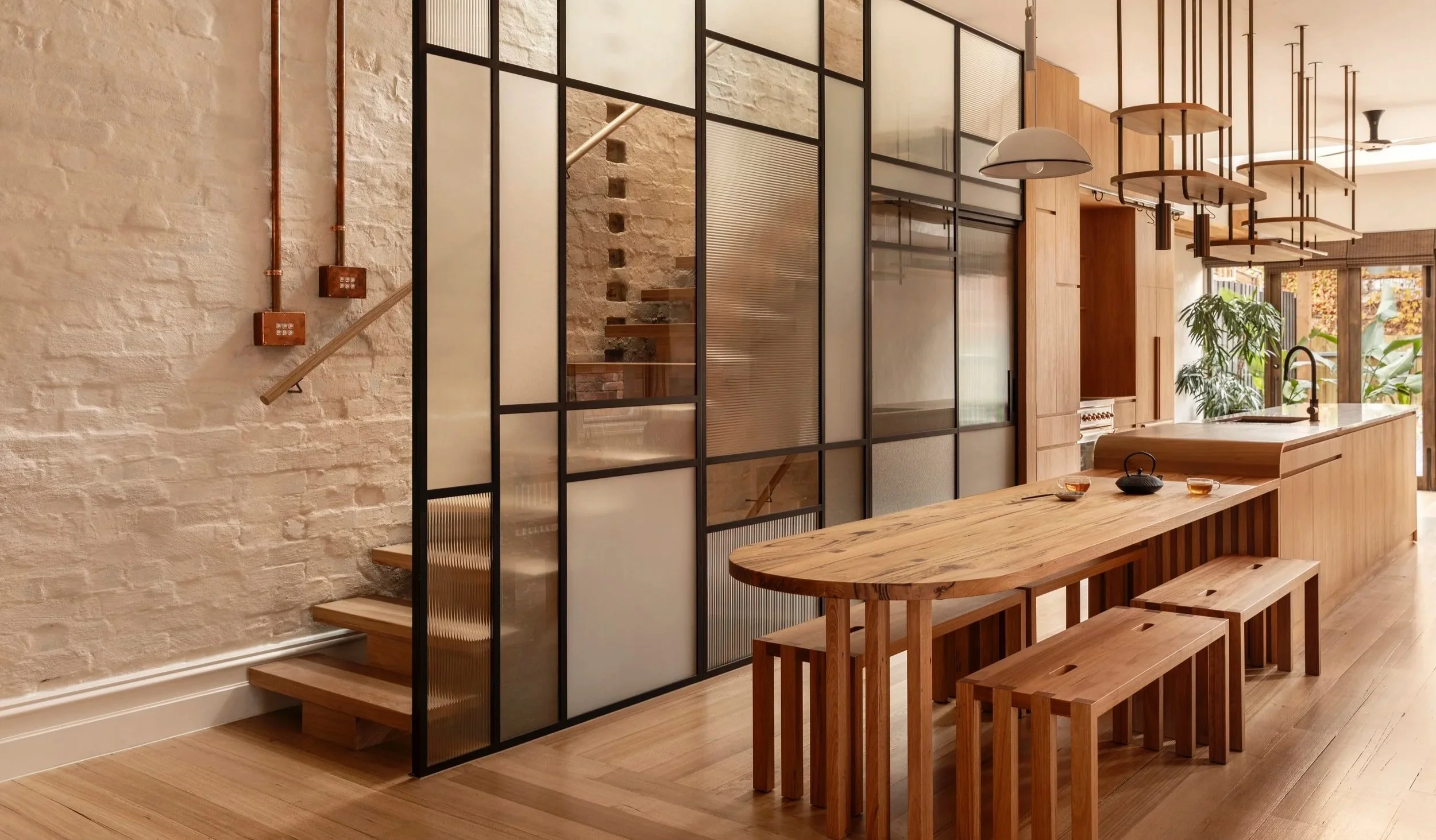
Haiku House by Kim Kneipp reimagines a Victorian terrace in Brunswick East through a lens of Japanese calm—where materiality, light and memory shape the rhythm of family life and quiet ritual.
Words HANDE RENSHAW Photos MARTINA GEMMOLA Interiors & Styling KIM KNEIPP STUDIO Architecture STEFFEN WELSCH ARCHITECTS Joinery WOODCRAFT MOBILIAR & CALLUM MATHESON Build TRANSFORM HOMES

In Brunswick East, an 1890s heritage terrace has been reimagined as Haiku House, a family home where light, memory and materiality intertwine.
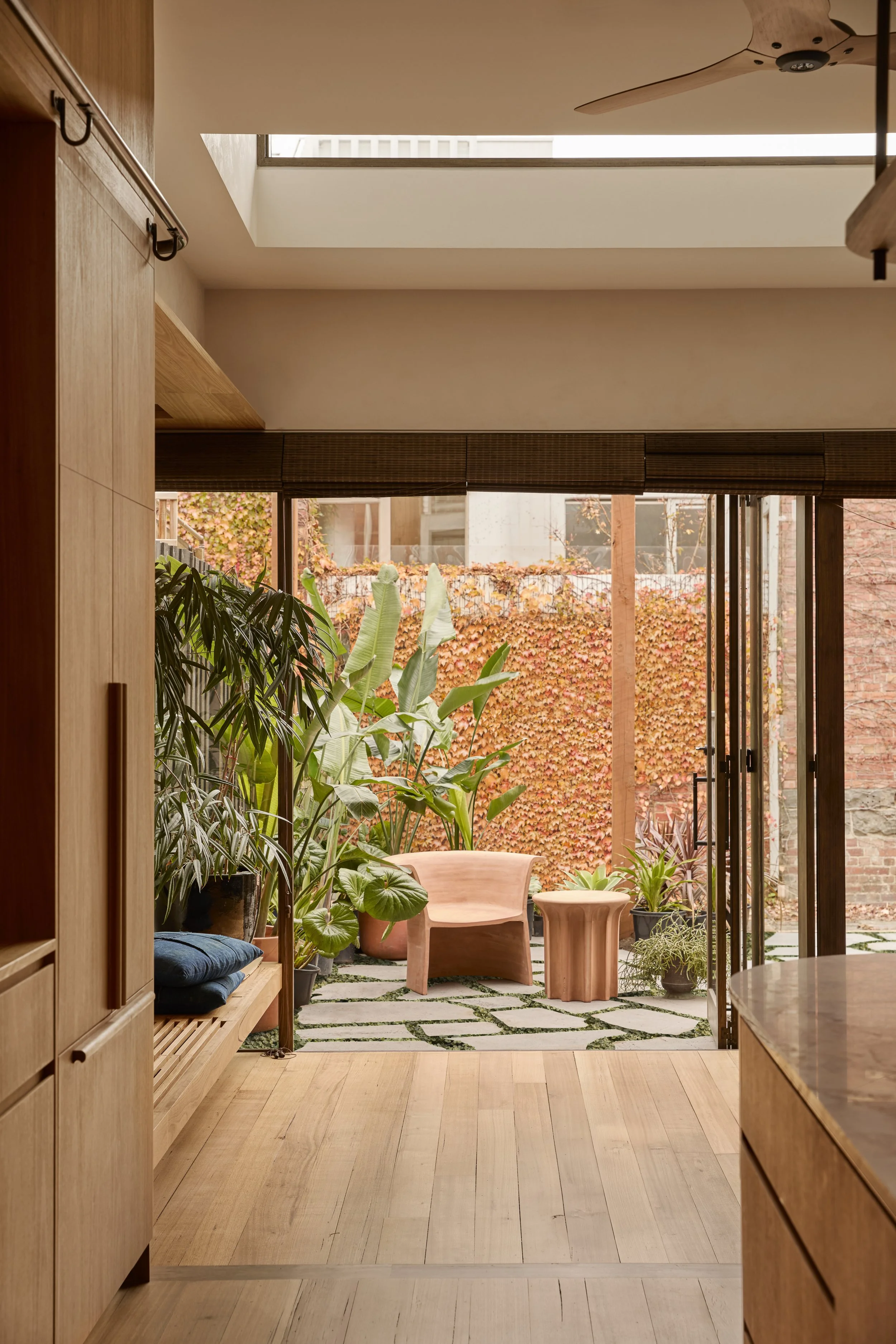
A view toward the courtyard, where Haiku House reveals its softness in materials, colour and calm transition.
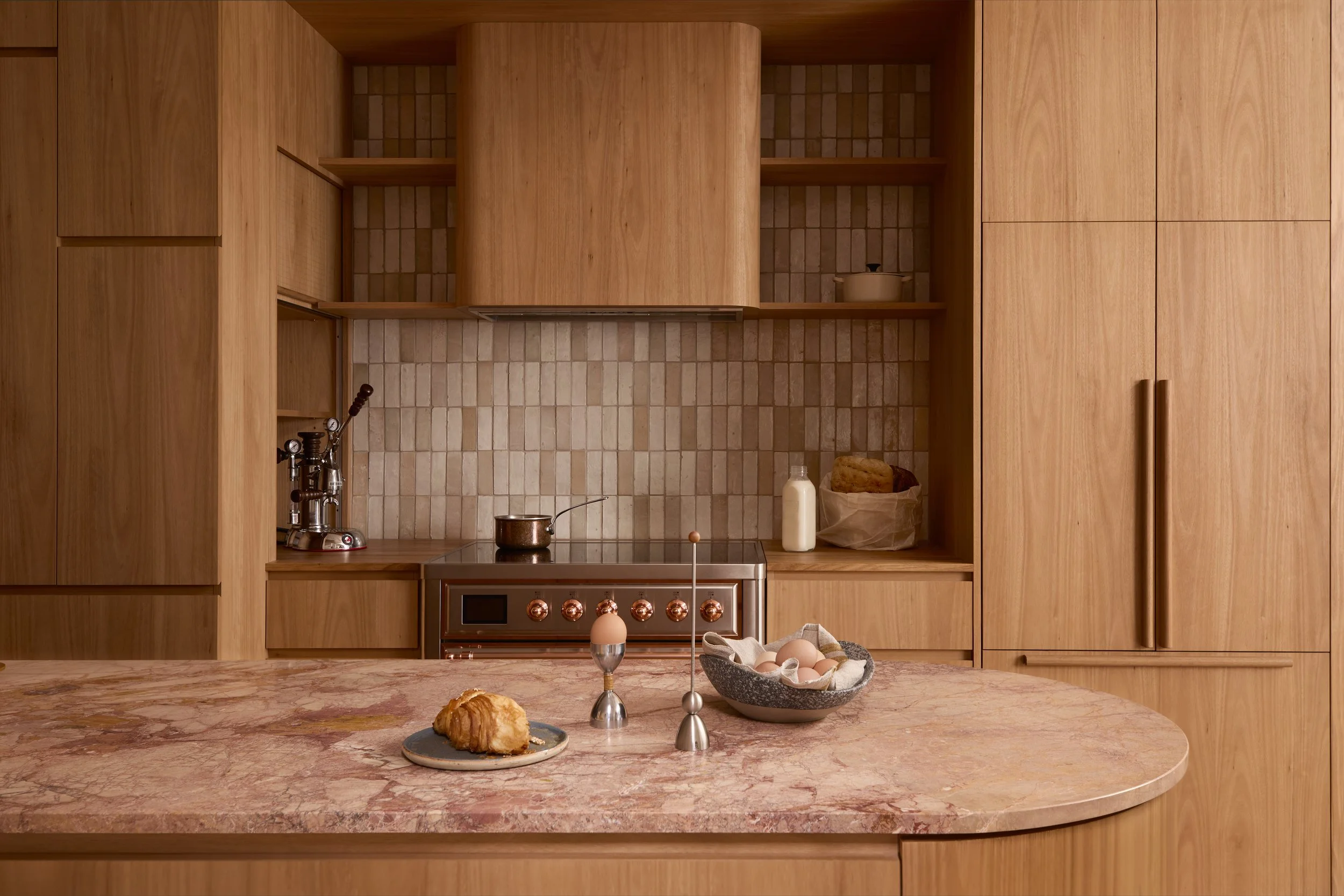
The kitchen becomes anchor and hearth—material, light and daily ritual held in balance.
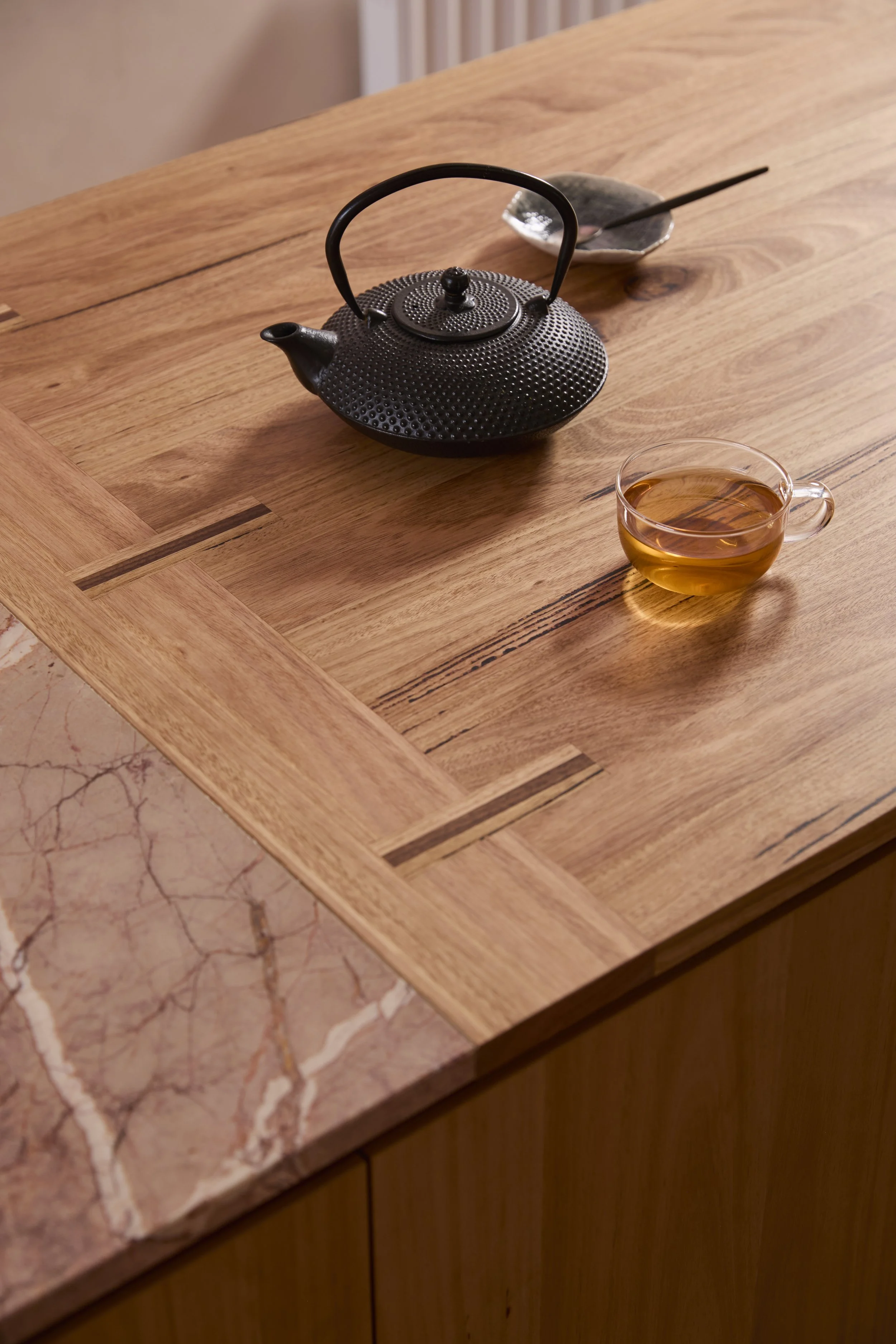
‘Every material in Haiku House was chosen for its quiet integrity: surfaces that feel honest and tactile, designed to soften and deepen with use,’ shares Kim Kneipp.
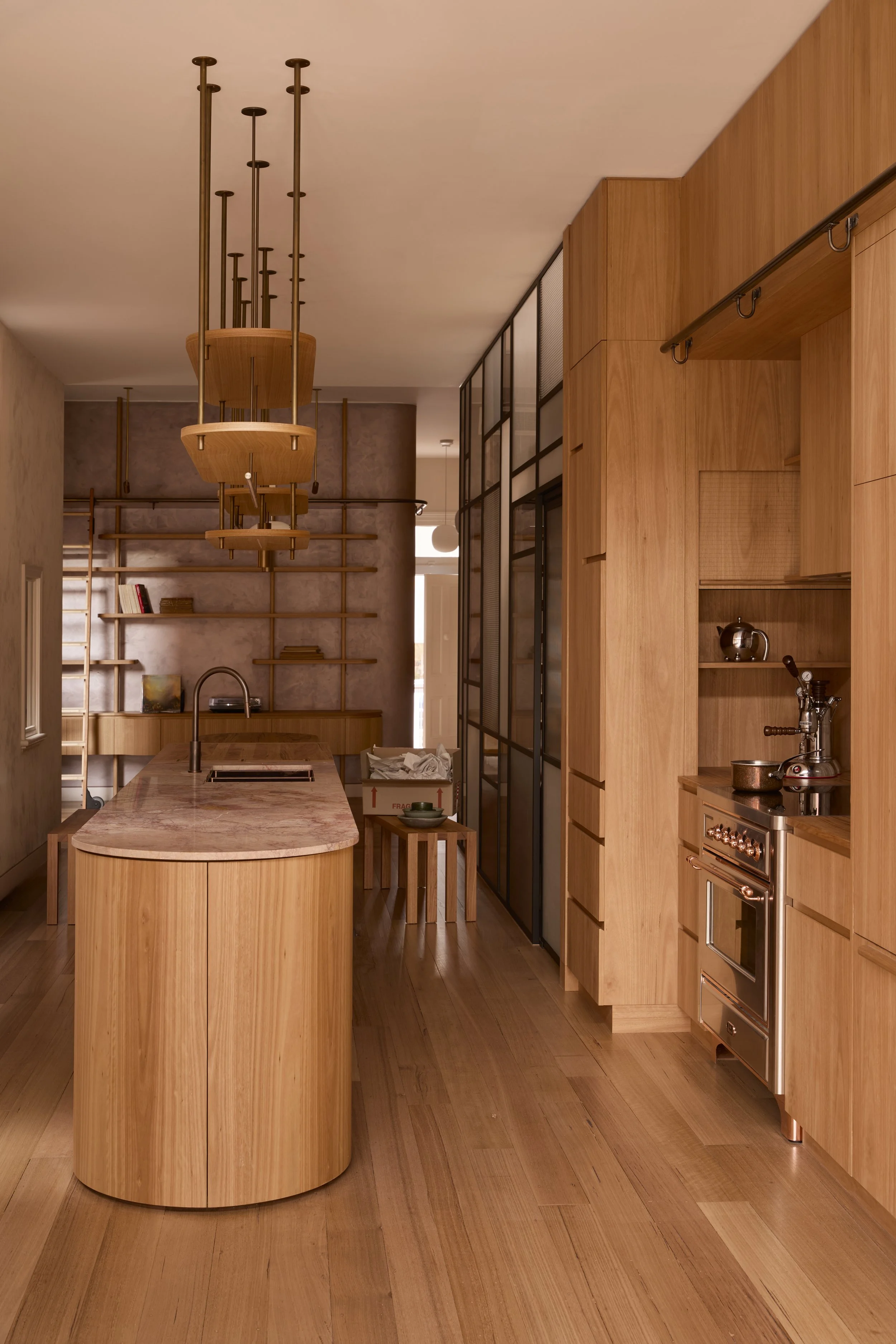
At the heart of the home, the kitchen is both hearth and bar: warm timber joinery, blush-toned stone and handmade tiles meet bespoke copper detailing.
“The house mirrors its owners’ easy openness and grounded warmth, designed for movement and gathering—where friends spill into the kitchen, children drift between rooms and quiet rituals unfold beneath the skylight.”
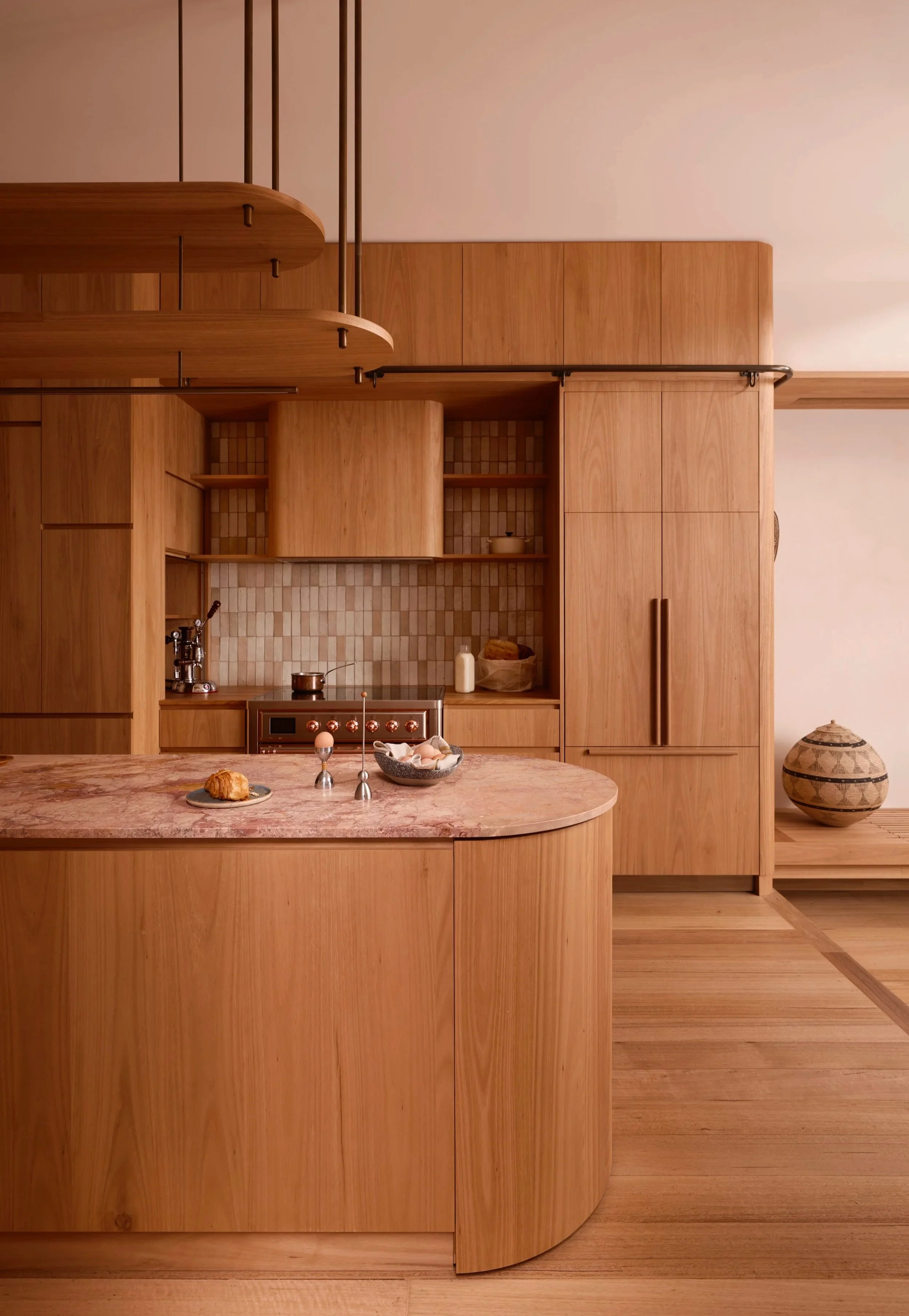
The kitchen becomes gentle architecture; sculpted, tactile and calm, crafted for presence as much as function.
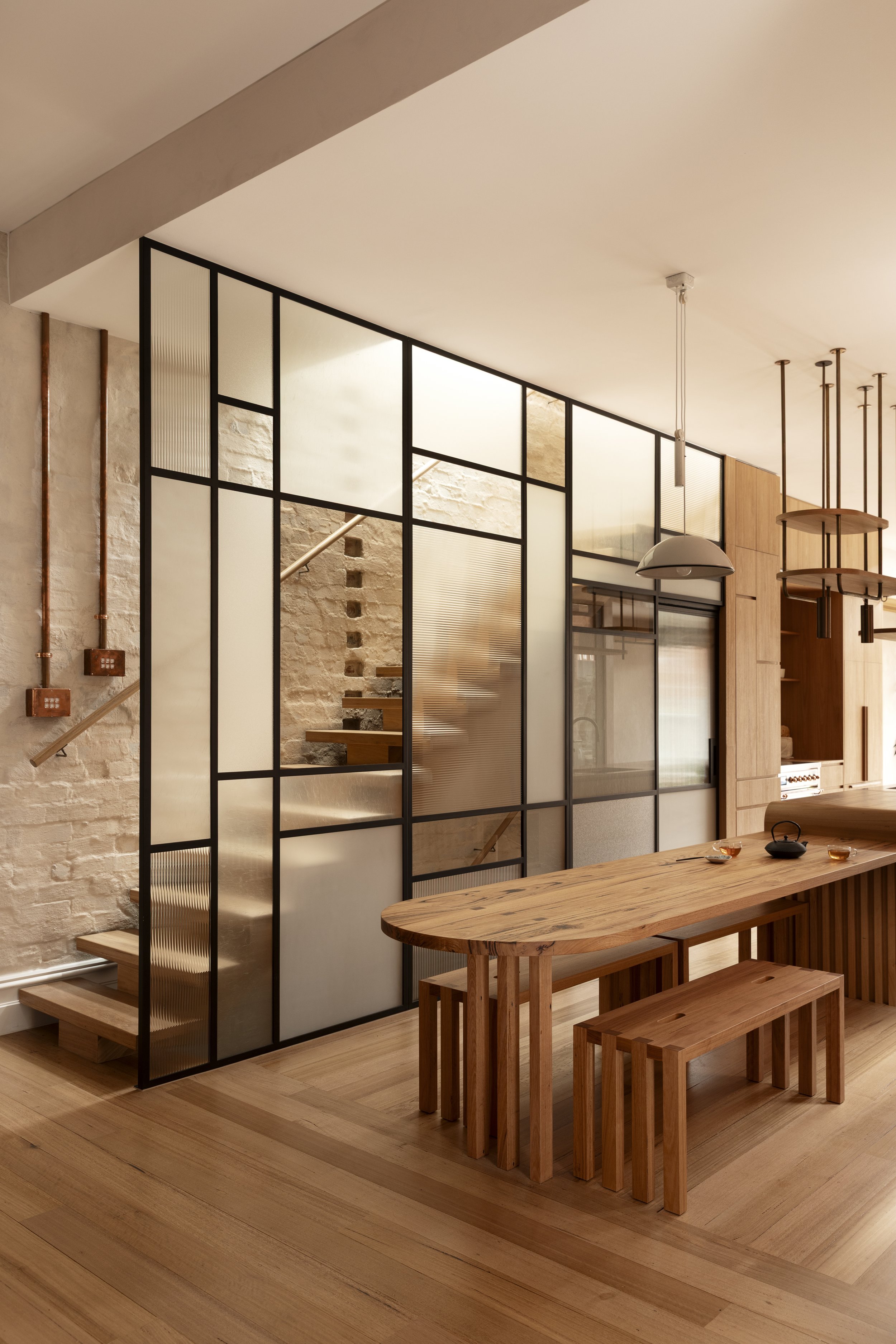
‘The glass shoji wall was an engineering and design feat and the first of its kind our studio has built, so it became a valuable learning curve.’
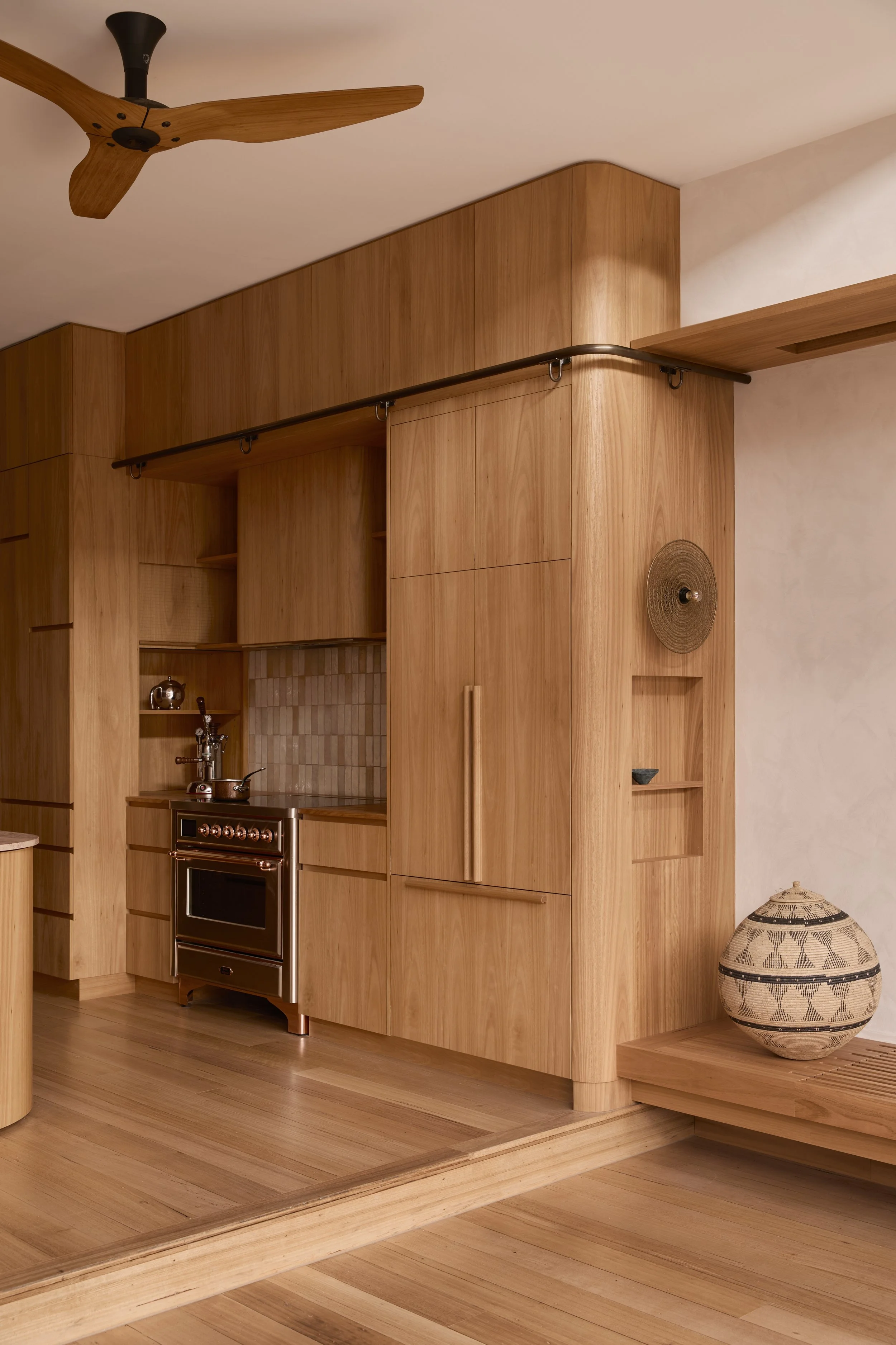
Storage is treated as part of the home’s material continuity—concealed, refined and folded into the timber envelope.
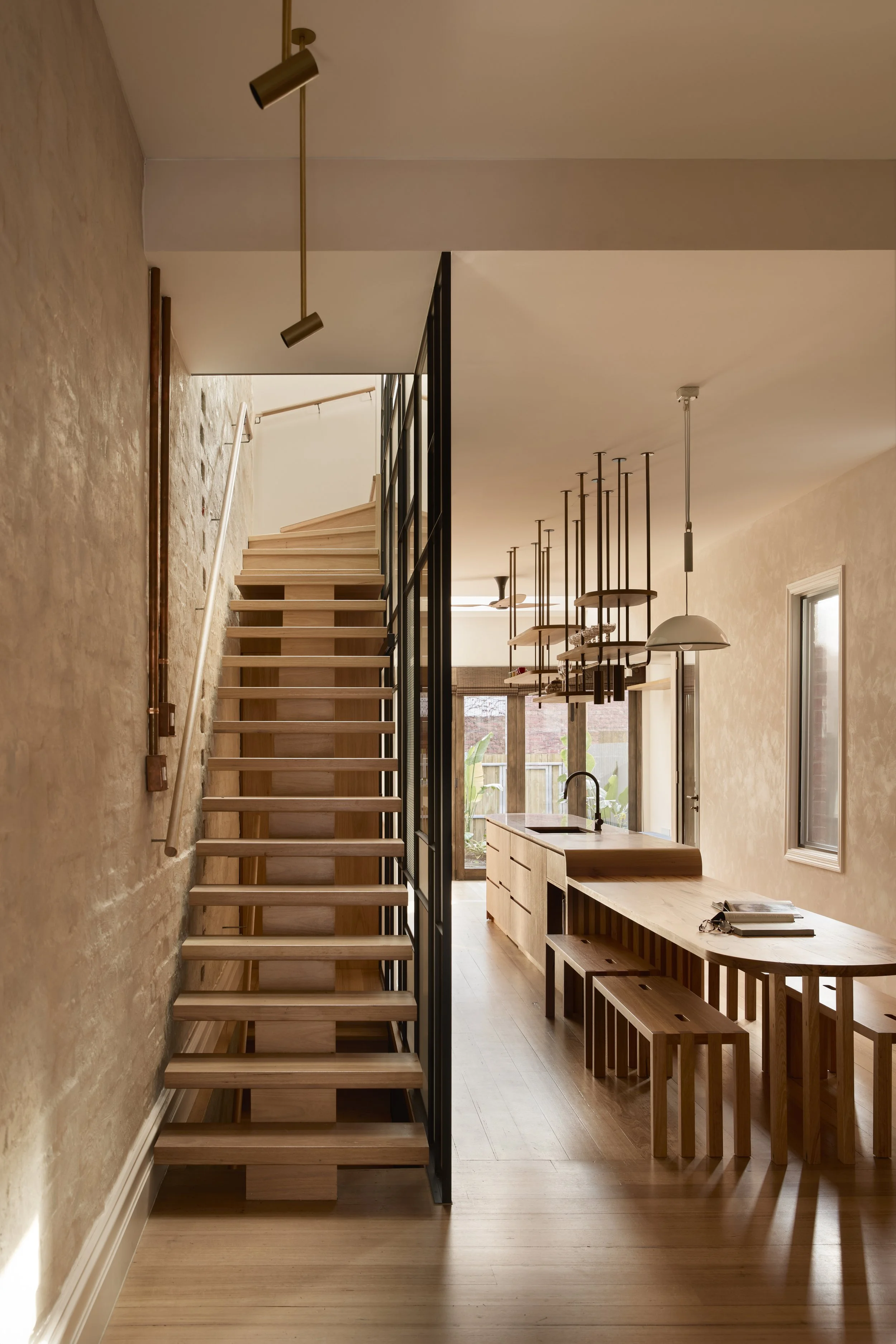
‘For me, a standout feature is the staircase, the project’s spine and its haiku.’
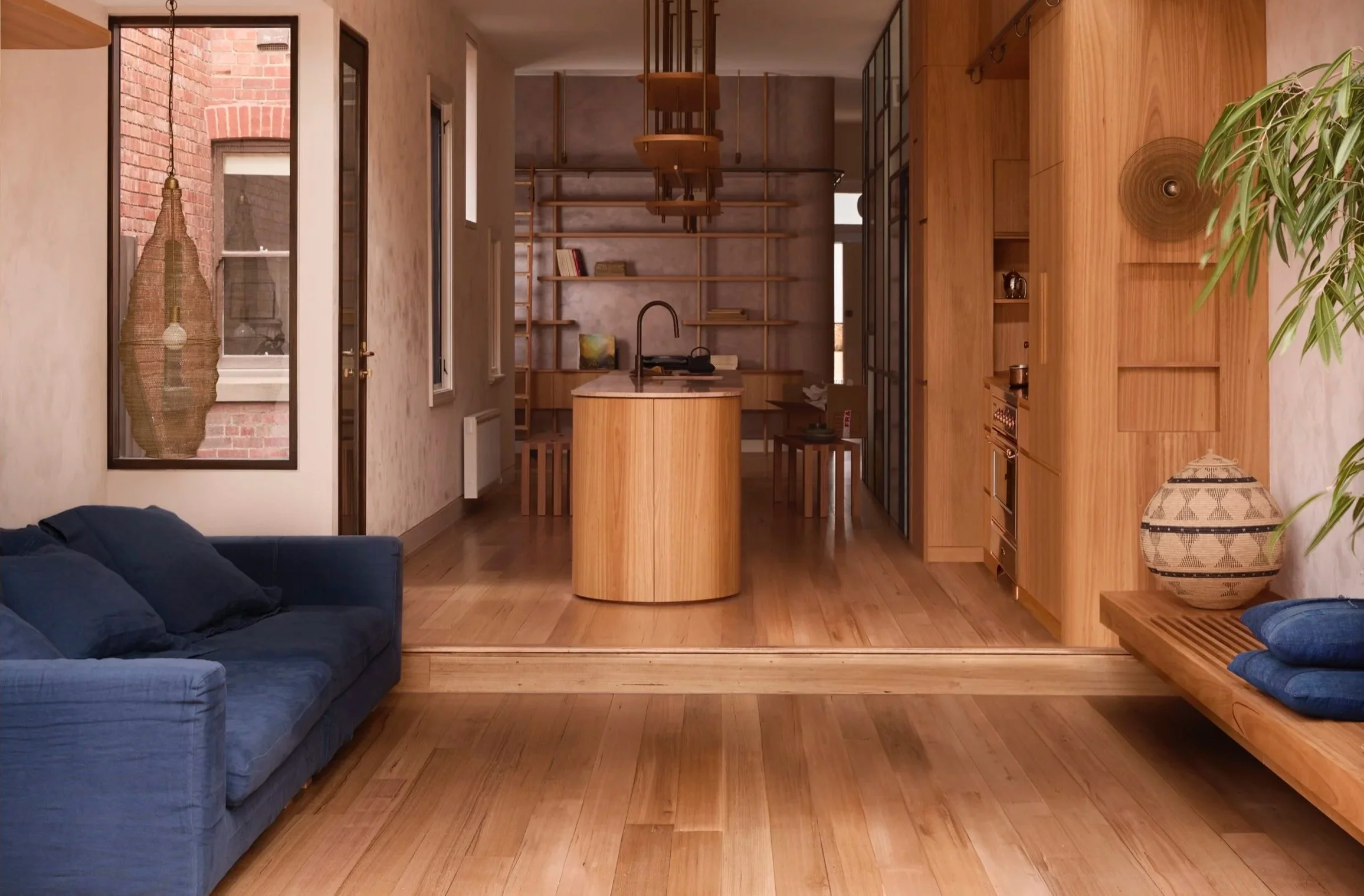
An indigo sofa anchors the lounge space, grounding a clear sightline from courtyard to the kitchen.
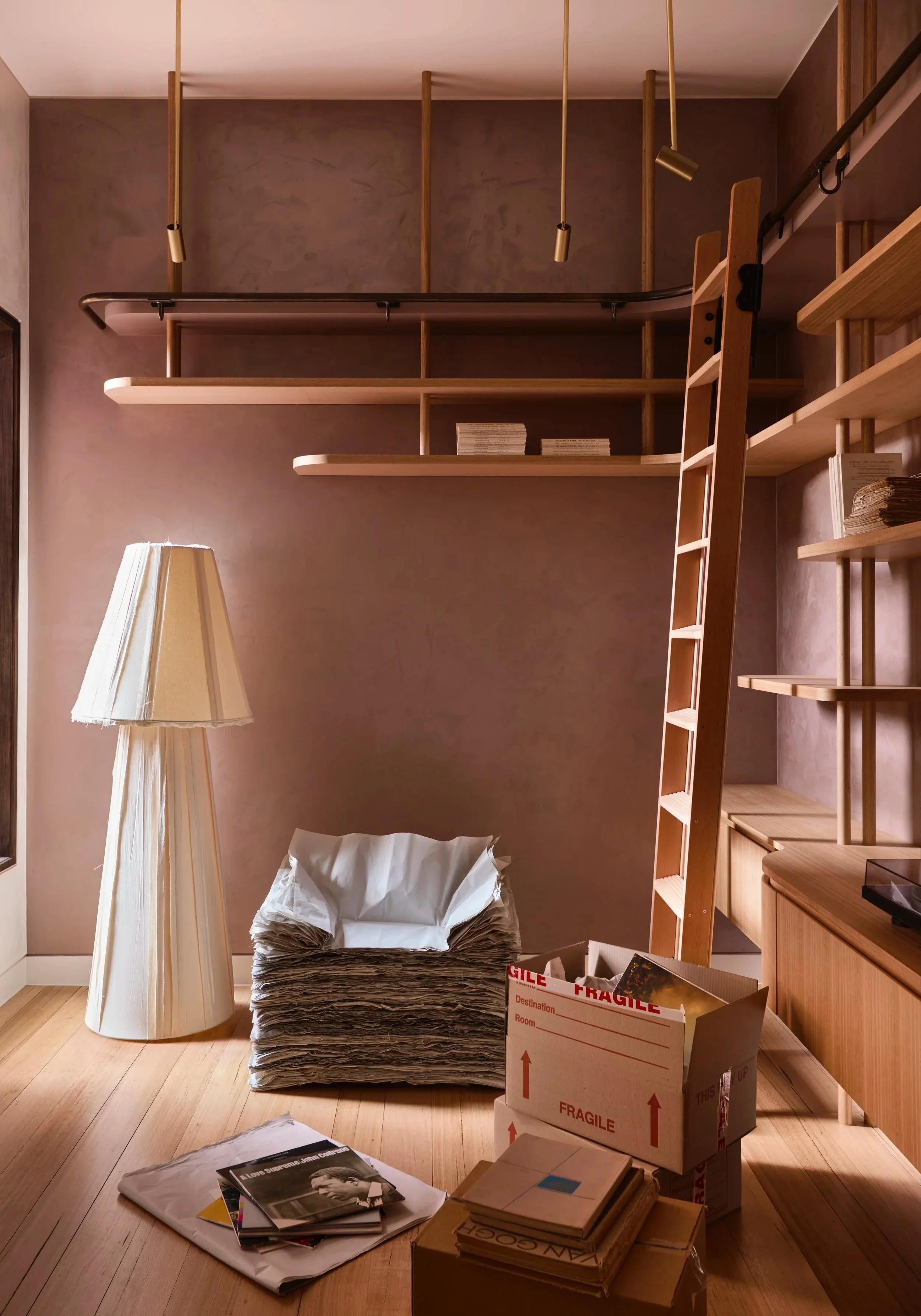
Packing paper sculptural chair by Madeleine Griffith.
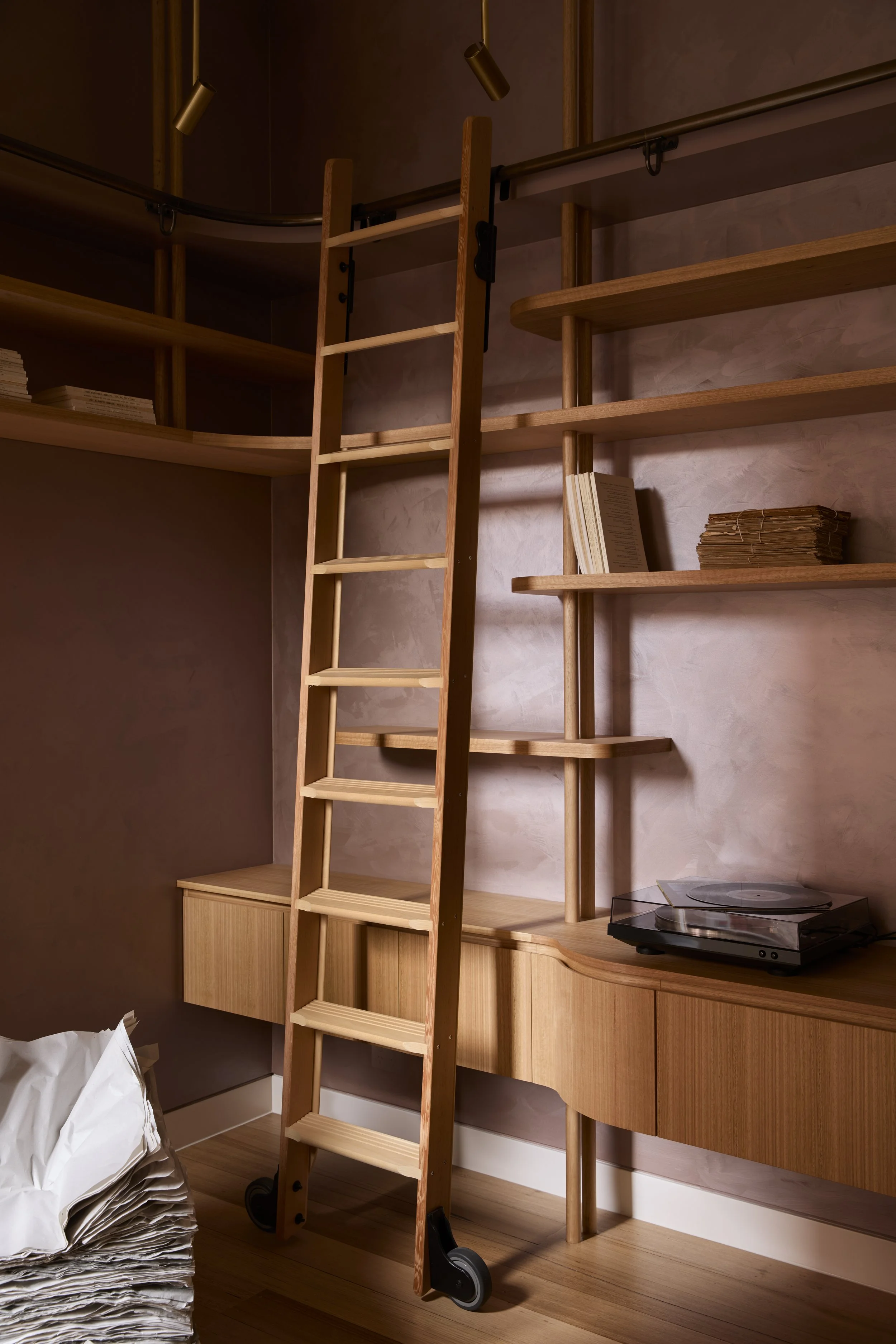
Joinery rises lightly up the wall, the ladder a reminder that utility can also be beautiful.
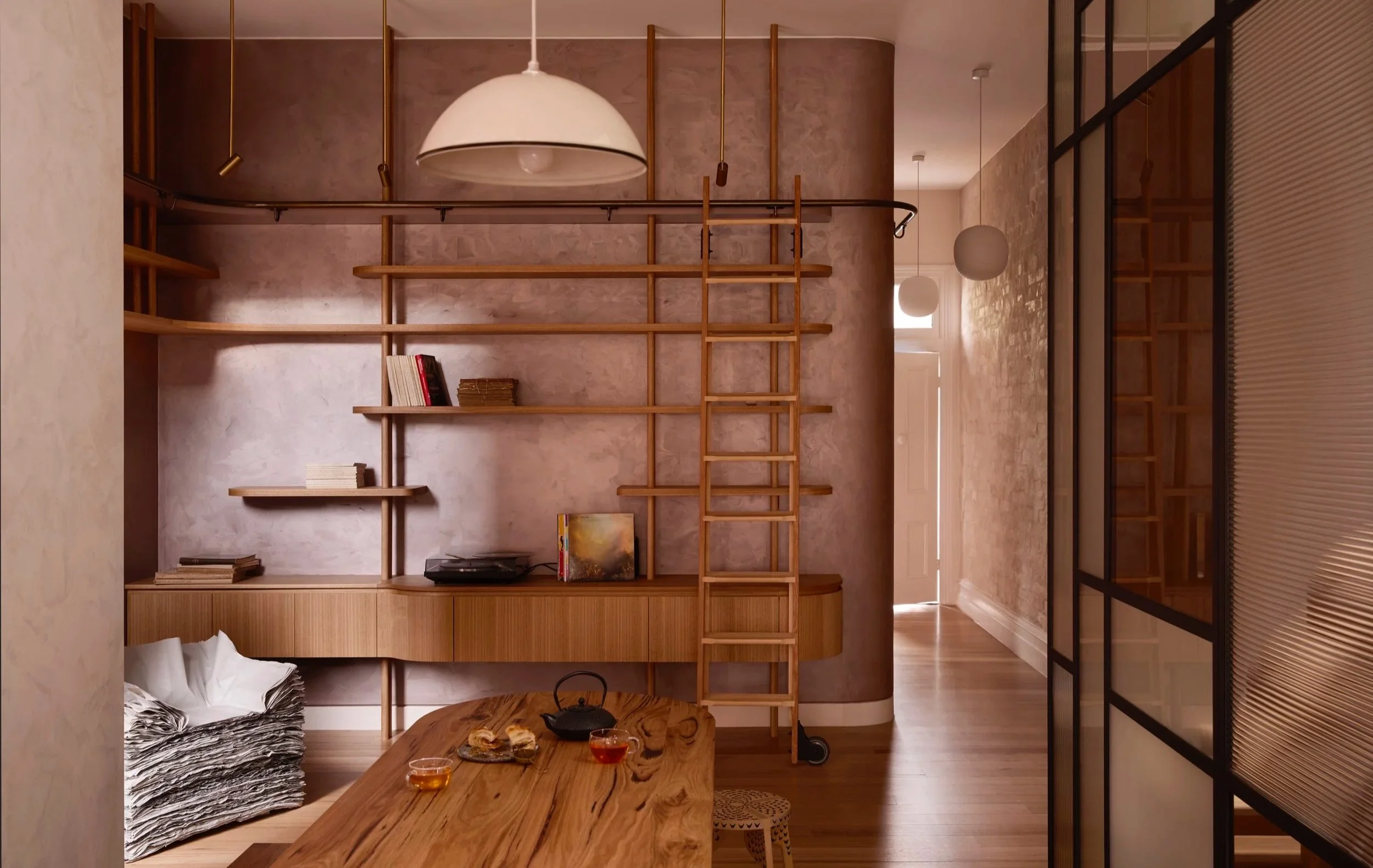
Throughout, natural materials: timber, stone, plaster and burnished brass, are layered with a wabi-sabi sensibility that honours the hand of the maker and the passage of time.
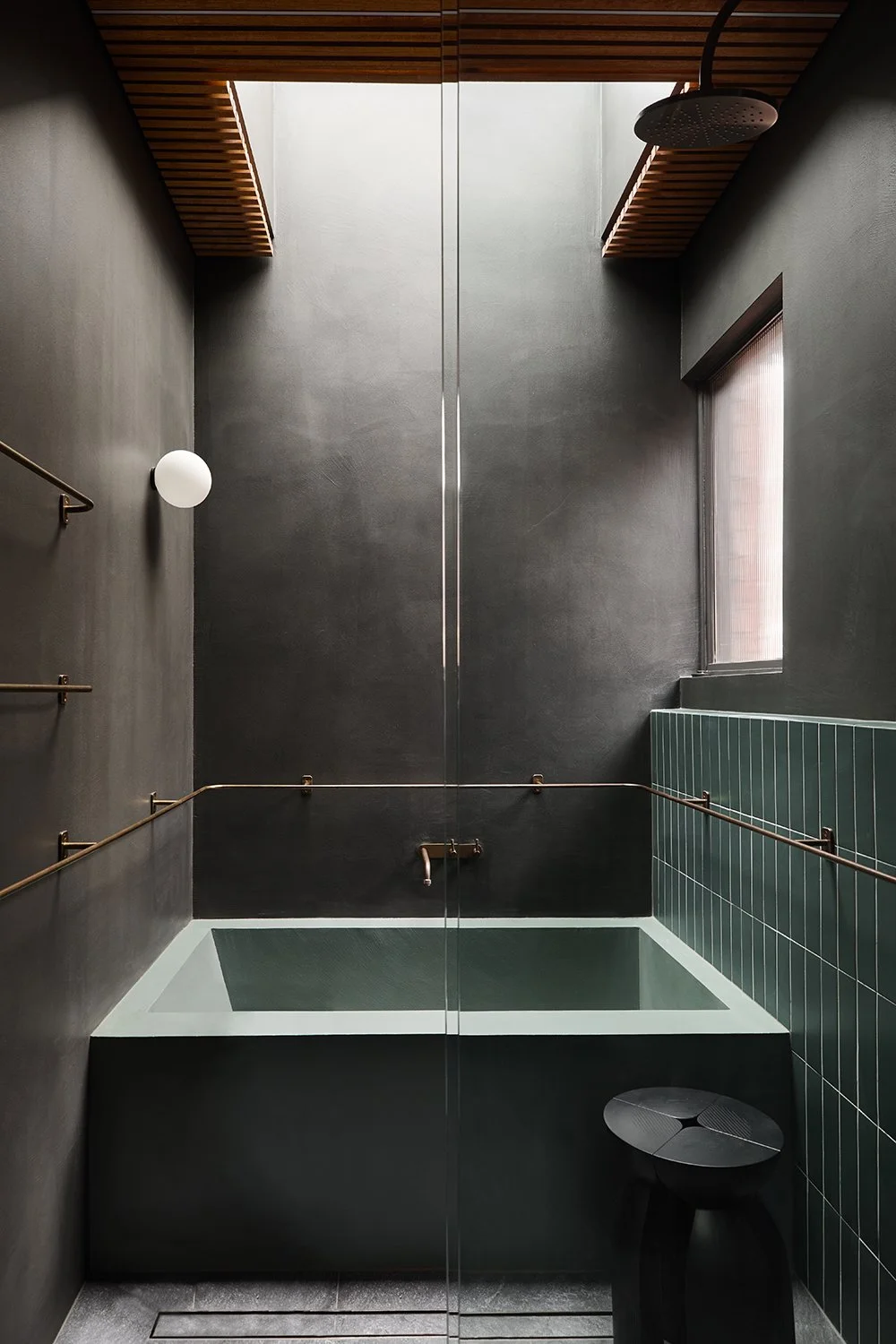
The moody bathroom features a custom designed raised bath tub.
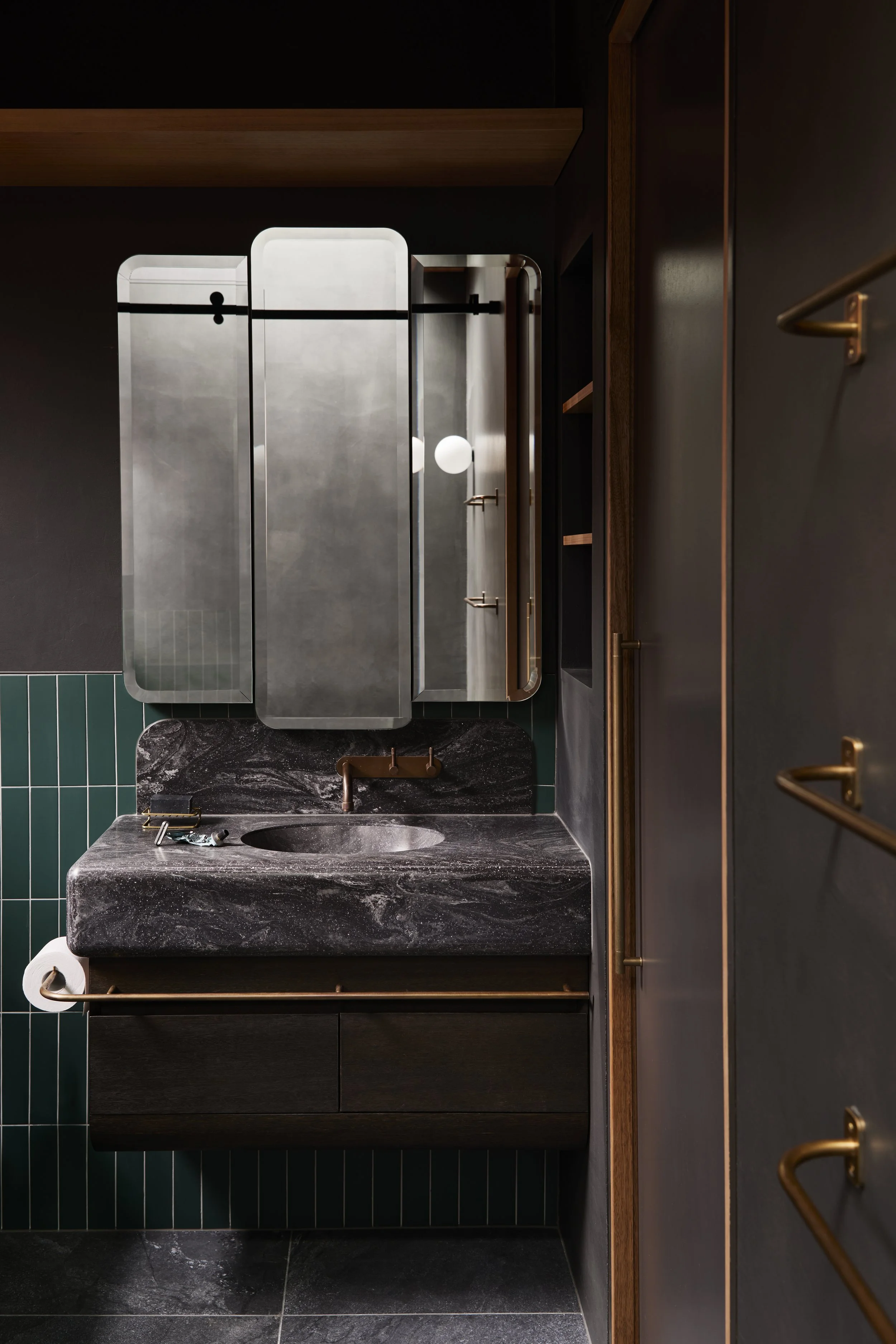
Bespoke brass handrails feature in the bathroom space.
In Brunswick East, interior designer Kim Kneipp reimagines an 1890s heritage terrace as Haiku House, a family home shaped by light, memory and Japanese poise.
For the homeowners, it carries a sense of return: a quiet echo of the terrace where they first met, now reshaped to hold new rhythms of openness, camaraderie and warmth for their three children.
Wedged between party-walls, the central challenge was daylight. Working in close collaboration with Steffen Welsch Architects, the plan was completely rethought, extending both levels, relocating the staircase and introducing skylights and a clerestory window that carve a luminous vertical spine through the home. Floating treads, a slender central stringer and a shoji-inspired balustrade bring a quiet precision to the centre, drawing daylight deep into the interior.
Upstairs, this Japanese sensibility continues: an onsen-like bathroom, a sculpted microcement bath rising from the floor, shoji-inspired partitions concealing study and retreat. Rhythm and restraint create a sense of calm ritual; a slower architectural register.
Materiality in the design was deeply intentional. Kim Kneipp notes: ‘Every material in Haiku House was chosen for its quiet integrity: surfaces that feel honest and tactile, designed to soften and deepen with use.’ Bagged brickwork holds the warmth and history of Brunswick Brickworks; microcement brings stillness; burnished brass and timber grow patina through daily ritual. ‘Together these materials form a layered dialogue between texture and meaning, grounding the house in both memory and evolution.’
Heritage is not preserved, but carefully re-threaded. ‘We introduced new arches and doorways upstairs to echo the original hallway language, essentially building the heritage back in,’ Kim says. A salvaged plaster keystone, saved from the original hallway, is placed deliberately in the new arched corridor: a symbol of continuity. Shadow lines sit neatly against period architraves, skirting and cornice, stitching new structure into old. During construction a stitch-like pattern revealed itself in brickwork, a trace so fitting Kim describes it as the house quietly acknowledging its own repair.
At the heart of the home sits the kitchen, warm timber joinery, blush-toned stone and handmade tiles, anchored by copper detailing. A generous dining table and built-in banquette encourage gathering, while sliding glass dissolves into a courtyard of tropical green, nodding to the client’s childhood. Living spaces balance ease and energy — an indigo sofa nods to the family motto ‘couch, dog, gym house’; smaller nooks offer retreat; a basement undercroft ensures adaptability across life’s future seasons.
The name Haiku House emerged during the build itself, when the long and often challenging process was lightened by an exchange of poems between client and designer. Kim’s own lodestar remains the vertical core: ‘For me, it’s the staircase—the project’s spine and its haiku.’
A study in balance, Haiku House carries Victorian lineage and Japanese poise with quiet certainty.
