

Chelsea Young
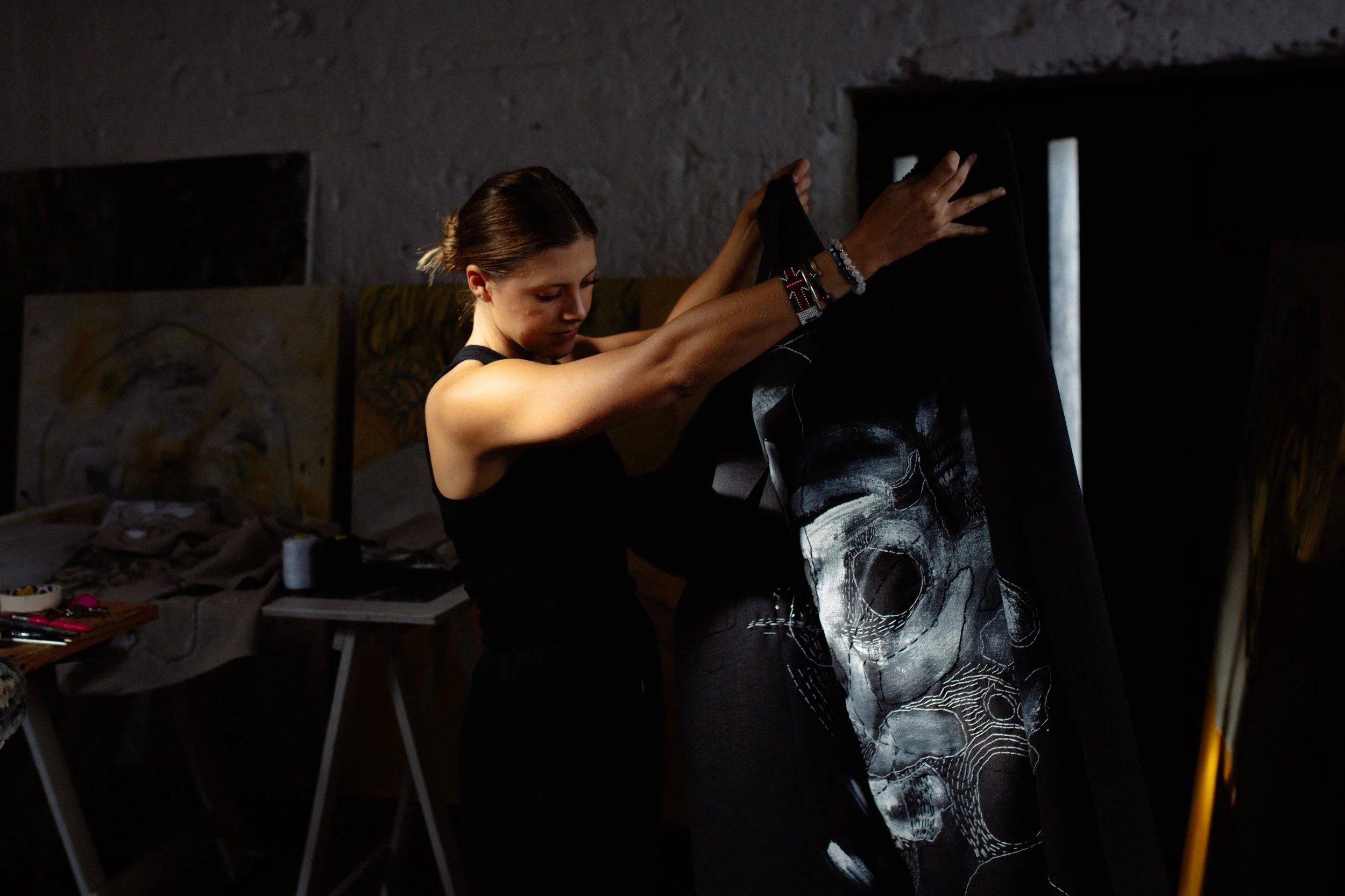
We step inside the abstract, layered and incredibly emotive world of Botswana-based artist Chelsea Young.
Words: Hande Renshaw I Photography: Matt Kay
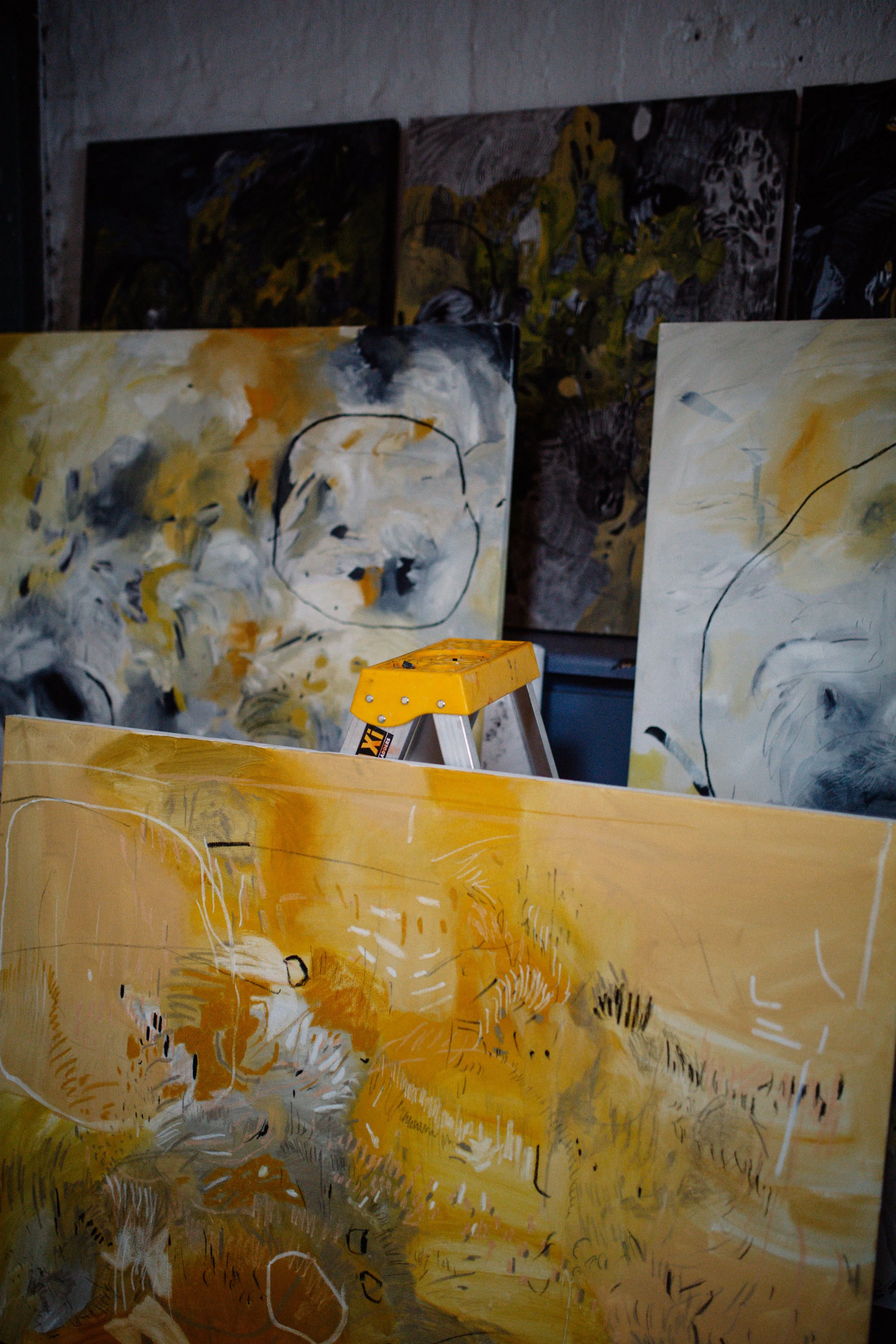
‘It’s amazing how your environment reflects so clearly into your work,’ says Chelsea Young.

Botswana-based artist Chelsea Young.
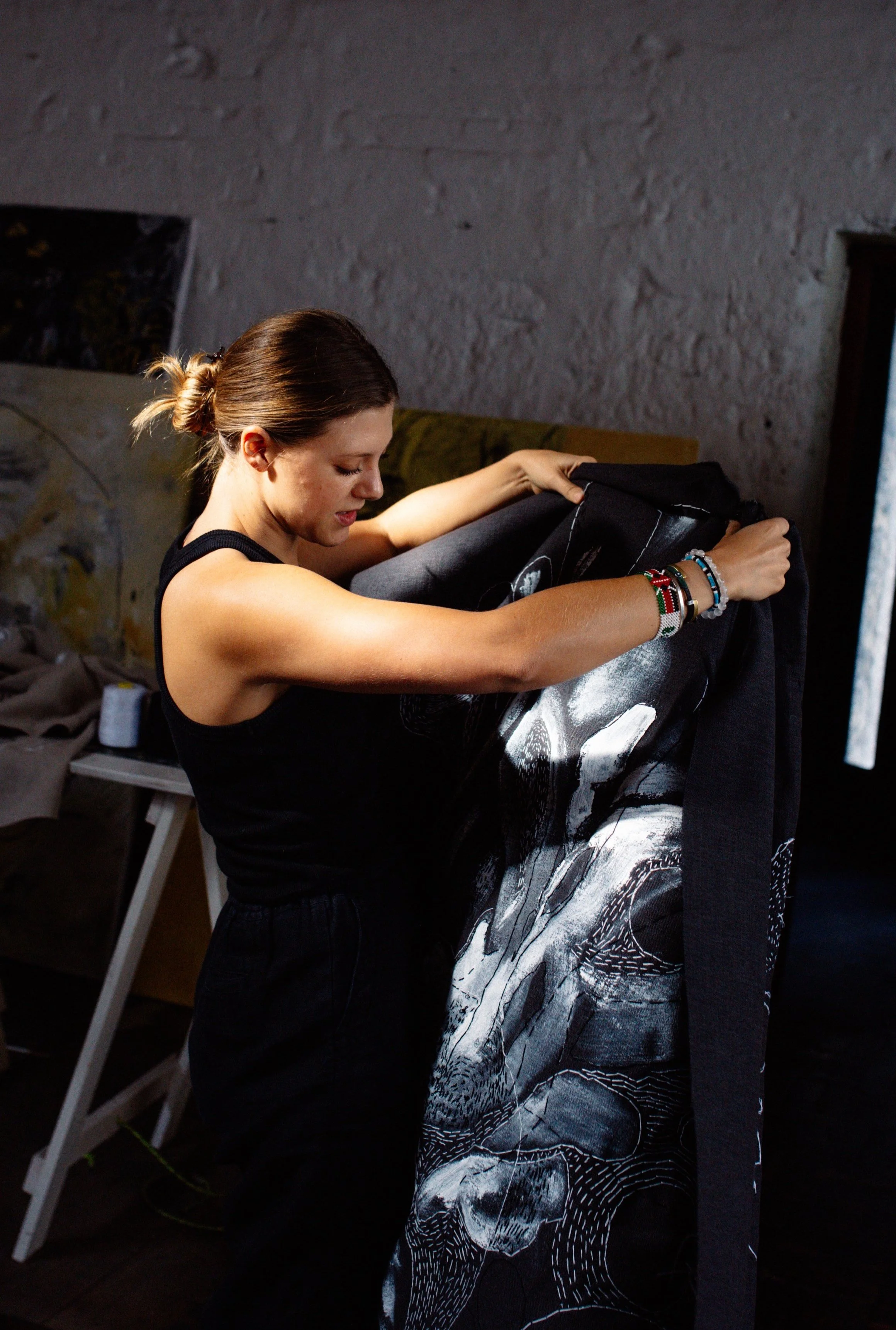
‘Fresh eyes are the best partner in art making for me—to come back into my studio with fresh eyes is always the solution.’
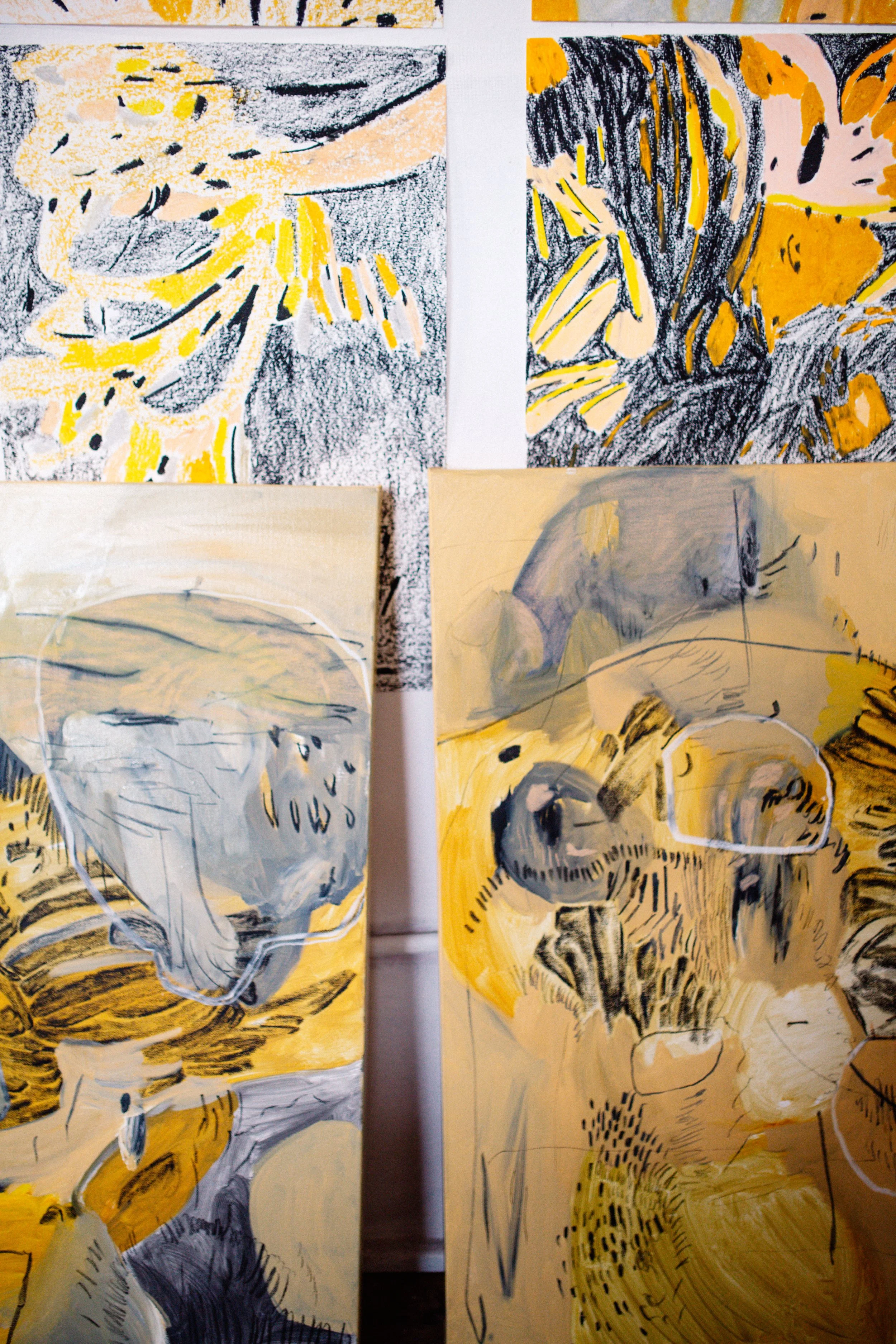
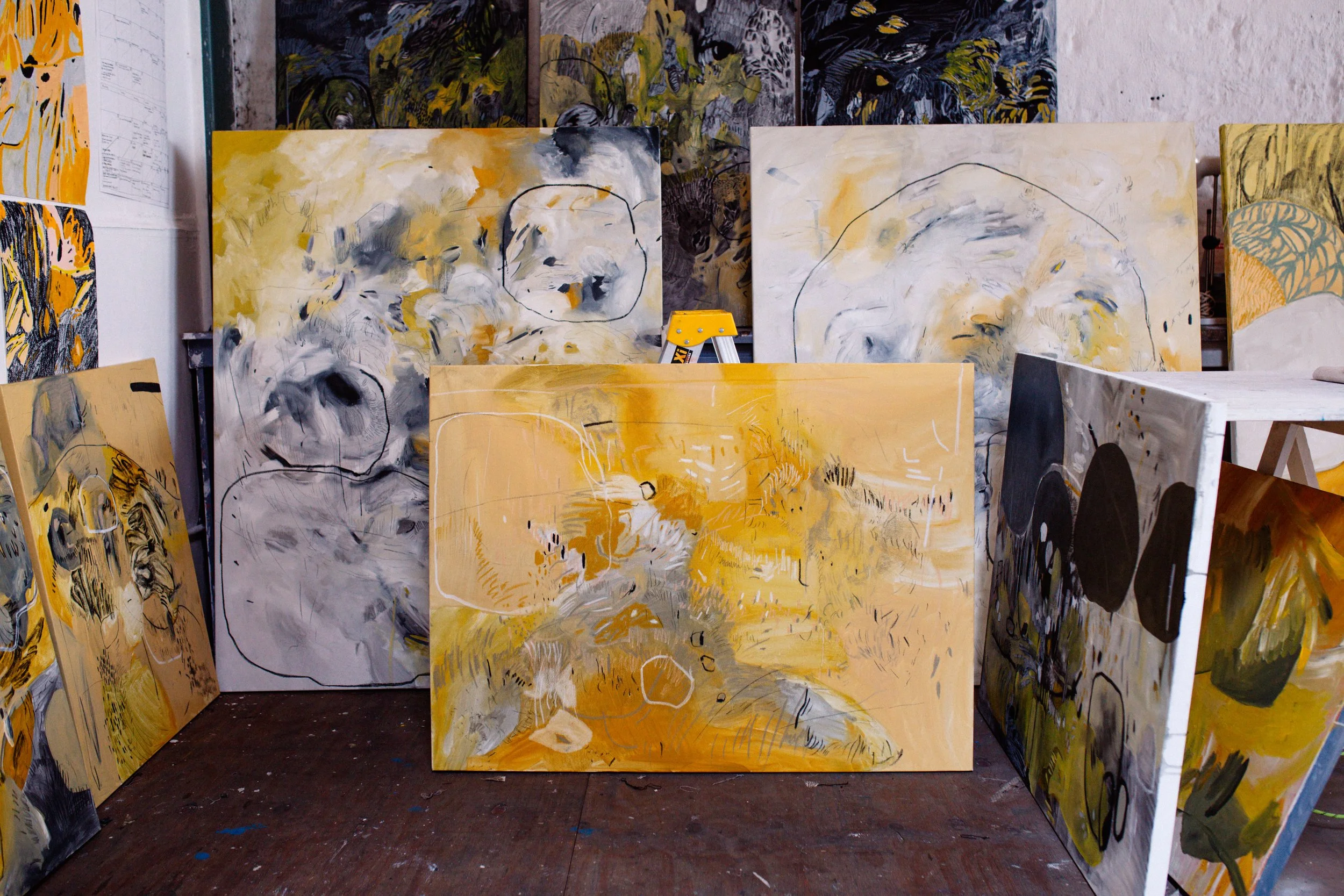
‘I’ve always been drawn to yellow, in all shades. My most recent paintings continue to hold onto this, with shades of yellows, mustards and browns—like glowy, sunlit landscapes with bold shadows and contrasts.’

Botswana-based artist Chelsea Young can clearly recount her earliest memories of creativity—moments where she would get completely lost in the process of making. ‘At the age of four, I remember collecting empty boxes and pieces of paper, constantly glueing things together,’ shares Chelsea.
At the age of 5, Chelsea received a book titled, 365 Things To Make And Do. After completing all the projects in the book, her passion for art was further cemented. ‘I remember the thrill of imagining something and seeing a final product created with my hands. It initiated a need to understand things through ‘making’, to make sense through making of my own world, perspectives and the beauty of abstract things,’ she says.
After completing her degree in fine arts at the University of Stellenbosch, in the Western Cape of South Africa, Chelsea became fascinated by the impact of colour and scent on memory, in particular the sensory aspect of art which moves beyond sight. ‘It was the most incredible 4 years, where I could really dive into my mind, linking abstract thinking to art as an experience.’
Following university, Chelsea spent 4 years working with world renowned sculptor, Dylan Lewis and being mentored by his sales manager, Lynn Ascham. ‘The knowledge I gained from her regarding the sales market of fine art was invaluable,’ she says of the experience.
In 2022, Chelsea attended two international Artist in Residence programs, one in Kenya’s Great Rift Valley and the second in the village of Andore, in India. ‘The residency in India was absolutely life changing and allowed me to see the universal language of art. I spent most afternoons creating and playing with children of the local village, mostly young girls who fell into the traditional way of the village—not being at school, and ‘learning’ from home. The Kantha cloth became my biggest mode of communication, outside of language.’
The Kantha cloth, an inspiration for Chelsea’s current textile work, is made with discarded cloth and embroidered using a running stitch. Women in villages stitch patterns onto the cloth, creating a canvas to share stories and pass down knowledge, mainly to younger girls in their family. ‘It is like a secret language—I loved this idea,’ says Chelsea.
Today, in her new studio in Botswana, Chelsea creates abstract artwork pieces, both on canvas and textiles. ‘My time in India was the first time I’d ever joined art making and textiles. I grew up being obsessed with linens, cottons and block printed things and learning how to embroider from my granny, but I hadn’t considered it to be an extension of my practice until then—I now can’t imagine my practice without textiles, it allows for a softening into space, for a slower production of artwork that’s less impulsive and more considered. Sometimes this is frustrating, but I quite like that self inflicted tension.’
For Chelsea, abstract art is incredibly subjective, ‘It also need not necessarily be steeped in thought, it could simply be beautiful marks alongside each other,’ she says. Drawn to all shades of yellow, from mustard to brown tones, it’s a colour that’s a constant in her work, ‘Like glowy, sunlit landscapes with bold shadows and contrasts,’ she adds.
‘I love that sometimes abstract art can be extremely frustrating and at the very same time, liberating. It transports me out of the world and back into that world of me as a child, making.’
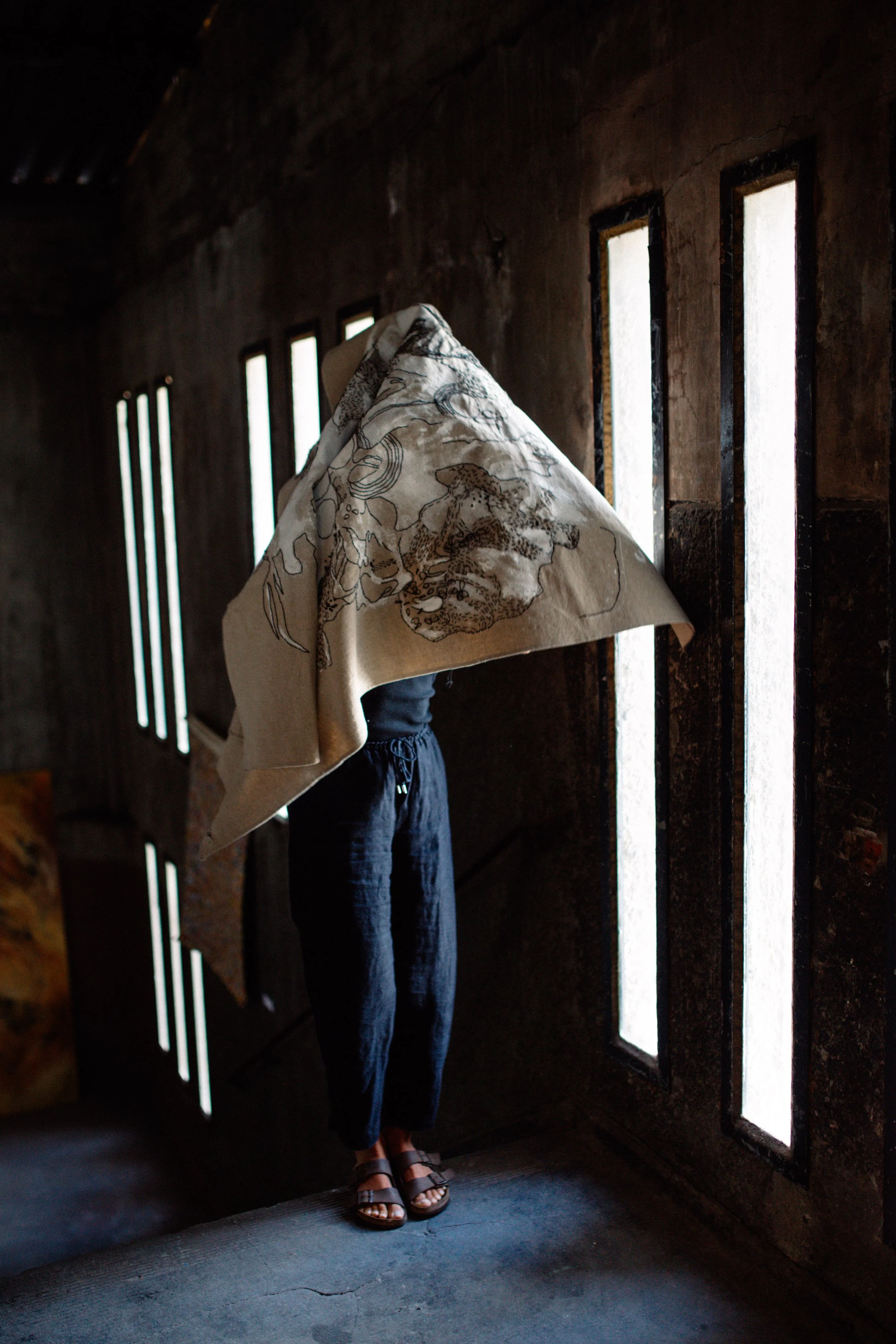
‘I now can’t imagine my practice without textiles, it allows for a softening into space, for a slower production of artwork that’s less impulsive and more considered. Sometimes this is frustrating, but I quite like that self inflicted tension.’
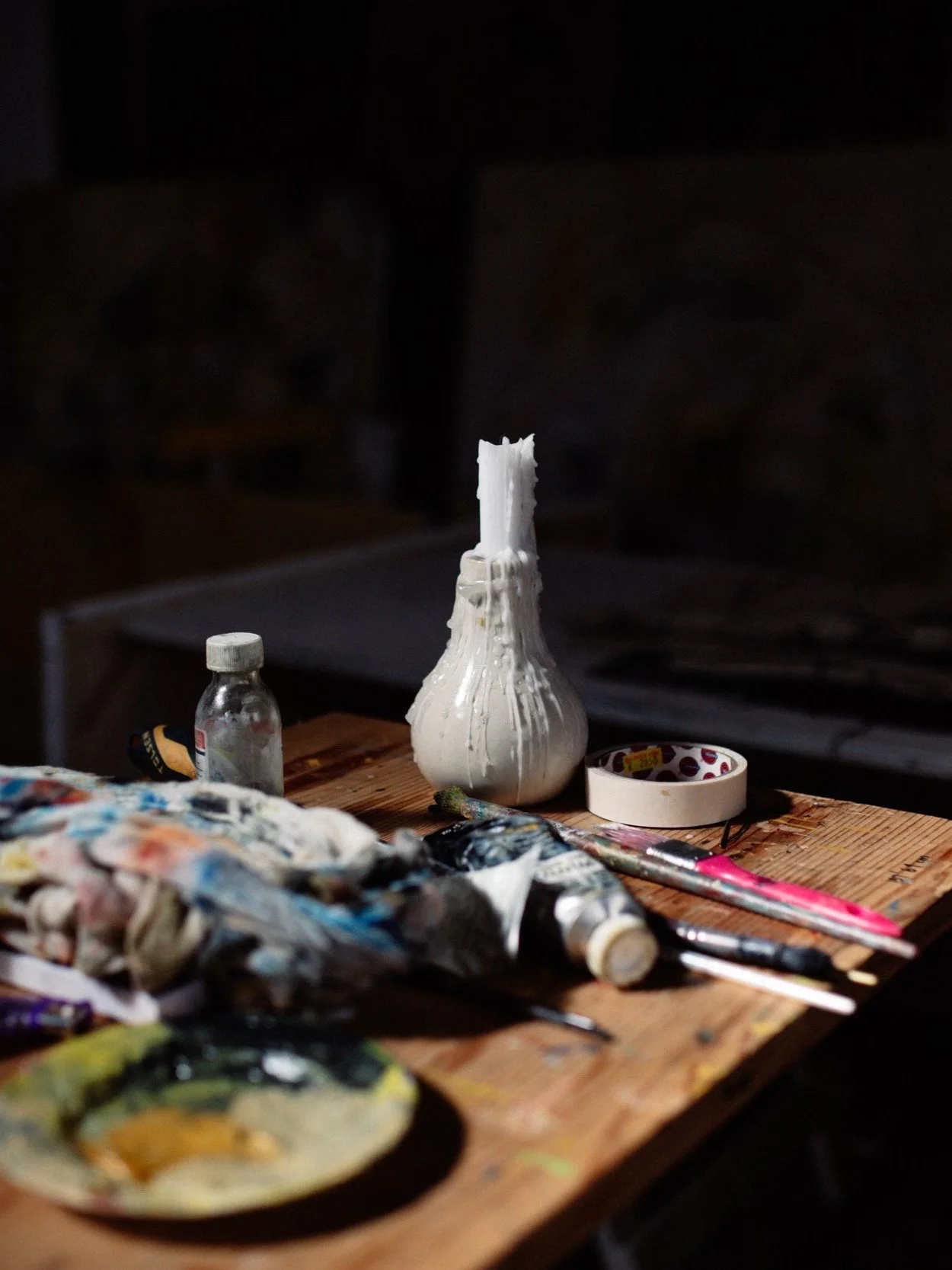
‘There’s a moment in the painting when I have to stop—it’s like an impulse that screams at me. I then usually pack up, clean up, and go home.’
“I love that abstract art is so subjective—it also need not necessarily be steeped in thought, it could simply be beautiful marks alongside each other.”
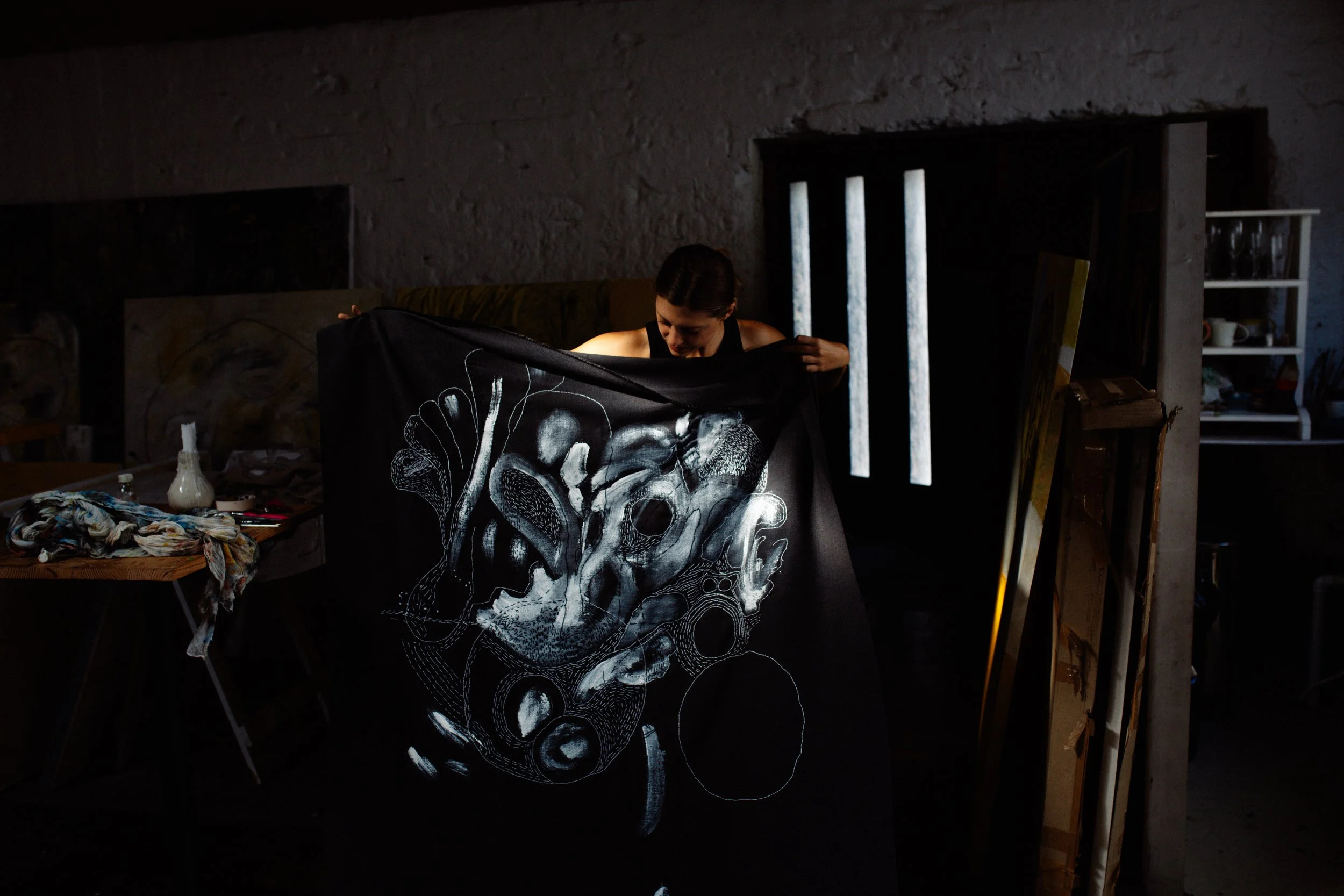
‘Inspiration visits me like a wave—sometimes it’s rather dry, but when it arrives, it’s all encompassing and full on.’
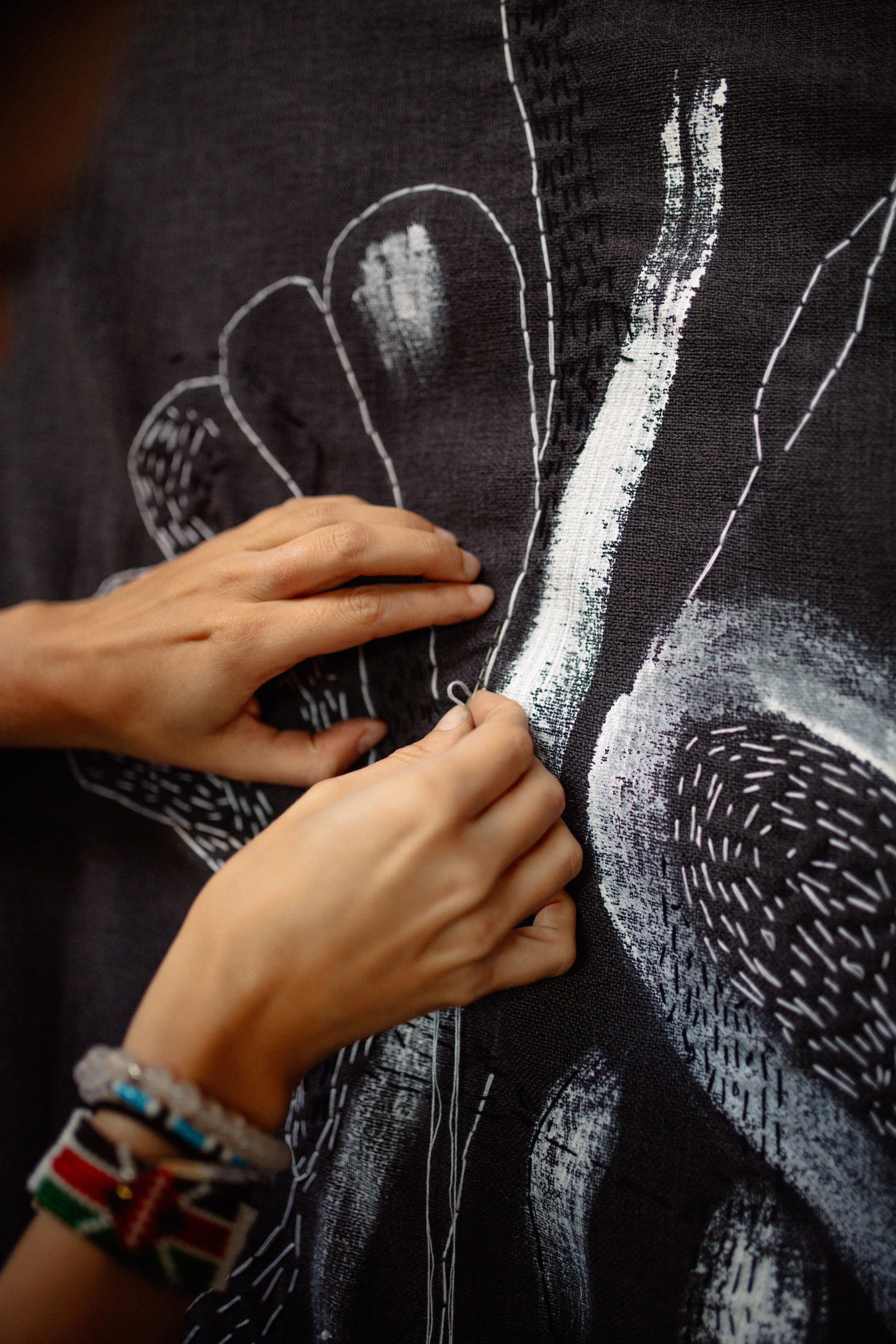
‘I grew up being obsessed with linens, cottons and block printed things and learning how to embroider from my granny, but I hadn’t considered it to be an extension of my practice.’
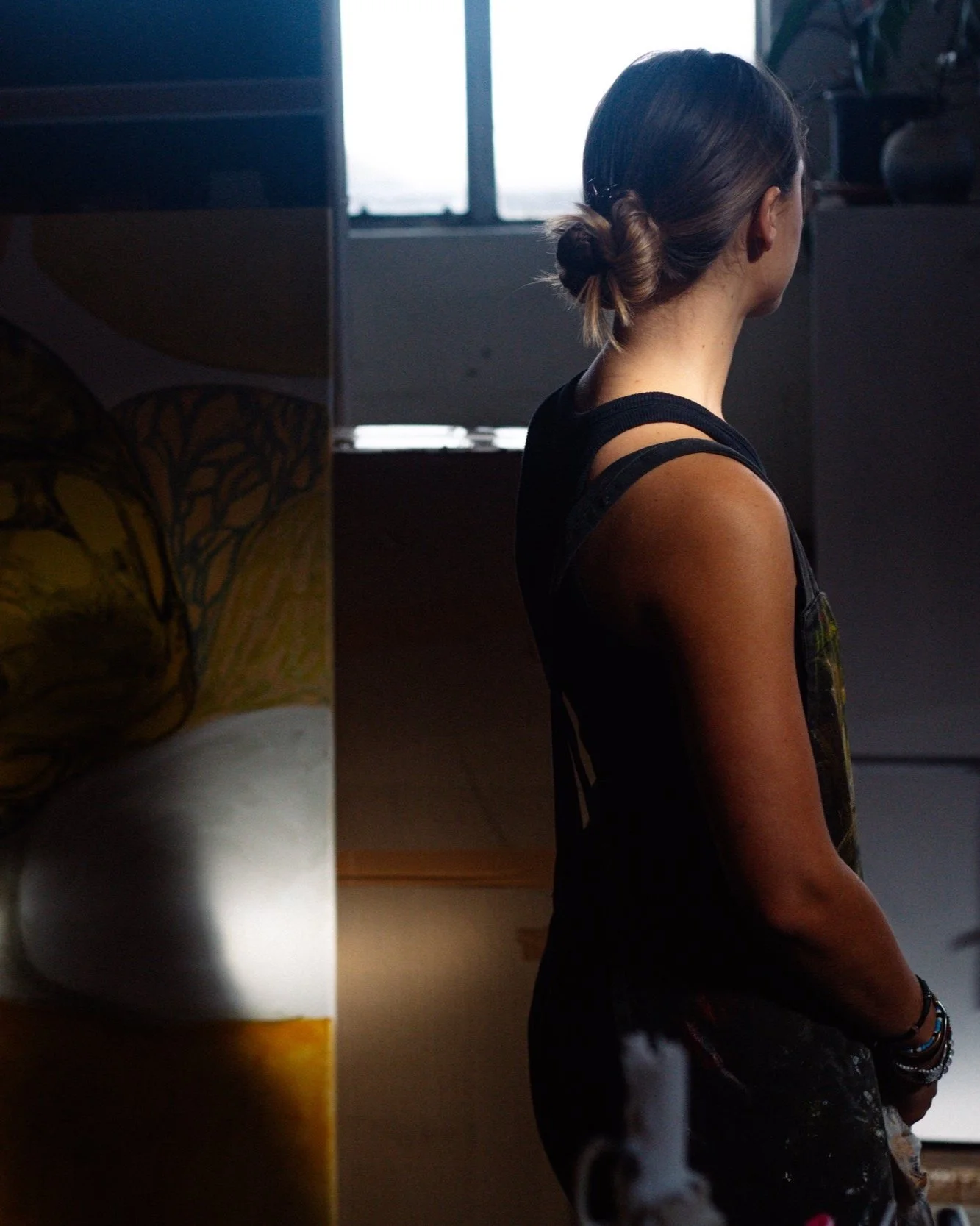
‘The work-life balance has gently moulded into one for me, where my life and relationship with myself and people around me, is exactly what my work aims to share.’
