

Project Carlyle By Mosh Home—A Coastal-Cool Transformation
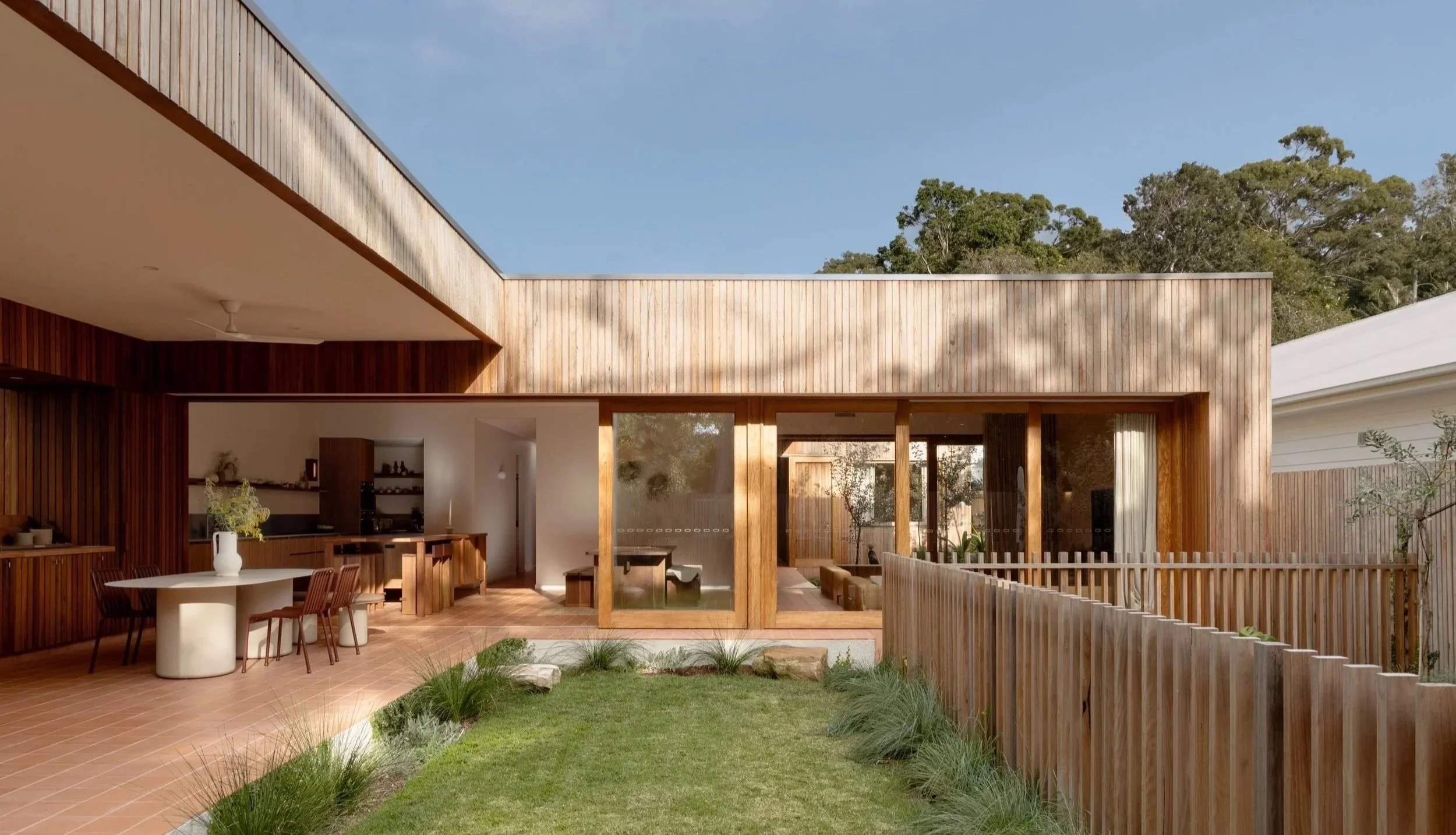
Designed by Mosh Home, Project Carlyle reimagines a 1970s Currumbin brick-and-tile dwelling as a coastal retreat—opened to north light and guided by Japanese minimalism and Californian bungalow cues.
Words HANDE RENSHAW Photos TARI PETERSON Interior Design MOSH HOME Landscape Design CAPO LANDSCAPES Build DAMON CONSTRUCTIONS
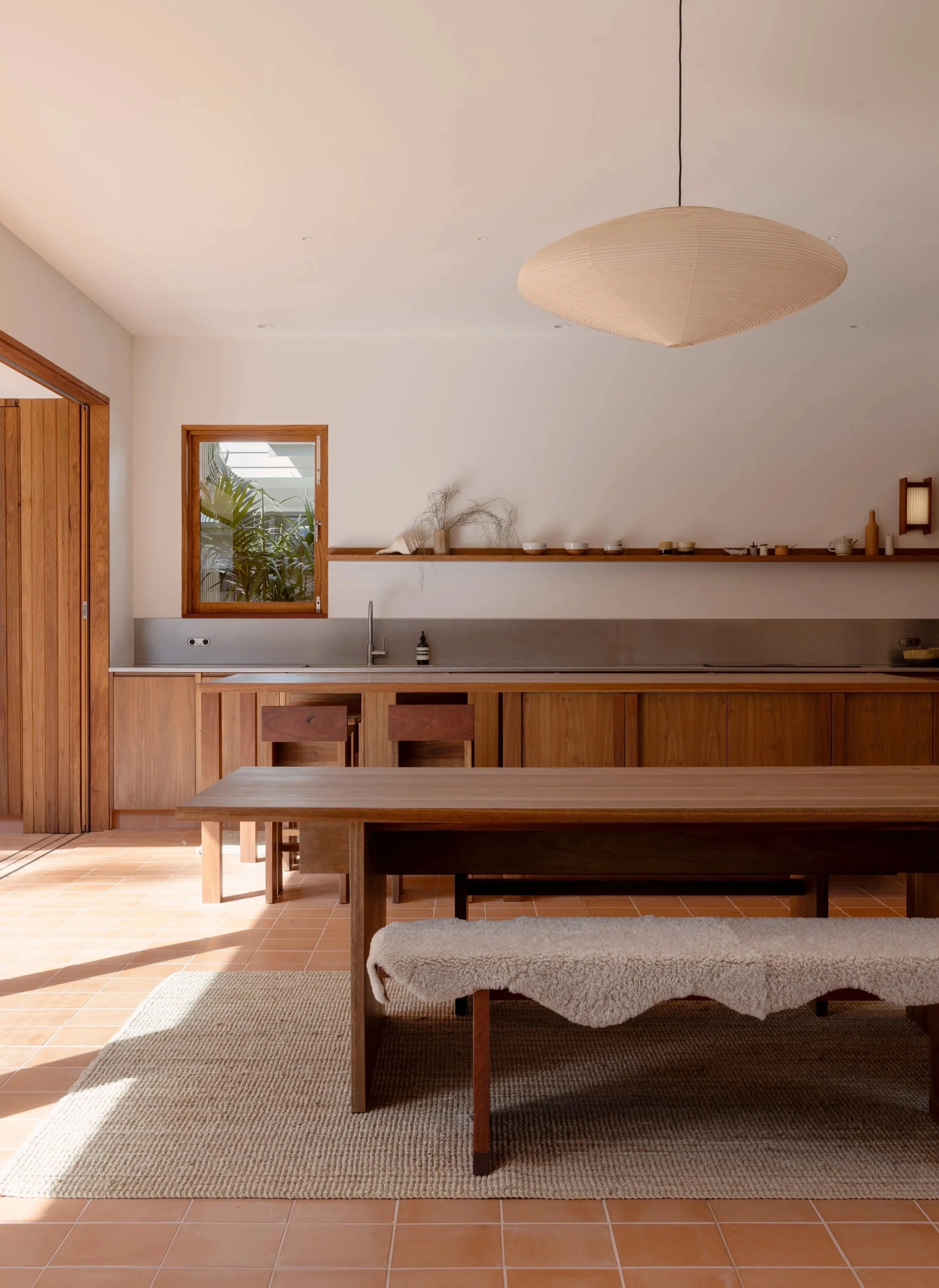
Mosh Home drew inspiration from the clients’ favourite design styles and philosophies, including Japanese minimalism and Californian coastal bungalows.
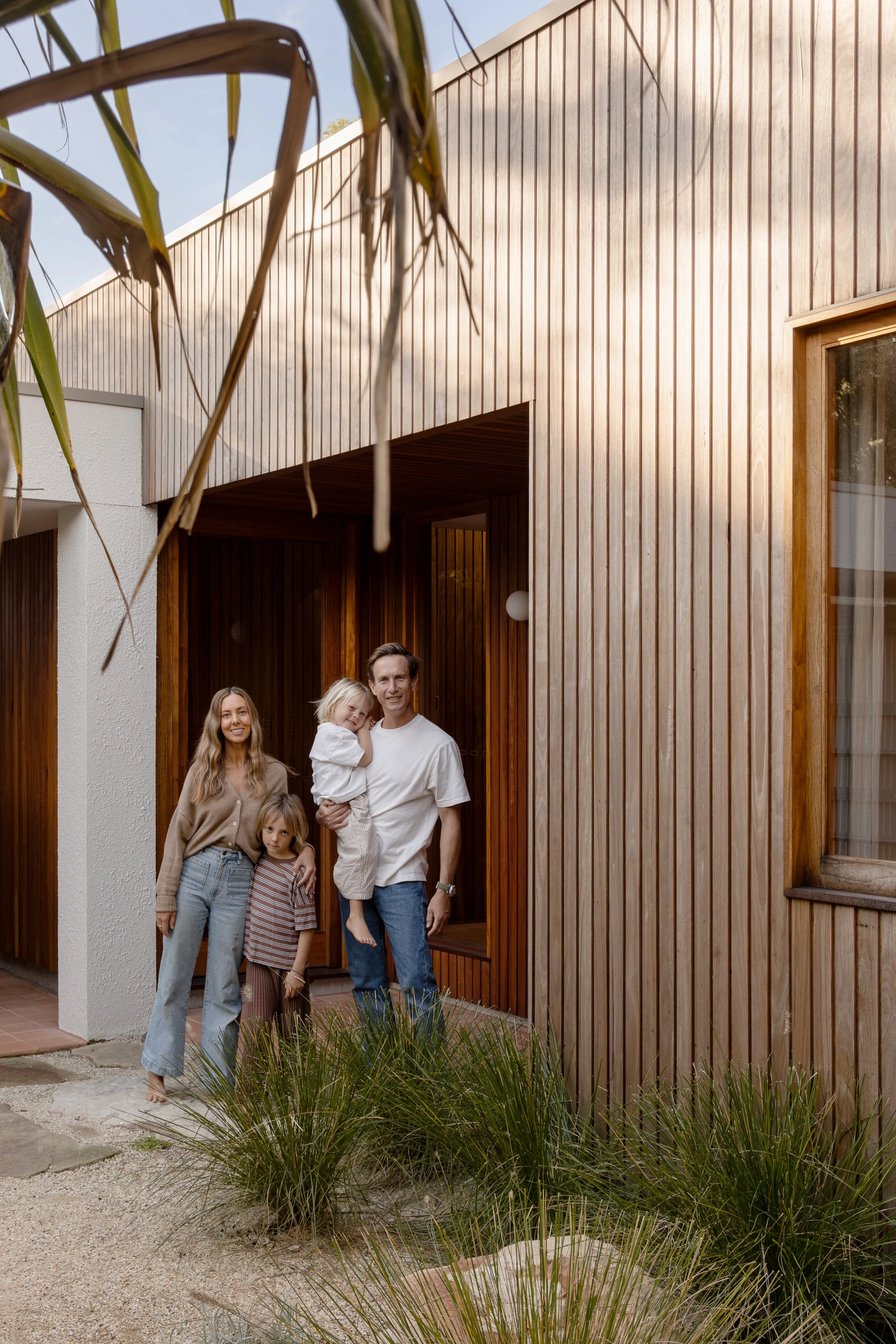
Homeowners, Rich and Becky Bournon, with their two young children.
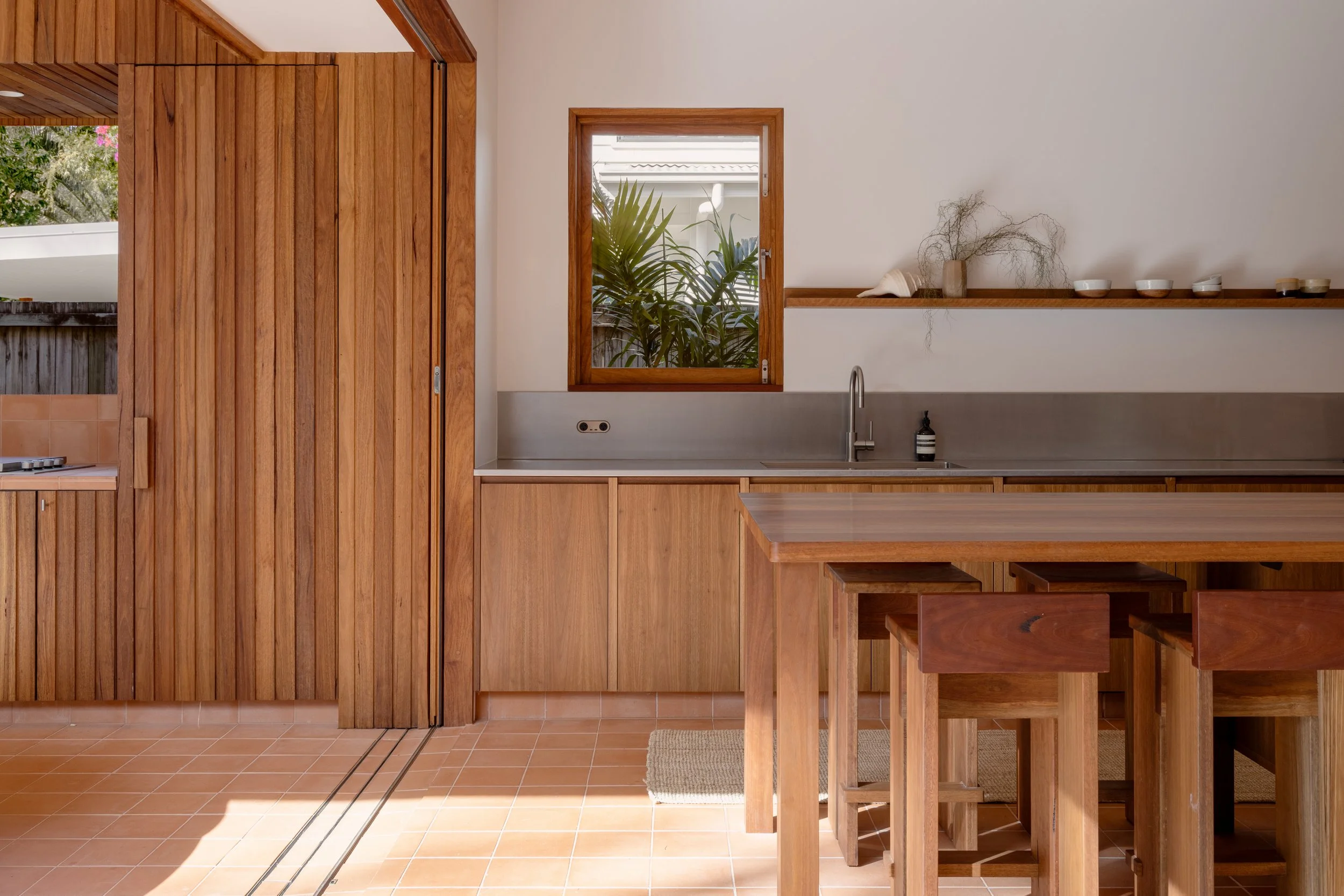
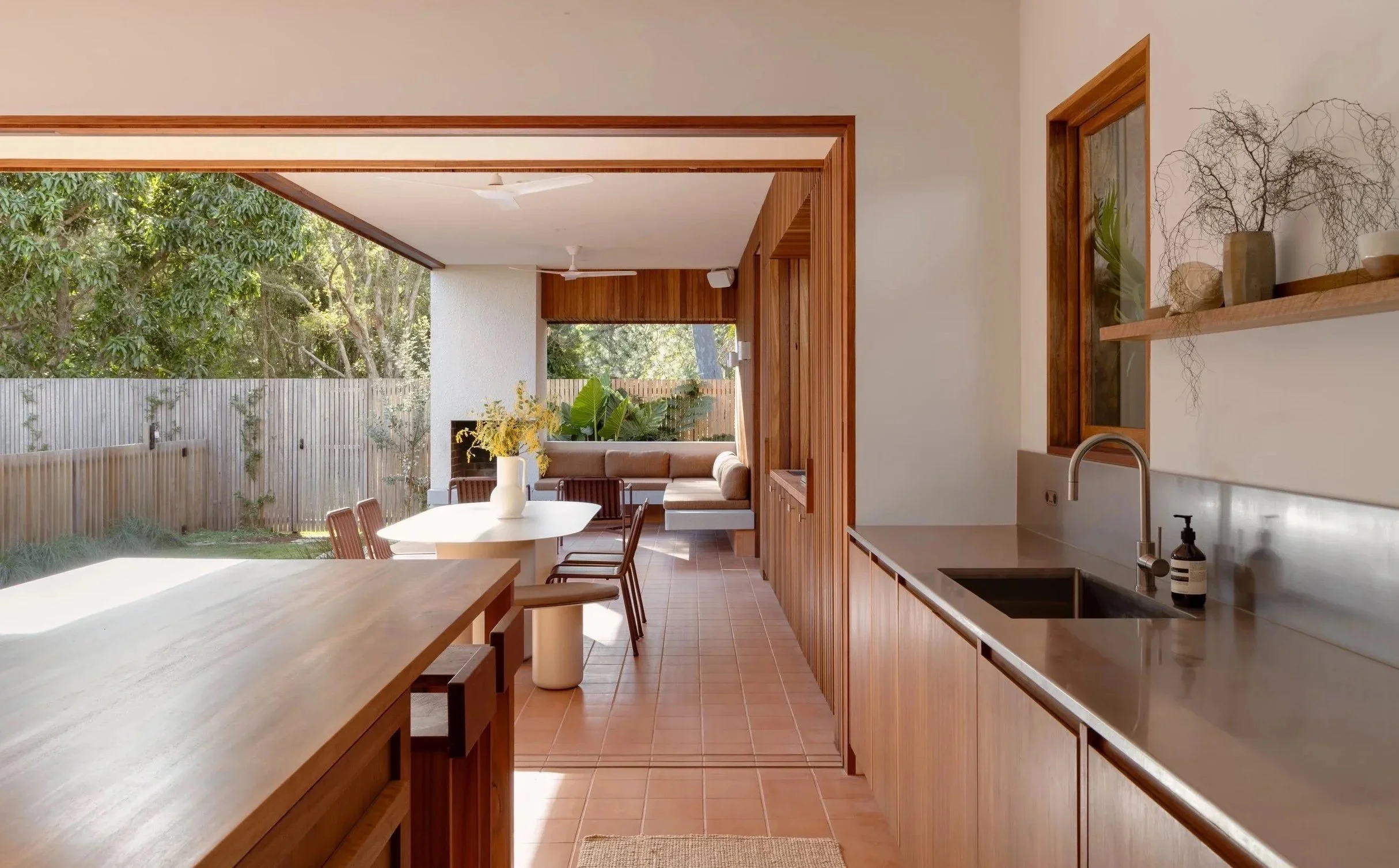
With Mosh Home and Mosh Joinery at the helm, the custom cabinetry anchors the interiors—crafted, cohesive, and built for daily life.
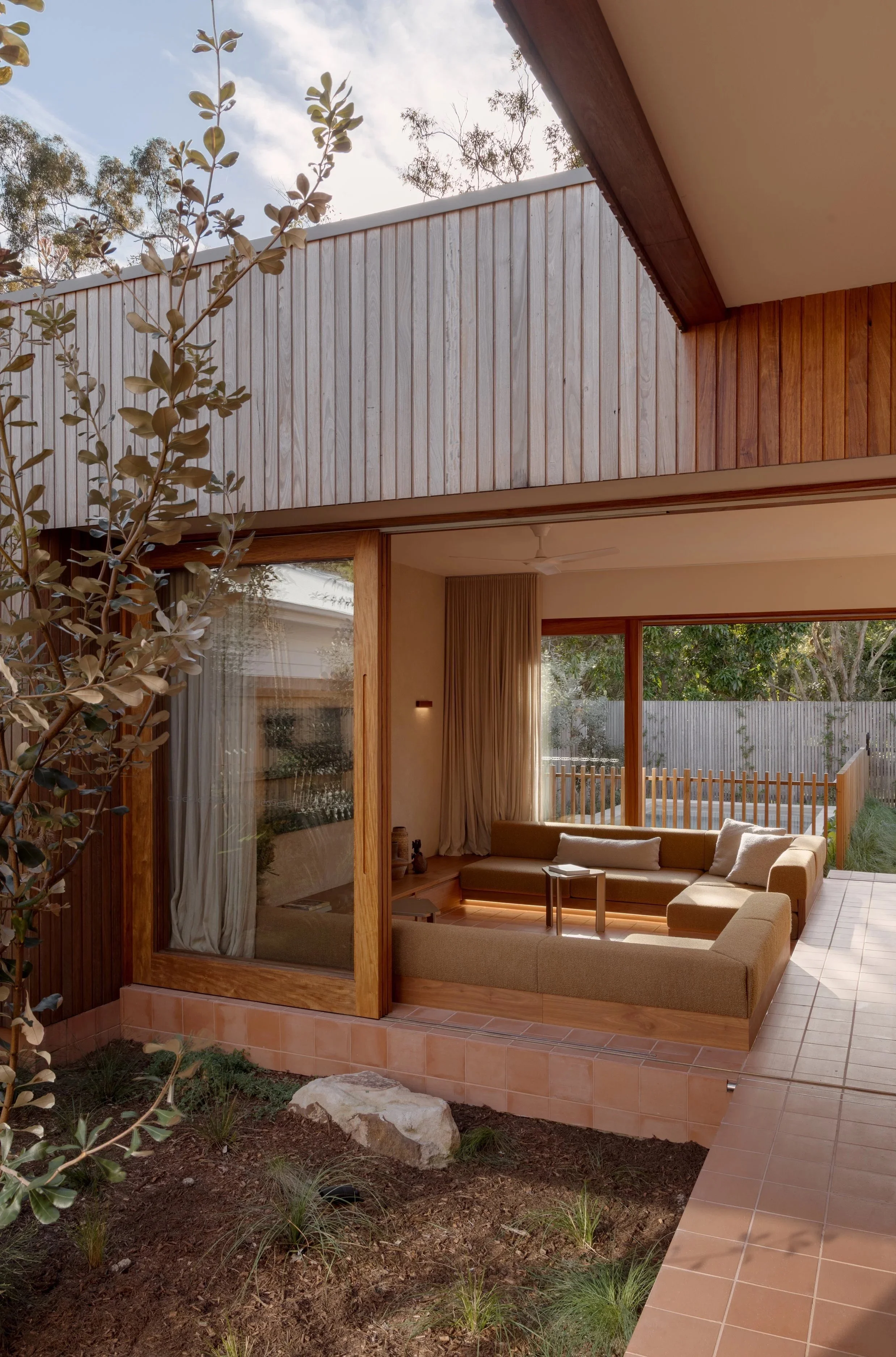
The custom sunken lounge was designed and built by Mosh Joinery.
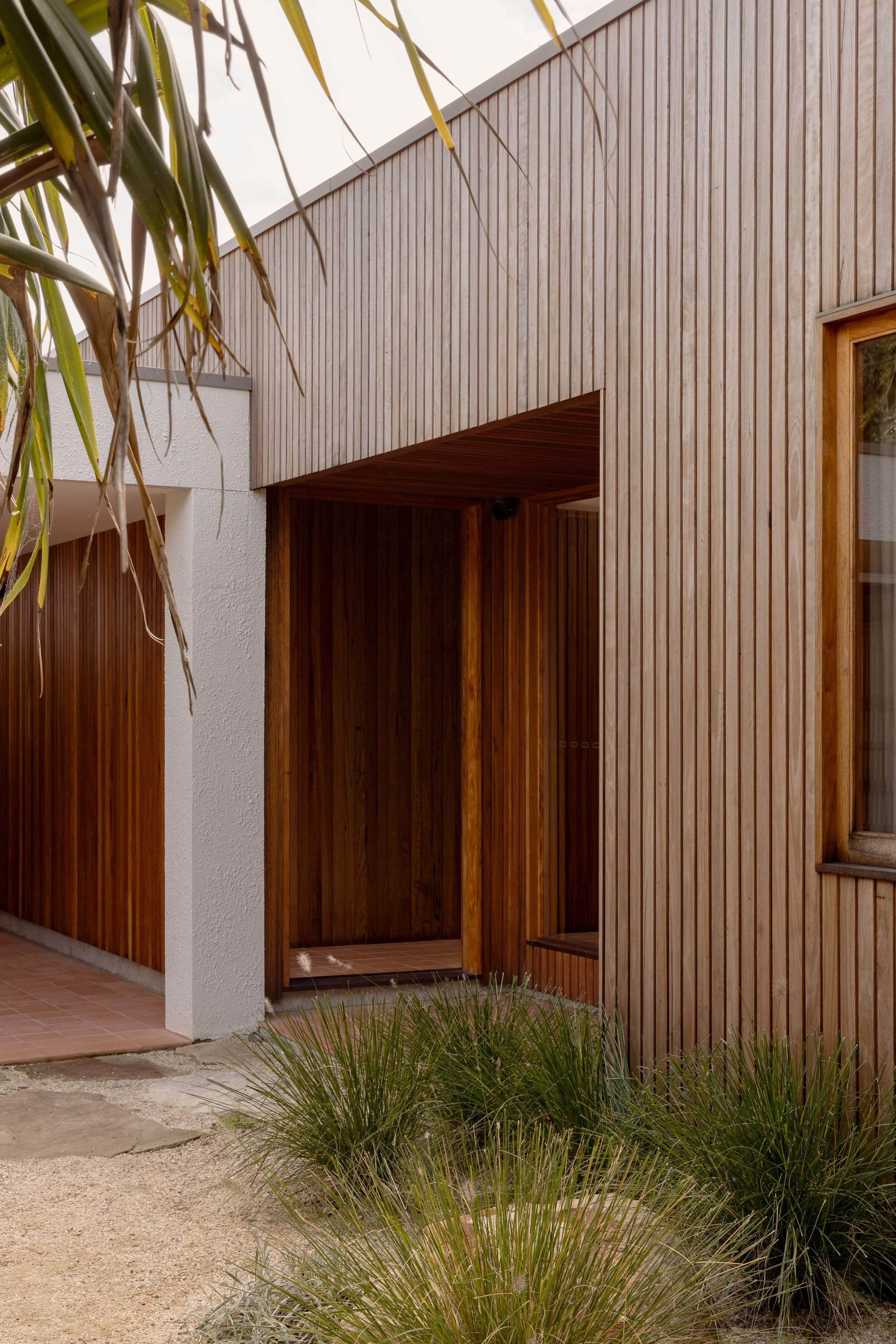
Blackbutt shiplap timber wraps the exterior of the home.

‘I love that I can be in the kitchen and connected to both the living room and the outdoor space. Everything feels generous in size but equally within reach.’
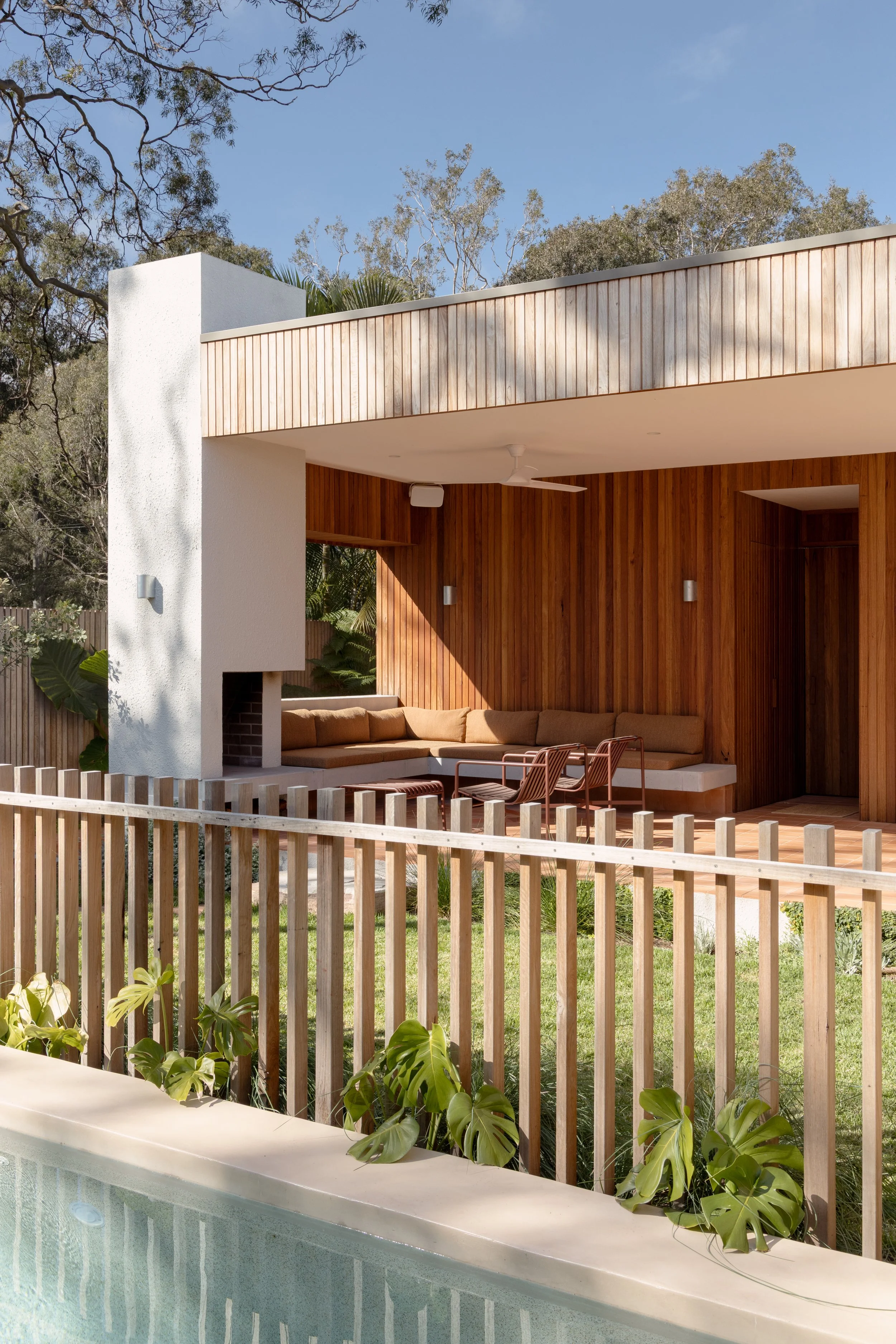
The outdoor space anchors family life, featuring built-in seating and outdoor fireplace.
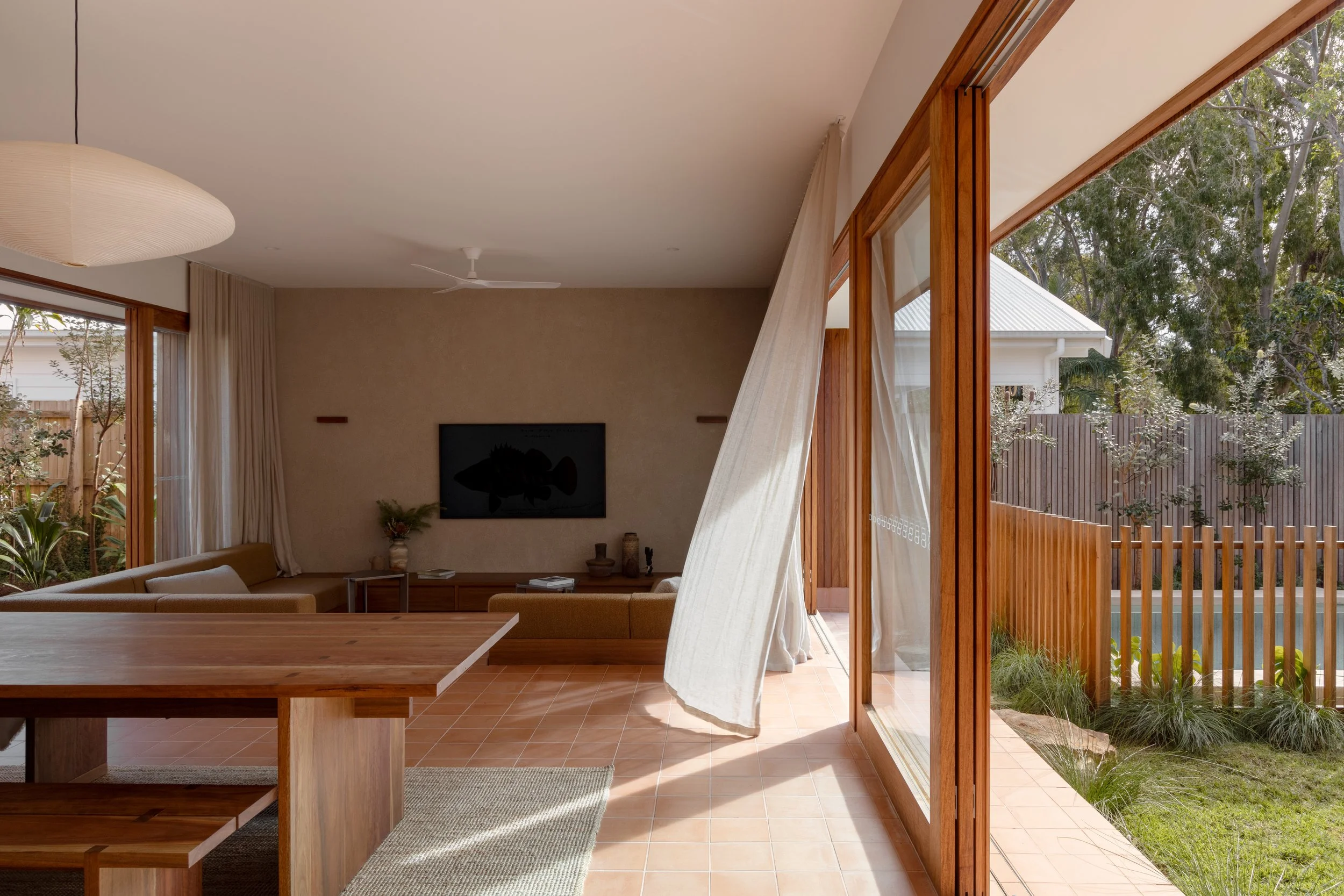
Central to the brief was a stronger connection to the outdoors—embracing Currumbin’s landscape and open-air lifestyle.
“The homeowners had a clear vision for their home—a family retreat, crafted from natural materials, which evokes a sense of comfort, warmth and calm.”
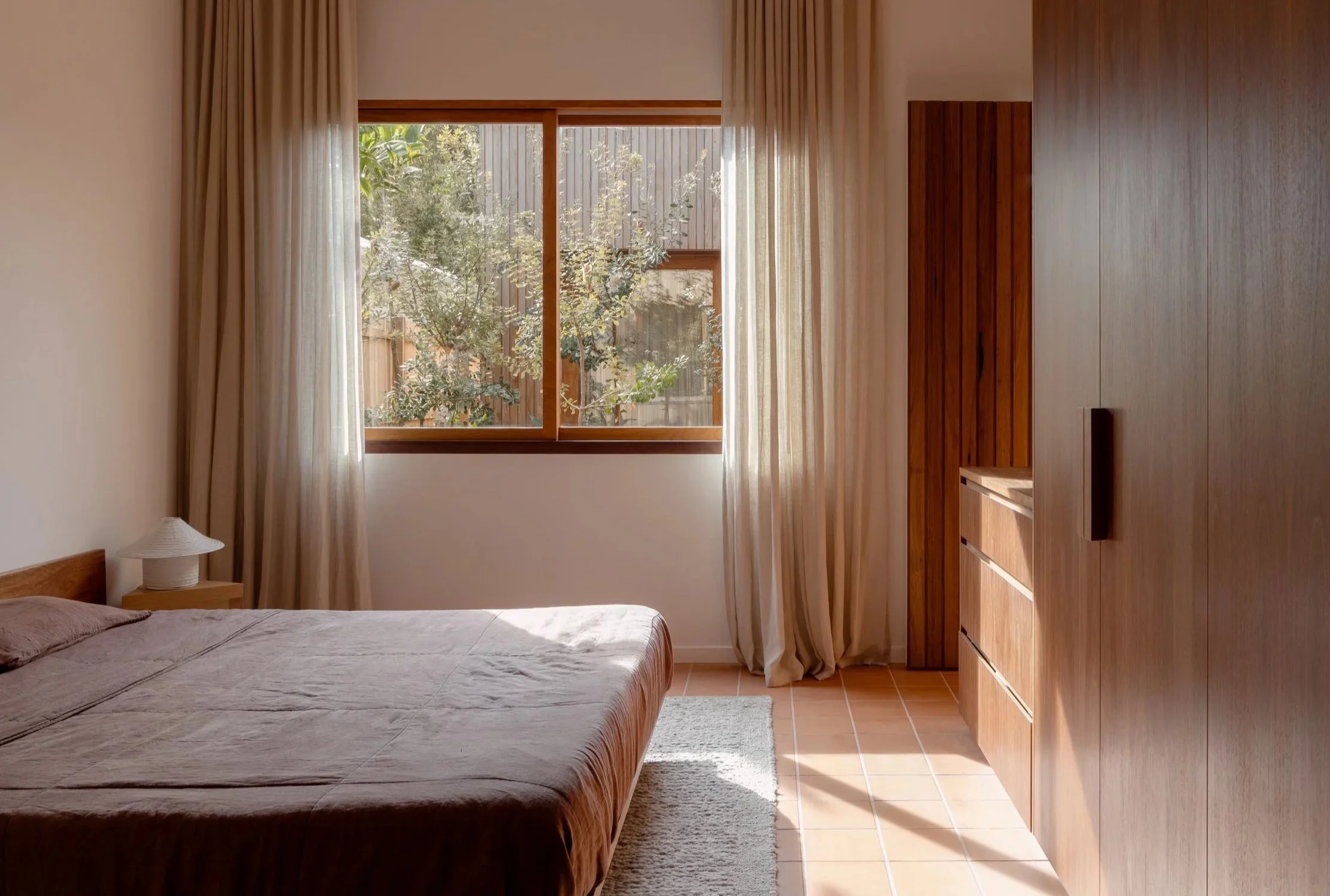
The beds, along with other timber furniture pieces throughout were custom-designed and made by D'Arcy Design Furniture.
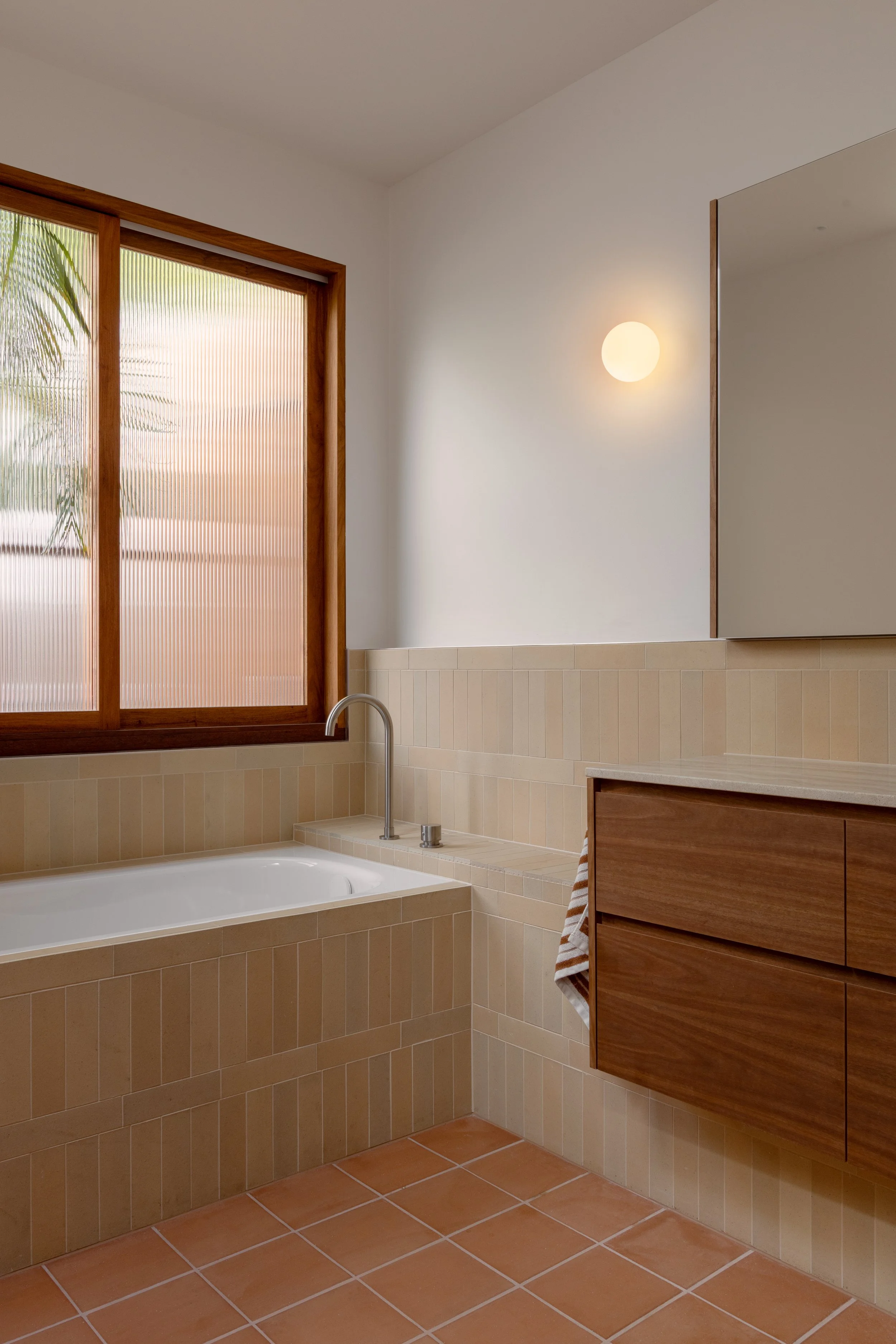
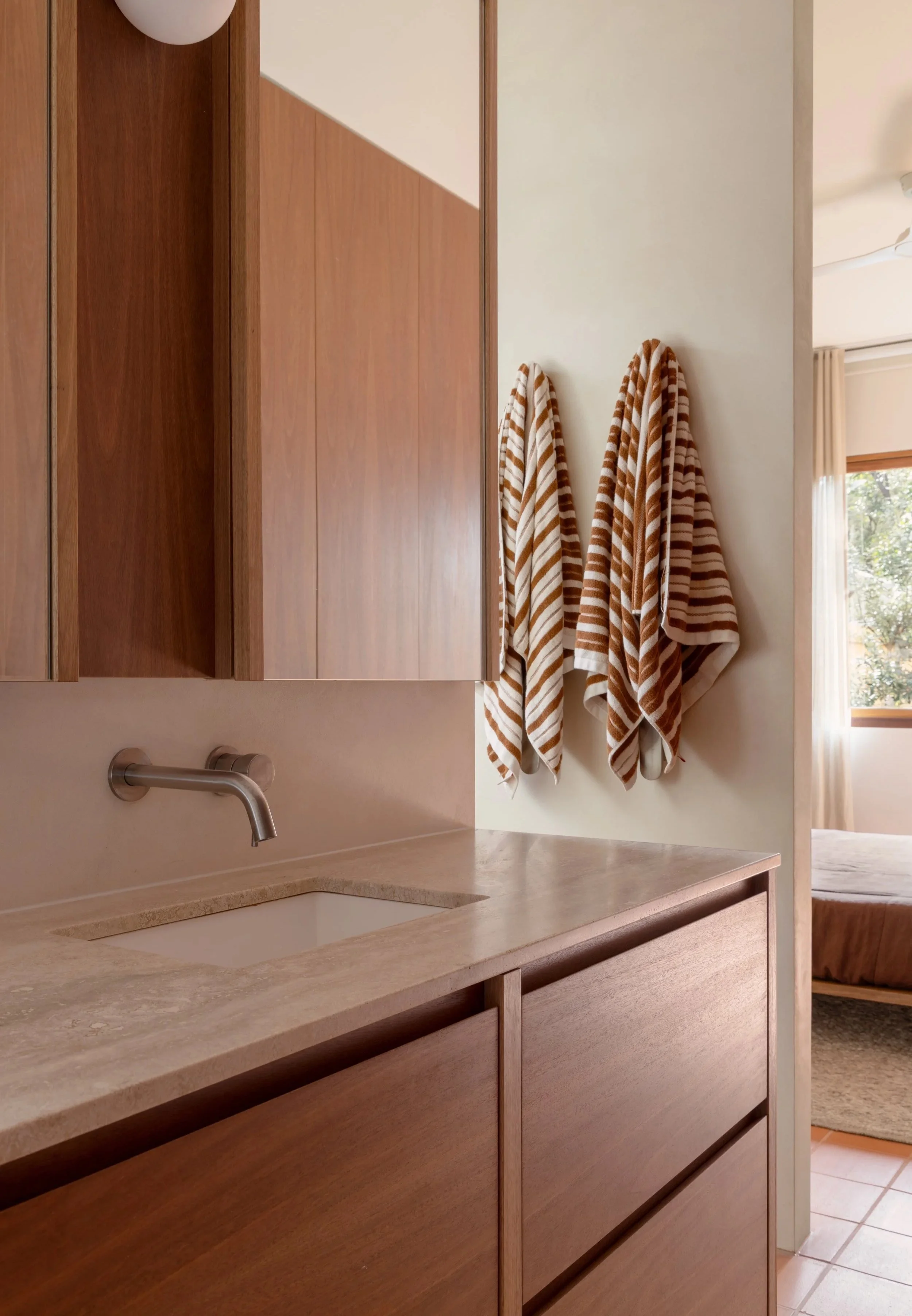
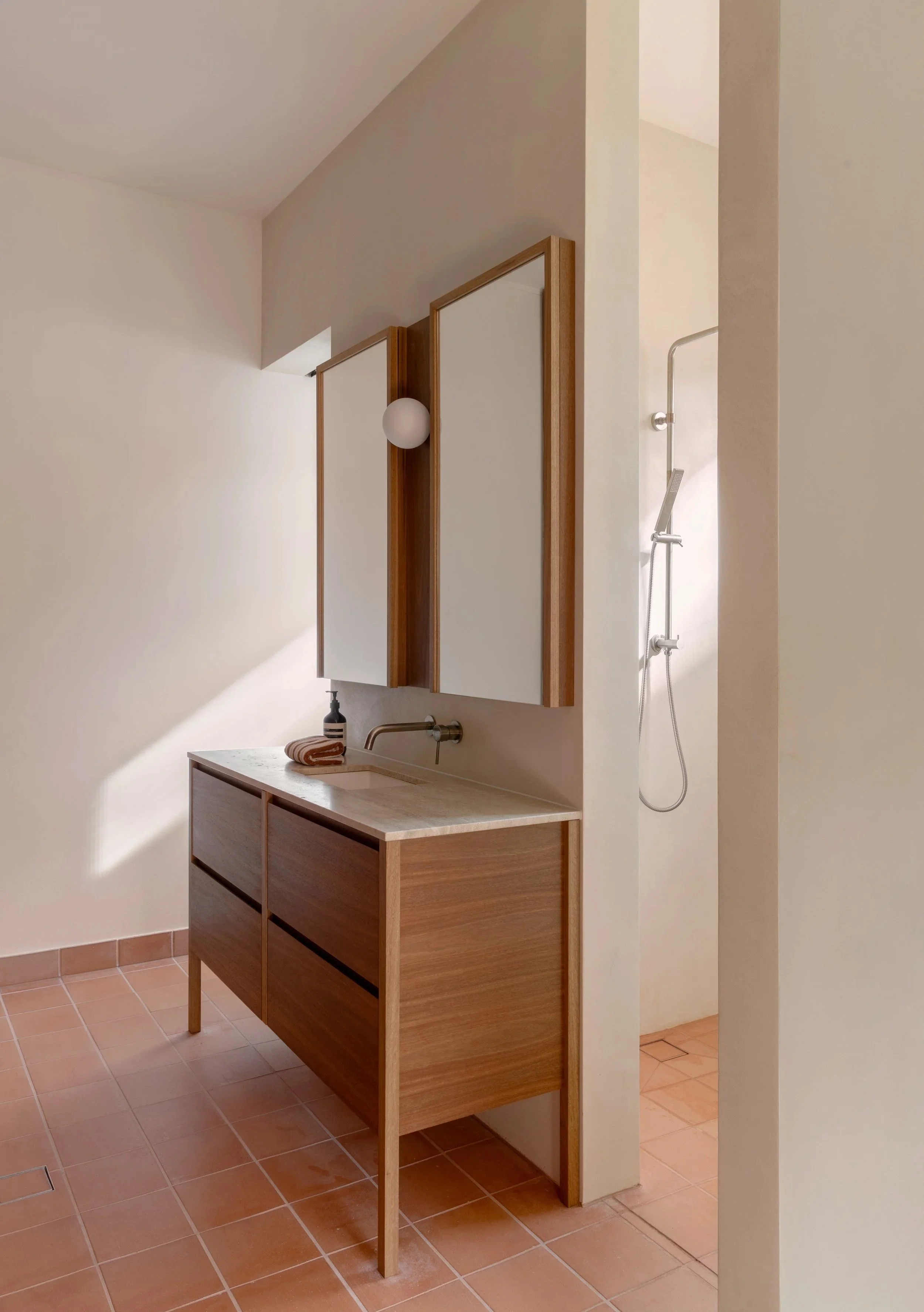
Warm terracotta floor tiles and timber cabinetry set a calm palette in the bathroom.
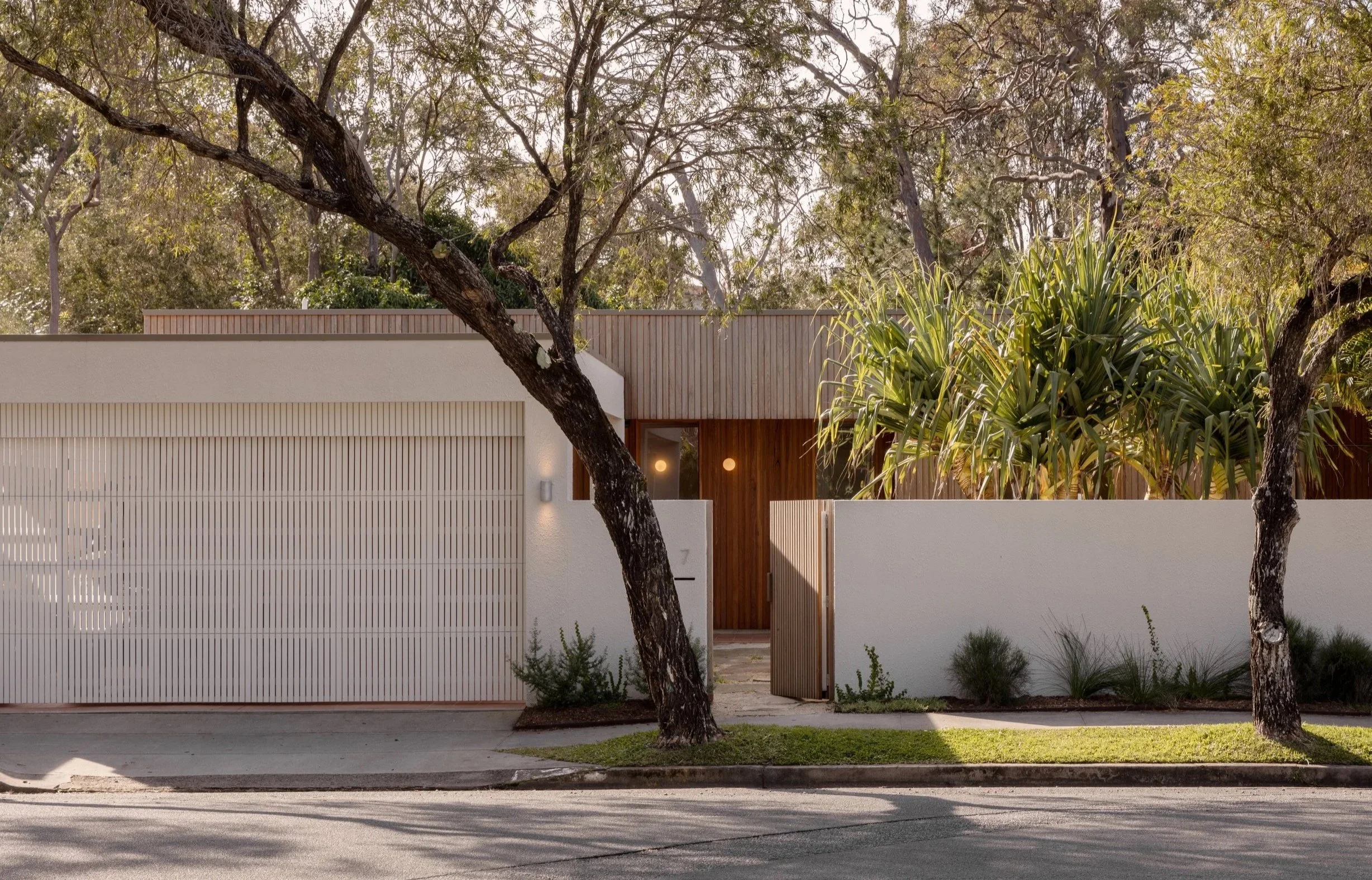
‘As soon as you walk in the door, everything just feels so cohesive and works.’
Project Carlyle is a considered reinvention: an unassuming 1970s brick-and-tile home in Currumbin reimagined as a timber-clad coastal retreat. Guided by Mosh Home and building designer Brad Ruddell, the renovation preserves and extends the original footprint, prioritising light, flow, and connection to place.
After purchasing the leafy property in 2021, homeowners Rich and Becky Bournon initially pursued plans for a complete rebuild before pivoting to a strategy that retained much of the bedroom wing, added floor area to the living and alfresco zones, and introduced a new master suite to the north-western corner. The reoriented plan opens to a breezeway and native gardens, choreographing movement from arrival to the rear living spaces while carving away old service corridors.
After living in the house for years, the homeowners knew what to keep and what to change, their brief centred on a stronger relationship with the landscape, ‘The home’s connection with the outdoors was a key design element in their brief,’ Brad shares. The plan introduces a north-facing breezeway and expanded alfresco zones with elevated ceilings and seamless indoor–outdoor flow.
These moves draw natural light deep into the interior and redirect circulation toward the rear living spaces, bypassing the former service hallway to the bedrooms and kitchen while clarifying the home’s minimalist form. ‘These elements also contribute to the overall shape and form of the dwelling that provides the minimalist aesthetic we were aiming for,’ adds Brad.
With Mosh Home and Mosh Joinery at the helm of cabinetry and interior detailing, founder Libby Brady anchored the home’s sensibility in natural materials and calm, open planning—drawing on Japanese minimalism and Californian coastal bungalows to create a light-filled, quietly expressive interior.
‘Rich and Becky had a clear vision for their home: a family retreat, crafted from natural materials which evoked a sense of comfort, warmth and calm,’ says Libby. ‘We knew them as friends and neighbours before they engaged us to help with their renovation, so we were confident we aligned in aesthetic and genuinely understood the look and feel they were trying to achieve, along with the value we could offer through the joinery design process,’ she adds.
The homeowners had already selected Artedomus Cotto Manetti tiles and wanted to use as much timber as possible throughout, so Mosh Home’s work was about letting the materials sing.
‘We designed a lot of the Spotted Gum timber veneer joinery to read as furniture pieces rather than standard cabinetry, but we knew that maximising storage was also important. Inevitably, our work always balances form with function - not only do we want our spaces to look and feel great, but they need to work like a dream too,’ says Libby.
Completed in late 2024, Project Carlyle is already proving its resilience to daily family life. ‘As soon as you walk in the door, everything just feels so cohesive and ‘works’. We’ve never had proper storage before and now our home life doesn’t feel so chaotic - everything has a spot. Even the boys know where to put their stuff, so we are more organised than ever,’ says Becky. ‘I also love that I can be in the kitchen and connected to both the living room and the outdoor space. Everything feels generous in size but equally within reach.’
‘We are so happy—the home feels like a true reflection of us and we just want to keep on enjoying the space,’ Becky adds.
