

Ben Thomas
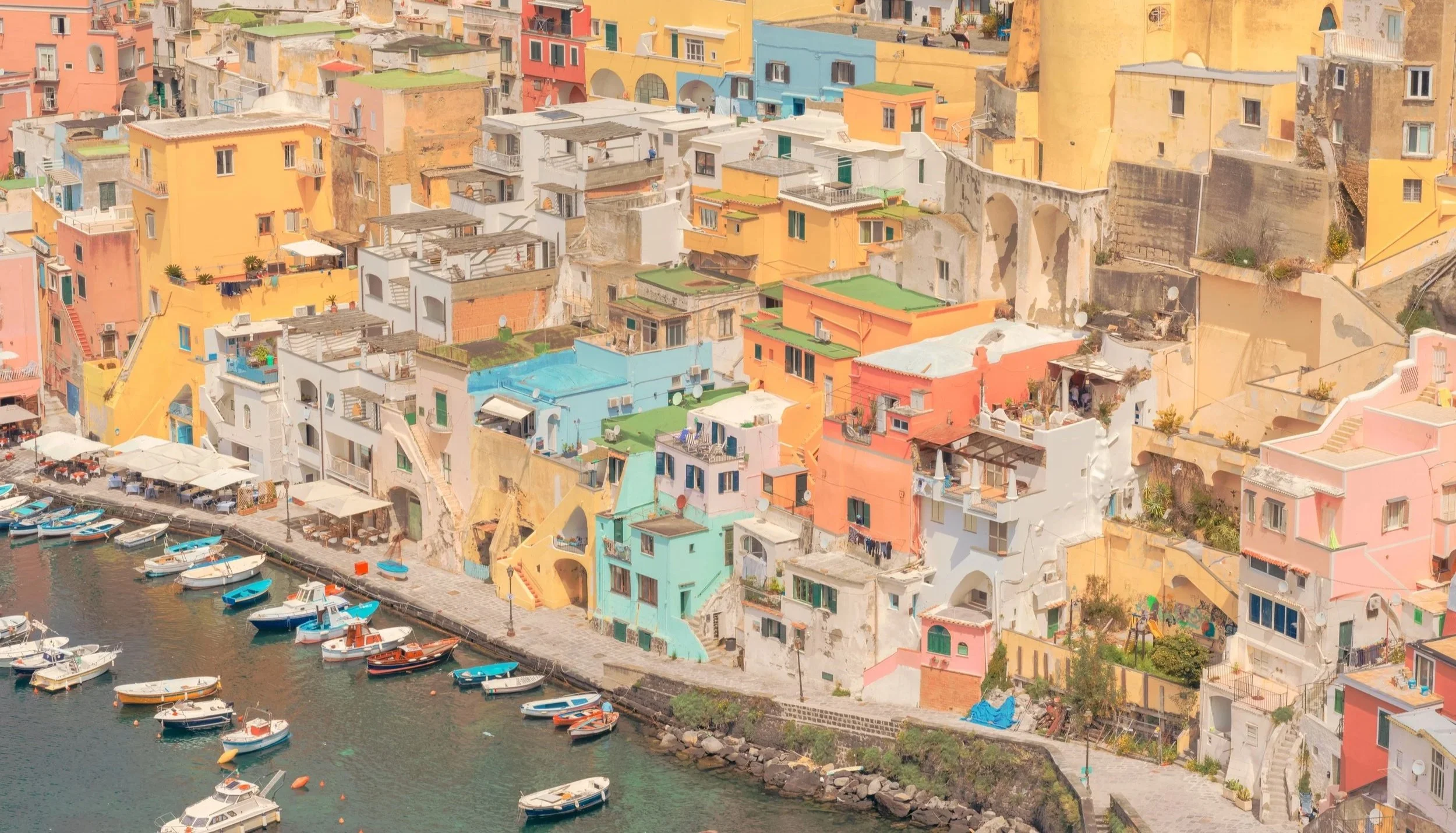
Melbourne-based fine art photographer Ben Thomas works with patience and presence, allowing time and place to shape his lens—his dreamlike images transform the everyday into studies of bright, spectacular colour, light and form.
Photos BEN THOMAS
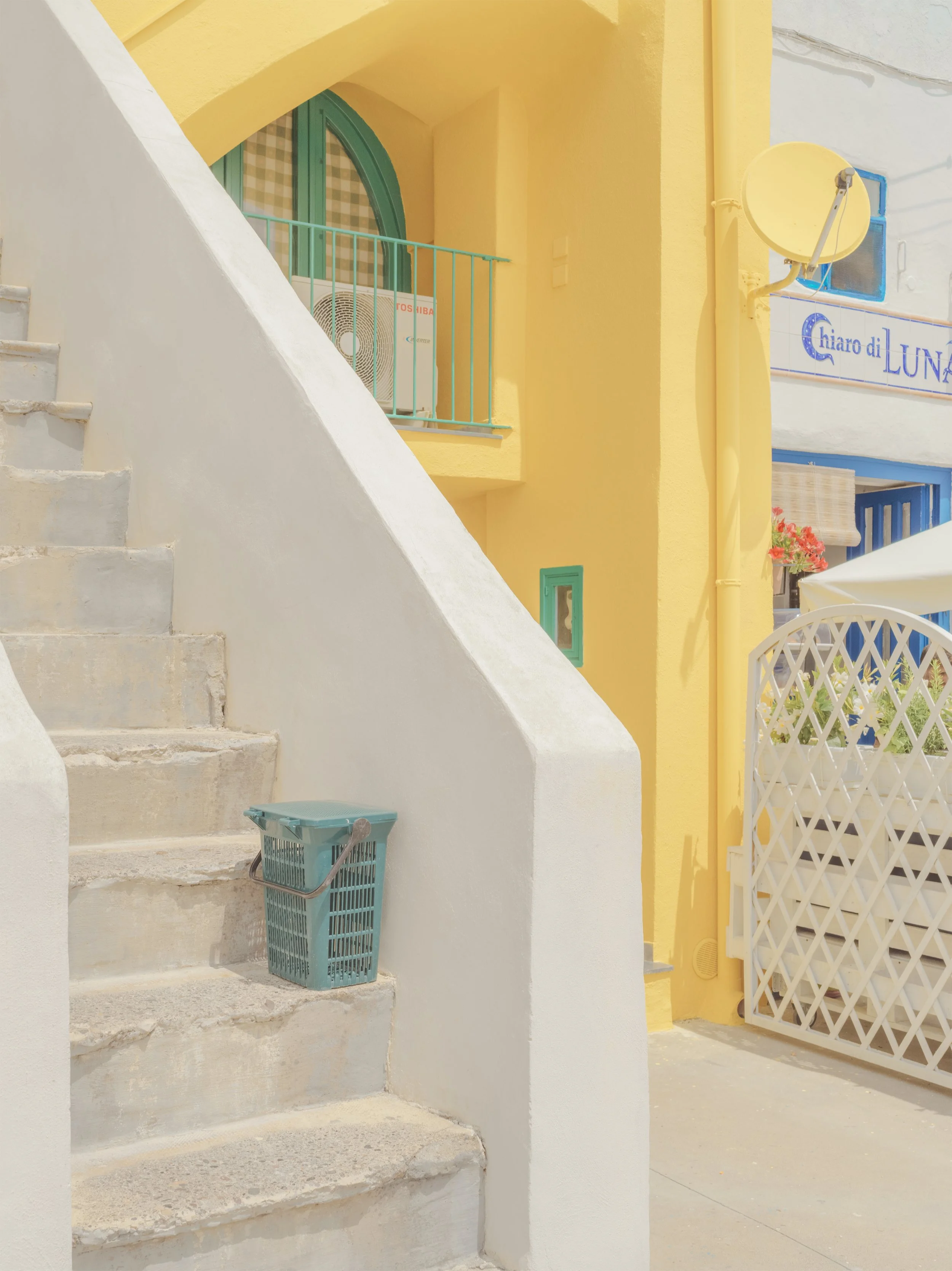
‘I feel most in flow and happy roaming around, waiting to see what comes next. I really enjoy slowing down and spending a few hours in a place, anticipating the right picture to appear in front of me,’ says Ben Thomas.
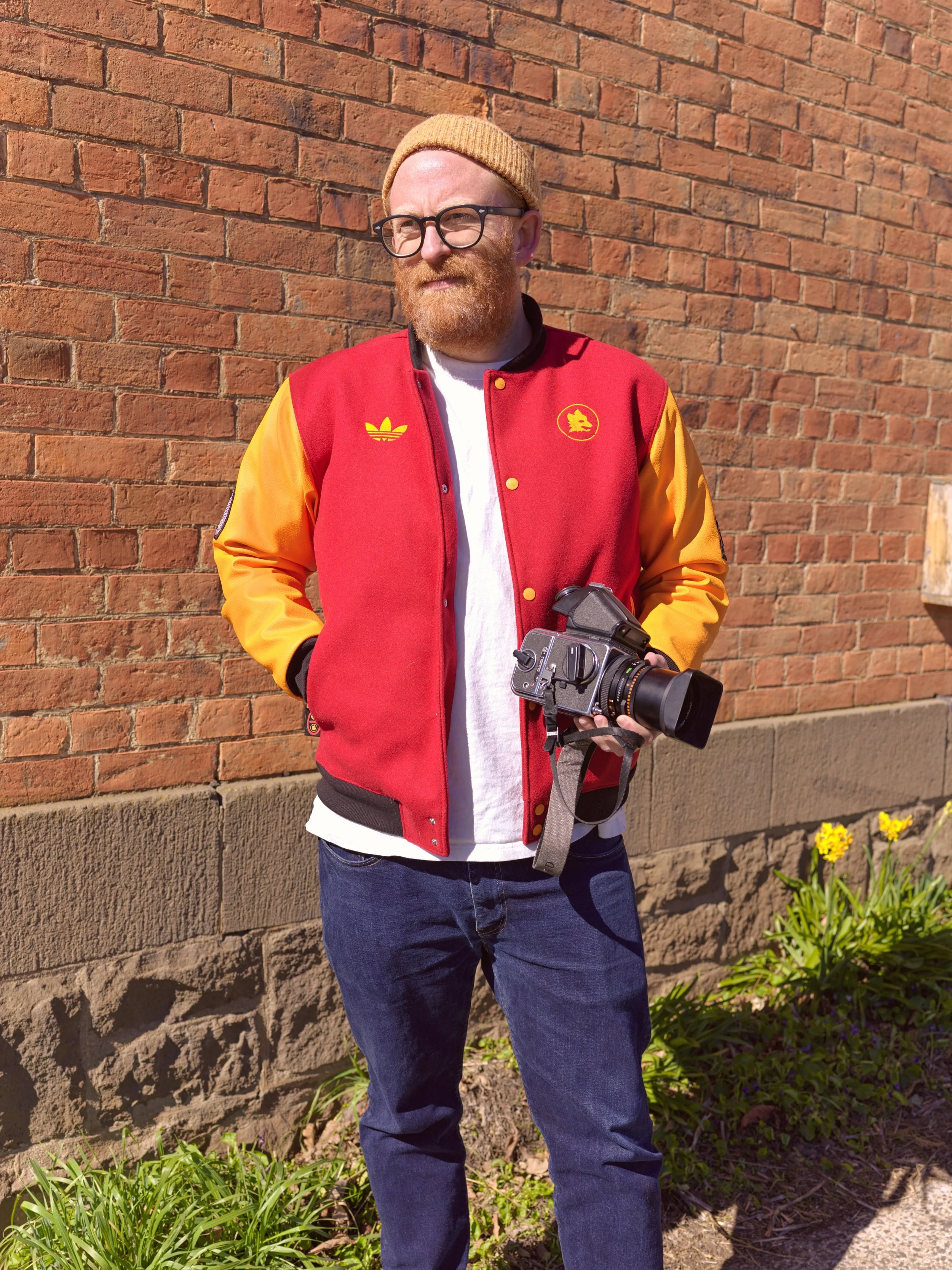
Ben Thomas is a fine art photographer based in Kyneton, Victoria.
Hello Ben—can you please introduce yourself?
Hi there Hunter & Folk, my name is Ben Thomas and I’m a fine art photographer based in Kyneton, Victoria.
For those who might be new to your work, how would you best describe your style?
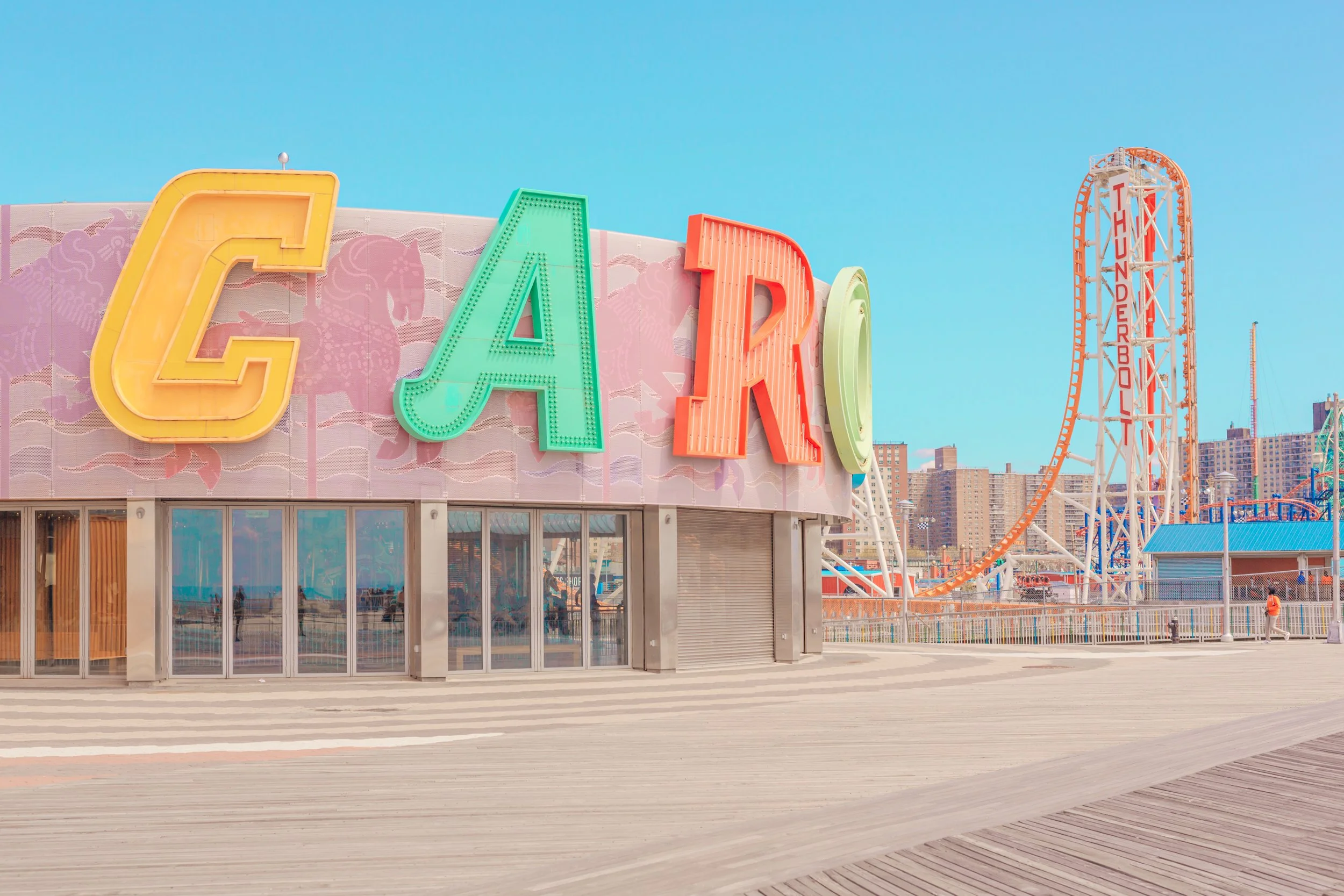
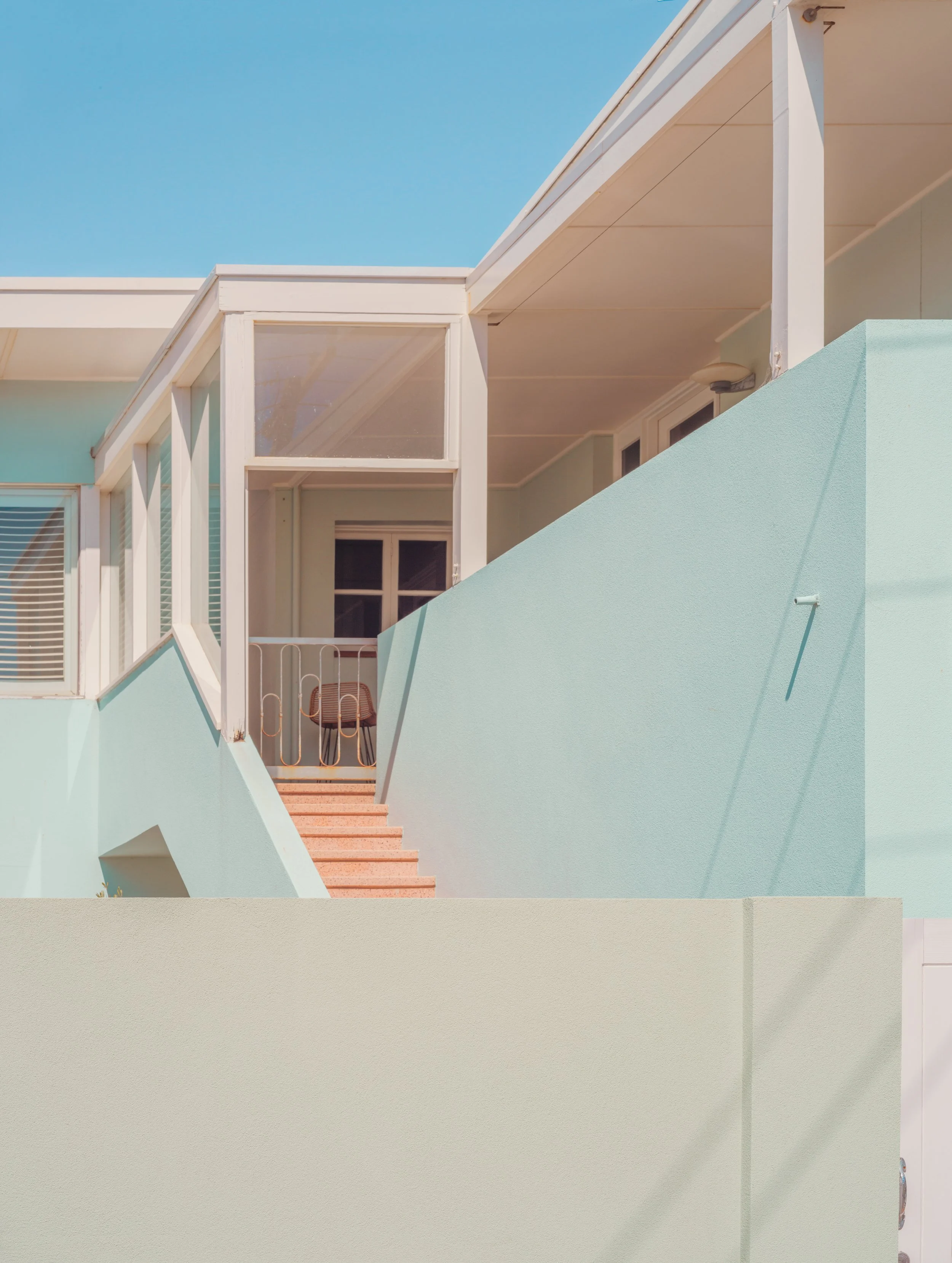
Some have referred to my work as the style ‘hyperreality’, but I like to see the pictures as a reflection of the places we live and how we interact with the spaces we call home—I like to use colour and subtle changes to light and shadows for each of my works.
Have you always had a love for the arts—what’s your earliest memory when it made an impact on you?
I’ve had a love of the arts since I was a kid, starting with music, playing trumpet, which led to me getting entrenched in Adelaide’s jazz scene. I also, from a pretty young age, picked up a video camera and started filming the bands that I loved. That quickly turned into something I really enjoyed, and I started to experiment more and more with the moving image. It wasn’t until moving to Melbourne in my early 20s that I picked up a stills camera for the first time and spent all of my spare time exploring my new city, taking as many pictures as I could.
My first significant interaction with a piece of art was back in 2006 on a visit to the National Gallery of Victoria when I saw a picture by artist Olivo Barbieri. The picture, shot in Rome from a helicopter, showed the many buildings and spaces, but in a way I had never seen before; everything looked like a miniature—I couldn’t believe it was real. I was so intrigued by the picture and was determined to figure out how it was shot. The technique, I later found out, was tilt-shift—something that years later would become mainstream thanks to apps like Instagram; however, in 2006 there was little to no information about the technique. I spent the next 7 or so years bringing my own vision to the technique, which set me on a path that I didn’t expect and laid the foundations for a start in the arts.
Where do you most go for inspiration in times where you feel most stuck?
I get inspiration from a lot of the usual suspects; I love seeing new work wherever I can see it. I also get a lot from how architects and urban designers create space. One of the aspects I enjoy the most is talking to people about how the spaces they live and interact with mean to them. I’m also fascinated with how a person's eye can see different things in the same space; how certain details can have you completely locked in while others skip over them. It’s been a really powerful and valuable exercise in putting myself in locations where I wouldn’t instantly see a shot, and just slow down. Slowing down my process and being more present in recent times has been a really effective way to find more inspiration in the everyday.
Your work strikes a delicate balance between colour, space, and stillness… how do you navigate these elements to achieve your distinctive aesthetic?
My process is something that’s been evolving for a while now. My initial plan with this body of work was to create pictures that lent more toward being something that resembled a painting or illustration. While there are certain aspects I’m looking to create from a compositional perspective, I’ve found that using colour and more minimalist texture and blocking with certain lighting conditions help bring an overall narrative to the works.
Can you walk us through how your creative process begins: from the initial concept to the final image?
I usually run with a two-prong approach to taking pictures. I like to do as much research as I can about a particular place before shooting. That includes looking at the history and journey of a space, how it came about, and how it’s possibly changed over time, and why. Once I have a good grounding in understanding why a place is as it is, I like to spend some time roaming around the streets in an app like Google Maps Street View to get a feel for the place. From here I’ll start narrowing down on specific areas or locations, which will take me into a second stage of research to understand the smaller details in more depth.
While that approach works really well, I also really enjoy packing my camera and headphones and just starting to explore an area. This work is more akin to a typical approach to street photography, however, it’s where I started back in my early 20s. I feel most in flow and happy roaming around, waiting to see what comes next. I really enjoy slowing down and spending a few hours in a place, anticipating the right picture to appear in front of me—I’ve spent hours standing on a corner waiting for the right elements to come together in the right way, and when it all comes together, there is no better feeling.
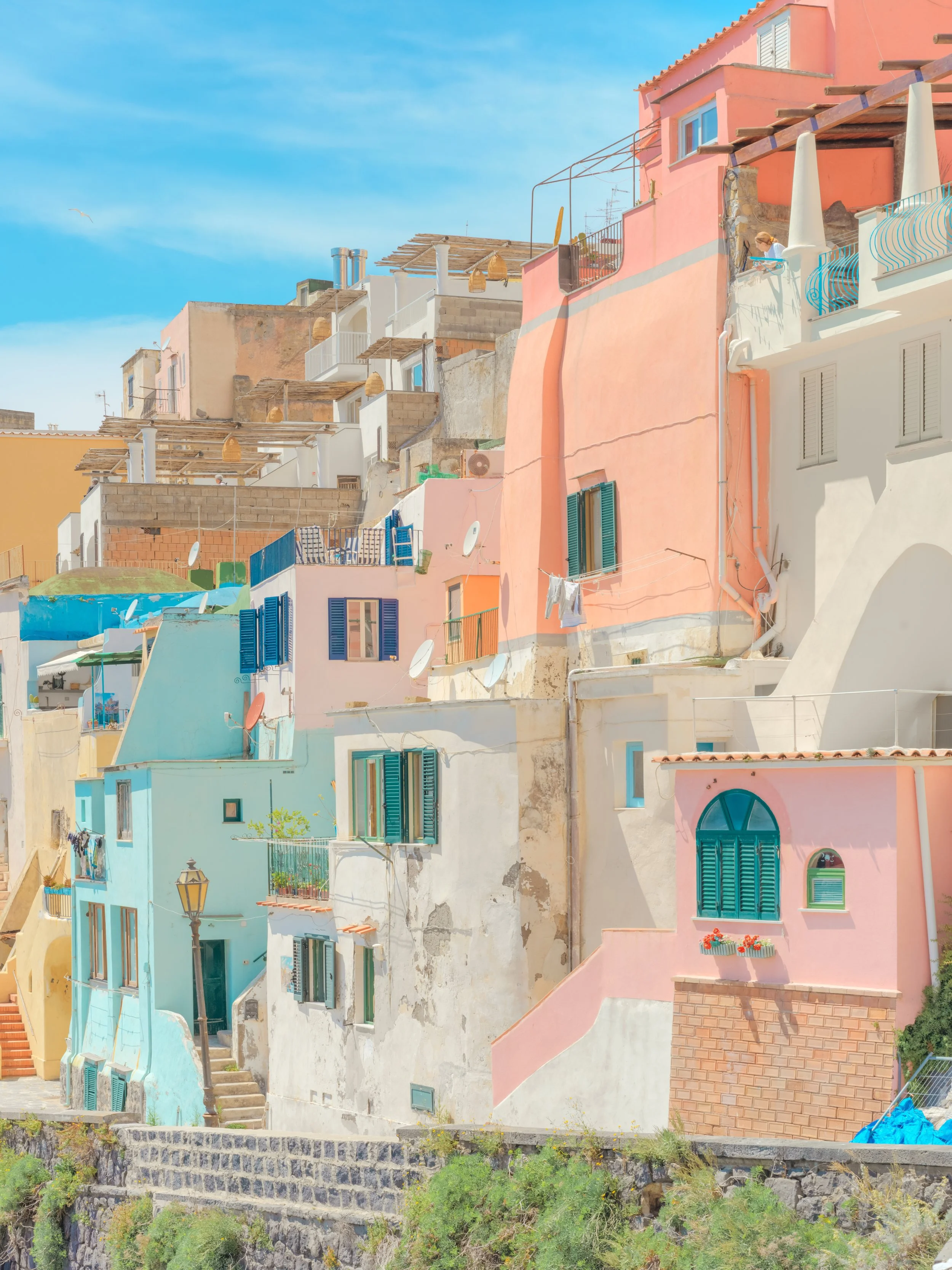
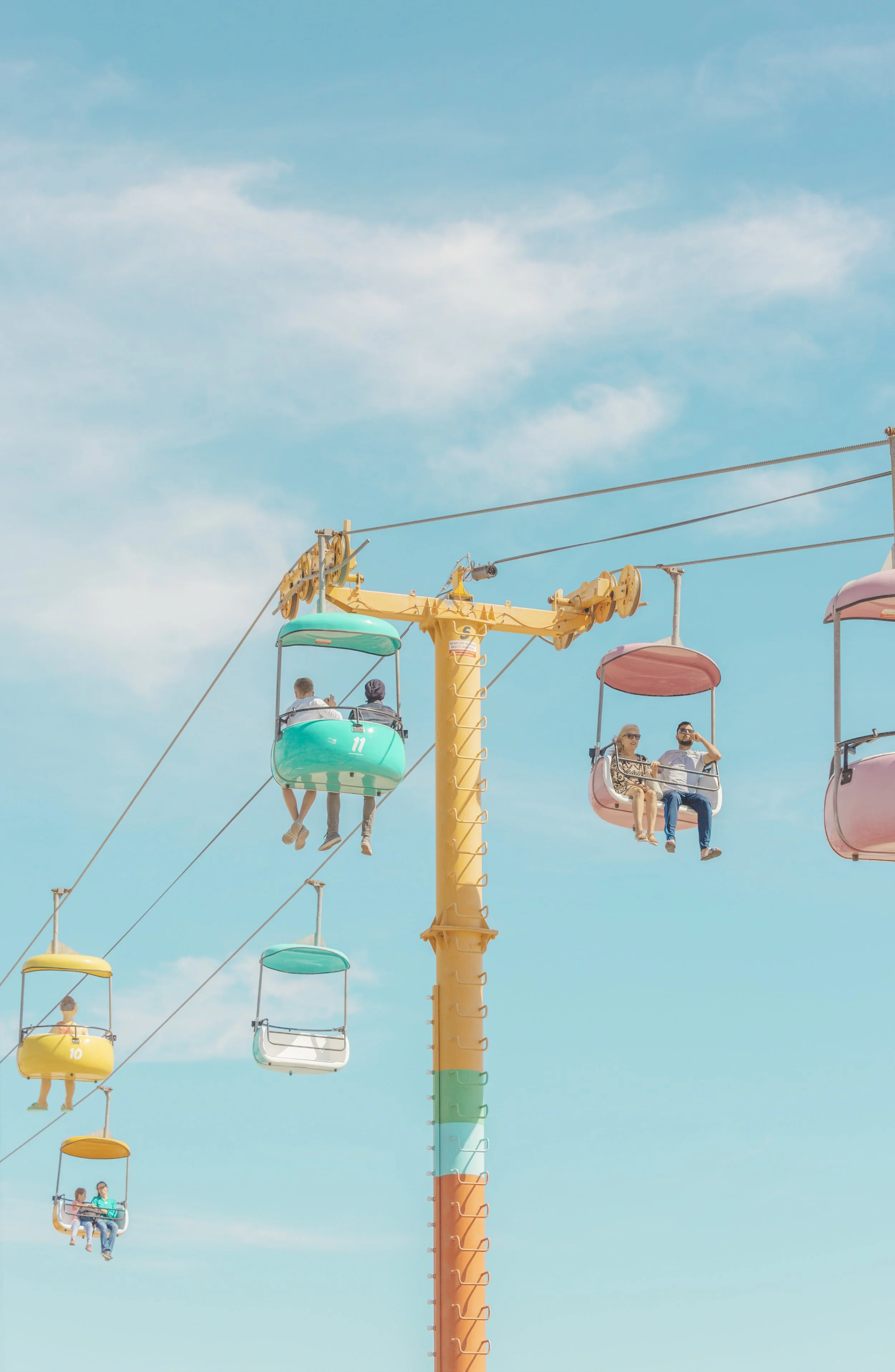
“I’ve spent hours standing on a corner waiting for the right elements to come together in the right way, and when it all comes together, there is no better feeling.”
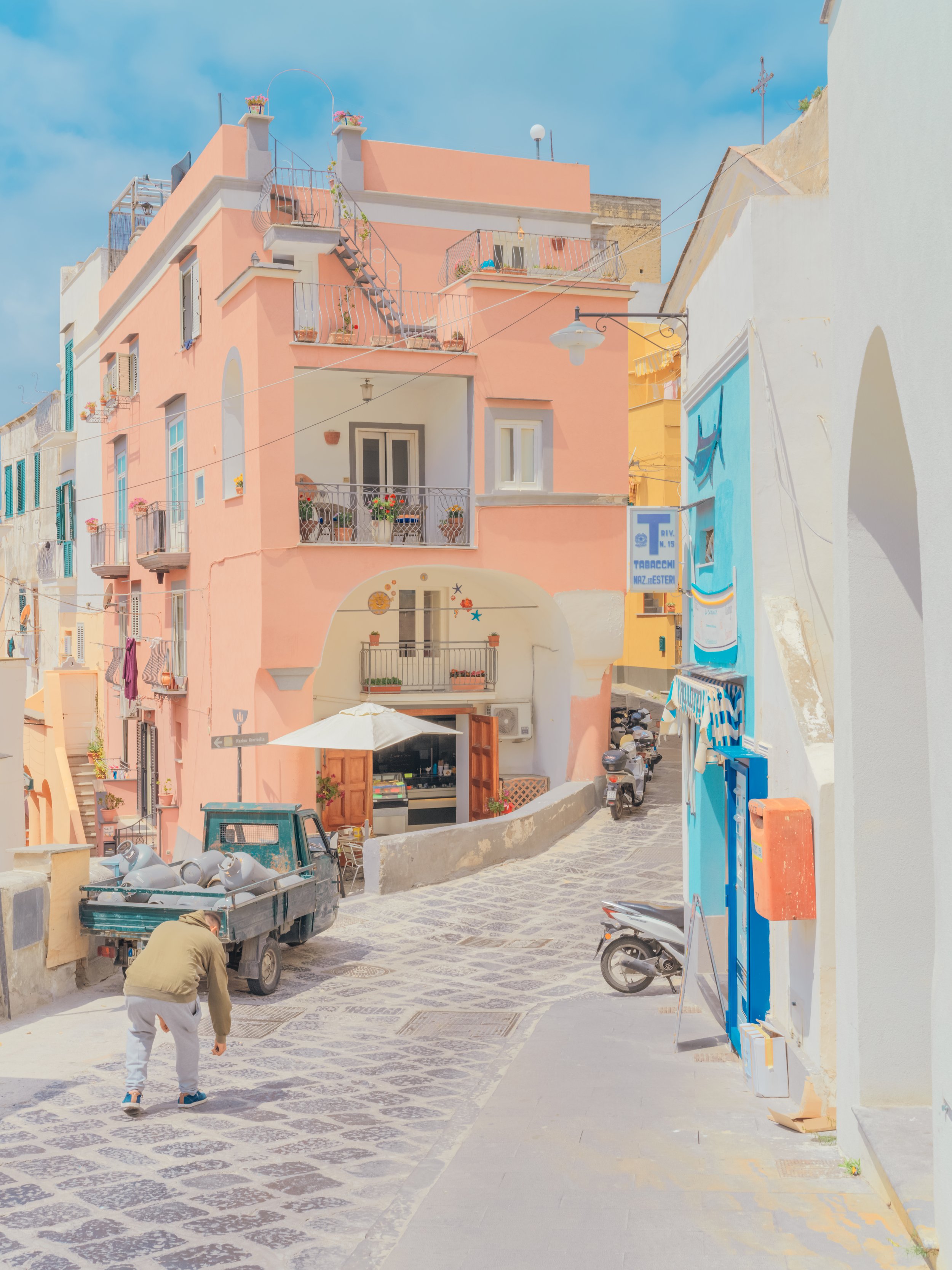
Unknown Journey, Italy by Ben Thomas.
5000 by Ben Thomas.
Colour is a recurring, powerful element in your images. How do you approach your colour palette—do you work in-camera, with lighting, or rely on post-production techniques?
It’s a mix of all of that. I’ve been lucky enough to be shooting on a Hasselblad medium format for a number of years now, which gives me an incredible amount of control over a picture. Lighting-wise, I shoot at times that a lot of photographers hate; midday, with maximum harsh sunlight, has become a prerequisite to build a picture in the way I want. I do spend some time in post-production. I mostly use a tool by the name of 3D LUT Creator, which is a bit clunky to use but gives me a level of control that is hard to replicate elsewhere.
When shooting, are there any techniques you return to?
My process is constantly evolving, but one component that I’ve stuck with is shooting with fixed focal length lenses and no zoom lenses; I only shoot with two lenses. Doing this has done a couple of things for me. First of all, it forces me to move more and to be more intentional around what I shoot, which has been really valuable. The other benefit in doing this over a long period of time is that I can see the framing of a picture before picking the camera up, which helps me to be more in tune and present with a potential scene.
Can you walk us through a typical day in the studio? What rituals or rhythms help anchor your process?
My studio setup is really basic; I try to keep things as minimal as possible, but I do like to create a space that has as much natural lighting as possible to hang early iterations of the work, which I’ll keep up for a number of weeks. Being able to spend time with the physical works over a number of weeks before locking them down has been a really valuable part of my process; again, it’s been about slowing things down over the last few years.
What are you currently exploring in your work, and where do you feel your work is heading next?
I’ve been working with film a lot over the last year experimenting with translating my treatment into a more analogue process, which has been super challenging, but exciting. I’ve also been experimenting with creating more physical, sculptural representations of the work, which is proving to be a long process!
What’s coming up for you that you’re most excited about?
I’m putting the finishing touches on a couple of shows at the moment that dig into life in the Netherlands and Greece. I’m also pushing along with the sculptural works, which I’m hoping to release mid 2026. I’m really excited for the year ahead!
To stay up to date with Ben’s work, visit his website or follow @_benthomas on Instagram.
