

Anny Benjamin From Studio ab.
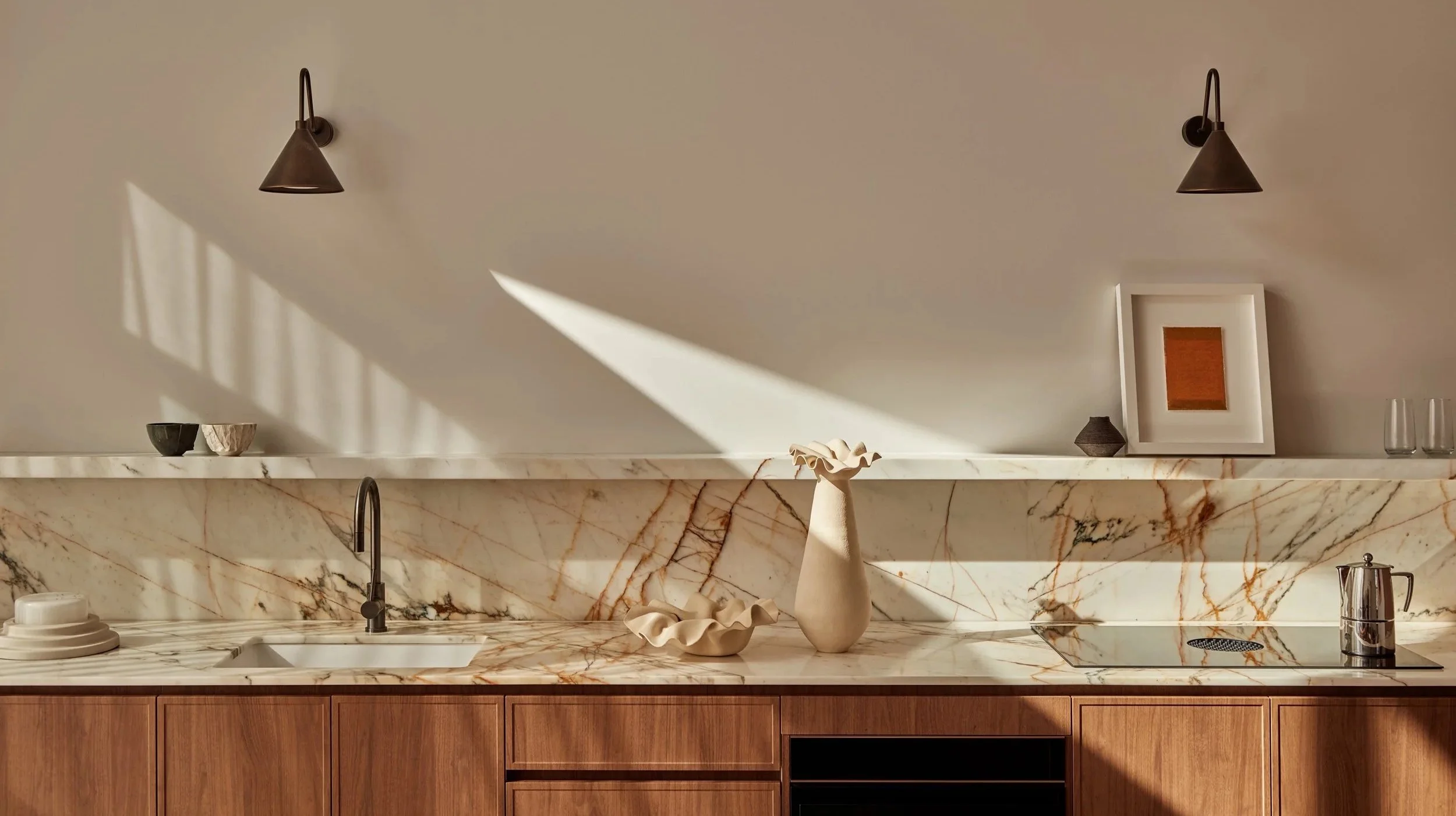
Studio ab. founder and director Anny Benjamin designs instinctive, tactile and layered interiors that are elevated yet effortless—grounded in comfort and led by mood and materiality.
Interior Decoration & Styling: STUDIO AB. Photos SABI COLLECTIVE & ELISA WASTON
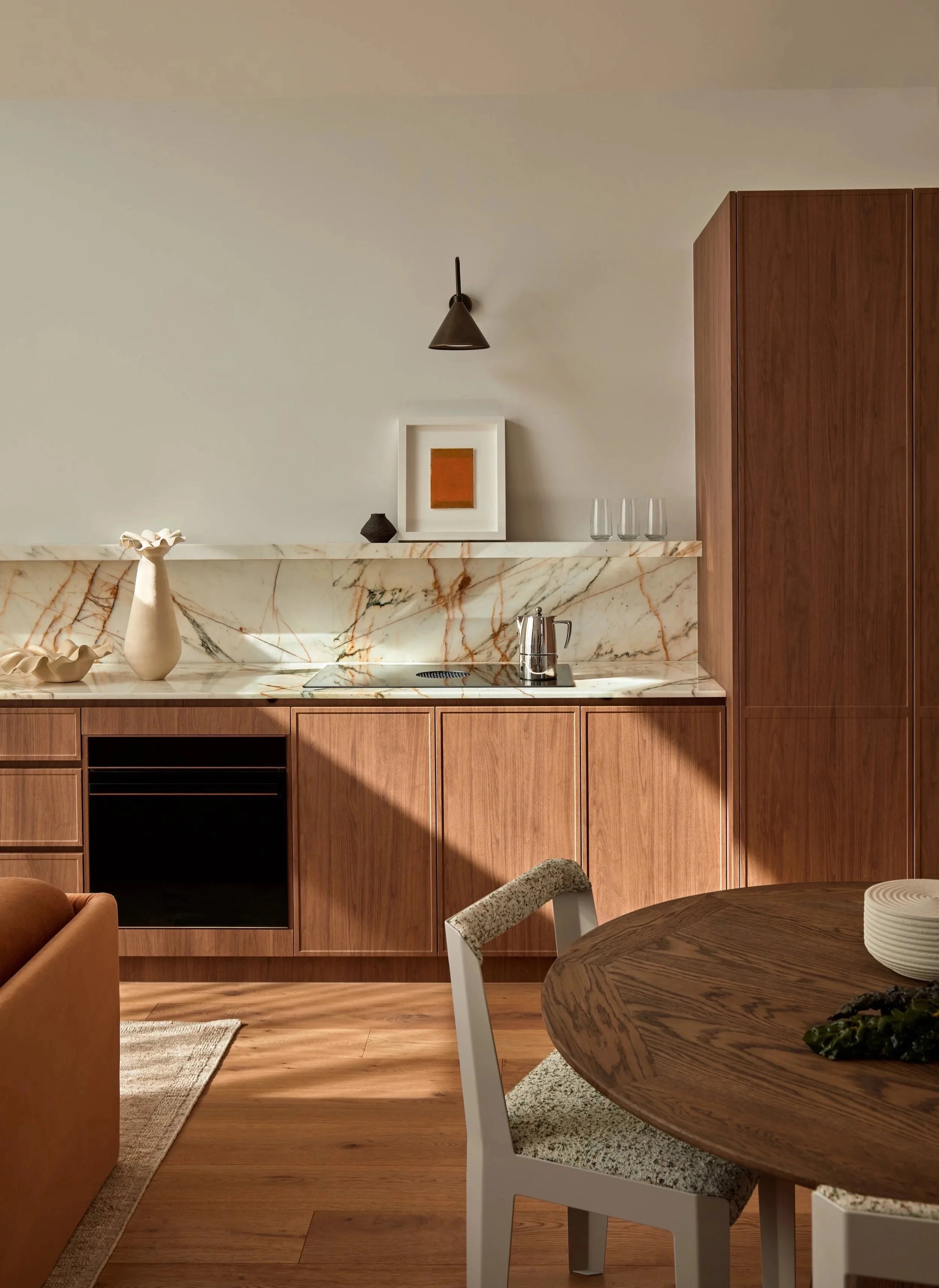
Number 42 Northcote by Studio ab. Photo: Elisa Watson
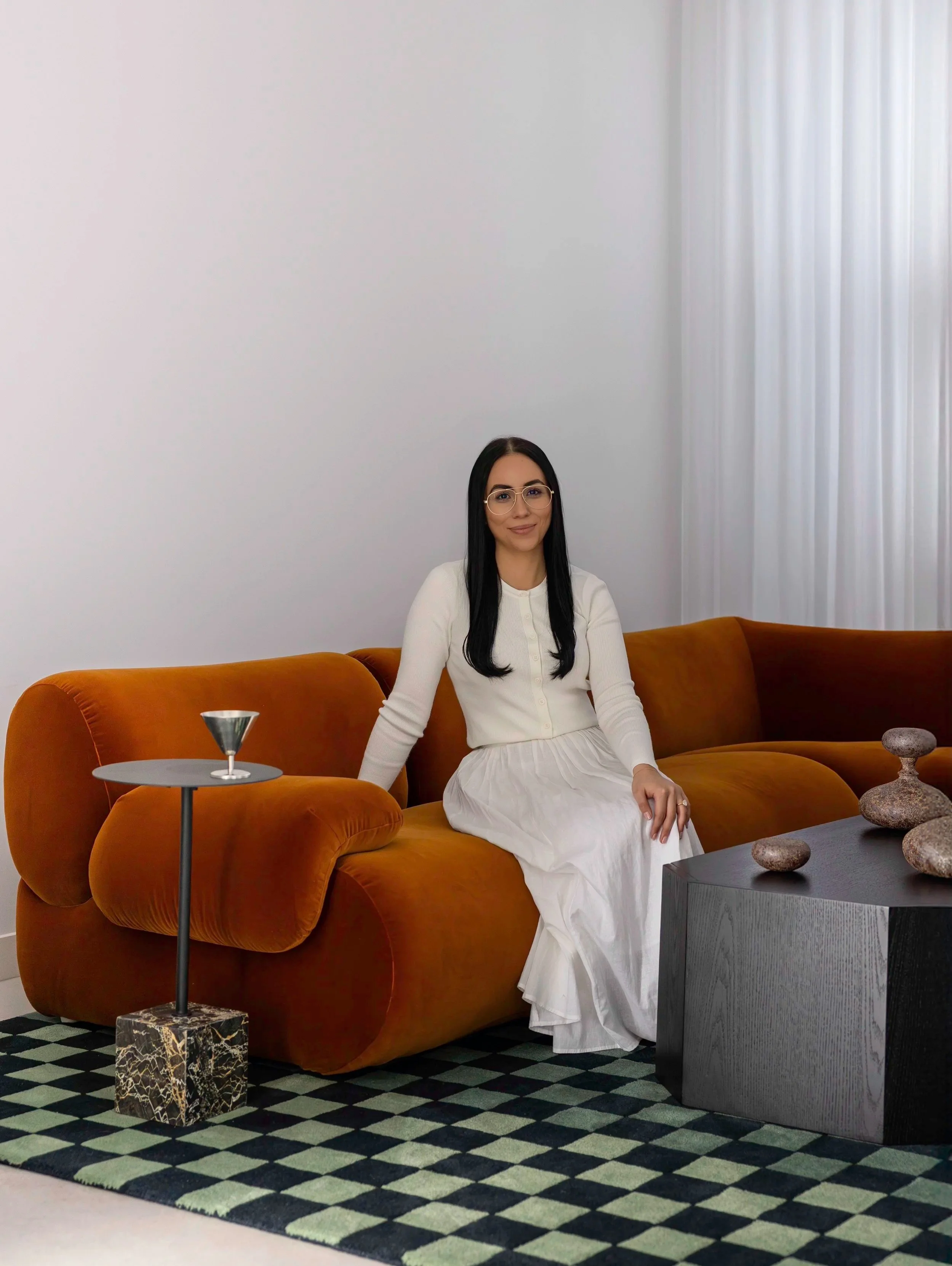
Studio ab. director and founder, Anny Benjamin. Photo: SABI Collective
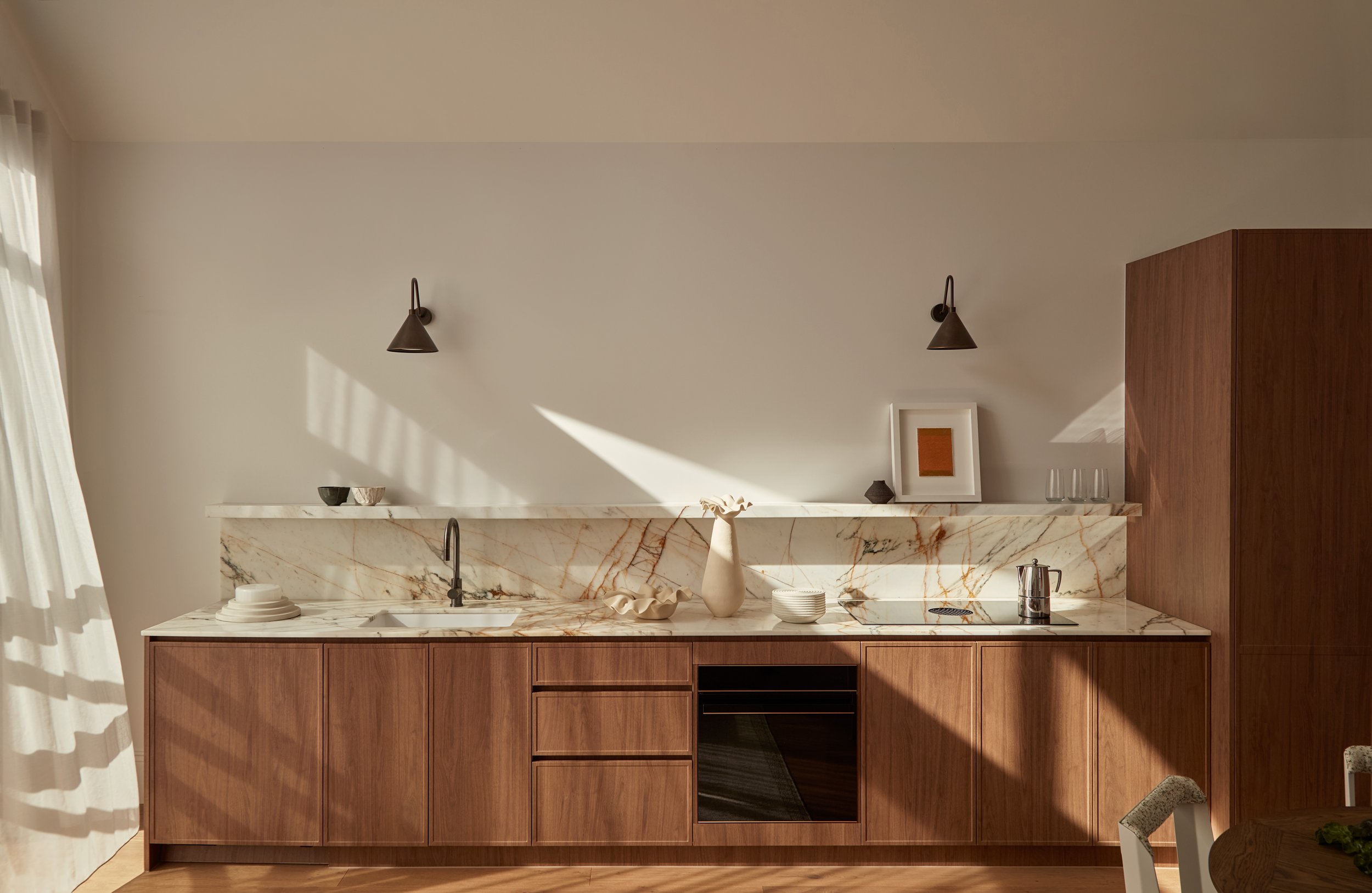

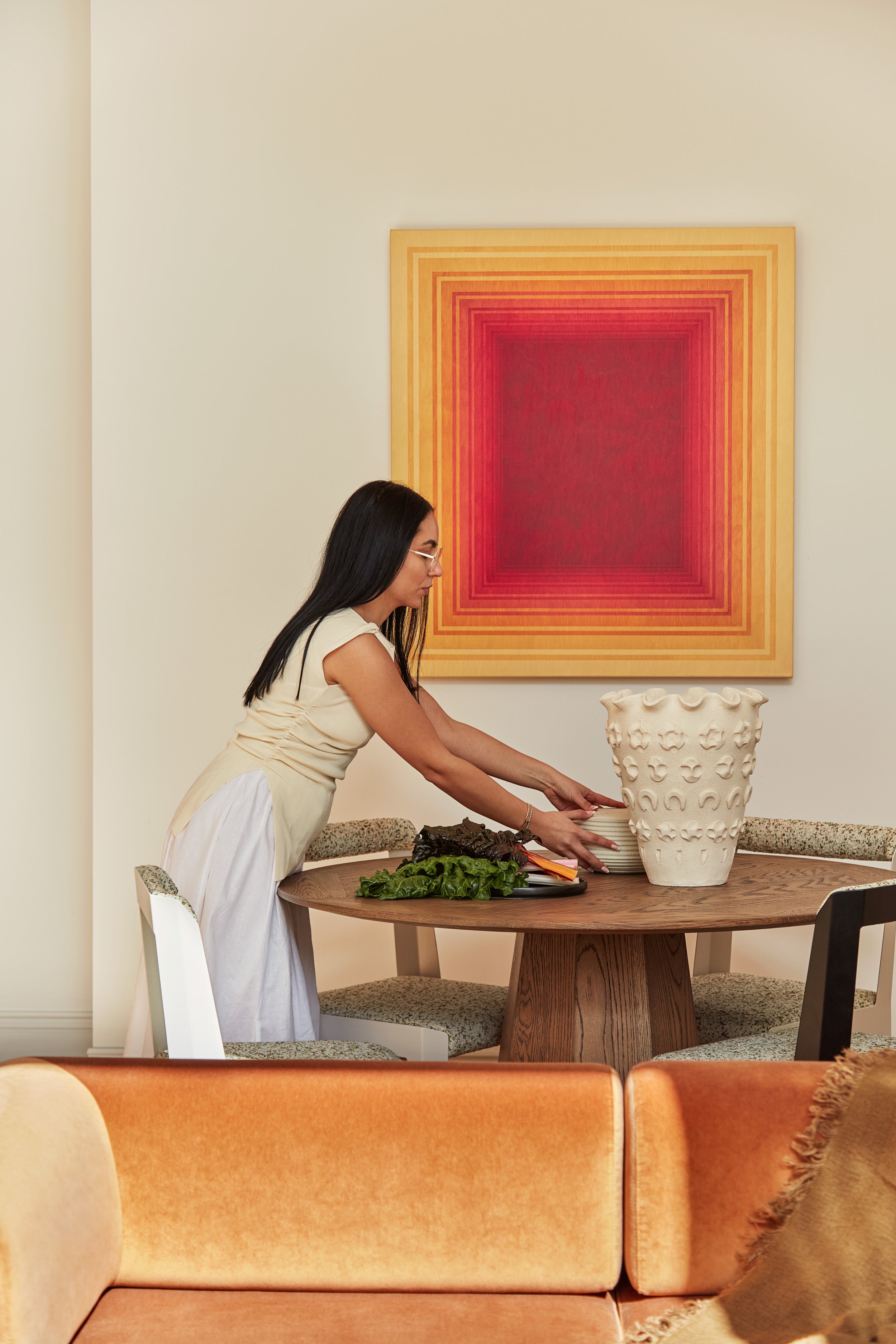
‘My style is instinctive, highly tactile, and always anchored in the unexpected.’ Photo: Elisa Watson
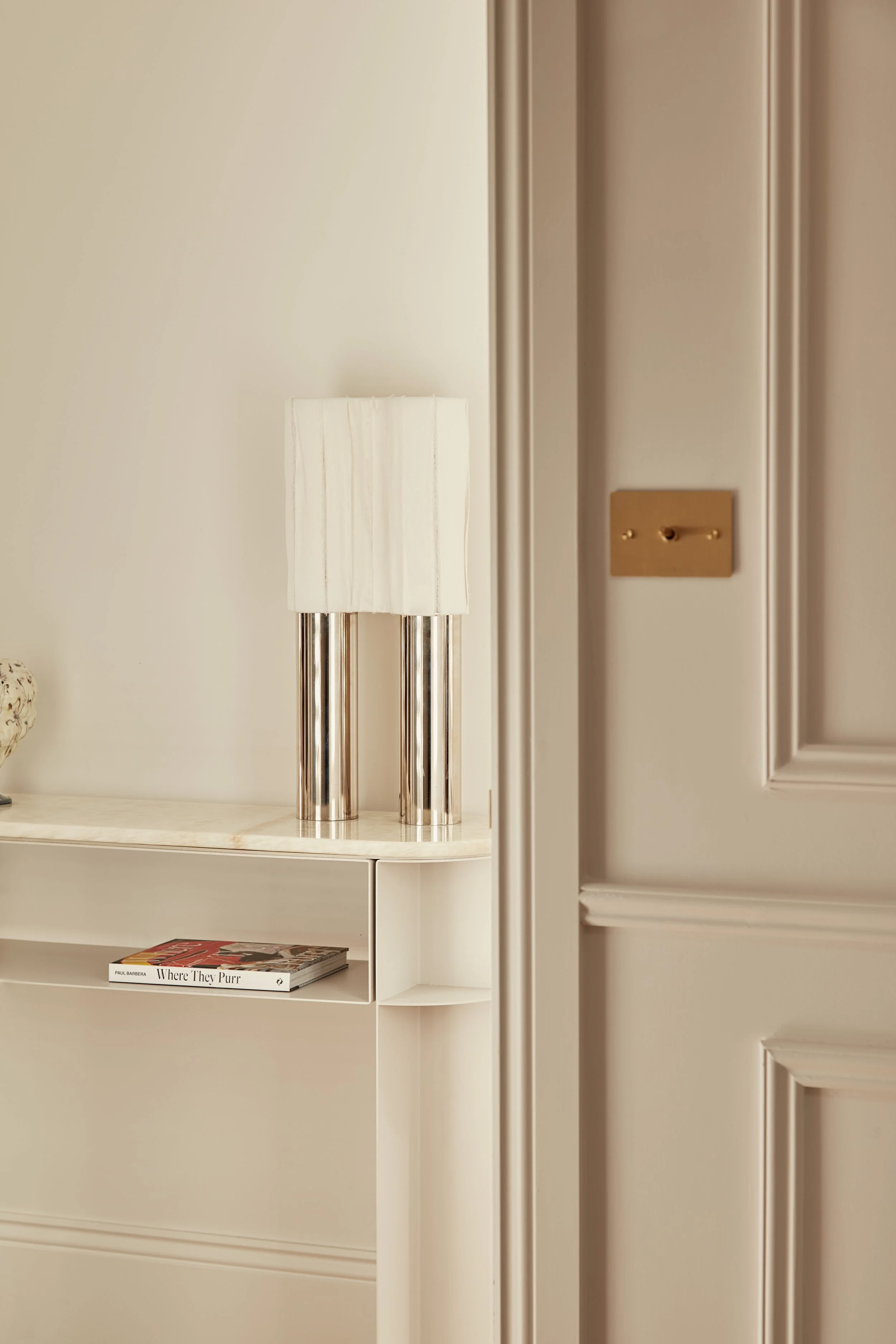
Design details at Number 42 Northcote by Studio ab. Photo: Elisa Watson
“I’ve always let curiosity guide me, exploring new ideas and ways of working that feel thoughtful and purposeful.”
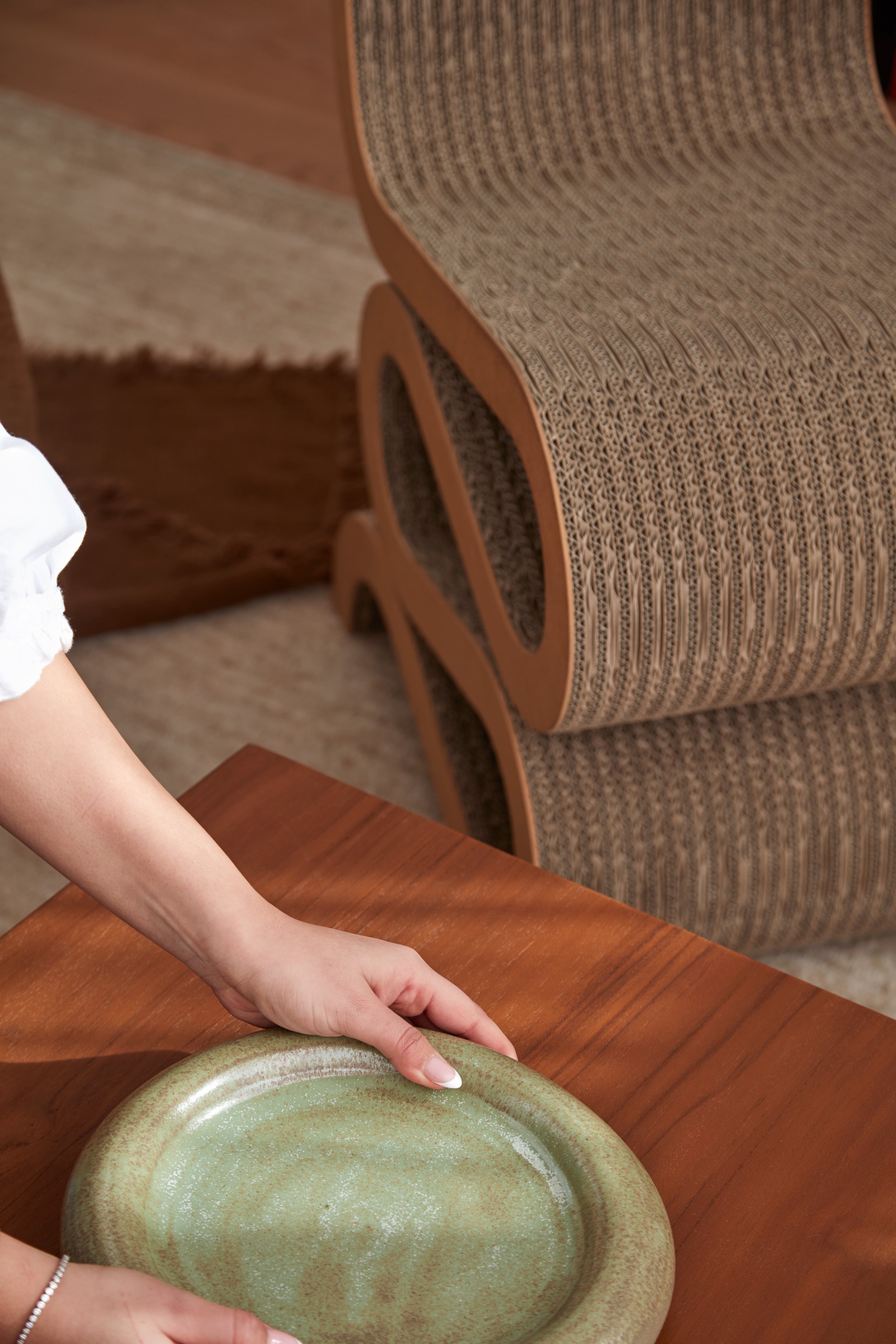
‘There’s something about being in a space, handling the materials, and discovering pieces you’d never find in a digital scroll.’ Photo: Elisa Watson
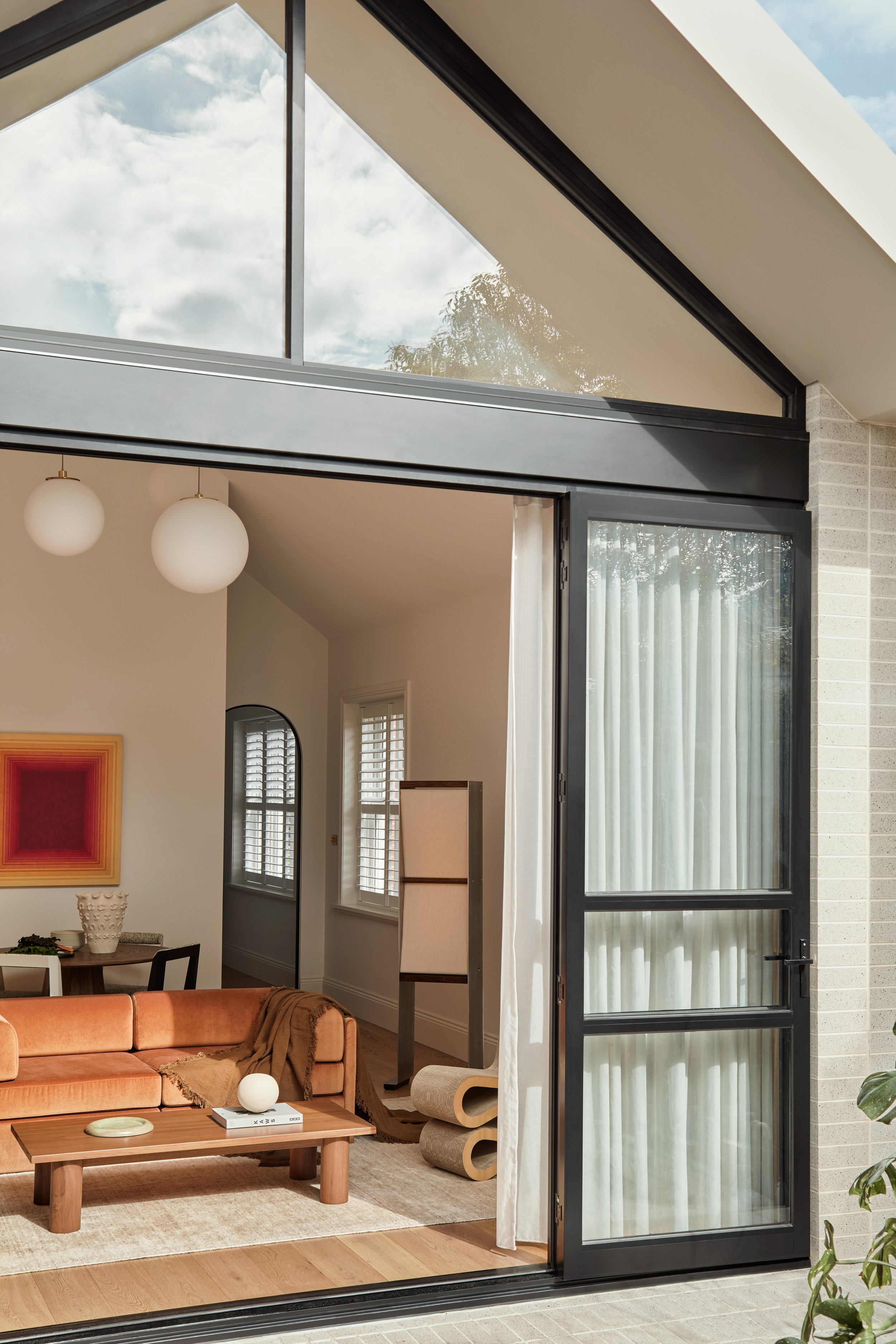
Number 42 Northcote by Studio ab. Photo: Elisa Watson
Hello Anny—can you introduce yourself?
Anny: Hey, I’m Anny—an interior designer and decorator who loves creating spaces that feel unexpected, playing on the tension between elevated and liveable. With a background in interior architecture, I’m passionate about design that moves beyond formula and embraces intuition. Spaces that are layered, emotive, and a little off-centre, but still grounded in comfort. For me, it’s all about mood, materiality, and trusting instinct over perfection. My Crimson Haus project gave me room to explore that: to play, push, and let the details do the talking.
For those who might be new to your work, how would you best describe your design style?
My style is instinctive, highly tactile, and always anchored in the unexpected. It’s playful yet sophisticated, warm, layered and grounded in the way people use and feel space. Every project is client-centred, shaped by how my clients want to experience their space, and what makes it feel like their own.
I love working with contrast—raw yet refined, structured yet relaxed, familiar yet unconventional. That often means playing with texture, tone and surprising material pairings to create something truly layered and original. My design philosophy also embraces the tension between eras, where contemporary lines meet heritage details to bring depth and richness to a space.
Crimson Haus is a clear expression of that balance, where clean forms sit alongside character-rich details to create a space that feels both fresh and grounded. There’s a sense of dynamic interplay in my work whilst also a sense ease and comfort. The Crimson Haus reflects all of this. It’s elevated yet liveable, full of small moments that surprise and materials that invite touch—it was designed to feel deeply considered, and that’s the lens I bring to every project.
What’s the origin story of Studio ab. and how would you describe your design point of view?
Studio ab. began with a turning point, a moment where I felt a deep calling to create something of my own. After years of working within other people’s design frameworks, I knew I had a different way of seeing and doing things. That shift coincided with a project that felt aligned with my vision, it gave me the push to formally launch Studio ab.
I’ve always let curiosity guide me, exploring new ideas and ways of working that feel thoughtful and purposeful. Over time, that curiosity, paired with hard work and strong relationships, allowed Studio ab. to grow into studio built on instinct, trust and a passion for creating spaces that feel both elevated and deeply personal.
Talk us through a typical studio day’s rituals and rhythms…
Every day is different, as cliché as that sounds. Mornings usually start at full throttle: iced matcha in hand, emails open, and straight into whatever’s most pressing. It’s pretty fast paced. Some days I’m styling or sourcing, oher days it’s headphones on and fully focused on the more technical side of interiors, documenting, scheduling, and refining floor plans to optimise flow and function. That part always follows time spent with my clients, observing how they move through and use their spaces.
I’m constantly on the move, visiting my favourite suppliers to see, feel and touch selections in the flesh, online sourcing can’t compare. There’s something about being in a space, handling the materials, and discovering pieces you’d never find in a digital scroll—I’m incredibly tactile. I need to feel something before I put it forward, whether it’s a material, a piece of furniture, artwork or an object. It’s fast paced, fluid and hands on, and I absolutely love it!
As for rituals, it’s iced matcha, always! And if I’m working from my desk, I’ll spray my favourite aromatic mist, a scent called Earth, which reads ‘feel grounded and not overwhelmed’ on the label. It’s from a nursery in the Dandenong Ranges and helps me stay centered and clear as the day unfolds.
From brief to concept to built outcome: what are the key stages of your design process?
Everything starts with the brief. I take time to really understand what my clients want to achieve, why it matters to them, and how they want to experience their space. It’s more than function it’s about feeling. This stage is where trust and alignment are built.
Next comes the concept—the big idea, the direction that anchors the entire project. It’s where material palettes, spatial flow, and mood begin take shape. I present concepts through a mix of tactile samples, sketches, references, and layouts to bring the vision to life.
I then develop design into something fully resolved, refining layouts, detailing joinery, selecting furniture and finishes. This is a hands-on phase where I often iterate: reworking a layout to improve flow, layering in unexpected elements, or adjusting details to feel more intuitive.
With all selections finalised, I move into bringing the design to life. This stage is where the concept becomes tangible. For interior decoration projects, that means sourcing, ordering, and managing logistics. For interior design, I document every element for construction and liaise with architects, builders and suppliers.
Finally, the space takes its true form—curated, composed, and ready to be lived in.
‘Striking the right balance between tactility, durability and scale is central to how materials and finishes were selected for Crimson Haus.’ Photo: SABI Collective

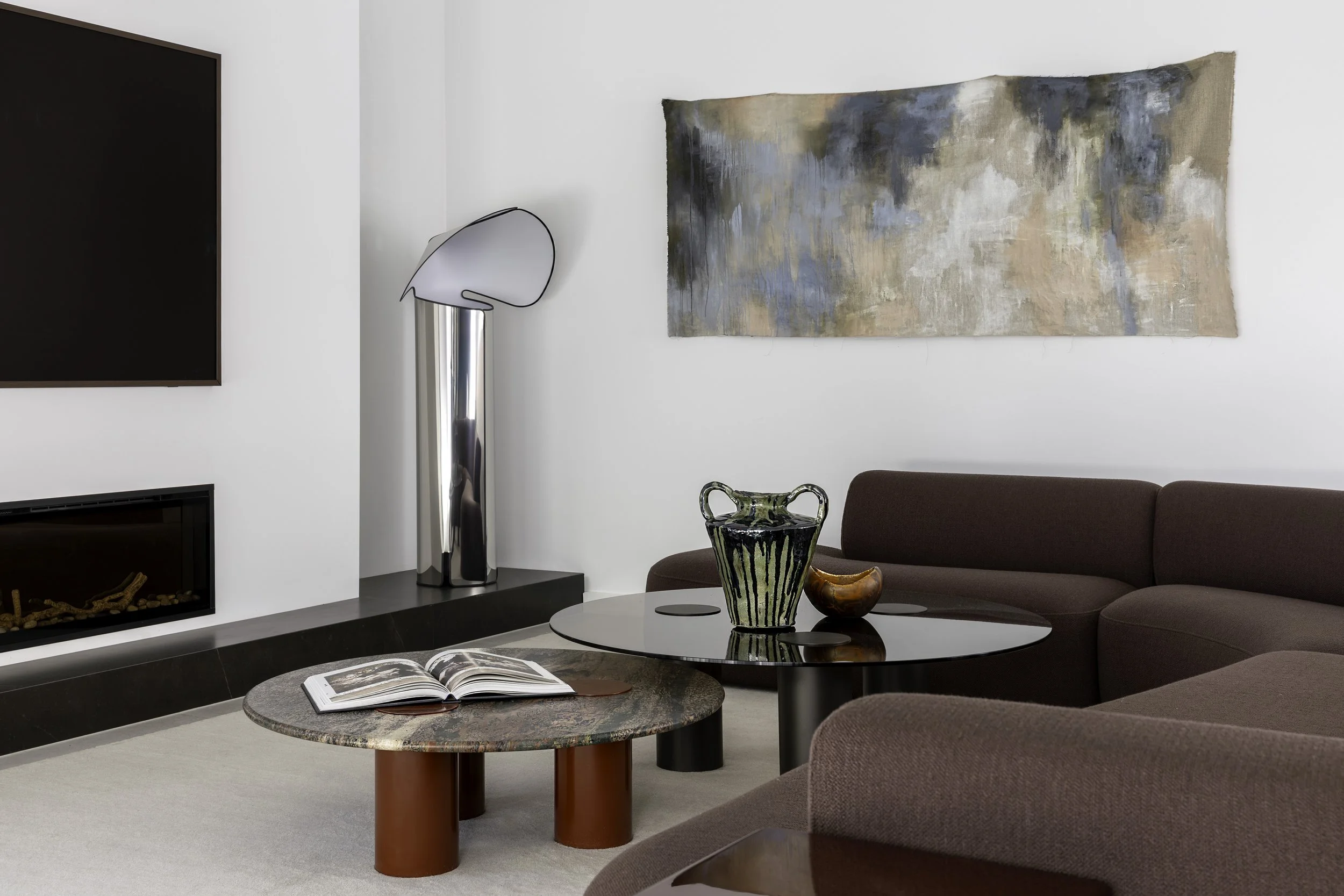
The Mario Bellini’s Chiara floor lamp in Crimson Haus by Studio ab. Photo: SABI Collective

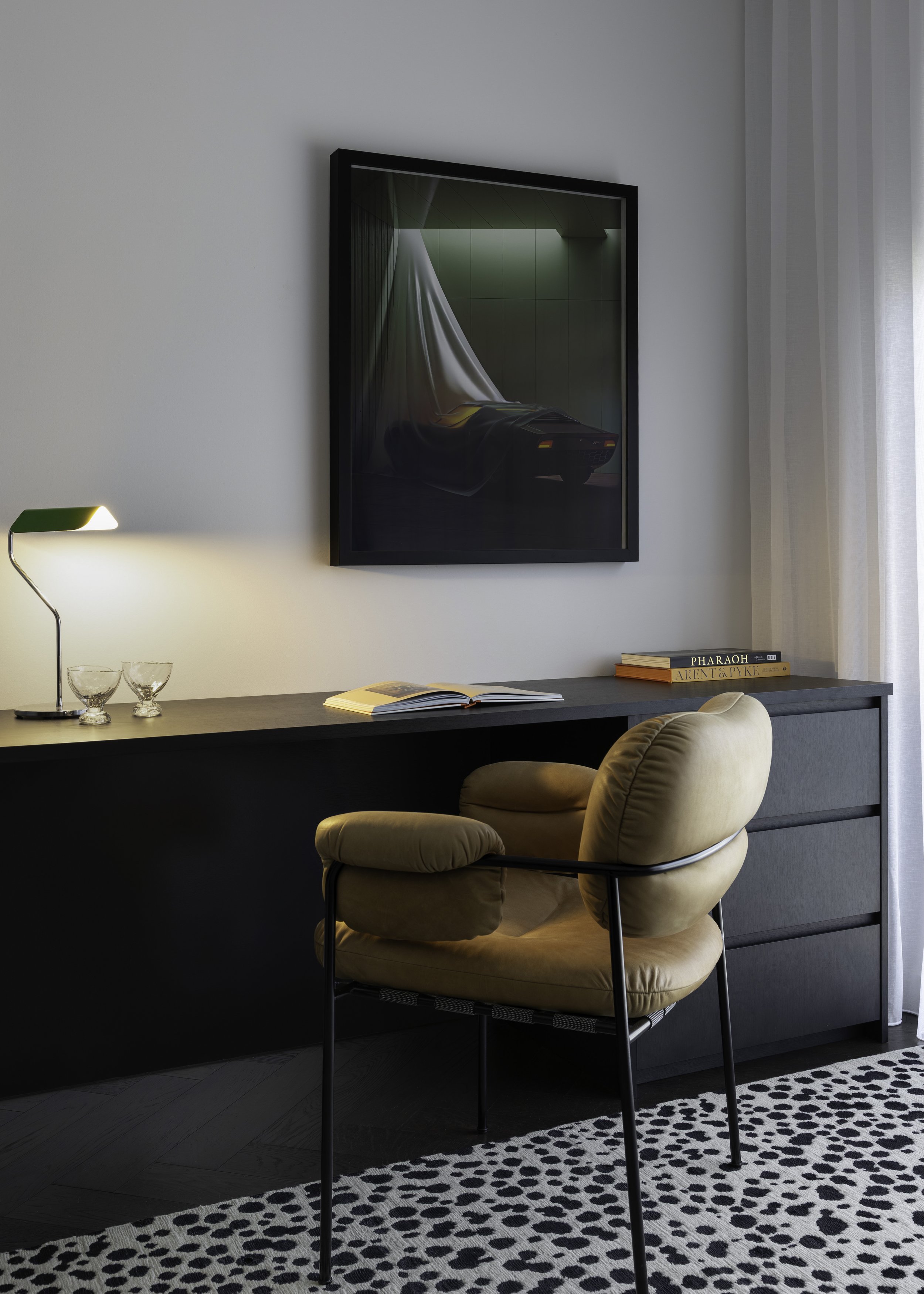
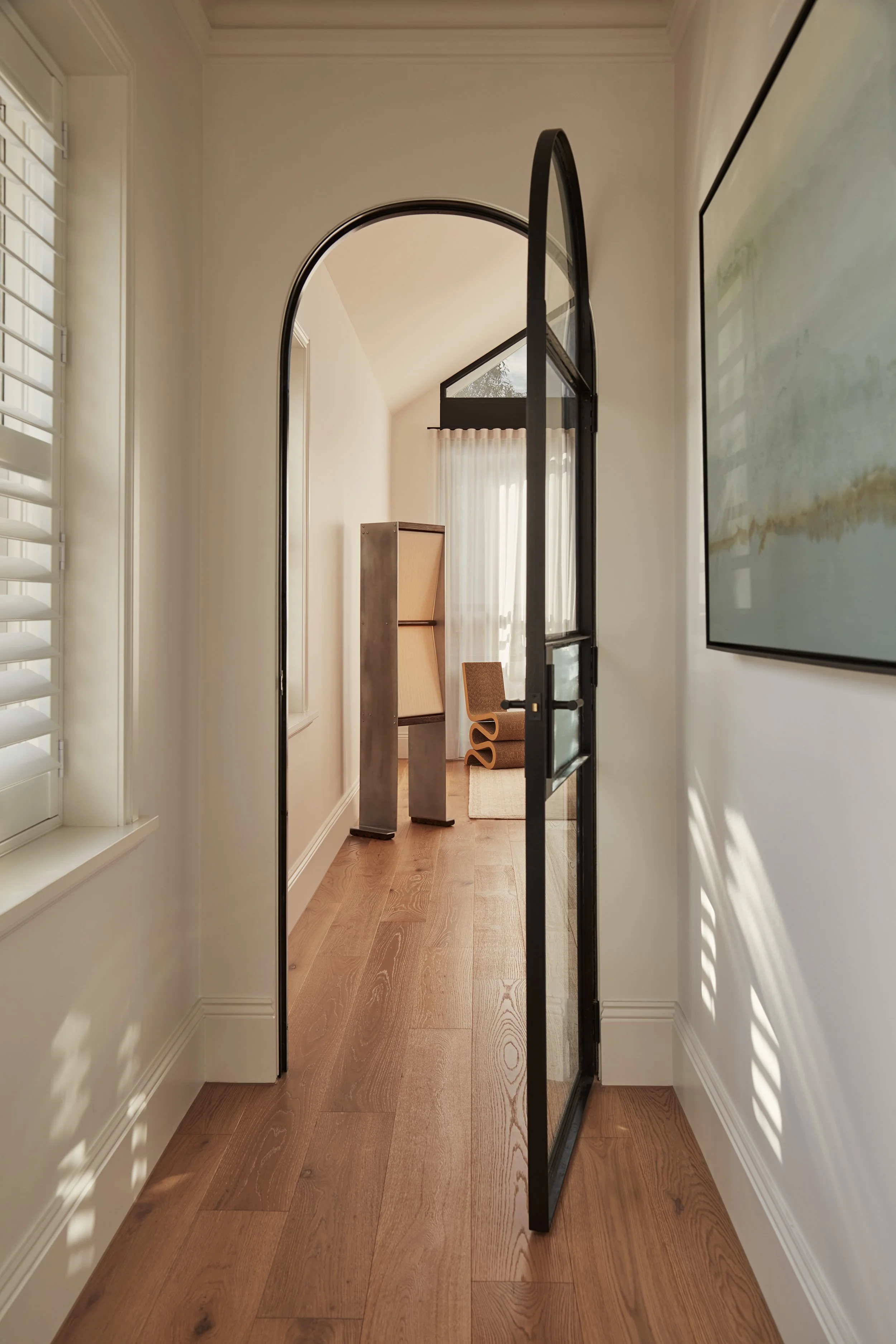
Number 42 Northcote by Studio ab. Photo: Elisa Watson
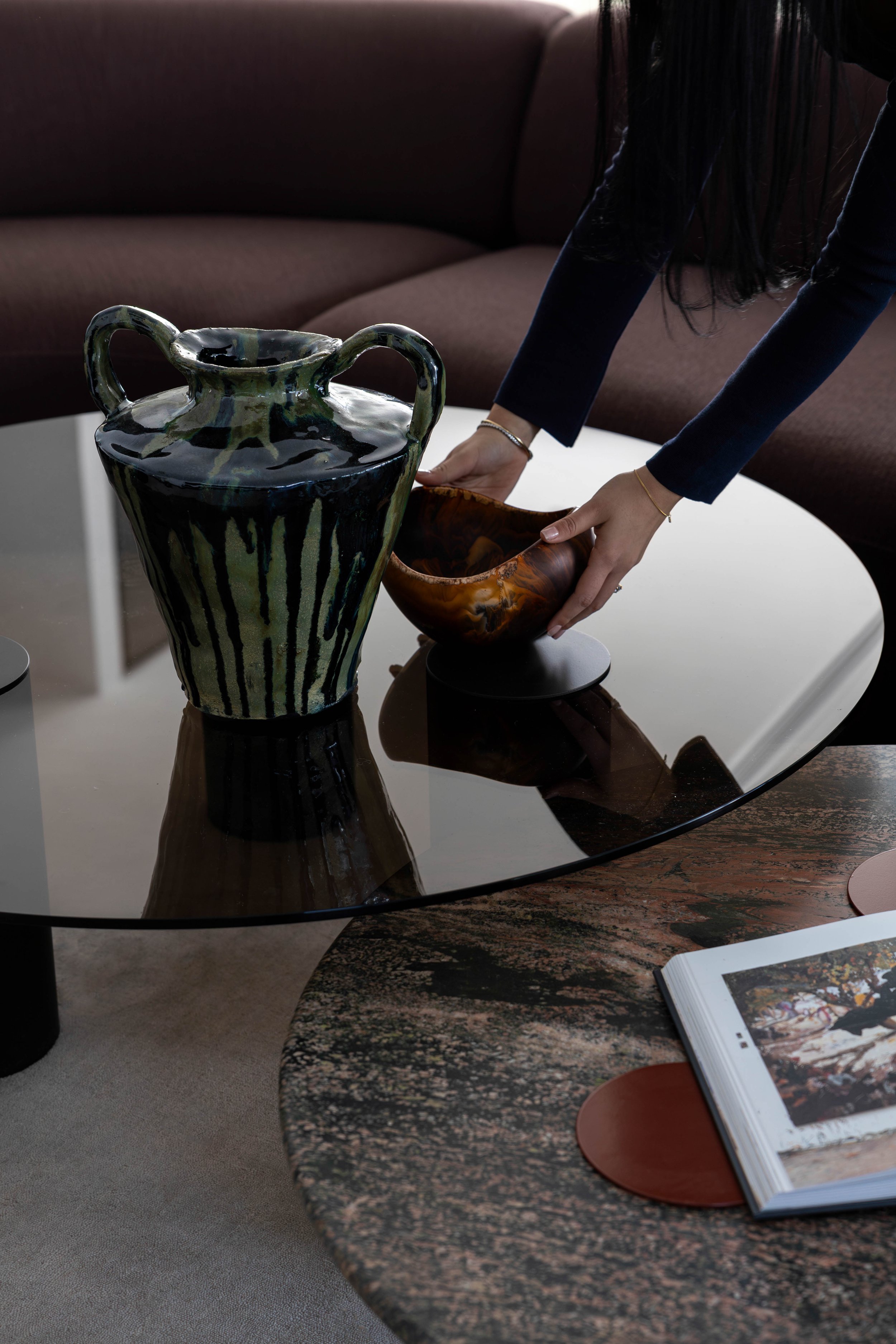
Crimson Haus by Studio ab. Photo: SABI Collective
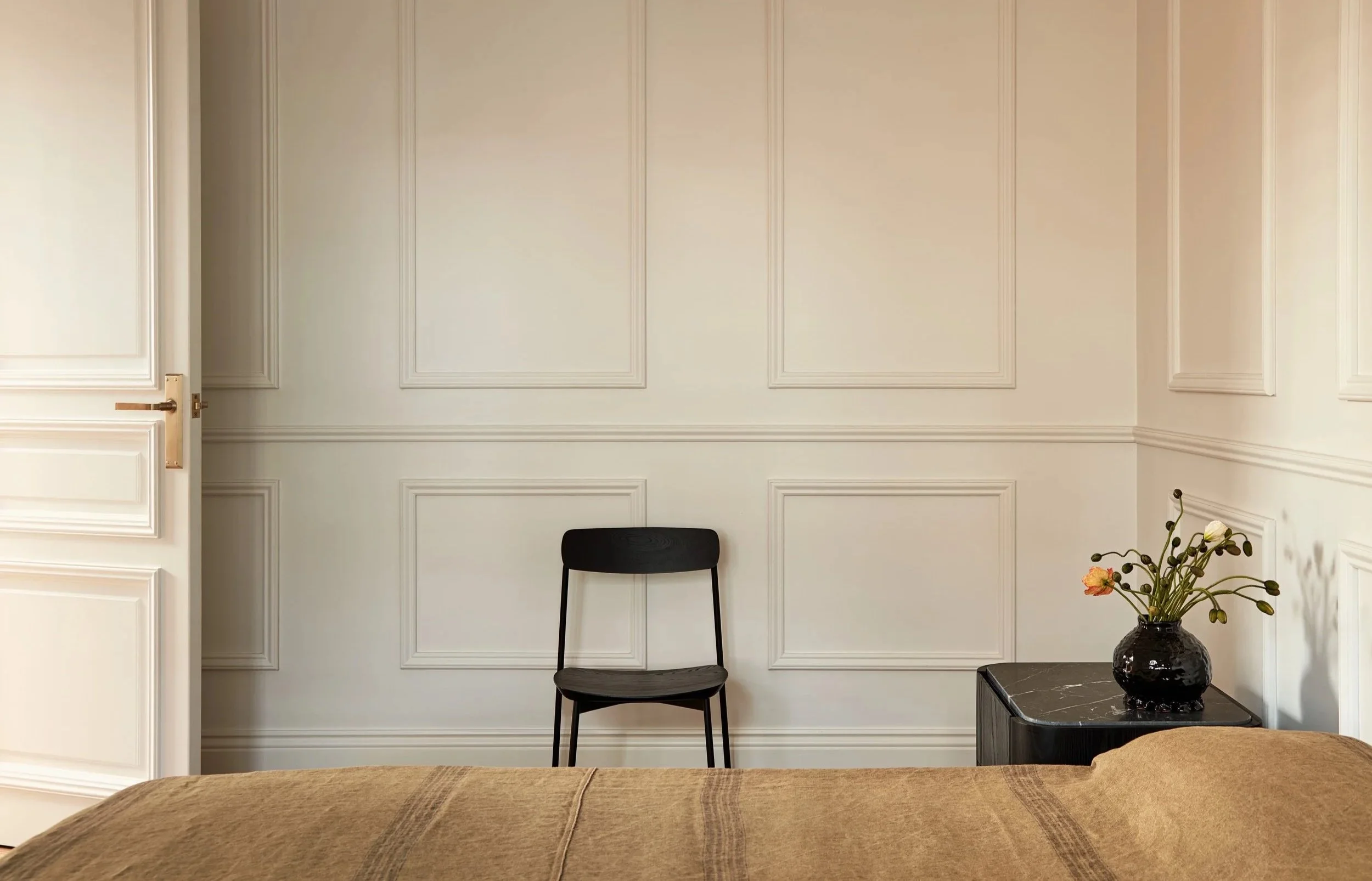
Which designers, artists, places, or books have most shaped your eye?
I draw a lot of inspiration from Melbourne and our local creatives, their work brings a richness and originality that can’t be replicated. It’s something I consciously weave into my projects, not just for the aesthetic, but for the connection it brings to place and story. In Crimson Haus, the local influence is woven through every room: artwork by Carol Batchelor, furniture by Jardan and Grazia & Co. Extending to the smaller details such as the ceramics and glassware by Studio Dokola, Melinda Wallis, Emily Ellis, and Kelly Brown.
I’m deeply influenced by eras—particularly the design language of the 60s and 70s. Right now, I’m working on a home built in 1973, and we’re leaning into that era’s palette of materials and forms. I find so much inspiration in vintage furniture and objects, they have a weight, history and sculptural quality that resonates with me.
I’ve always been drawn to the work of designers like Tobia Scarpa, Gerrit Thomas Rietveld, Carlo Scarpa, Mario Bellini, Vico Magistretti and Charlotte Perriand… her 7 Fauteuil Tournant dining chair is my all-time dream! I recently sourced a pair of Liisi Beckmann’s Karelia lounge chairs for a project. You’ll also spot Mario Bellini’s Chiara floor lamp in Crimson Haus, a subtle nod to the era I love.
What guides your choices around materials and finishes—balancing tactility, durability, maintenance, and sustainability?
Striking the right balance between tactility, durability and scale is central to how materials and finishes were selected for Crimson Haus. The architecture had a clean, contemporary edge, lacking some much-needed warmth. The furnishings the couple had initially chosen were small and disjointed from the space.
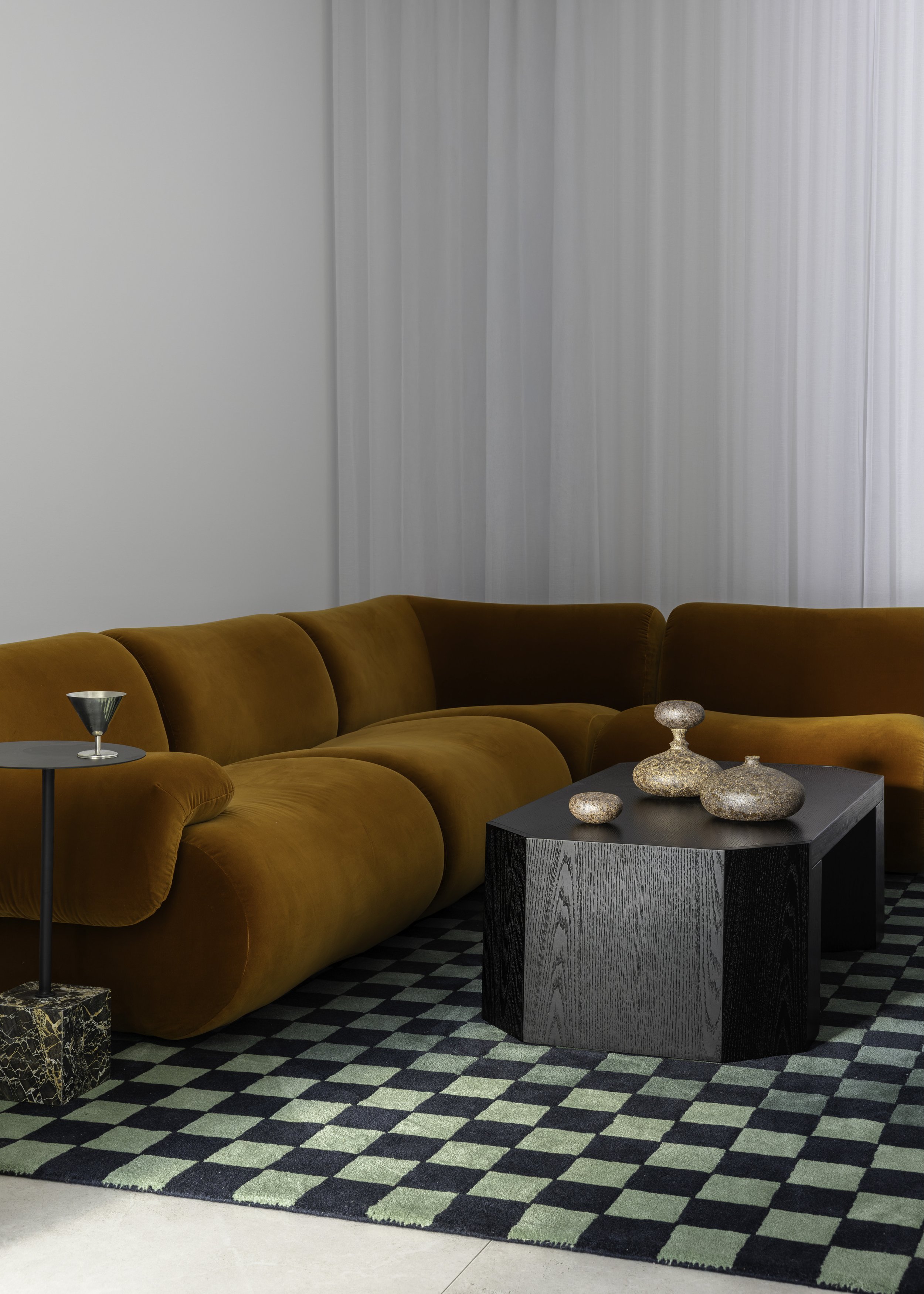
I introduced a sculptural, oversized sofa in a deep crimson to anchor the open-plan living area; bold in tone, generous in scale, and soft in form. In the theatre room, we had some fun: a golden velvet sofa paired with a checkered rug brought a hit of character and contrast, layered to make the space feel playful yet grounded.
Finishes throughout were chosen to age gracefully, support everyday use, and complement the architecture without competing with it. The result is a space that feels cohesive, expressive, and designed to be lived in.
Proudest work moment so far?
My proudest moments are always the final walk-through or the day of the photoshoot, when everything has come together. All the late nights, decisions, edits, problem solving, they all lead to that one big moment where I get to step back and see the space fully realised.
Seeing the look on my client’s faces, the pride, the joy—it’s incredibly grounding. That’s when I feel proud not just of the work, but of what it means to my clients. Seeing how much it transforms their lives, how proud they are to share it with friends and family, knowing it’s a space where memories will be made. That’s the real reward.
What’s the best piece of advice you would give to someone embarking on their design career journey?
Your eye is your edge, the industry can be loud, so block out the noise. Trust your instinct: don’t be afraid to try things, mess them up, move them around, and try again. The more time you invest in learning your craft, the more it will show in your work.
Always ask questions, take notes, and get on-site as much as you can. Education matters, it gives you credibility and a solid foundation, but some of the most important lessons happen on site, in real time. A wonky wall or delivery drama will teach you lessons you can’t learn from a textbook or your favourite lecturer.
Valuable and practical tips for readers tackling their own interiors, and the common mistake you’d suggest they avoid?
Start with how you want the space to feel—then think about how you’ll use it. Close your eyes and picture yourself moving through the space: where you’ll pause, where the light lands, what you’ll be doing there. That one shift changes everything.
Once you have that, layer in texture, tone, and pieces that hold meaning. I often see people buying something just because they need to fill a gap, but they end up with pieces they don’t actually love.
Good interiors take time—to refine, to edit, to evolve. Don’t try to complete a space all at once. Let it grow with you.
And please, please… no furniture sets!
To stay up to date with Studio ab. visit the website or follow @studio_ab_ on Instagram.
